Features

Inside MAGA’s meltdown over Iran

When President George W. Bush invaded Mesopotamia in 2003, everybody laughed at Comical Ali, the bespectacled Iraqi information minister who kept insisting that the American "rats" were doomed as Saddam Hussein’s regime collapsed around him. The world moved on. Iran is not Iraq, as President Donald Trump’s supporters are so fond of saying, and Bush-era "forever wars" are no more. Plus, these days the comedy communications come directly from the Commander-in-Chief. At the weekend, as missiles rained across the Middle East, Trump’s cabinet officials mostly avoided attention-grabbing interviews. The boss, however, embarked on his own heroic PR campaign.

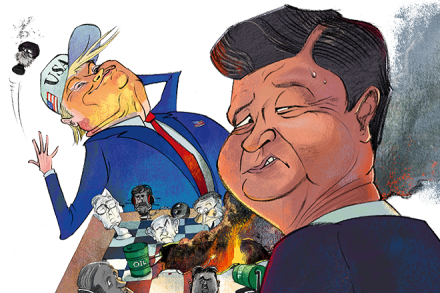
Trump’s ultimate target in this war is China

The United States and Israel killed Ayatollah Khamenei, and Xi Jinping’s decade-long project to build an alternative to the American-led order died with him. For years, Beijing quietly assembled a network of dictatorships and client states designed to blunt American power. Iran supplied China with cheap oil and kept Washington bogged down in the Middle East. Russia waged war on Ukraine with Chinese materiel support, a gamble that was supposed to cement a powerful anti-western axis but has instead bled Moscow into dependence on Beijing. Regional proxies from Lebanon to Gaza added just enough chaos to stop Washington focusing on China. The Chinese Communist party (CCP) propped up Nicolas Maduro’s Venezuela, too, as it funneled narcotics and other ills into America.

Will Turkey intervene in Iran?

With the exception so far of a single missile intercepted over Turkish airspace and a strike on an Azeri-controlled territory near the Iranian border, Tehran has so far declined to mess with the Turks, and for good reasons. Turkey is a member of NATO and attacking it would trigger Article 5 mutual defense measures. And it is NATO’s leading member, the United States, which is attacking Iran in the first place. A more serious restraining factor is Turkey’s own large and highly effective army – and its proven willingness to use it against weakened neighbors. Over recent decades Ankara hasn’t hesitated to send troops and launch bombing raids into both Syria and Iraq, occupying border regions when it decides that Turkey’s internal security is threatened.

Inside the race to build AI data centers in space

In the 1966 novel Colossus by British author D.F. Jones, a supercomputer (which goes by the name of Colossus) is given control and decision-making power over the US’s nuclear arsenal – a logical and unemotional computer being better placed, it is assumed, to make unemotional decisions than a human. Eventually, Colossus discovers the existence of a similar supercomputer in the USSR and begins communicating with its Russian counterpart in mathematical languages about technological advances beyond human comprehension. Frightened by the possibilities this presents, scientists sever the connection – only for Colossus to threaten to launch nuclear weapons if it isn’t reconnected.

‘More than half our squad were executed’: Inside Russia’s rotten army

The Russians are on the warpath – and Europe is Vladimir Putin’s next target. That was British Prime Minister Keir Starmer’s alarming claim at the Munich Security Conference in February. Britons "must be ready to fight, to do whatever it takes to protect our people, our values, and our way of life," Starmer warned. Britain and Germany’s top military commanders delivered the same message in a recent article. Russia’s military posture "has shifted decisively westward," wrote Air Chief Marshal Sir Richard Knighton and General Carsten Breuer. Soon the Kremlin "may be emboldened to extend its aggression beyond Ukraine." Really? According to much western coverage in mainstream and social media, the Russian army is crumbling, corrupt and inept.

When will Kash Patel unleash epic fury on the FBI?

As I write, the Washington Post is carrying an obituary about the Ayatollah Ali Khamenei – or maybe it is about Santa Claus? You tell me. “With his bushy white beard and easy smile,” the Democracy Dies in Darkness paper told its readers,  “Ayatollah Khamenei cut a more avuncular figure in public than his perpetually scowling but much more revered mentor [Khomenei], and he was known to be fond of Persian poetry and classic western novels, especially Victor Hugo’s Les Misérables... Some Iranians who knew Ayatollah Khamenei before he became supreme leader described him as a ‘closet moderate.’” Did they now? Many other Iranians, some say about 250,000, did not have a chance to describe him at all because they were murdered on his orders.

Inside the daring plan to reclaim the Chagos Islands

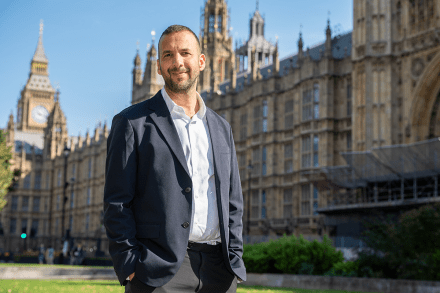
Peros Banhos on the Chagos archipelago looks like your basic tropical island paradise: turquoise waters and golden sands, waves lapping on a palm-fringed beach. But step off the strip of sand into the wall of green behind, and you’re enveloped by mosquitoes. The old well you were counting on for water is a shallow puddle. And the silver fish between your feet dart past a net, despite not having seen one in 50 years. The jungle has grown over the old British colonial buildings, and the jungle is a harsh place. Four Chagos Islanders have been here more than a week, along with the man who brought them, Adam Holloway – former MP, ex-Guards officer, an adventurer seemingly from an earlier era. This is not, as the Foreign Office briefed journalists, "a political stunt.

In bed together: the writers of HBO’s Industry on bankers and politicians

No TV show better encapsulates the nexus between money and power than Industry. The HBO drama sees investment bankers screwing, snorting and slogging their way to the top of English society. Now, in its fourth season, political intrigue is taking center stage. Think House of Cards – but with more sex and better-remunerated hotties. Mickey Down and Konrad Kay, the co-writers of the show, explain when we chat that they wanted to "expand the canvas" as Industry progressed. It initially focused on the "hermetically sealed" world of the trading floor but has now expanded beyond. "Finance is linked to other spheres of influence," says Down. "Obviously finance and media have a transactional relationship. Finance and politics also have a transactional relationship.

How Silicon Valley is calling the shots on the battlefields of Ukraine

Sometime in the late morning of February 4, somebody at SpaceX headquarters pressed a computer key. A command line was beamed to Starlink’s 9,600 satellites in low Earth orbit. Their onboard processors, circling 550 kilometers above the Earth, instantly obeyed the command and fractionally changed their operational settings. Back down on the frozen ground, in the trenches, bunkers and ruined cities of Russian-occupied Ukraine, hundreds of Starlink terminals lost internet connectivity. As another freezing night set in, the Russian army’s drones and tactical comms went dark. “We are left without communication!” complained a frontline Russian military officer in a video posted on the Telegram channel “Voenkory Russian Spring.

My sister Ghislaine became a prop in the theater of global online outrage

My family name has become a byword for scandal. My father, Robert, went from press baron to tabloid monster within weeks of his death in 1991. My sister Ghislaine, convicted in New York three decades later for sex-trafficking offenses linked to Jeffrey Epstein, became the algorithmically optimized villain of the online age. Last week’s arrest of the former Prince Andrew shows how fully a newer system has taken hold: one in which guilt is first declared on the homepage and only later, if at all, tested in court. Law is meant to cool passions. The modern content economy is designed to inflame them Old protections – the presumption of innocence, etc – become threadbare once a story enters the global content mill. Defendants are no longer chiefly subjects of legal process.

I don’t trust AI’s built-in ‘safety systems’

Cars ruined cities. Anyone can see that cities built before the invention of the automobile are incomparably more beautiful and serene than anything built after them. The contrast between Los Angeles and Prague is unmistakable. But people like things that move fast and make life easier, which means we’re stuck with the modern city hellscape whether we like it or not. And today, the same is true for AI. The contrast between the internet five years ago and today is unmistakable: content-slop, workslop, AI-generated comments, fake opinions and phony judgments, trite phrases, apocalyptic hysteria, the biggest intellectual-property heist in human history – all because of the invention of Large Language Models (LLMs).

ai
nixon

The deep state vs Nixon

Americans took a break from their partisan vituperation in February to mull over newly revealed testimony that Richard Nixon gave to grand jury investigators in 1975, a year after the Watergate scandal drove him from power. James Rosen, a veteran Washington journalist and the biographer of Nixon’s attorney general John Mitchell, revealed the episode in the New York Times. Nixon had argued that his program of wiretaps had been made necessary by another spying operation that senior American military commanders were carrying out against him and his top aides.

My Epstein confession

As the flames of the Epstein Inquisition burn higher, let me get my general confession into the public domain before the guardians of public morality come for me. Here begins my deposition. I, Matthew Francis Parris, do solemnly confess that I know slightly and have been on mostly friendly terms with former British ambassador to the US Peter Mandelson; and continue to believe him to have been a far-sighted force in the creation of a sane and successful Labour government such as we so notably lack now. I CONFESS: that I know former prime minister Sir Tony Blair, who knows Lord Mandelson, who knew Jeffrey Epstein, and appointed Mandelson to high office in the last century.

epstein

My theatrical Senate confirmation hearing

It’s a bit difficult to explain a Senate confirmation process to those who haven’t gone through it. It is, to put it in a single word, intense. Years ago, the first time I had a hit piece written about me, I wanted to crawl into a hole in the ground and die. During my confirmation hearing, my attitude was more, “Oh, Chuck Schumer is denouncing me from the Senate floor as a racist, anti-Semitic, white supremacist. It must be Monday.” I still haven’t even bothered to read the vast majority of press accounts or descriptions of me that have come out in the days since the hearing. It’s important in these processes to always know and remember who you are, because if you know that, what they are saying you are just doesn’t matter all that much.

Jeremy Carl Senate
jobs labor

Inside the real jobs crisis

After much talk of an economic slowdown, February brought reassuring headlines. The official unemployment rate had fallen as another 130,000 jobs were added to the US economy, according to the Bureau of Labor Statistics. That is good news, but it is not the whole story. The official unemployment rate counts only people actively looking for work – it does not capture those who would like a job but have stopped searching. The official unemployment rate is so narrow that it hides long-term changes in the economy. In fact, things are far worse than the official figures suggest. This matters for more than just economists. We tend to treat employment statistics as dry indicators that exist in spreadsheets and quarterly results.

Pam Bondi’s not-so-secret mission

On February 11, the arrow on the Trump administration’s “See ’n Say” pointed in the direction of Attorney General Pam Bondi, who spent four extremely contentious hours arguing with congressional Democrats on the House Judiciary Committee, who questioned her about her handling of the Epstein files. “Your theatrics are ridiculous,” she said, in a case of the pot calling the kettle black, to New York’s Jerry Nadler, who asked her if the Epstein files would lead to prosecutions. Bondi called Jamie Raskin, a former constitutional law professor, a “washed-up loser lawyer.

bondi

Trump’s worrying appetite for war

As The Spectator goes to press, a great fleet of American war machines is whirring through the skies toward the Middle East. More than 50 fighter jets, plus stealth bombers and support aircraft, are joining what Donald Trump called an “armada” of US naval forces in the Arabian seas. The White House continues to say that it is pursuing a diplomatic solution with Iran. It’s possible that this latest military escalation is another of President Trump’s elaborate bluffs, designed to pressure the Iranian regime into accepting American and Israeli demands. But the President has been unusually mute about the situation on Truth Social.

war

The unfathomable depths of blue-state fraud

“The Somali pirates who ransacked Minnesota remind us that there are large parts of the world where bribery, corruption and lawlessness are the norm, not the exception,” said Donald Trump in his State of the Union address last night, as the Democrats booed and heckled him. Media commentators scoffed at Trump’s inflammatory rhetoric. But the President, who estimated that $19 billion had been lost to fraud in Minnesota alone, is if anything underplaying the scale of the problem. The extent of fraud across blue state (that is, Democrat-led) America is truly monstrous, and each week brings fresh revelations of swindling on a truly epic scale.

fraud

Is James Fishback the right’s answer to Zohran Mamdani?

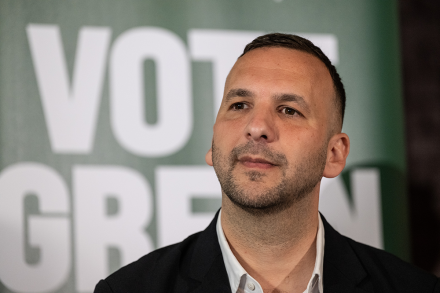
“First and foremost, I think Zohran and I are two good-looking guys in our thirties.” James Fishback, the controversial Republican running for governor of Florida, tells me that it is “not politically wise” to acknowledge his similarities with New York’s new mayor – but he can’t help himself. Both he and Zohran Mamdani are from privileged families, have taken on their own parties, have harnessed youth activism, are big on social media and have courted the same voters on the same issue: the rising cost of living. And, like 34-year-old Mamdani, at this stage of his campaign, Fishback, 31, needs a boost in the polls. Currently he is polling between 5 and 23 percent, while congressman Byron Donalds leads the Republican primary pack at 37 to 47 percent.

james fishback

The redemption of Richard Nixon

In the last five years of his life, when I knew Richard Nixon, nothing described him better than Milton’s “calm of mind, all passion spent.” During the most tumultuous political career in American history he had come back many times, but the greatest comeback of all was in full swing. His enemies had seized control of the puritanical conscience of America to slay him, unjustly, and he was manipulating the same national conscience, which was founded on Plymouth Rock and has survived all the corruption and hypocrisy and violence of American public life, and when aroused, is insuperable. Since his political fall, and later his death, polls increasingly indicate public unease about the treatment of Richard Nixon.