Books and Arts

Coleman Hughes’s case for a colorblind future

Claudine Gay would have you believe that her resignation as president of Harvard University was because of her identity. The scandal, in her and her allies’ eyes, was that — as she wrote in a New York Times op-ed — she was “a Black woman selected to lead a storied institution.” Never mind that her allies wouldn’t say the same if black academics they don’t like, like Thomas Sowell or John McWhorter, were involved in a similar scandal; their lens is always a racial one. But the colorblind response would throw all this aside.

hughes

War hero, bon viveur, Japanese spy: Frederick Rutland wore many masks

It is early in the morning on the “day of infamy,” Sunday, December 7, 1941. Two hundred and fifty miles north of Hawaii, six Japanese aircraft carriers are preparing to launch more than 350 aircraft in a surprise attack on the United States Pacific Fleet at Pearl Harbor. The fleet’s commander-in-chief, Admiral Husband E. Kimmel, had told a reporter the day before that the Japanese would be “damned fools” to attack the United States, ignoring the warnings that war was imminent. Around 7:30 a.m., the lead Japanese pilot fires a single flare, giving the pilots the “final go” signal. “Within an hour... the US Pacific Fleet was in ruins.” The American public, writes espionage historian Ronald Drabkin in Beverly Hills Spy, quite rightly demanded: “Whose fault was it?

rutland

The frustrating rise of celebrities ‘writing’ children’s books

When you are next visiting a bookstore, and find your way to the children’s section, you might be forgiven for thinking that there is no longer such a thing as a children’s author. Instead, you will be ambushed by piles of books blazoned with the names of actors, singers, comedians, DJs and people who generously exhibit themselves on social media. “Writing” a children’s book has become another string to the celebrity bow. Imagine the scene. You’ve married a prince, and opened a shop that sells vaginal eggs. What more is there to do? A-ha, thinks the celebrity, perhaps while she is sitting on a bench. All those untutored minds, eager for moi! My personal brand will bring them such joy, such self-worth! They will all feel seen!

chidren's

The wit and wisdom of Margaret Cavendish

Margaret Cavendish, Duchess of Newcastle, who died aged fifty in 1673, was a divisive character whose life spanned one of the most fraught periods of English history. To some contemporaries, she was one of the wonders of the age, while others considered her one of the silliest writers ever to have taken up a pen. In her last two decades, Cavendish published over a dozen works of drama, philosophy and poetry, including what some consider her masterpiece, The Blazing World. Posterity has seen her obscured and dismissed, the fame she admitted craving granted only in 1929, when Virginia Woolf described Cavendish in A Room of One’s Own as “a giant cucumber” who “frittered her time away, scribbling nonsense and plunging ever deeper into obscurity.

Cavendish
Whedon

The loss of Joss Whedon

Cheerleaders save the world. Vampires gain souls. Ellen Ripley comes back to life as a half-alien. In the case of Willow Rosenberg, Buffy the Vampire Slayer’s geeky, lesbian BFF, she’s a good witch one year, Southern California’s equivalent of the Wicked Witch of the West the next, and only a year later, the key to stopping an apocalypse. One season, you’re good; the next, you’re bad; then, finally, you’re the savior. This is the world Joss Whedon envisions across six television shows (Buffy the Vampire Slayer, Angel, Firefly, Dollhouse, Marvel’s Agents of S.H.I.E.L.D.

von Teese

Dita Von Teese, the once and forever burlesque star

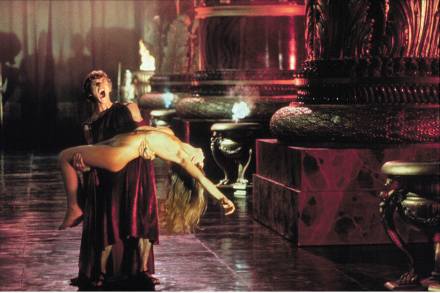
She’s the Glamonatrix who looks equally as comfortable luxuriating in a Champagne glass, emerging from a giant shell, perched upon a cake or astride an oversized lipstick bullet. She’s the Rhinestone Cowgirl, the Bird of Paradise, the star of Strip, Strip, Hooray! and Dita’s Crazy Show. She’s a star. In contrast to OnlyFans influencers, Dita Von Teese comes from an older, spectacular style of tease, and at fifty-one, remains the world’s best-known burlesque dancer. She’s the most famous striptease showgirl since Gypsy Rose Lee and perhaps the world’s leading erotic celebrity. She’s come a long way since she was simply a Michigan-born girl named Heather Sweet.

theater

Spring’s hottest theatrical openings on Broadway

Since closing its doors during the pandemic in 2020, Broadway has struggled. The Phantom of the Opera lowered the curtain in April last year after more than thirty-five years. Andrew Lloyd Webber’s new musical, Bad Cinderella, shut in June, less than three months after it opened, and other musicals, such as the tortuously-named Britney Spears-inspired Once Upon a One More Time, have fared little better. Meanwhile, productions are still scrambling to get butts on seats: audience numbers are down 17 percent from their pre-pandemic highs. And yet, for theater aficionados, there is hope.

Dalí

The divine Dalí and his ‘Christ’

I arrived in the city of Figueres early one January morning to visit one of the most popular, and bizarre, art museums in the world, the Teatre-Museu Gala Salvador Dalí. It houses a dreamlike picture that, for the first time since it left over seventy years ago, has made a temporary return journey to Spain. Originally simply titled “The Christ,” the 1951 canvas depicting the giant figure of a man on a cross, shown at an overhead angle hovering over a moody seascape, was painted by the most famous son of Figueres, Salvador Dalí. Through April 30, it forms the centerpiece of a show exploring its creation, history, local connections and symbolism.

The notorious feud between John Ruskin and James Whistler

It was too dark to see, and the painting was upside down. In 1877 John Ruskin, the leading art critic of Victorian England, attended an exhibition that included paintings by the American-born artist James Abbott McNeill Whistler. He hated them — and said so. In print. “I have seen, and heard, much of Cockney impudence before now; but never expected to hear a coxcomb ask two hundred guineas for flinging a pot of paint in the public’s face.” Whistler sued. The following year the argument came to court, on a dark day in a gloomy and gaslit courtroom. The canvases that Ruskin had so disliked were propped up against a wall and barely visible; one was the wrong way up, and another was dropped unceremoniously onto an elderly gentleman’s balding head.

ruskin

Relive Lou Reed’s wild, contradictory life

Before “Walk On The Wild Side” changed everything for Lou Reed in 1972, bringing him status and bolstering his bank account, he had been lead singer of the Velvet Underground, a group, as managed by Andy Warhol, that served up songs about drugs, gender-bending and sexual fetish, all designed to crash the boundaries of what polite America considered acceptable. The great thing about Velvet Underground songs was that musically, too, they transgressed: drone-based harmonies progressed glacially as rhythmic impetus stuttered. The big problem with the Velvets, in terms of finding any wider audience beyond self-confessed weirdos who hung out with Warhol, was that virtually nobody wanted to hear drone-based harmonies moving glacially or rhythms that fragmented. Where was the fun in that?

reed

In praise of George Gissing, the born exile

George Gissing died just over 120 years ago, marooned in the French Atlantic resort of Saint-Jean-Pied-de-Port and in circumstances that might have been plundered wholesale from one of his notoriously ground-down novels. H.G. Wells, present at the scene, was so affected by his friend’s deathbed ravings that he transferred them word for word into the mouth of Uncle Ponderevo as he lies dying in Tono-Bungay (1909). There are Orwellian shadings: like Gissing, Orwell died at forty-six of lung disease, and was profoundly influenced by his Victorian forebear. It was Anthony Powell who remarked of Orwell’s third novel, Keep the Aspidistra Flying (1936) that “the Gissing had to stop.

gissing

Cahokia Jazz is enormous fun

If you are a male, middle-aged, middle-class novelist, do not despair of being deemed unpublishable in our era of identity politics. On both sides of the Atlantic, the smartest chaps have turned away from the interiority of literary fiction. From Colson Whitehead and Marlon James to Mick Herron and Charles Cumming, they now write detective fiction, speculative fantasy, or a combination of the two. Francis Spufford, the award-winning author of best-selling novels such as Golden Hill, has come up with a zinger. Cahokia Jazz is set in a 1920s city in a counterfactual America. Here, the native Americans were not fatally weakened by a deadly strain of smallpox, but experienced the milder version which has just a 1 percent mortality rate and confers immunity.

spufford
densmore

John Densmore on protecting the Doors’ legacy

The once-explosive accusation that a rock ’n’ roll band is a sell-out, aimed at artists who make an accommodation with industry, has come to seem a little naive since it was first bandied about in the 1960s. Whether it’s that well-known monument to prudence Iggy Pop extolling the virtues of car insurance, the Zombies promoting Tampax or Bob Dylan shilling for Victoria’s Secret, they’re all at it these days. Elton John wants you to dial UberEats, the Stones will start you up with a $139.99 Keurig coffee machine, and by now it might be easier to list the names of rock stars who haven’t chugged Pepsi on TV than those who have.

crawford

Does Joan Crawford deserve her bad reputation?

Bitches get a bad rap. In his new book, Ferocious Ambition, film historian Robert Dance recontextualizes the life, career and artistry of the most notorious bitch of them all, Joan Crawford. Crawford’s early twentieth-century rivals have faded into history (outside of the gayest of gay kids, does any Gen Z-er know the name Norma Shearer?), but Crawford is omnipresent for all the wrong reasons. Ryan Murphy reenacts her feuds on FX’s Feud. Drag queens imitate Crawford running around with an ax. And, every Mother’s Day, bloggers roll out posts and memes about her legacy as the worst mom of all time; the titular Mommie Dearest of Faye Dunaway’s campy, classic, child-abuse shlockfest.

Harmony

Beauty, terror and banality are uneasily juxtaposed in Harmony

If there is a central message in Harmony, it is that old cliché that evil flourishes when everyday people stand by and do nothing. That idea is returned to repeatedly, with increasing angst, as the central characters in the musical get swept up, and finally tossed aside, in Nazi Germany. Harmony revives the true story of the Comedian Harmonists, six men — three Jewish, three Gentile — who created an ensemble in 1927 during the waning days of the Weimar Republic. The group, who melded physical comedy with singing, sometimes using their vocal cords to mimic entire orchestras, became a surprise hit. They sold millions of records, appeared in movies, and performed worldwide.

starfield

The frustrating promise of infinite freedom in video games

Starfield is intermittently, unexpectedly profound. As my custom spaceship lands on one of the game’s thousand planets, and my customized character steps into the neon lights of a strange alien city, I’m struck by the sheer scale of this digital universe. This is the game I dreamed of as a sci-fi nerd child and teen, burying myself in The Icarus Hunt, The Long Earth, Foundation, Hyperion, Dune and boundless other sci-fi novels that transported me from a rural Australian library and into space. And here I am, transported there again, through an Asus M16 gaming laptop. There’s a big galaxy out there, and it’s yours to explore. And yet, however vast, it’s a desolate universe.

art market

How does the global art market move?

Art market reporting tends to be more sensationalist than, say, the news about corn futures. Breathless accounts of high-stakes bidding abound, remarkable discoveries of forgotten treasures in thrift shops get big headlines, and who’s up or down and how much money the fluctuation involves become fodder for salacious gossip. Interesting though these tales undoubtedly are, though, they don’t provide a realistic picture of the art business. While they may be less gossipy, some nuts-and-bolts stories away from the headlines can be just as compelling for those with an interest in the art market, and how what we see displayed in our homes, public spaces and cultural institutions depends upon very practical considerations to get there.

The marvelous Montalbano

I visited Sicily in May 2005, when the airlines were still requiring all checked luggage to be left unlocked. After the flight from Paris touched down at Palermo, my wife and I went to collect our luggage at an apparently quiet and unrushed airport to discover my suitcase opened partway and an expensive dressing gown missing. Eighteen years ago, il Commissario Salvatore Montalbano was quite unknown to me. Otherwise, I should have immediately thought of the Sinagra family at the eastern end of the island, though the word “mafia” did come to mind as I rezipped the bag.

Montalbano