Wild life

How Moscow can pervert the course of Africa’s future

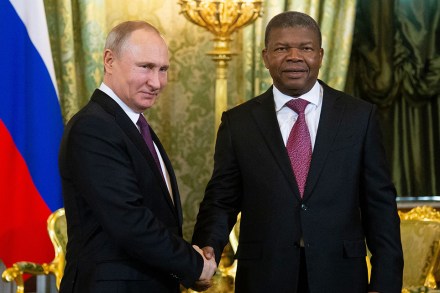
On the lengthy train ride to Kyiv I read my Plokhy as we trundled through seas of mud, passing villages with blue timber churches topped by golden domes gleaming in the spring dawn. A metastasis of Putin’s atrocities against Ukraine has been the entrenching of Russian influence, powered by guns and agitprop, across my home continent of Africa. I wanted to hear what people in Kyiv thought about this trend, since it threatens to roll back democracy in Africa three decades after the Soviet Union collapsed. Look at Africa’s UN voting patterns, what many Africans are saying, at the sudden appearance of Russian goons in the remotest corners and at the convergence of Chinese and Vatnik rhetoric.

My conversations with Wilfred Thesiger

When Wilfred Thesiger arrived in the port of Al Mukalla after his foot crossing of the Empty Quarter desert with the Bedu in 1948, he wore only Arab clothes. My father lent him a pair of trousers and a razor so he could get cleaned up before going to dinner. A friend of mine this week just read Thesiger’s superb Arabian Sands and reminded me that the author claimed his razor and European clothes had been sent from Salala, with no mention of Dad’s kindness.

The man who makes money where no one else dares to go

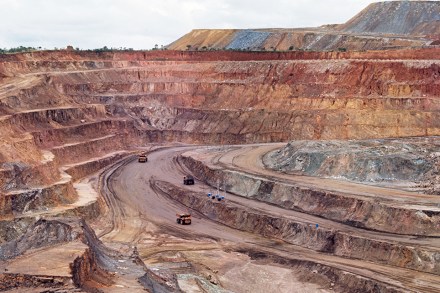
Rwanda The mineshaft is dark, the air humid and starved of oxygen. I follow Marcus Edwards-Jones out of the muddy tunnel towards a window of light and at last we emerge into the evening. The sun is going down over Rwanda’s green hills, dotted with banana groves and eucalyptus stands, with a river snaking away into the distance. Around us are men carting away lumps of rock, which on close inspection are streaked with veins of a black metal called tantalum, a high-value mineral used in the manufacture of mobile phones, nuclear reactors and spaceships. ‘I’ve never seen a deposit like this,’ says Marcus. ‘It’s all been worth it.’ I first met  Marcus in Oxford in 1985. We said hello on the stairs at a Piers Gaveston party, both of us dressed in togas.

My nonagenarian father-in-law has embraced East Africa

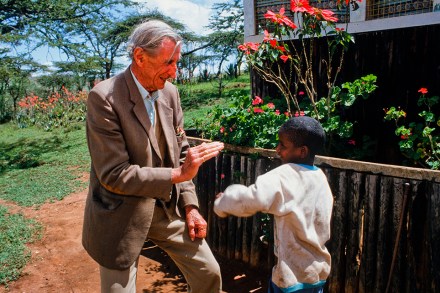
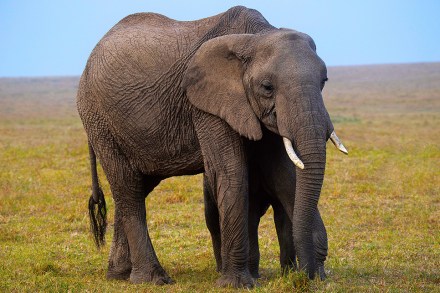
Kenya My father-in-law Gerry Taylor is 91 and walks daily on our Kenya ranch among herds of buffalo, giraffe and zebras. A few days ago he inadvertently came within 20 feet of an elephant and the both of them pretended not to see each other. He says he enjoys highland Kenya for its open spaces and endless horizons, the sense of freedom which, he points out, cannot be found in a row of English houses. Late in his life, East Africa has been his compensation for the India he lost as a youth. Born in Calcutta, Gerry was the son of a British Army officer who worked on India’s railways. He got his matinee idol good looks from his mother, whose ancestors were Indians, Burmese teak merchants and Armenian traders in the great city.

In praise of missionaries

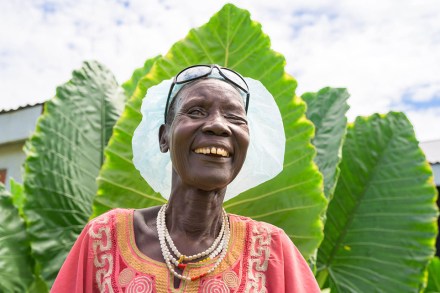
Kenya Tonj is a war-battered settlement on a river that eventually feeds into the White Nile, in South Sudan. When they are not feuding over livestock, Dinkas from remote cattle camps, dressed in garish jalabiyas, saunter down the dusty main street. For months at a time, tropical deluges turn the surrounding mud hamlets into islands, clogged with papyrus, buzzing with insects and isolated from the world. Last year, Dr Ben Roberts, an eye doctor from Alabama who works as a medical missionary in Africa, arrived in Tonj to perform cataract operations on hundreds of local people, restoring sight to those who live in darkness. News of Dr Roberts’s miracles reached a blind elderly woman named Madhieu, many days walk away.

The energy of the world is shifting south

Kenya Greetings from Africa, my beleaguered cousins. I’ve written before about how in 1973, Uganda’s Idi Amin telegrammed Queen Elizabeth, promising to send shiploads of bananas to feed her subjects after ‘following with sorrow the alarming economic crisis befalling on Britain’. Now that you rival Burkina Faso in the number of times you’ve changed your leaders recently, I’m going to move out of the sunshine, take a swig of cold beer and show some sympathy once more. For a long time, those of us the British Empire left behind when you pushed off a few decades ago sniggering into your pith helmets sometimes wondered if we’d made a mistake.

Class of the 1980s: my Balliol reunion

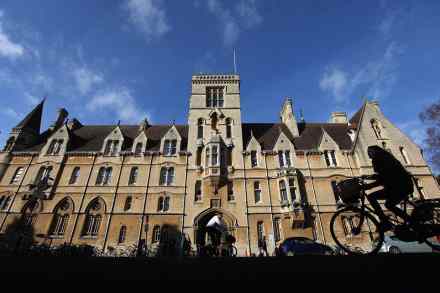
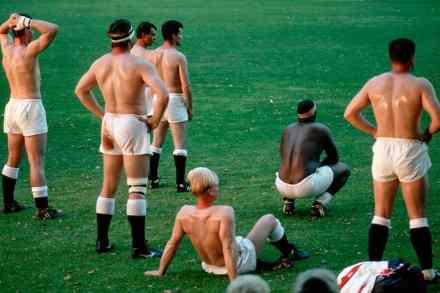
Laikipia, Kenya No portrait of Boris Johnson hangs in the hall of Balliol, his old Oxford College. Hardly a surprise, since serving prime ministers do not have their pictures painted and he has moved on only recently. But as things stand, it seems pretty clear that Boris will never go up alongside this distinguished Oxford institution’s other three prime ministers, H.H. Asquith, Harold Macmillan and Edward Heath. I worked this all out last month while attending a Gaudy, or reunion, at my old college for the years 1984 to 1988. Boris matriculated the year before I went up but as I stood in the hall before dinner looking up at the walls, I clearly remembered seeing him standing in the quad together with Macmillan and Heath halfway through my time at Balliol.

The man-eating leopard of Laikipia

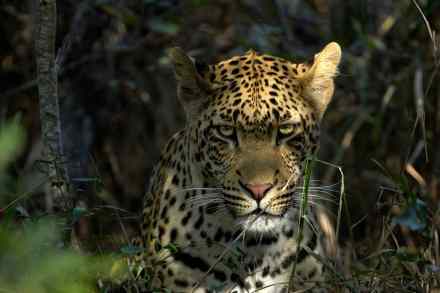
Laikipia Plateau, Kenya Until only a few years ago, the constellations blazed across the sky above the farm at night and there was not a single electric light on any horizon. On many evenings I found myself with my rangers sleeping on the tracks of cattle rustlers heading into Kenya’s wild north with no fences between us and the Ethiopian frontier. Today the wildness is gone, the tarmac almost reaches our farmstead, the phone network reaches everywhere and the good old days of gunfire and adventures and great dances of warriors with their beads and flashing spears will survive only in memory. And so it is quite surprising when even today a man gets eaten by a leopard a stone’s throw away from home.

Waiting for the rain that never comes – and for the elections to be over

Kenya After two years of no rain, all colour has drained from the landscape on the farm so that by the time we boarded the bush plane to leave in the bright sun it was as if we were all snow blind. From the air the highlands were waterless and dead until we descended over Kenya’s north shore and the world went green. My late mother’s garden at the beach house swirls with bougainvillea, gardenia, frangipani and allamanda. Green ingots of baobab leaves hang wetly down over green grass and wild flowers which spill down to the high tide mark. We walk among clouds of butterflies with lilac-breasted rollers and eagles overhead along paths crisscrossed by millipedes and ghost crabs.

There are almost no animals left – but we’ve been here before

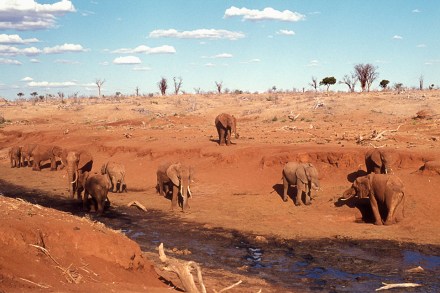
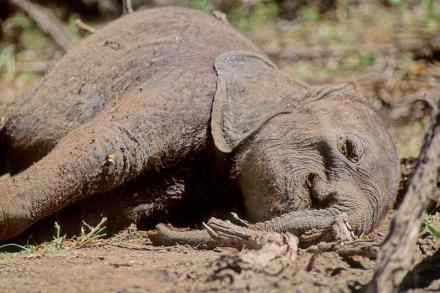
Laikipia You know things are bad when the zebras are thin. Even during most droughts, zebras are like matrons at the gym in stripey spandex stretched around plump buttocks. Pastures vanished long ago and our plains resemble Sudan’s Batn-el-Hajar – the Belly of Stones desert – so that I cannot even recall what they were like when they were last thick with green grass. The zebra foals are dying, the elephants are thin, while the buffalo disappeared a while back. The dry has killed quite mature trees which now shudder with the sound of termites and crash to the ground. To the north of us, horned skulls and dried carcasses litter the trail where the cattle-keepers trekked their animals vast distances in search of rain. Up there the countryside is silent.

The long and the short of it in Africa

Kenya As late as the 1920s, it was believed that Africa’s tropical sun would boil a European’s brains. ‘The direct ray of the sun – almost vertical at all seasons of the year – strikes down on man and beast alike,’ Churchill had written on his visit to East Africa. ‘Woe to the white man whom he finds uncovered!’ When my father first arrived in Tanganyika he was advised to go about in a spine pad and solar topee, which he swiftly discarded. He wore a khaki drill bush shirt and shorts as long and baggy as spinnakers. In old age his face, neck, arms and legs were very dark brown, but his torso remained a much paler colour. As a boy I also went about in khaki shorts, made by the Indian tailors in old Malindi town.

When flying was fun

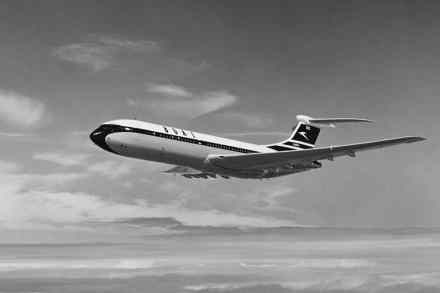
On the BOAC VC10 flights to Nairobi, the pilots would invite children like me up to sit in the cockpit with them. Once they put me behind the controls and I was very nervous about making a wrong move that could throw us into a tailspin. I had a BOAC badge and a Junior Jet Club book, which the captain kindly signed for me on each voyage. Attractive stewardesses served breakfast, lunch and supper with metal cutlery, the seats were huge with loads of legroom for tall men and the adults puffed away on cigarettes. The cabin was ultra-quiet because the four big Rolls-Royce engines were in the tail, rather than under the wings. Somebody up there cares about you, the advertisements said.

The sin of neutrality

Yet again, millions of civilians across the Horn of Africa are starving. The world blames the crisis on drought and climate change, which nowadays is the way we excuse these countries for environmental mismanagement. But as ever, war is really the single greatest reason why people are killed year after year in this region. And while western countries pour billions of dollars of food aid into Ethiopia, Somalia and South Sudan, the weapons flooding those states originate mainly from Russia, China, Belarus – and Ukraine. In response to an article I recently wrote in The Spectator about why I think so few African governments condemn Russia’s invasion of Ukraine, I have had the usual deluge of ad hominem attacks so familiar to anybody who dares to criticise African governments.

Hell is an English train journey

Delayed, on Southern Rail Home From the Hill is a 1987 documentary by Molly Dineen about Hilary Hook, an elderly colonel who after a life in Kenya and the Far East retires to a nasty flat in England. Poor old Hilary has never had to prepare his own food and now, in his twilight years, he can’t even open a can of soup. He is horrified by Britain, its culture and bad weather. When I first saw Molly’s superb film as a young man it struck a chord. Some 35 years later, on a brief visit to England from Kenya, I can almost hear and feel myself becoming Hook. It’s not so much that neither of us can cook for ourselves. It’s more that under this dome of grey skies and public service announcements, we both miss the gaudy melon flower of home.

Africa’s lessons for Ukraine

Kenya During Russia’s invasion of Georgia in 2008 I got a close look at Moscow’s troops and their kit. These contractniki were a ragged bunch with rotting teeth, bad boots and homemade tattoos, using weapons and vehicles that seemed like hand-me-downs from a failed state in Africa. I had expected them to be much smarter. Recently my spooky friends told me that Putin’s military invading Ukraine was now a modernised, well-trained force. Instead it appears that Moscow’s generals have stolen the diesel, supplied the mechanised brigades with ageing knock-off Chinese tyres and sacked all the dentists.

Why a church in Jerusalem is the model for all family-owned holiday homes

Malindi, the Indian Ocean When I lived in Jerusalem a long time ago, I often visited the Church of the Holy Sepulchre, where the Catholics, the Greeks, the Syrians and Armenians had their separate territories within the sacred complex of Christ’s Calvary, tomb and Resurrection. (The Ethiopian priests were all unfairly banished to the roof.) Every year, one of the denominations would say: ‘The ceiling is blackened by candle smoke — we should clean it.’ And all the other denominations would say: ‘Noooo — this is a terrible idea. It should not be done.’ The next year, another of the denominations would also say: ‘The ceiling is blackened by smoke, let’s clean it.

My ocean voyage from hell

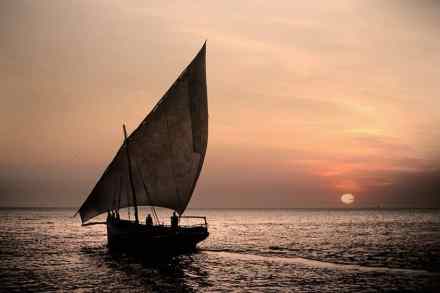
Kenya Wondering what this year will bring, at dawn this morning I stood in the waves in front of our beach house and watched two Swahili sailing dhows battling through monsoon surf, heading out to the fishing grounds. For 1,500 years mariners off our East African coast have voyaged in these lovely boats and now, just in the past couple of years, fibreglass hulls have started to replace teak planking, and outboard motors instead of lateen sails propel men across the ocean. I was looking at the end of a long history. In my life I’ve enjoyed wonderful sea safaris on dhows, hunting for tuna and ambergris and waves to surf — and I wonder what’s ahead.

A long-forgotten tale of sorcery and a severed head

Laikipia Plateau, Kenya Our local chief Panta wore a government-issue khaki uniform with epaulettes, beret and swagger stick. On a pleasant stroll to our farm springs, he observed how plenty of blood had been spilled over this water. We sat on the glassy-smooth black rocks around the water pools and the chief retold for me a story more infamous in its day than the Happy Valley tale of Lord Erroll’s murder, but now completely forgotten. Welshman Dicky Powys, from a family of authors and philosophers and cousin of our ranching neighbour Gilfrid, arrived in Kenya in 1931 to farm. Young Dicky learned the local Maasai vernacular fluently and got on with everybody. His employer had rented pasture in Laikipia around our springs for a vast flock of sheep and Dicky pitched camp here.

When it comes to Africa, the media look away

Kenya We were flown around the country, hovering low over mobs using machetes to hack each other up Each time I sit in St Bride’s on Fleet Street during the memorial of another friend, I look around at the crowds they’ve been able to pull in and feel terribly envious. Riffling through the order of service and then the church’s book of correspondents to find the faces of old comrades, I’m like a man wondering if any guests will bother turning up to one’s own hastily arranged bring-a-bottle party. Our 1990s generation of Nairobi hacks has been severely depleted. While we survivors are not a distillation of complete bastards, it’s natural to feel many of the best have gone before us. Too many were killed young on the story.

Africa’s empty vastness has vanished under the concrete of the present day

Kenya   When I was a child in Kenya, the road from the Indian Ocean up to Nairobi was still a dirt track, with the way frequently blocked by a rhino or large herds of elephant. A few decades later, the route has two railways and the road is an unbroken column of lorries heading all the way to the Congo. Africa is growing so fast that older people like me feel a kind of existential jetlag — or a sort of phantom limb syndrome, in which our eyes still see empty wilderness, plains and forests of a recent past that have vanished under the concrete of the present day. Whatever still survives is changing at tremendous speed. Twenty years ago two lonely stone pillars stood on the empty savannah west of where I write this on the farm we have built up.