The Wiki Man

How to pick the perfect present

I had always attributed it to bad luck in the genetic lottery. I am three-eighths Welsh and a quarter Scottish, which is a rotten mixture: part Cavalier, part Roundhead. This means that every pleasurable experience I have in life is coloured by Calvinist guilt: in the remote likelihood that I were ever to find myself sitting in the grotto in the Playboy Mansion, my Welsh part would enjoy it while the Scottish part would be worrying about how much it cost to heat. But it seems this guilt problem is nothing to do with my ethnicity: no human brain is remotely monolithic, but a bundle of conflicting modules cobbled together over millions of years of evolution.

Have the people who design trains and airports noticed that laptops exist?

It’s taken years to work this out, but there is a subtle art to designing an airport lounge. 1) Install power sockets and add useful tables and comfortable chairs… 2) make sure these three items are never located in the same place. You can sit comfortably, use a laptop or even charge it — but do not attempt more than one of these at the same time. In this way, almost all the gains made in information technology are being eroded by the uselessness of furniture designers and the mean-spiritedness of the people who design public spaces.

Why does Amazon think my friend is a kidnapper?

About four years ago, an irate father in Minneapolis walked into his local Target shop with a complaint. He wanted to know why they were sending his daughter, who was still at school, vouchers for baby clothes and cots. Were they trying to encourage her to get pregnant? When they telephoned to apologise a few days later he was more diffident. His daughter had fessed up: a child was due in a few months. But if dad hadn’t spotted any telltale signs of pregnancy, the shop had: she’d been rumbled by her recent purchases, in particular unscented lotions and certain dietary supplements. Some algorithm had spotted the significance of a sudden change in her buying habits, and triggered the ‘bombard with new‑baby offers’ subroutine.

S&M&B&Q: Why aren’t there sex-and-shopping novels for men?

I never got beyond page 20 in Fifty Shades of Grey. No one got shot in the first chapter, and there were more than four characters, so I rapidly found the plot confusing. In any case, I am averse to physical pain in any form (if I were to engage in BDSM activities, my secret codeword would be ‘ouch’) so it wasn’t really my thing. But the book does leave us with one literary Everest still to be conquered: if someone can write a pornographic novel for women, is there a similar fortune to be made writing a sex-and-shopping book for men? So that’s my plan for retirement. To write a novel for blokes where graphic scenes of deviant sexual activity are interspersed with practical, time-saving trips to Argos and B&Q.

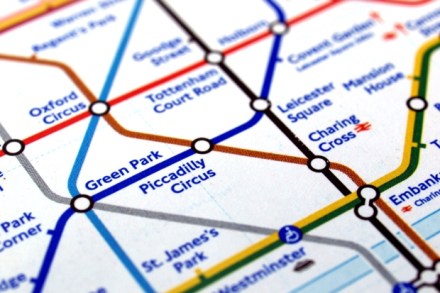
The best navigation idea I’ve seen since the Tube map

I stopped using London buses when some coward put doors on them. Twenty years ago, you could board any bus headed in the right direction and when it diverged from your intended route you’d jump off and board another. You didn’t need to understand bus routes at all. Now, when bus doors open only at specified stops, an absurd level of research is needed. It takes five minutes to work out where to wait and which route to take. Worse, buses use the dippy Paris Métro approach (Diréction Porte de Clignancourt) where only the final destination is on the front. This demands unrealistic knowledge of the outer suburbs. Where the hell is Clapton Pond? North? East?

Why everywhere should be more like Essex

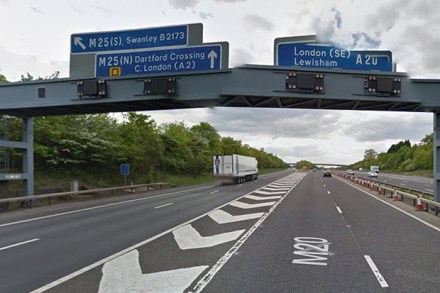
Apart from the Wye Valley, where I grew up, there are only two places in Britain I’d consider living: Kent and Essex. Since Kent grabbed the ‘Garden of England’ moniker, it’s generally considered the posher of the two, but in reality the two counties are mirror images of each other: in the words of one travel writer, the Medway towns are ‘where you take your northern friends when they claim that southerners are soft’. In both places it is possible to drive through an idyllic medieval village and two miles later find yourself at a KFC drive-thru which is open until two in the morning (I like both). I now live near Sevenoaks — a town so rich that you reach it by exiting the M25 from the fast lane — but in time I’d like to move east.

Was the phrasing of the Scottish referendum question designed to create division?

It is a trick which often works on children. Do not tell them to eat vegetables; instead ask whether they want broccoli or spinach. Question such as ‘Red or white?’ or ‘Still or sparkling?’ are examples of placebo choice: a psychological hack which works rather like the placebo ‘door close’ buttons in lifts (which are usually not wired up to anything but exist to give impatient people the illusion of control). Such questions give the feeling of choice without offering much at all. The hack needs to be viewed with caution since it can subtly transmute ‘I prefer B to A’ into ‘I want B’. Watch out for canny estate agents who show you a slightly inferior house just before they show you the one they really want to sell.

Why is nationalism OK when prefixed by the word ‘Scottish’ but not ‘British?’

My second favourite religious joke is an old Jewish joke (which I read in the Harvard Review, so I assume it has passed the political correctness test). Two Jews pass a church displaying a sign promising $1,000 to all new converts. After much debate, one of the men decides to take up the offer and enters the church. An hour passes, then another as the friend waits outside. Finally he comes out of the church and his friend eagerly asks, ‘So, did you get the money?’ The first man glares back and says, ‘Is that all you people think about?’ You could transfer this punchline to the Scottish independence debate.

Why don’t more non-smokers try e-cigarettes?

I was waiting on an office forecourt recently puffing on an e-cigarette when a security guard came out. ‘You can’t smoke here,’ he shouted. ‘I’m not, actually,’ I replied. He went to consult his superior. A few minutes later he reappeared. ‘You can’t use e-cigarettes here either.’ ‘Why not?’ ‘Because you are projecting the image of smoking.’ ‘What, insouciance?’ ‘Go away.’ I did. This phrase ‘projecting the image of smoking’ — along with ‘renormalisation’, ‘gateway effect’ and the usual ‘think of the children’ — appears frequently in arguments for restricting the use of e-cigs in public places.

How oneupmanship wrecks things for everyone

‘There’s a little bit of a fascist in all of us. For some, the tragedy of human want may provoke an impatient urge to expropriate and centralise economic resources. Others, alarmed at the world’s exploding population, may be attracted by calls for a programme of mass compulsory sterilisation. But for me it’s letter boxes and street numbering. I want order. I want consistency. I want standards. And I want eye-watering penalties for property owners who try their fellow Britons’ patience and waste our time by making their addresses impossible to find.’ You may remember reading this from Matthew Parris in last week’s Spectator. When delivering leaflets in Derbyshire, he was infuriated by the difficulty of matching houses to their address.

Four gadgets to take on holiday — and two to leave behind

One inarguably good thing about electronic publishing is that it solves that old quandary about what books to pack for your holiday — you just take a tablet or Kindle and buy books on a whim. The downside, however, is that this old dilemma has been replaced by an entirely new one: what bits of electronic crap need you take on holiday and what should be left at home. One thing you will never see on these pages is a review of headphones. I have owned lots of these over the years, costing between £10 and £150. Unfortunately all of them are completely useless. This is because I am married.

Why we’ll never go back to smoking indoors

What would happen, I wonder, were we to rescind the smoking ban as Nigel Farage wants? My guess is not much. Most restaurants would keep the existing rules. Some pubs might set aside a room for smokers. Casinos, comedy clubs and jazz clubs might revert to the status quo ante. But would we return to a time where people routinely smoked everywhere? Unlikely. People have had the chance to experience a new version of normal, and in large part they prefer it. You wouldn’t expect me to say this, but I think the legislation has to be considered good precisely because, even if it were abolished, much of the behaviour it created would stick. The same goes for seatbelt legislation.

Adam Smith is the father of more than one sort of economics

Gandhi would test his resolve by sleeping between two naked virgins, an avenue not really open to me, as my wife is an Anglican vicar: though Anglicanism imposes almost no constraints on your behaviour or beliefs nowadays, it still frowns on sleeping with naked virgins, especially if they are of the opposite sex. So my equivalent of this exercise is to try to go into certain shops for half an hour and emerge without buying anything. Lakeland is an especially tough challenge here, but the real Matterhorn for me is an airport branch of Dixons.

The six things that’ll change when I rule the world

But why did the food [in England] stay so bad after refrigerated ships, frozen foods and eventually air-freight deliveries of fresh fish and vegetables had become available? … The answer is surely that by the time it became possible for urban Britons to eat decently, they no longer knew the difference. [Since] your typical Englishman, circa, say, 1975, had never had a really good meal, he didn’t demand one. And because consumers didn’t demand good food, they didn’t get it. Even then there were surely some people who would have liked better, just not enough to provide a critical mass.

How user-friendly is your house?

Old Glaswegian joke: ‘Put your hat and coat on, lassie, I’m off to the pub.’ ‘That’s nice — are you taking me with you?’ ‘No, I’m just switching the central heating off while I’m oot.’ Late last year we bought a little holiday flat on the Kent coast. After I had furnished it with all the essentials — fibre-optic broadband, a large television, a Nespresso machine and a couple of random chairs — I looked for an excuse to buy some new gadgetry which I hadn’t tried before.

This strategy won Eurovision. It could also save your life

Oskar Morgenstern grew up in Vienna, John von Neumann in Budapest. Clearly the same Austro-Hungarian intellectual spirit which gave rise to Zur Theorie der Gesellschaftsspiele and their seminal joint work Theory of Games and Economic Behaviour is still alive in that part of the world, because the Austrians chose a bearded transvestite to represent them in the Eurovision song contest. Oskar and John would have been very proud. If you want a really childish explanation of game theory, it is that when everyone else goes around shouting ‘rock’, a few smart people should start to shout ‘paper’. And perhaps a few really smart and really brave people, figuring out this ‘paper’ strategy in advance, might even be emboldened to shout ‘scissors’.

Why I no longer want to live in America

A few years ago I would have quite liked to live in America. I’m not sure now. For one thing, most of the things perfected by Americans (convenience, entertainment, technology, a very small bottle of Tabasco to accompany your breakfast) very soon make their way over here. On the other hand, the things Europeans do well (cathedrals, four weeks’ annual holiday, more than two varieties of cheese, general all-round classiness) don’t travel in the other direction. In fact, once the right-hand-drive version of the Ford Mustang reaches the UK in 2015, it is hard to think of any remaining reason to emigrate at all. Besides, the political scene over there is just too absurd. The US has always been oddly polarised in lots of ways, not only politics.

What do you get if you cross a suitcase with rollerblades?

A 14-year-old at an American school recently caused a stir when he claimed that the US government could save over $400 million annually on the cost of printer ink if the default printer font were switched from Times New Roman to Garamond. Major effects can often be achieved by relatively trivial improvements. One of the things I have always hated about the European passport (apart from the word ‘European’, obviously) is the fact that the pages and the cover are all the same size. How much shorter would all immigration queues be were the photograph page just an eighth of an inch narrower than other pages, so the damned thing flipped open at the right place? But these little incremental improvements are not really the stuff from which really interesting innovations arise.

You can buy happiness. Here’s how…

If you are reading this article online, perhaps you could go to the comments section and let us know what single slightly unusual item you have bought which has brought you the most reliable and lasting happiness. Perverse answers are welcome, of course, but I am not so interested in suggestions such as ‘a Thai bride’ or ‘a brewery’ or ‘“The Concert” by Johannes Vermeer’. What I am hoping for is a list of slightly unusual domestic or practical items which you might have bought on a whim or as a slight extravagance but which subsequently you found surprisingly delightful or life-changing to the point of boring your friends about them.

The engagement-ring theory of property bubbles

Google ‘the bread market’ and you get 135,000 hits, mostly from specialist food industry websites. Google ‘the property market’, however, and you get over 180 million. ‘The financial markets’ nets you 282 million. Seen like this, it’s unsurprising that capitalism has a reputational problem. The likelihood that the word ‘market’ is attached to any area of commercial activity is in direct proportion to the degree to which that category is seriously messed up. The idea that all ‘markets’ are effectively the same is perhaps one of the stupidest economic errors of the past 50 years. For a start, asset markets are not like other markets.