The Wiki Man

A game of chicken with the electorate

I have worked in advertising for 28 years. In that time I have seen many briefs for communication campaigns, but none contained the line ‘It is important to insult the target audience, or at least treat them with barely disguised disdain.’ So I wonder whether the referendum result might have gone the other way had Remain supporters refrained from using social media in the days before the vote. Impossible to enforce, of course. The problem with the self-righteous is that they are so eager to virtue-signal to each other that they will go on doing it even when it is completely counterproductive. One American expert has written a blog post entitled ‘Liberals, Want Trump to Win? Keep Calling Him Racist.

The cultural hodgepodge that is Europe

If Geert Hofstede’s name is familiar to you, it might be from pop-science articles explaining a spate of Korean airliner crashes in the 1990s. A widely held theory placed some of the blame on the hierarchical nature of Korean culture; this made the junior pilot reluctant to mention any mistakes made by his superior. If he noticed the captain heading for a hillside, he might summon up the courage to mutter, ‘Perhaps, honoured sir, you might like to pay particular attention to the interesting terrain.’ This contrasts with low ‘power distance’ cultures: New Zealand, say, or Ireland. On Aer Lingus, a stewardess could jab the pilot in the ribs and say, ‘Watch you don’t fecking crash, you gobshite!

A monkey-brained case for Donald Trump

A few years ago I was asked to speak at a conference in New York. ‘Where would be the best place to stay?’ I asked my assistant. ‘Well, you’re booked into The Trump SoHo’, she said, careful to pronounce the capital H. ‘Are you completely deranged? Do I look like a man with a craving for gold taps and Swarovski-encrusted towelling robes?’ ‘The conference organiser has booked it. They’ve got a special rate.’ So a few weeks later a Lincoln Town Car (which after a long flight, for some unfathomable reason, is the best car in the world) dropped me in front of The Donald’s hotel.

How your brain buys a sofa

Almost every popular commercial product owes its success to two different qualities. First, it does the job it is ostensibly designed to do pretty well. Secondly, it has some quality that you might call ‘limbic appeal’. It delights or soothes our unconscious mind in ways which defy objective measurement. Much as it delusionally believes that it runs the show, the power granted to conscious reasoning within the brain is that given to a slightly colour-blind, utilitarian man when he buys a sofa with his wife. The man may have his own preferences, but he has a minimal role in the selection, involving as it does many complex factors that defy male comprehension (my wife has names for colours that seem not to exist on the visible spectrum).

Tea and honesty

We recently moved -offices from Canary Wharf to Blackfriars bridge. When you move after a long time in one place, you notice the surprising ways in which your behaviour is subliminally affected by your surroundings. On my second day in the new office, someone came from Victoria to meet me. After about 25 minutes of useful conversation, I thanked them and they left. Something about the encounter seemed strange; I suddenly realised that, back in the old office, I’d never had such brief meetings. Instinctively it felt discourteous to give anyone who had made the longer trip to Canary Wharf any less than 45 minutes of your time. This sense of obligation was unconscious. In some ways, something similar seems to apply to phone calls.

How to do better at darts – and life

I have always been intrigued by the scoring systems for different sports, and the degree to which they contribute to the enjoyment of any game. As a friend of mine remarked, had tennis been given the same scoring system as basketball it would be tedious to play, and even worse to watch. Once you glanced at your TV and saw Djokovic leading Murray ‘by 57 points to 31’, you would shrug and change channels to something more gripping, like an unsubtitled version of Last Year at Marienbad. Tennis scoring isn’t quite socialist — one player can demolish -another — but in such cases the contest is over in a mercifully short time.

My tip for the next cool shop: Argos

When I was at school in the 1970s, some of the richer kids would come back from their summer holidays with jaw-dropping tales about the wondrous places they had visited. Chief among them, as I remember, was Schiphol airport. ‘It was amazing,’ they would say. ‘There were shops and restaurants and stuff,’ and you could buy a Walkman for some insanely low price. A few others vainly tried to trump the Schiphol crowd by fancifully claiming to have been to Frankfurt airport and seen an actual sex shop there — an assertion widely disbelieved, certainly by me, until I used the airport 15 years later and discovered it was perfectly true.

Directions your phone can’t give you

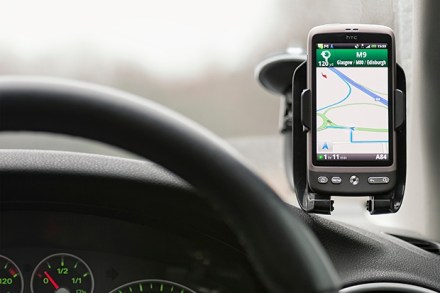
In many ways a satnav is a miraculous device. A network of US military satellites more than 10,000 miles above the surface of the Earth, each broadcasting a signal with little more power than a 100-watt light bulb, allows a device in your satnav or mobile phone to triangulate your location on the ground to within seven yards or so. The system is so finely tuned that the clocks aboard the satellites must be calibrated to run 38 microseconds a day slower than Earth time to correct for the effects of general and special relativity. This allows your phone to know your location and, after factoring in real-time traffic information, to calculate the quickest route to any destination with an astonishing degree of precision.

What’s the point of the driverless car?

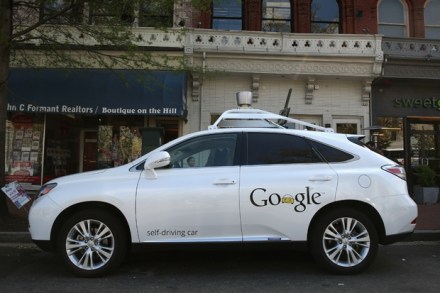
A first last week: a Google driverless car in autonomous mode was partly at fault in a collision, interestingly one involving a bus. The car was merging into a lane of faster-moving traffic to dodge a pile of sandbags in a collapsed drain and nudged in ahead of the bus on the assumption that its driver would give way. He didn’t. I suspect this may be a failure of social intelligence. Human drivers, for all their faults, can intuitively read the behaviour of other road users very well. We instinctively know that bus drivers are less likely to give way than car drivers. Understanding humans is always going to be easier when you know what it’s like to be one: in reading human emotions, even the best technology still lags far behind the typical domestic dog.

The 5 per cent of people who get to decide everything

What happens when 95 per cent of people like something, but 5 per cent of people prefer something else? You might think natural democracy would prevail: that the 5 per cent would acquiesce and go along with the taste of the majority. Not necessarily. In many cultural settings, it is common for a small, intransigent minority to beat a much larger, tolerant majority. If you’re hosting a dinner party, for instance, all it takes is one git with a spurious ‘fenugreek intolerance’ to veto your best lamb curry. You might call this ‘the asymmetry of tolerance’, where certain social systems end up calibrated to suit their most inflexible component.

Tax me more, but don’t touch my dishwasher

There was a big fuss a year or so ago about a book by a French chap called Piketty about wealth inequality. He suggested capitalism, aside from an anomalous period between 1930 and 1979, inexorably concentrated wealth at the top. One interesting defence of inequality is that the rich, by adopting technologies early, redistribute far more of their wealth than we realise by funding R&D and innovation. The first people to pay top dollar for a flat-screen TV or a dishwasher are unwittingly subsidising their wider adoption. As Hayek observed of early adopters of technology: ‘We depend on them, for they finance the invention and reinvention of products whose cost falls to a point where we can afford them’. When Hayek was writing in 1960 this was inarguably true.

The power of painless payment

I am one of those annoying, mildly claustrophobic people who sit at the end of a row in cinemas. There are plenty of things in life — films, plays, social events — which I can only fully enjoy knowing I can make a sharp exit at any time. It’s not that I leave: I just like to know I can. My idea of hell is a party on a boat. So I am rather enamoured with the new mobile-phone app Qkr, which lets you pay with your phone in some restaurants without waiting for the bill. It’s the honest man’s version of ‘doing a runner’. You check in on your phone, give a four-digit code to the waiter or waitress, and then you are free to order extra items and settle up on your screen.

Q: What is a good school? A: One that other people like

A few months ago I received a call from someone running a small private school near New York. They believed their school was objectively better than a larger, more famous establishment nearby, but had more difficulty attracting pupils. What should they do? This is not easy. You see, however skilled your teachers are, what really makes a good school is often simply having a reputation for being good. When parents choose a school for their children, much as they pretend otherwise, they are not really choosing a school so much as buying a peer group for their offspring (and, to some extent, for themselves).

Things we don’t mind paying for

Here’s a challenge for film buffs: can anyone remember, from the entire canon of cinema and television, a single scene set in an underground car park in which something unpleasant or nefarious did not occur? Yet I still rather like them. By far the best car park in London is the one found underneath Bloomsbury Square, which is in the shape of a double-helix. This allows you to drive all the way down and all the way up again with your steering wheel in one position. About once a year I park in the Mayfair car park at the bottom of Park Lane. I recently noticed that an annual season ticket for the car park is £3,900, which, provided you are happy to sleep in your car and wash in the nearby public toilets, makes it something of a bargain for central London property.

Why the greatest innovations do only one thing, but do it well

McDonald’s got rid of cutlery. Uber does not allow you to pre-book taxis. Amazon began by selling only books. Conventional logic would suggest that successful innovations are best when they allow you to do lots of things. Actually, if you want your innovation to change behaviour, it is often best to launch an innovation which does only one thing. It is much easier to adopt a new technology if its function is unambiguous. The device solves one simple problem, and solves it very well. If X then Y. I have never had much luck with multi-purpose kitchen devices. Although theoretically they have a plethora of different uses, their application is so vague that you end up not using them at all. You may have a microwave which also contains a grill function. Have you used it more than twice?

The other side to the division of labour: the concentration of attention

Adam Smith’s theory on the division of labour first appeared in 1776 in The Wealth of Nations. The idea was later revived by The Coasters in their early 1960s B-side ‘My Baby Comes to Me’. Well, she go to see the baker when she wants some cake She go to see the butcher when she wants a steak She go to see the doctor when she’s got a cold She go to see the gypsy when she wants her fortune told But when she wants good loving my baby comes to me When she wants good loving my baby comes to me. As Mr McClinton explains, rather than dividing his efforts between the supply of cake and fortune-telling, the baker is better off concentrating on the former.

Does HS2 pass the Butterfield test?

Despite my opposition to High Speed 2, I am quite a big fan of HS1, the line which runs from St Pancras to Ebbsfleet, Ashford and on to other towns in north and east Kent. I also think HS3 — a proposed line linking the cities of t’Northern Powerhouse — is a good idea. Why the inconsistency? Well, I believe HS1 and HS3 are significant innovations whereas HS2, though it costs far more and covers a much greater distance, is not. In fact I would argue, counterintuitively, that HS2’s greater length is precisely what makes high-speed rail less necessary: the cost of the longer journey means that most people do not make it very often.

Hayek was right: you can’t understand society without evolution

In December the controversial satellite TV channel ReallyTV launches its Christmas season with a flagship reality show called From Homs to Hamburg. A dozen refugees, accompanied by their families, will be given a budget of $500 and two-days’ water in a race to cross the German border using any form of transport. The prize for the winning family is a car and a two-bedroom flat in -Billstedt. The show follows the success of the US reality TV show Monterrey to Monterey,in which Mexican families compete to cross the Rio Grande by hiding in shipping -containers. Now, before you recoil in disgust, I should just point out that nothing like this programme will be appearing this Christmas, because I made the whole thing up. ReallyTV does not exist.

Spontaneous recombustion: how vapers have re-invented pipe-smoking in electronic form

A fascinating newcomer on the British high street is the vape shop. These were perfectly described by my friend Paul Craven as ‘like a cross between an Apple Store and an Elizabethan apoth-ecary’. In the splendid All About da Vape in Deal, there is a glass cabinet full of new, hi-tech ‘mods’, ‘tanks’ and ‘coils’, while on rows of shelves behind the counter is a Cambrian explosion of coloured bottles containing e-liquid in many strengths and flavours, hipsterishly labelled Suicide Bunny, Jimmy the Juice Man or Miss Pennyworth’s Elixirs; I recently bought a bottle of something called Unicorn Puke.

We let programmers run our lives. So how’s their moral code?

A few years ago, in the week before Christmas when supermarket sales are at their highest, staff at one branch of a leading British chain regularly did the rounds of local competitors’ shops buying up their entire stock of Brussels sprouts. It was, in its ethically dubious way, an interesting experiment. You might assume frustrated shoppers would merely buy all the other things on their list and then go somewhere else for their sprouts. They didn’t. As the perpetrators suspected, spending 30 minutes in a shop knowing that you’ll eventually have to make a separate trip to buy sprouts feels like wasted time — so people promptly left to find a shop where they could buy everything in one place.