The Wiki Man

All hail the new taxi-card revolution

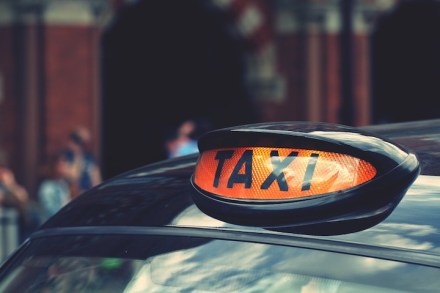
From October last year, it was compulsory for all London black cabs to accept payment by card. London cabbies aren’t always sunnily disposed towards Transport for London, but those I have spoken to since the move seem to welcome the ruling, and acknowledge that business has picked up since. There are, of course, plenty of reasons why taxi drivers preferred cash. It’s quick and does not require equipment or entail the surcharges credit card payments do; it might also be a little more, ahem, tax-efficient. Never-theless, the case for cabs accepting card payments was compelling. Uber, for fair reasons and foul, was eating into their business. From New York, there was clear evidence that passengers tipped more when paying by card. And people carry less cash than they once did.

How I learned to love the airport bus

After landing at Gatwick, the plane taxied for five minutes or so and then came to a halt in the middle of an outlying patch of tarmac. I heard the engines wind down. ‘Oh shit!’ I thought to myself. ‘It’s going to be a bus.’ Until then, I had always felt short-changed and mildly resentful when forced to take a bus to the terminal rather than being offered a proper air bridge. Then the pilot made an announcement so psychologically astute that I wanted to offer him a job. ‘I’ve got some bad news and some good news,’ he said. ‘The bad news is that another aircraft is blocking our arrival gate, so it’ll have to be a bus.

Technology and the winner-takes-all effect

I was exchanging emails with someone the other day and signed off with the sentence ‘let me know when you are next in London’ or words to that effect. It then occurred to me that I had absolutely no idea where in the world my correspondent lived. This interested me. Because it occurred to me that I could write the sentence ‘next time you are in London’ to more or less anyone in the world without it sounding ridiculous. Of how many other cities is that true? New York, certainly. But then it gets difficult. Paris or Singapore? Well, at a pinch. It wouldn’t work for Perpignan, say, or Bourton-on-the-Water.

Thank God for overpriced lawyers!

When you buy a house in Britain, there is an extensive and well-established series of checks you must perform to ensure the property is suitable for habitation. When undertaking a survey, you should ensure that the boundaries of the property conform to those recorded at the Land Registry, and that the property does not lie on a flood plain or risk structural damage from coastal erosion or subsidence. Unfortunately, there seems to be no mechanism to protect householders from the worst possible eventuality — which is to find out that you have a lawyer living next door.

My alarm call for GPs

A few months ago I was stuck in traffic on my way to give a talk at the Royal College of General Practitioners. I thought of phoning the venue to warn them I’d be late, but decided they’d probably just tell me to call back at 8 a.m. the following morning. When did that whole thing start? It’s now routine for GPs’ surgeries to make you phone first thing, and to book appointments for that day only. In my view, it overlooks the Law of Unintended Consequences. While it might help the surgery meet some bureaucratic ‘responsivity target’, it may also have the unfortunate psychological side effect of encouraging unnecessary bookings. Let me explain this issue by describing the trajectory of most illnesses. Day 1. ‘Ooooh, I don’t feel very well.

Vinyl madness

I was at home enjoying an online episode of Tales of the Texas Rangers when my daughter interrupted me, wanting something on Amazon. Just to explain, Tales of the Texas Rangers was a 1950s NBC radio series featuring Joel McCrea as Ranger Jayce Pearson. There are 90 half-hour episodes available online. Once you tire of binge-listening to these, there are perhaps 200 more episodes of Dragnet and about 400 of Gunsmoke to choose from, the latter featuring the voice of William Conrad (detective Frank Cannon to anyone my age) as Marshal Matt Dillon. Yes, I realise it’s a bit weird using a fibre-optic broadband connection to listen to 1950s radio, but not half as strange as my daughter’s request. You see, she wanted me to buy her a record.

Making work for ourselves

In 1929 John Maynard Keynes predicted that by 2029 people in the developed nations could enjoy a perfectly civilised standard of living while working for 16 hours a week. His hope was for our precious hours of extra leisure to be devoted to such edifying pursuits as playing Grand Theft Auto and watching kittens skateboarding on YouTube. (Actually he didn’t predict that bit — he suggested we’d be listening to string quartets and attending poetry recitals but, hey, that was the Bloomsbury Group for you.) Today, however, not only has the work week stayed constant but, in direct contradiction of the theory, the better-paid now work disproportionately longer hours.

Keep death off the roads with an app

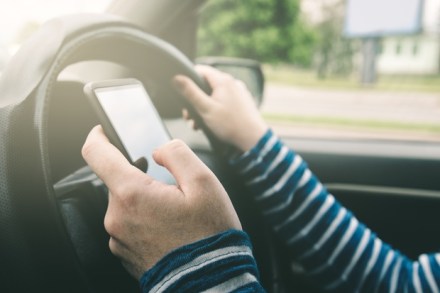
Controversial I know, but I feel a little sympathy for Tomasz Kroker, the lorry driver jailed for ten years for causing death by dangerous driving; distracted by his mobile phone, he killed four members of the same family on the A34 by failing to notice that the traffic ahead had stopped. I don’t mean to say that he was not grievously at fault. First of all, he was using the phone in his hand. This is a doubly dangerous thing to do. Since you cannot brake fully until you have both hands braced on the wheel, the act of unhanding your phone adds around a second to your reaction time; add to this the additional delay caused by divided attention and you are outside the margin of error for driving at speed.

The rich aren’t so different any more

The traditional orange at the bottom of a Christmas stocking dates to a time when this was the only orange a child might receive all year. Earlier, in the 17th century, a single pineapple might cost the equivalent of £5,000 today; like pepper in the Middle Ages, pineapple ownership was confined to royalty and the super-rich. Yet last week I spoke to someone who had worked in a food-waste processing plant. She said their worst nightmare was when one of the supermarket chains offered two-for-one on pineapples; so many people would throw away their unwanted second pineapple that the extra acidity played havoc with the chemical workings of the plant. Because it’s Christmas, I thought it might be time to reflect on some good news.

Scandals that make you switch off

Do any of us honestly have any idea how serious the Hillary Clinton email scandal was? I haven’t got a clue. Her actions could have been a neglectful oversight or a heinous criminal act. We don’t know. Clinton was an avid BlackBerry user and, on becoming secretary of state, claimed she didn’t know how to handle email on the desktop computer the government provided. When the National Security Agency was unable to find a secure way of sending classified information via her BlackBerry, Hillary simply continued using it, along with the old email address and server she had used while out of office. She never had an @state.gov email address: you emailed hdr22@clinton-email.com.

How the left wastes its energy

There are only three infallible rules in advertising. Be distinctive. Make a lot of noise. And try to feature a cute animal somewhere. Had Donald Trump followed my advice and bought a springer spaniel he would have won California. For a man with such tiny hands to be elected to the world’s highest office, I think we can all agree, is a tragic loss to proctology. But it is also a remarkable lesson in how to play the media. Hillary had $2 billion to spend; what Trump miraculously found was that with each outburst of political Tourette’s, he got more airtime than her, and for free. So eager were the mainstream and social media to express their horrified disdain for his latest outrage that they were effectively donating to his campaign.

How to carry less baggage

One fairly reliable rule of thumb is ‘never buy anything at an airport if you can help it’. Something about the peculiar atmosphere of airports makes people act in strange ways. I used to find myself buying plug adapters simply because they were a slightly different colour from the ones I already had in my bag. Other people seem strangely eager to buy giant Toblerones.-Lufthansa once even asked scientists to investigate why in airport-lounges and on aircraft, people became far more disposed to drink tomato juice than anywhere else. Finally, and most baffling of all, who the hell buys luggage airside? Buying a suitcase before you go through security might make sense (perhaps your bag has burst on the way to the airport, or you decide you want to repack before you check in).

Cruel boy errors

Perhaps you are slightly concerned about your son. At present he is sitting in the crawlspace beneath your home wearing a clown costume, gleefully pulling the legs from crane flies and waiting for the cover of darkness so he can set light to your neighbours’ sheds. Well, no need to worry. You see, 50 years ago the only possible future for people like this lay in becoming a serial killer or, failing that, joining the secret police in a brutal dictatorship. But now, thanks to the wonders of technology, there are almost limitless openings for people of a sadistic disposition. To date the most prized job for the aspiring young sociopath has been designing the user interface for the ticket machines at railway stations.

Let there be light, and at better times of day

We already drive on the left, give road distances in miles and drink pints. So one good feature of Brexit is that Britain will be able to develop a whole series of exciting new idiosyncrasies to annoy continental Europeans. For instance, I am planning to bring a private petition to Parliament demanding that Britain formally adopt the UK tabloid approach to metrication, where all low temperatures are reported in Celsius and highs in Fahrenheit. A colleague of mine, Pete Dyson, has an idea that might raise the eyebrows of our continental chums. He points out to me that the EU sanctioned dates on which we change our clocks for daylight saving time are holding us back. Pete is a human geographer, so he should know, but just to be sure I checked with my brother who is a bona fide astronomer.

The stupidest target in British transport

Two books to recommend to my fellow transportation nerds: Travel Fast or Smart? A Manifesto for an Intelligent Transport Policy by David Metz, formerly chief boffin at the Department for Transport; and Are Trams Socialist? Why Britain Has No Transport Policy by Christian Wolmar. The first is excellent throughout, the second is excellent right up to the final pages when, as many British transport commentators are liable to do, Wolmar rhapsodises about European approaches to city planning with their ‘bicycle superhighways’ and, yes, those bloody trams. You know the kind of thing: ‘In the Norwegian port of Slartibartfast, all cars are banned from the city centre before midnight, and the high street has been converted into an organic kale farm.

Watch out for Chesterton’s fences

There exists in such a case a certain institution or law; let us say, for the sake of simplicity, a fence or gate erected across a road. The more modern type of reformer goes gaily up to it and says, ‘I don’t see the use of this; let us clear it away.’ To which the more intelligent type of reformer will do well to answer: ‘If you don’t see the use of it, I certainly won’t let you clear it away. Go away and think. Then, when you can come back and tell me that you do see the use of it, I may allow you to destroy it.’ The above paragraph is from G.K. Chesterton’s 1929 defence of Catholicism titled The Thing.

The internet of stupid things

Back in the 1980s a colleague of mine was paranoid about being burgled. Before he went away on a two-week holiday, he bought the most expensive telephone answering-machine he could find and installed it in plain view on his hall table. Each morning he phoned it from Spain and hung up once he heard the outgoing message. He’d then enjoy the rest of the day content in the knowledge that his flat was safe; if no one had stolen his absurdly flashy answering machine, he reasoned, they wouldn’t have stolen anything else. Today he could buy a Canary. These cost about £139 (the website’s canary.is) and let you view your own hallway in glorious HD from anywhere in the world.

When more data makes you more wrong

In a one-day international against Australia last year, Ben Stokes was dismissed for ‘obstructing the field’, a rule rarely invoked in-cricket. The bowler had thrown the ball towards the wicket (and hence near Stokes’s head) in an attempt to run him out. Stokes raised his hand and deflected the ball. After some discussion between the two on-field umpires, and a referral to the third umpire, Stokes was given out. What was most interesting was the difference in the conclusions people reached depending on whether they watched the replay in real time or in slow motion (you can find both on YouTube). Seen at speed, his raising of his hand looked nothing more than an involuntary and instinctive act of self-defence.

Aspirin should be reassuringly expensive

Last year, those rationalist killjoys at the Australian Competition and Consumer Commission prosecuted Reckitt Benckiser over four products: Nurofen Migraine Pain, Nurofen Tension Headache, Nurofen Period Pain and Nurofen Back Pain. Their gripe was that ‘each product claimed to target a specific pain, when in fact it was found that they all contained the same amount of the same active ingredient, ibuprofen lysine.’ These variants were often sold at a higher price than the basic brand, despite being pharmacologically identical. I am sure the ACCC have their chemistry right; their psychology, however, is wrong. For me, Nurofen didn’t go far enough.

We need to invent something better than Machu Picchu

Don’t know if you’ve noticed, but middle-class rules now require that every dinner party cheeseboard must contain at least two cheeses which aren’t very nice. Typically one will be a veiny French cheese which is not as good as Stilton; another may be that foreign thing with rind on it which isn’t nearly as good as Cheddar. I was baffled by this for a long time, until I realised that these cheeses are not bought to be eaten, but to signal the sophistication of the occasion. Economists might call them Veblen cheeses. (One day someone should make an inedible cheese called Veblenne. They’d make a fortune.