The Spectator's Notes

The Spectator’s Notes | 2 July 2011

It is well known that, from next year, tuition fees will rise to a maximum of £9,000 per year. It is well known that, from next year, tuition fees will rise to a maximum of £9,000 per year. What is less well known is that the loan rates, for most students, will also rise enormously. At present, the rate is 1 per cent over base rate. In future, for those students who hit the higher income threshold of £41,000 a year, it will be RPI plus 3 per cent (i.e., at present RPI, 8 per cent). This is a very high rate indeed (and with severe penalties for early repayment), so high that it is hard to understand why anyone would pay it, since the money could be borrowed more cheaply in other ways.
The Spectator’s Notes | 25 June 2011

Do think-tanks make any difference to anything? I ask because I stepped down this week after six years as chairman of the centre-right think-tank Policy Exchange. In a moving ceremony in the garden of Nick Clegg’s old school (Westminster), David Cameron marked the handing over of the reins from myself to the brilliant and witty Daniel Finkelstein of the Times. He spoke about the importance of the battle of ideas. He is right. Many of the nicest English people deplore ideology in politics, but the problem is that, if nice people have no ideology, others do not follow their example. Nasty ideology has the field to itself. This is very marked in the sphere of Islamism, in which Policy Exchange does excellent work.

The Spectator’s Notes | 18 June 2011

‘The intellect of man,’ Yeats famously wrote, ‘is forced to choose between perfection of the life, or of the work.’ Patrick Leigh Fermor, who has just died aged 96, managed to refuse this choice and achieve both. ‘The intellect of man,’ Yeats famously wrote, ‘is forced to choose between perfection of the life, or of the work.’ Patrick Leigh Fermor, who has just died aged 96, managed to refuse this choice and achieve both. He was what is now called a role model — a war hero, an intrepid traveller, a witty guest, a man with whom women fell in love, a Byronic romantic without Byron’s unkindness — but he was also a writer with the most exacting standards and unique imagination.

The Spectator’s Notes | 11 June 2011

This week, for the first time, the Union flag will fly above the Department for International Development. Gordon Brown, when Prime Minister, decreed that all public buildings should fly the flag; but DFID somehow evaded his command. When challenged about this — and about why there was no portrait of the Queen in the reception hall — by the present Secretary of State, Andrew Mitchell, officials muttered that they were a ‘very international’ department. The Queen, being the head of the Commonwealth, has a more international role than anyone else in this country, but this had somehow passed them by. Now Mitchell has ordered that the flag be flown for Prince Philip’s 90th birthday this week and that a full-length portrait of his wife be hung.

The Spectator’s Notes | 4 June 2011

It remains a risky thing to say, but is it possible that, in Libya, the West may be about to have a foreign policy success on its hands? Criticism of the Nato bombings has been based on the idea that the allies had no real knowledge of what they were doing. It remains a risky thing to say, but is it possible that, in Libya, the West may be about to have a foreign policy success on its hands? Criticism of the Nato bombings has been based on the idea that the allies had no real knowledge of what they were doing. This is not true. The targeting seems to have been accurate, and so does the intelligence about the state of the Gaddafi regime. Defectors tell us useful things. No Arab nation tries to save the dictator. He is desperately trying to buy his way out.

The Spectator’s Notes | 14 May 2011

Making a speech in Scotland at the weekend, I met scores of people who want their country to remain in the Union, but do not know what to do about it. They complain that they have no leadership. Unionism is probably still, by some way, the majority view, but it is decades since it was properly articulated. Once upon a time, it depended upon Protestantism (even after the 1945 election, Tories held most of the seats in Glasgow for this reason) and Scotland’s role in the Empire. The case has not been updated, though it could and should be. (What, after all, is modern about petty nationalism, and creating new borders?) And so Alex Salmond, by far the most able Scottish politician, has been allowed to frame the argument.

The Spectactor’s Notes

The Americans committed an extra-judicial killing this week, violating the sovereign territory of a friendly power, and reaching bin Laden’s lair because of information obtained outside legal process at Guantanamo Bay. The Americans committed an extra-judicial killing this week, violating the sovereign territory of a friendly power, and reaching bin Laden’s lair because of information obtained outside legal process at Guantanamo Bay. And a good thing too, in the circumstances. But it is fascinating how little protest there has been from the people who are usually noisiest about any infringements of international law, and of human rights as currently interpreted. This must be because the perpetrator is Barack Obama. He has behaved exactly as George W.

The Spectator’s Notes | 23 April 2011

The coalition wants to change the ‘discriminatory’ law of succession and allow any first-born daughter to ascend to the throne. The coalition wants to change the ‘discriminatory’ law of succession and allow any first-born daughter to ascend to the throne. People witlessly nod their heads at the idea that male primogeniture is an ‘anachronism’. Mr Murdoch’s Sunday Times has decided that such a change would be ‘a perfect wedding present’ for Prince William and Kate Middleton. I think they’d prefer an electric toaster. Why, after all, is primogeniture itself not an anachronism? Why is succession by blood allowed at all? Once you start asking these questions, it is hard to stop; that is what republicans intend.

The Spectator’s Notes | 16 April 2011

The justification for banning the burqa and the niqab in France surely has nothing to do with the French ‘separation of Church and State’. The justification for banning the burqa and the niqab in France surely has nothing to do with the French ‘separation of Church and State’. If it is justified — I would rather hesitantly argue that it is — it is solely because the veil hides identity. Common citizenship involves trust, and trust cannot exist where one cannot see people’s faces in public. Obviously there can be necessary functional reasons for concealment — surgical masks, beekeepers’ helmets, extremes of cold — but concealment in normal circumstances in an open society amounts to a hostile act.

The art of giving | 2 April 2011

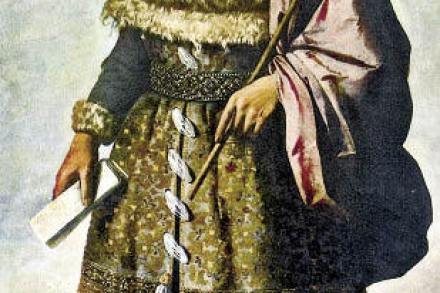
The investor Jonathan Ruffer reveals why he is spending £15 million to buy 12 great paintings from the C of E – and give them back ‘It’s the pearl of great price,’ says Jonathan Ruffer. Like the merchant in the Gospel, he is selling all that he hath. With the proceeds, he is buying the 12 Zurbaran paintings of Jacob and his Brothers at Auckland Castle, the palace of the Bishop of Durham. And when he has bought them from the Church of England, he will give them back, keeping them in the castle, thus bestowing them upon the people of the north-east in perpetuity. The price is £15 million. He believes in the Big Society and is taking a big punt on it. Ruffer, who is 59, is a very successful private client fund manager.

The Spectator’s Notes | 2 April 2011

People are right to worry about the royal wedding. The violence at the TUC anti-cuts demonstration on Saturday showed yet again that all large gatherings are now vulnerable to the malice of a few. Friends of mine walking with the marchers noticed how the people causing trouble were allowed to wear masks, and were unmolested when they attacked shops and banks, sometimes smashing them up for 15 minutes. They were often armed with fireworks loaded with coins which they threw among the police. These activities were all well-planned in advance on the internet. UK Uncut targeted specific businesses online in advance. Why should it be immune from prosecution?

The Spectator’s Notes | 26 March 2011

There is a school of thought which argues that President Obama’s reluctance to lead over Libya is a brilliant piece of presentation. There is a school of thought which argues that President Obama’s reluctance to lead over Libya is a brilliant piece of presentation. He wisely does not wish to be seen to attack yet another Muslim nation, the argument goes, but he will, in fact, do what is necessary. There is certainly sense in an American president being asked by others to help, rather than the other way round. But there are two problems. The first is that the ‘backwards into bed’ theory is not true.

The Spectator’s Notes | 19 March 2011

‘You can be young, optimistic and oppose AV’, says the magazine spiked. ‘You can be young, optimistic and oppose AV’, says the magazine spiked. I am sorry to hear it, because we anti-AV people were hoping not to be pestered by any young, optimistic people, but to oppose change in an elderly, unthinking and sullen manner. ‘Non tali auxilio!’, we cry, confident that young, optimistic people will not know what we mean. But one might feel more optimistic if one could have referendums on subjects for which there is real popular demand. The AV vote is so obviously and solely the result of a treaty between politicians that it just isn’t reasonable to ask the rest of us to interest ourselves in the details of the matter.

The Spectator’s Notes | 12 March 2011

In common with, I suspect, many of those writing most censoriously about it all, I have no idea whether the Duke of York has done anything wrong. So far, the charges against him are that he is friendly with a convicted sex offender, and that he has met Saif Gaddafi and given lunch to the son-in-law of the then president of Tunisia. The first accusation proves nothing against him, but the newspapers are trying to hint, without stating evidence, that the Prince himself may have committed sexual offences. The other accusations prove even less: the Duke is this country’s informal trade ambassador, and he met people with whom the British government happily did business, so he was performing his official role.

The Spectator’s Notes | 5 March 2011

In Jerusalem last week to interview the Prime Minister, Benjamin Netanyahu, I noticed several changes since my last visit 15 years ago. The first is that Israel is now quite rich. It even has its own gas and shale oil, prompting Netanyahu to tell me that he is being forced to revise his view that Moses, for all his heroic virtues, had been a ‘bad navigator’ in finding the only place in the Middle East with no natural resources. Israel used to be socialist — democratic, of course, but almost Soviet in its collectivist austerity. Today, the annual growth rate is nearly 8 per cent, even the West Bank looks smarter, and the wine, which used to be undrinkable and served in thimbles, is delicious. But the precariousness never goes away for long.

The Spectator’s Notes | 12 February 2011

David Cameron’s bold speech in Munich last Saturday has been somewhat misrepresented as a call to British Muslims to drive out their own extremists. David Cameron’s bold speech in Munich last Saturday has been somewhat misrepresented as a call to British Muslims to drive out their own extremists. It was really directed at his own bureaucracy and even (though he did not say this) at some in his own party. He is exasperated that administrative efforts to isolate violent Islamist extremists so often end up empowering non-violent ones, thus creating the mental conditions for the very horrors which they are trying to avert. His speech will need a huge amount of follow-up. An early test emerges in parliament, rather than Whitehall.

The Spectator’s Notes | 5 February 2011

Last week, I was airing to a sceptical Cabinet minister this column’s moan (see Notes, 4 December) that the BBC is so obsessed with the Israel/Palestine question that it ignores what is happening in the rest of the Muslim world. Last week, I was airing to a sceptical Cabinet minister this column’s moan (see Notes, 4 December) that the BBC is so obsessed with the Israel/Palestine question that it ignores what is happening in the rest of the Muslim world. ‘Why,’ I complained, ‘does it tell us so little about the state of Egypt?’ I was more to the point than I knew. On leaving the meeting, I heard that trouble had started in Cairo.

The Spectator’s Notes | 29 January 2011

The departure of Andy Coulson exposes a weakness in this government’s management of the media. The departure of Andy Coulson exposes a weakness in this government’s management of the media. Coulson was very good at sitting in on meetings of clever advisers and ministers and subjecting their ideas to the simple test of ‘How will this play with voters?’ His plain common sense is now absent. But even Coulson was not particularly suited to the much-maligned but essential art of ‘spin’. Because of the Blair and Brown years, this is now seen as the same as lying. It is true that lying has too often been involved, but the essential point is not dishonest.

The Spectator’s Notes | 22 January 2011

To interview people for my biography of Lady Thatcher, I often go the House of Lords, where many of the best witnesses lurk. Recently, the place has become so crowded that queues form at the Peers’ Entrance and mobs of petitioners are kettled beside the coat-racks. The reason is that New Labour created more peers than any government since Lloyd George, so the coalition felt it had to balance the numbers. As controversial legislation, such as the Alternative Vote referendum, is debated, three-line whips have become frequent. This week, we had the great sleep-in. The place is an ermine slum. Now reformers are saying that it is disgraceful that some peers do not attend the House much. But why should they?

The Spectator’s Notes | 15 January 2011

The question of what is art vexes the tax authorities as well as philosophers. Last month, the Art Newspaper reported the latest twist in a wonderful, long-running row. The European Commission has decided that two pieces of installation art — ‘Hall of Whispers’ by Bill Viola, and ‘Six Alternating Cool White/Warm White Fluorescent Lights/Vertical and Centred’ by Dan Flavin are not, after all, works of art. The first is classified as ‘DVD players and projectors’ and the second as ‘light fittings’. This makes them liable not for the 5 per cent VAT rate that applies to art sales, but the standard rate — now 20 per cent. In this month’s issue, the Art Newspaper campaigns vigorously for a reversal.