Television

Riveting and heart-wrenching: BBC1’s Time reviewed

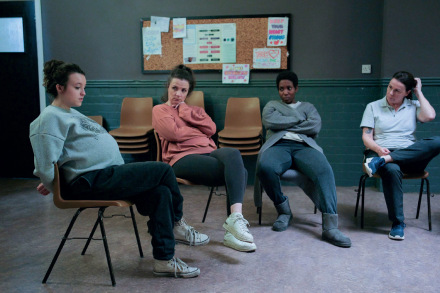
‘Only with women’ is a phrase used by more cynical TV types for a show that takes something that’s been done before with men, but by changing the gender of the characters can pose as ground-breaking. It sprang to mind this week when both of BBC1’s big new dramas unblushingly took the only-with-women approach; the problem for the cynics being that the programmes themselves are rather good. Or, in the case of Time, overwhelmingly so. Jimmy McGovern’s original 2021 series – a heart-wrenchingly effective portrait of life in a male prison – deservedly won a Bafta. Now he’s back to give us a heart-wrenchingly effective portrait of life in a female one.
Surprisingly addictive and heartwarming: Netflix’s Beckham reviewed

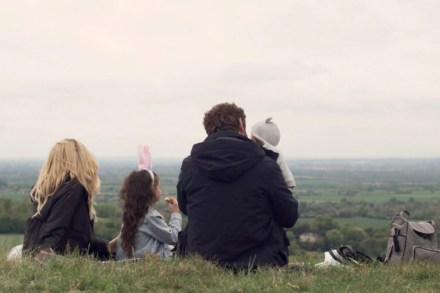
If you’re not remotely interested in football or celebrity, I recommend Netflix’s four-part documentary series Beckham. Yes, I know it’s about a famous footballer who happens also to be a celebrity and who, furthermore, is married to the famous model/celebrity/whatever who used to be in the world’s most famous girl band, the Spice Girls. But trust me, you’re going to be hooked. One of the things that hooked me was the way it enables you to play catch-up on all the David and Victoria Beckham stories you pointedly ignored during the past three decades because, damn it, that pair were quite overexposed enough already without needing any of your attention wasted on whatever nonsense they’d got up to lately – Beckham’s goal, for example.

Only goodwill will get you through this reboot: Paramount+’s Frasier reviewed

Remember the groans of dismay, possibly including your own, which greeted John Cleese’s announcement in February that he was reviving Fawlty Towers? Happily, there appears to be much more goodwill behind the return of Frasier – the bad news being that, judging from the first three episodes, it might well need it. Kelsey Grammer’s entrance – 39 years after Frasier Crane showed up in Cheers – received a huge audience ovation. All references, however straightforward, to his earlier incarnations got a guaranteed laugh. Nonetheless, for those of us desperately hoping the new series won’t be a letdown, the result so far has required an increasingly effortful keeping of the faith.

I watched it so that you didn’t have to: ITV2’s Big Brother reviewed

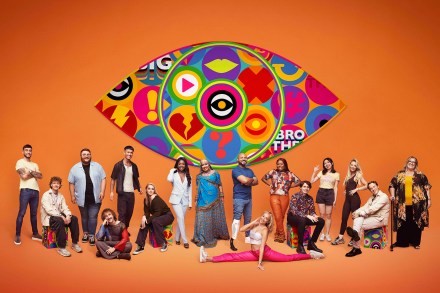
Big Brother is Nineteen Eighty-Four rewritten by Aldous Huxley. The detail that George Orwell got wrong is that far from being terrified and brainwashed into submission by Big Brother, the populace would embrace the all-seeing eye as their route to fame, prosperity and freedom. Some of the populace, at any rate. We met 16 of them – there were 30,000 applicants, allegedly – on ITV on Sunday night, mugging and pratting around and enjoying their newfound semi-celebrity en route to entering the new-look Big Brother house, vying to win a £100,000 prize and, presumably, a career in minor-league showbiz by abasing and humiliating themselves in public. Into monopede DJs with disco lights on their false leg?

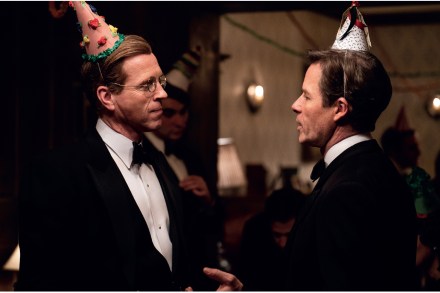
Shocking: Channel 4’s Partygate reviewed

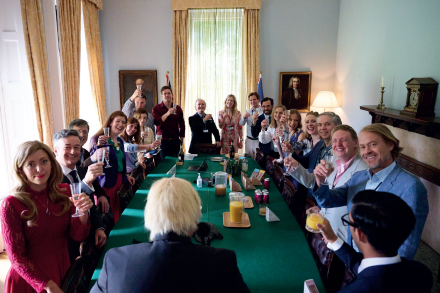
If there were special awards for Most Subtlety in a Television Drama, Tuesday’s Partygate would be unlikely to win one. You could also argue that, in contrast to most of its characters, it didn’t really bring much to the party. And yet, in a rare challenge to the law of diminishing returns, the more it pounded away with its sledgehammer, the more effective it became. Despite the programme’s commitment to a thoroughly researched veracity that extended to the use of on-screen footnotes, the framework for the pounding was supplied by two fictional characters. Grace Greenwood (Georgie Henley) was a shining-eyed true Johnson believer from Darlington, who couldn’t believe her luck at ending up with the cool kids in No. 10.

Arresting visual spectacle and superb fight scenes: Netflix’s One Piece reviewed

What would you say is the most successful comic-book series in history? If you’re thinking Tintin you’re not even close. (Curiously enough, even the now largely forgotten Lucky Luke scores higher.) If you’re thinking Peanuts, you’re getting warmer. And if you named Asterix, good try but that’s only number two. No, the hands-down winner, with total sales exceeding 516 million, is a Japanese manga called One Piece. One Piece? Me neither. It’s quite unusual these days to chance upon a massive cultural phenomenon – the series has been going since 1997, with 1,093 chapters so far – of which one has never once even heard. But this, I suspect, will be the experience of most viewers approaching the Netflix adaptation.

A Picasso doc that – amazingly – focuses on how great he was

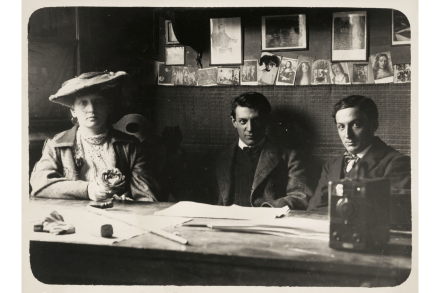
Earlier this year, the Guardian took a break from arguing that ‘cancel culture’ is a right-wing myth to ask the question, ‘Should we cancel Picasso?’ He is, after all, ‘the ultimate example of problematic white guys clogging up the artistic canon’. Given the programme’s title – and the BBC’s increasing loss of nerve – you could be forgiven for thinking Picasso: The Beauty and the Beast was bound to get bogged down in the same tedious and apparently non-mythical 2020s obsessions. Instead, Thursday’s first episode of three proved gratifyingly deft at dealing with them.

Why I’m addicted to Australian MasterChef

Why is Australian MasterChef so much better than the English version? You’d think, with a population less than a third of ours, the smaller talent pool would make the Antipodean edition look like thin gruel. But a bit like with the cricket and the rugby, size clearly isn’t everything. UK MasterChef now resembles one of those joyless austerity dishes you cobble together from crusty leftovers you found languishing in the fridge. But the Aussie one has had my entire family addicted and yearning for more for the past fortnight. I suppose it’s partly down to the way Australia sees itself.

Subtle, psychologically twisty drama: BBC3’s Bad Behaviour reviewed

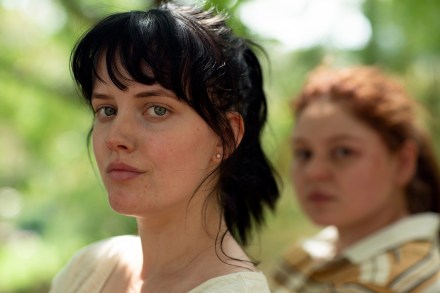
Bad Behaviour is a decidedly solemn new Australian drama series with plenty to be solemn about. It was billed in Radio Times as ‘slow-burning’ – which feels a little tactless, given that the opening scene featured a girl in a boarding-school dormitory setting herself on fire (and burning quite quickly). We then cut to the same girl, Alice, ten years later looking surprisingly well as she gave a cello performance in a venue where the catering staff included a fellow ex-pupil called Jo, who greeted her warmly. Perhaps understandably, though, Alice was reluctant to reminisce about the old days at Silver Creek.

Enthralling: BBC4’s Colosseum reviewed

In the year 2023, the Neo-Roman Empire was at the height of its powers. A potentially restive populace was kept in check using a time-honoured technique known as ‘Bread and Circuses’. The ‘Circuses’ part consisted of a remarkable piece of technology in which spectacles could be beamed directly into the homes of the citizenry, filling them with awe, wonder, gratitude and a sense of their insignificance in the sweep of history.

Bags of charm and a gripping plot: Netflix’s The Chosen One reviewed

Some years ago, Mark Millar (the creator of Kick-Ass, Kingsman, etc.) hit on yet another brilliant conceit for one of his comic-book stories: a three-part series based on the premise that Bible-believing Christians are right, that the Antichrist walks among us and that only the second coming will save us – eventually – from the horrors depicted in Revelation. Since the late 1960s, screenwriters have tended to give the devil all the best tunes ‘I have nothing but happy memories of growing up as a Catholic, and I wanted to do a book about faith that was both intelligent and respectful,’ said Millar. ‘If we can do a thoughtful take on Batman surely we can do the same with Jesus?

Much of the mysteriousness is inadvertent: ITV’s The Reunion reviewed

The Reunion opened in 1997 with some young people being carefree: a fact they obligingly signalled by zipping around the South of France helmetless on motorcycles while laughing a lot. Love appeared to be in the air as well – given that they consisted of two couples: the men in charge of driving (different times), the girls holding them tightly around the waist. But then matters took a darker turn as a voice-over intoned that ‘memory is a false friend’ and we sometimes ‘create our own truth’. And with that, we cut to present-day London where, despite its taste for banalities, the voice-over turned out to belong to a respected author called Thomas Degalais – duly seen signing books for a queue of grateful fans.

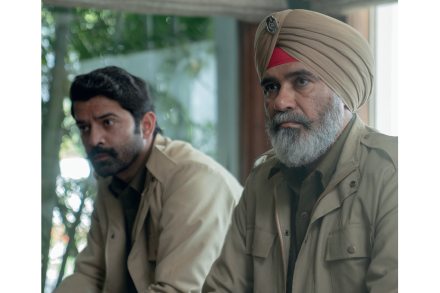
A welcome antidote to UK crime drama: Netflix’s Kohrra reviewed

It has been quite some time since I’ve been able to bear watching UK crime drama. All right, I do cheat occasionally with series like the one featuring the delightfully grumpy, chain-smoking Cormoran Strike, but on the whole I can’t stand the mix of predictability and implausibility: all the goodies will be female and/or ethnic; the murderer will always be white, middle class and male; no one ever gets arrested for misgendering someone on Twitter because in the parallel universe of cop TV the police still actually think it’s their job to solve crimes. So, your options are either to watch classic episodes of The Sweeney or to find a cop series from one of those countries where the old values still prevail. India, for example.

University Challenge deserves Amol Rajan

I wish I could say that Bamber Gascoigne would be turning in his grave at what has happened to University Challenge. But unfortunately, I understand from people who knew the Eton, Cambridge, Yale and Grenadier Guards historian, playwright, critic, polymath millionaire and scion of the upper classes that he chose to compensate for his privilege by embracing progressive causes. So, chances are, the shade of Bamber is thrilled to bits at seeing his old quizmaster’s seat occupied by someone who drops his aitches and pronounces ‘h’ where it should be aspirated and landed a mere 2.2 from hearty, insufficiently medieval Downing. Bambi’s successor Jeremy Paxman probably isn’t too bothered either.

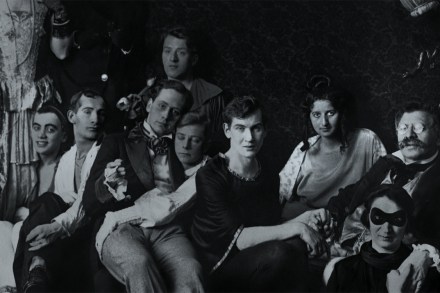
Historically dishonest: Netflix’s Eldorado – Everything the Nazis Hate reviewed

If you don’t subscribe to every last detail of the LGBTQ+ agenda, then basically you are a Nazi. This was the subtle message of Eldorado, a documentary that pretended to inform us about the real-life background sexual milieu to Cabaret and Babylon Berlin, but was really much more interested in promoting its political view that Weimar Germany with its sexual promiscuity, rampant drug use and anything-goes view on ‘gender’ represented some kind of paradise on Earth which we should seek to emulate. A voice-over told us what to think: ‘They feel intimidated by this rapid change. The pace of change is a source of frustration to just about everybody. If you’re a radical, then change is happening much too slowly for you.

Too in thrall to today’s dogmas: ITV1’s A Spy Among Friends reviewed

In 2014, Ben Macintyre presented a BBC2 documentary based on his book A Spy Among Friends: Kim Philby and the Great Betrayal. The programme managed to shed new light on a familiar but still irresistible story by concentrating on Philby’s relationship with his old chum – and fellow Cambridge man – Nicholas Elliott. Elliott was sent in 1963 by the Secret Intelligence Service (SIS) to question Philby in Beirut where Philby had become the Observer’s foreign correspondent after a long and successful career betraying his countrymen to the Soviets. Elliott did elicit some sort of confession, but a few days later, Philby absconded to Moscow.

Ugly, mechanical, soulless: Apple TV+’s Hijack reviewed

Idris Elba would have made a perfect James Bond. Not the James Bond that we knew and loved when he was played by wry, capable Sean Connery or playful, tongue-in-cheek Roger Moore. But he definitely ought to have been a shoo-in for the horror show that the Bond franchise has become: dour, humourless, pumped up, ponderous, portentous, joyless… In his latest vehicle, Elba plays high-level negotiator Sam Nelson, an ordinary man yet possessed of a very particular set of skills.

Time to take your meds, Kanye

No one does agonising quite like Mobeen Azhar. In several BBC documentaries now, he’s set his face to pensive, gone off on an earnest quest to investigate a touchy subject and reached his conclusions only after the most extravagant of brow-furrowing. There is, however, a perhaps unexpected twist: the resulting programmes are rather good, creating the impression – or even reflecting the reality – of a man determined to get to the often dark heart of the matter. For a while, it did look as if the programme’s main appeal might be as a comedy of liberal discomfiture In the past, Azhar has applied his methods to such issues as the long-standing effect of the Satanic Verses controversy and why British Muslims joined Isis.

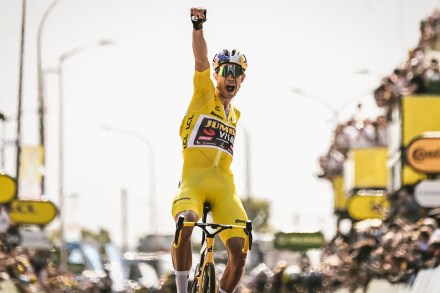
Netflix has struck gold: Tour de France: Unchained reviewed

I’m ideologically opposed to bicycles for all the obvious reasons: they don’t have lovely big nostrils which you can blow across gently or stroke inside to feel the soft, delicate skin; they can’t jump hedges; and the kit you’re expected to wear on them is quite hideous – not a smart, black, 18th-century-looking coat but vile, garish, deeply unflattering and unsexy Lycra. Still, after watching a few episodes of Tour de France: Unchained, I’ve softened my position slightly. Say what you like about those infuriating, car-impeding, road-hogging cyclists but the ones who participate in the big international races don’t half have some balls. (Three actually, if the stories I hear about the effects of those uncomfy saddles are correct.

One of the best (if not the jolliest) TV dramas of 2023: BBC1’s Best Interests reviewed

In the opening minutes of Best Interests (Monday and Tuesday), an estranged middle-aged couple made their separate ways to court, pausing outside it to look at each other with a mixture of furious reproach and overwhelming regret. From there we cut to a scene that perhaps overdid the evocation of Happier Times as the same pair laughed endlessly together on a train, before nipping off to the toilet for a spot of giggly conjugal naughtiness. Once they got home and picked up their two daughters from a neighbour, they soon showed what terrific and loving parents they were too – not least to 11-year-old Marnie, whose muscular dystrophy meant she needed especial care.