Television

Was Carrie Fisher really ‘a genius’?

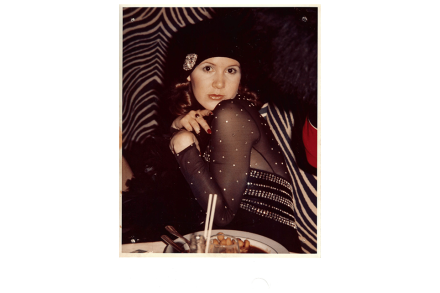
‘People throw the word “genius” around a lot,’ said a talking head on BBC2 this week, ‘but she was a genius, truly.’ If it wasn’t for the heading on this column, I suspect it might have taken you a while to guess the unquestionable genius being referred to here. But then again, for Carrie Fisher: A Life in Ten Pictures, considered analysis and fear of hyperbole would only have got in the way. Not that this prevented the programme from being inadvertently revealing. Granted, if you wanted to know the full story of Fisher’s life – including the fact that she married Paul Simon – you’d have been better off with Wikipedia.

Lavish, graphically violent swashbuckling: Disney+’s Shogun reviewed

Here’s a frightening thought for those of you who remember the original Shogun (1980), starring Richard Chamberlain as the Elizabethan navigator who ends up playing kingmaker amid the power struggles in the Japan of 1600. We are now further away in time from that series than that series was from the beginning of the second world war. And yet it feels almost like yesterday when we gathered with our parents in front of our tellies with their bulbous backs and no remote controls to watch Chamberlain in his natty kimonos grappling with Japanese culture. TV was so much more of a family affair in those days, with blockbuster mini-series  – Roots, Jesus of Nazareth, The Thorn Birds etc – garnering ratings which, in our fragmented modern culture, would be impossible.

Workmanlike romp: Sky Atlantic’s Mary & George reviewed

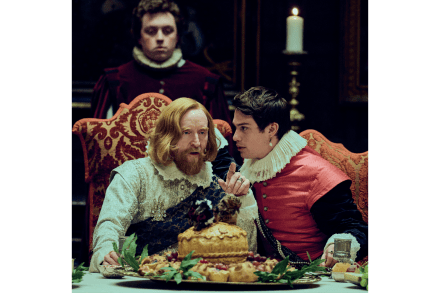
If there’s such a thing as a workmanlike romp, then Mary & George might be one. This drama about political and sexual shenanigans during the reign of James I certainly has all the scheming, racy dialogue and nudity that any romp-lover could wish for. At the same time, there’s the slightly awkward sense that it’s harbouring a guilty secret: it wants to be taken seriously as history and thinks it has some important things to say about class, gender and sexuality in 17th-century England and beyond. As a result, the naughty stuff – while definitely naughty – occasionally feels rather dutiful, and the playfulness somehow rather solemn.

A turkey: Netflix’s Avatar – The Last Airbender reviewed

Blimey, Avatar: The Last Airbender is a load of tripe. And I really didn’t want it to be. There’s nothing I like more than trawling the networks for exciting new cultural phenomena from the burgeoning, weird oriental TV market – such as Squid Game and One Piece – and bringing it to your attention. Perhaps it fails because, while based on a hugely popular echt Japanese anime series, this is made by Americans. Whatever the case this much-heralded fantasy offering (no relation of the James Cameron Dances With Smurfs movies) is a turkey. The premise is enticing. It’s set in a world divided into competing tribes – Earth, Air, Fire and Water – who co-habited in strained harmony till the aggressive Fire Nation got out of hand, wiped out most of their rivals and took control.

A neat fantasy that asks why Britons don’t revolt: BBC1’s The Way reviewed 

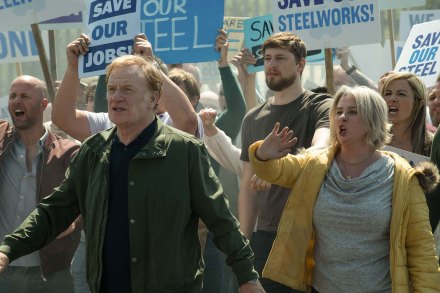
‘The British don’t revolt, they grumble,’ said someone in the first episode of The Way. But what if we ever reversed this policy? That was the question posed by a drama that’s clearly a passion project for its director, Michael Sheen – and therefore set in Wales. More specifically, The Way takes place in Port Talbot, the south Welsh town in which Sheen grew up and to which he moved back a few years ago, unexpectedly preferring it to LA. Or at least it takes place in a version of Port Talbot – because, perhaps necessarily for a show about a British revolution, there are hefty elements of the dream-like amid the realism.

Evocative and immaculate: Netflix’s One Day reviewed

One Day is a bestselling novel with a simple but effective premise: a delightful, made-for-each-other couple meet on their last day at university, narrowly miss getting off with one another, then continue narrowly to miss getting off with one another every year for 14 years until finally, eventually they do. Actually, I’m not sure about the pay off. I never got round to reading David Nicholls’s book, nor did I catch the poorly received movie version with Anne Hathaway playing the love interest. But I’m keeping my fingers crossed and shall be very disappointed if the dénouement doesn’t deliver what the plot seems to be promising. All right, so the episodes – each set, as in the book, on the same date in successive years – are only half an hour long.

How does Larry David get away with it? Curb Your Enthusiasm reviewed

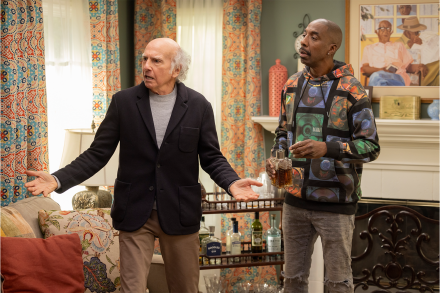
As Curb Your Enthusiasm begins its 12th and apparently final series, one key question remains: how does Larry David get away with it? While many entertainers are sent into exile for ancient tweets far less tasteless than the average episode of Curb, the show sails on – providing extended comic riffs on incest victims, Holocaust survivors and even fat women, while enjoying pretty much universal acclaim. I don’t know how Larry David gets away with it – but I’m still very grateful that he does Perhaps it helps that the jokes are funny – and that many of them are on David. You could also argue that his heartlessness about say, the bereavements of people he doesn’t know (and some that he does) is only an unusually honest version of our own.

The unique hell of being a wartime bomber pilot

Some years ago I did a short series of interviews for The Spectator with war veterans about their combat experiences. Most had found them exciting, fulfilling, even enjoyable: ‘I wouldn’t have missed it for the world!’ said infantryman Mike Peyton, who likened it to doing the black ski run at Tortin in Verbier. But the one who had nothing good to say about it was RAF bomber pilot David Hearsey. ‘All those films where you see fliers gather in the mess for a sing-song round the piano: didn’t happen in my squadron,’ he told me. ‘Our base was grim, cold and windblown. Everyone was miserable and terrified and barely socialised with anyone outside their crew. What was the point? They were all going to die sooner or later.

Highly effective slice of old-school storytelling: ITV’s Born from the Same Stranger reviewed

With its tales of close relatives reuniting after years of separation, ITV’s Long Lost Family has been reliably jerking tears since 2011. Now, from the same production company, comes Born from the Same Stranger: another thumping slice of highly effective old-school human-interest storytelling, this time served with a side order of ethical dilemmas. In the 1990s when, as the programme put it, ‘sperm donation was in its heyday’, donors did their thing in return for 50 quid and a promise of anonymity. On solid practical grounds, this seemed like a good idea at the time – and perhaps still does. But it reckoned without the deep human need to know where we’re genetically from – especially now that we appear to have decided this makes us who we are.

Gladiators was never good TV

I’m sure there’s a Portuguese word which describes ‘enforced nostalgia for a thing you never enjoyed in the first place’. Whatever it is, it applies in spades to BBC1’s reboot of Gladiators, which we’re now told was one of the landmarks of 1990s Saturday TV entertainment but which I don’t recall fondly one bit, despite having a child who would have been just the right age to enjoy it. What I do remember was the desperate contrivance of it all. The Fawn, I recall, was invited to go with our boy the Rat to write up a feature on the very first show and interview the stars. She came back traumatised.

Why has the BBC pulled its punches in this doc about the Indian super-rich?

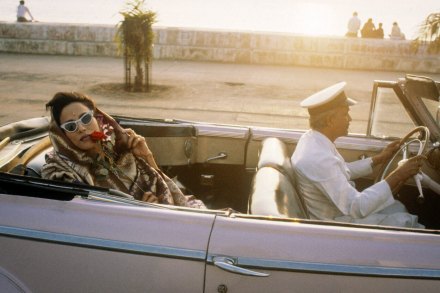
The big finish to Streets of Gold: Mumbai, an excited look at the city’s ‘wealthiest one-percenters’, was an extravagant party hosted by ‘two of India’s most coveted fashion designers’. As the programme made clear, all the guests were rich and/or famous, and all were dressed to prove it. ‘If you’re basic, you’re not invited,’ said one – which, given that the idea of the party was ‘to celebrate diversity in all its forms’ some documentaries might have considered a remark worthy of further investigation. But not Streets of Gold. As the previous hour had demonstrated, its chief characteristic – never a good one for a documentary – was a marked lack of curiosity.

CBBC’s The Famous Five shows you can update a classic without trashing it

The new Doctor in Doctor Who has blond hair, blue eyes and a firm handshake, dresses in a splendid red coat and has an exciting catchphrase: ‘Hounds are running! Tally ho!’ No, not really. The new Doctor is so very much what you’d expect the new Doctor to be like that you can guess without my telling you. And it’s not that I think that Ncuti Gatwa is going to be bad as the Doctor. On the contrary, from what little I’ve glimpsed of him so far, he seems charismatic, energetic, and fun. But I do wish the BBC commissars responsible for the series would try to make their social programming agenda a bit less insultingly obvious. Like all the best propaganda, Doctor Who is often gripping and visually enticing ‘It’s not aimed at you.

The road to the final snow-gazing scene is tortuous: Sky Max’s The Heist Before Christmas reviewed

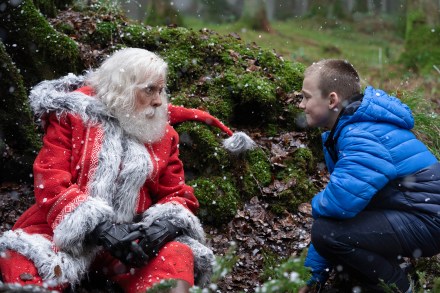
When it comes to one-off family dramas for Christmas, two things are pretty much guaranteed. They’ll begin with credits announcing a starry cast, and they’ll end with a redeemed character gazing at some falling snow as the music swells. The only tricky bit, then, is what should happen in-between. Should the redemption take place against a backdrop of vaguely gritty realism? Should plausibility be a consideration, or can the writers just rely on the magic of Christmas to get them out of any plot-related trouble? If Santa’s involved – as he so often is – should the show believe in Father Christmas? In the case of The Heist Before Christmas – set in Northern Ireland – the respective answers are ‘up to a point’, ‘I’ll get back to you on that one’ and ‘er…’.

Still the best thing on TV: Apple TV+’s Slow Horses reviewed

Slow Horses is the best thing on television. And it’s now so successful and popular it can afford to launch series three with a sequence worthy of James Bond: Istanbul location budget; spectacular chase sequences involving cars and speedboats with some thrillingly dangerous manoeuvres round a huge container vessel; a beautiful, immaculately dressed female agent meeting (spoiler alert, though to be fair you can see this one coming a mile off) a tragically sticky end. Except it’s better than Bond – not that difficult these days, it must be said – because it is missing all that grim portentousness, over-earnestness and pomposity. The cars are beaten up and gadget-free; the stunts look plausible; and the agents behave like real human beings.

Embarrassingly addictive: Channel 4’s The Couple Next Door reviewed

For years now, lots of TV thrillers have begun with a terrified woman running through some woods. But not The Couple Next Door. Instead, the first episode opened with the sight of an isolated cabin and the sound of a gunshot – and only then did a terrified woman run through some woods. Why the woman was terrified we haven’t yet learned, but we do know who she is – because in the next scene, her pre-terrified self and her partner were moving into their new house in a quiet, well-heeled Leeds cul-de-sac where every adult not mowing a lawn was washing a car. ‘Hello, suburbia,’ said her partner, perhaps unnecessarily.

‘My show is like life and death to people’: meet TalkTV’s Mike Graham

Hair combed and slicked, Mike Graham sits at his big shiny desk and waits on his cue. When his guest goes rogue backstage and starts swearing at a minion, it barely registers. He remains placid. Unruffled. It’s only his second week doing TV but Mike is in the zone. Three, two, one, zero. ‘Welcome to The Independent Republic of Mike Graham.’ He grins. ‘With you for the next three hours, of course!’ Of course. Independent Republic is a daily celebration of subversive tabloid television, beamed out on TalkTV to a dependable and swelling citizenry. Mike is the republic’s leader. During those three hours he skewers a museum for cancelling Santa, jokes about a ‘mystery eye-bleeding virus’ in France, and derides our brainless politicians.

A calculated insult to the viewer: Channel 4’s The Princes in the Tower – The New Evidence reviewed

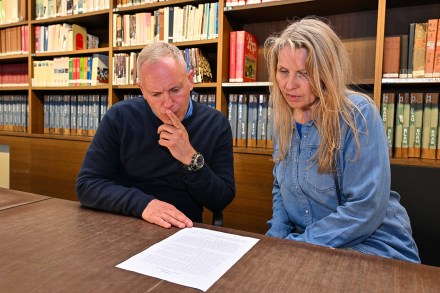
Major spoiler alert: if you don’t want to know the ending of The Princes in the Tower: The New Evidence, skip the next paragraph. Still with me? Good. The answer is no, Richard III did not order the killing of the two princes. That was just Tudor propaganda. Both boys, the sons of Edward IV, survived, and escaped to Europe. Thence, supported by their aunt Margaret of Burgundy, they made separate, ultimately unsuccessful attempts to regain the throne for the Yorkists, one under the name Lambert Simnel, the other as Perkin Warbeck. I’m telling you this not to be a spoilsport but to spare you 82 minutes of valuable life. Yes, the bare-bones story is fascinating, and researcher Philippa Langley deserves huge credit for her discoveries.

The death of TV

A while ago, a therapist advised me to go out less and stay in and watch TV more. Having avoided the world of block-streaming until then, I took her advice and immediately found great pleasure in my new pastime. There was so much to watch, and it was all so absorbing and pleasantly addictive. The pleasure and excitement has gone out of making TV – and it shows As soon as one arty but gripping ‘prestige’ series was over, there was another to begin. The golden age of television started around 2000, where innovation was enabled by leaps forward in visual technology and a revolution in storytelling ambition. Many of these shows were international, even if the US dominated.

Whodunnit that disappears down a rabbit-hole: ITV1’s The Playboy Bunny Murder reviewed

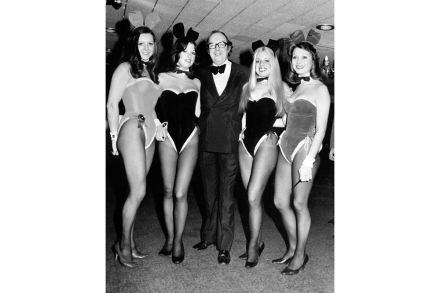
Perhaps unfairly, Marcel Theroux does rather bring to mind Dannii Minogue. Not only does he look very similar to his more famous sibling, but when not writing (pretty good) novels, he’s in the same line of work: like Louis, he makes TV documentaries that feature much brow-furrowing. His latest was a neat fit for ITV1’s continuing obsession with true crime. As it transpired, The Playboy Bunny Murder was an over-simple title for an extremely tangled tale. Nonetheless, the programme did start with the killing of bunny girl Eve Stratford who, in March 1975, had her throat cut at her Leyton home. In those pre-DNA testing days, the police did what they could – which is to say they arrested and soon released Eve’s musician boyfriend, and then hoped for something to turn up.

Incomprehensible and epically anti-climatic: Netflix’s Bodies reviewed

Bodies is another of those ‘ingenious’ time-travel apocalypse mash-ups so tricksy and convoluted that by the time the ending comes you’re praying fervently that the nuclear bomb will go off and everyone will die as punishment for the hours of life you’ve wasted on this angsty, politically correct, humourless tosh. The premise is initially intriguing: four detectives in different time periods – 1890, 1941, the present and the near-future – have to solve the same murder mystery. But it soon becomes clear, as is the way with these things – see, for example, the mind-bending irksomeness of Christopher Nolan’s Inception – that the solution will be simultaneously incomprehensible and epically anti-climatic.