Television

Guiltily compelling: Spector, on Sky Documentaries, reviewed

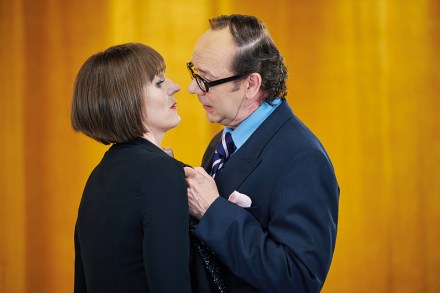
On 3 February 2003, the emergency services in Los Angeles received a call. ‘I’m Phil Spector’s driver,’ a voice told them. ‘I think my boss killed somebody.’ This was the inevitable yet still extraordinary starting point for Spector – a new four-part documentary on a man who, in the face of fierce competition, might well be the strangest figure in pop history. By that stage, he perhaps deserved the description of him in one news report as ‘a ghost, a phantom, a half-forgotten rock genius’. Except that – whether by coincidence or something more sinister – he’d recently granted his first interview for decades to the British journalist Mick Brown. ‘I have devils inside me,’ said Spector during their conversation.

A Turkish dystopia that eludes western censors: Netflix’s Hot Skull reviewed

A strange new virus has infected half the world but the cure is worse than the disease: authoritarian tyranny, in which the populace lose most of their freedoms, are subject to endless testing and are corralled into gated communities. I’m talking, of course, about the wildly implausible plot of a dystopian sci-fi thriller called Hot Skull. On the downside, it’s a bit depressing, with relentlessly grey cityscapes so bleak it makes Blade Runner look like Pleasantville. On the upside, it’s Turkish which means that – as with the brilliant Russian post-apocalyptic drama To the Lake – you get a completely different, original and perhaps more honest satirical slant on the crazy world we’re living in.

Irresistible: Sky Max’s Christmas Carole reviewed

What’s wrong with sentimentality? The answer, I’d suggest, could either be: a) its almost bullying insistence on us having emotions disproportionate to anything a particular story has earned; or b) nothing at all. And if you want to see how both of these are possible, two of this year’s big Christmas TV offerings provide handy illustrations. Firmly in category a) is The Boy, the Mole, the Fox and the Horse, an animated film by Charlie Mackesy, based on his own mega-selling book and with some impressively big-name actors doing the voices. Its methods are established immediately when a boy lost in a snowy wood happens across a cute talking mole (Tom Hollander). ‘What do you want to be when you grow up?’ the mole enquires. ‘Kind,’ says the boy.

Fascinating, plausible ideas undermined by Netflix: Ancient Apocalypse reviewed

Graham Hancock’s Ancient Apocalypse has been described by the Guardian as ‘the most dangerous show on Netflix’. What? More dangerous than the undigested, neo-Malthusian eco-propaganda that it serves up in its collaborations with Sir David Attenborough? More dangerous than its notorious movie Cuties, whose portrayal of hypersexualised children prompted a worldwide ‘Cancel Netflix’ campaign? https://www.youtube.com/watch?v=DgvaXros3MY The Guardian’s main beef is that by flirting with speculations outside mainstream archaeology – Atlantis, giants, the survivors of the great flood and so on – the show ‘whispers to the conspiracy theorist in all of us’. But oddly enough, I found the opposite to be true.

A dismaying exercise in nostalgia: Simon Schama’s History of Now reviewed

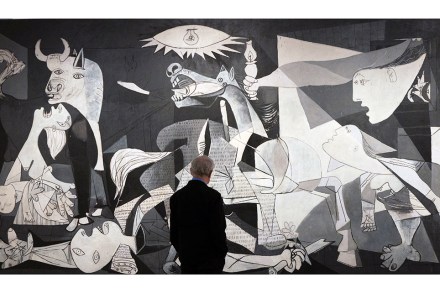
For those who consider themselves traditional liberals (full disclosure: such as me) Sunday’s first episode of Simon Schama’s History of Now may have felt like a somewhat dismaying exercise in nostalgia. As Schama ran through a familiar anthology of 20th-century liberalism’s greatest hits, we were taken back to a happier, more recognisable world of clearly demarcated goodies and baddies where democracy would inevitably mean the triumph of our own beliefs and there was little that couldn’t be fixed by art ‘speaking truth to power’. The programme’s starting point, as you might imagine, was the Spanish Civil War, described by Schama as a ‘great battle between democracy and autocracy’ – rather than, say, two autocracies.

Repellent: Paramount+’s Tulsa King reviewed

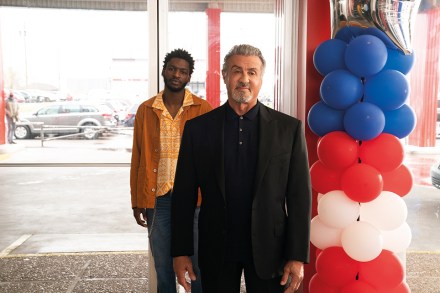
TV currently abounds with ‘I thought they were dead’ revival projects: series in which your favourite 1980s movie stars are given a new lease of life and you are reminded – with luck – how much you loved them. Kevin Costner is doing very well in Yellowstone; Ralph Macchio is milking the Karate Kid legacy for all it’s worth in Cobra Kai; Jeff Bridges and John Lithgow had a decent run in The Old Man. Now it’s the turn of Sylvester Stallone in Tulsa King. https://www.youtube.com/watch?v=aaQSScwZPbA But I shan’t be hanging around for the second episode. My main problem with it is the flawed premise. Stallone’s character –Dwight ‘The General’ Manfredi – is a New York mafiosi who has just done 25 years in prison.

Riveting: C4’s Who Stole the World Cup reviewed

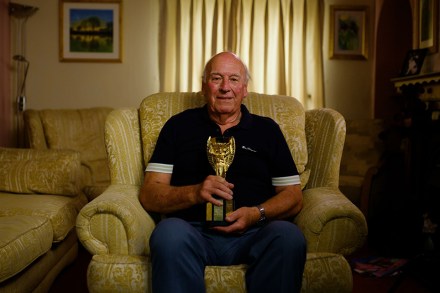
Have you ever seen film of the England 1966 football team holding the World Cup at the Royal Garden Hotel, Kensington, on the evening of their victory? The answer, I can guarantee, is no. Unbeknownst to everybody except a few policemen and FA officials, what they were holding was only a replica, made a few months previously after the real Jules Rimet trophy was stolenin London. But this was just one of the many eye-popping disclosures in Monday’s 1966: Who Stole the World Cup? Of course, it’s not uncommon for a documentary to claim the tale it’s telling is scarcely believable. Much rarer is for that claim, as here, to be true.

Riveting: Netflix’s The Bastard Son & The Devil Himself reviewed

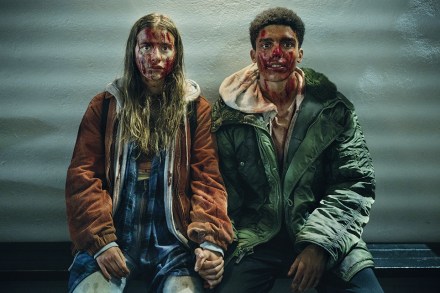
Gratingly edgy soundtrack, stomach-churning gore, torture, witchcraft, sadism and an indigestible title. The Bastard Son & The Devil Himself sounds exactly the sort of series most of us would wish to avoid. It’s aimed at young adults (based on a trilogy by Sally Green called Half Bad) and the only reason I was keen to give it a try was that it has been freely adapted by Joe Barton. For my money, Barton is – along with Jesse Succession Armstrong – the most exciting and original screenwriter currently working in TV.

Refreshingly macho: BBC1’s SAS Rogue Heroes reviewed

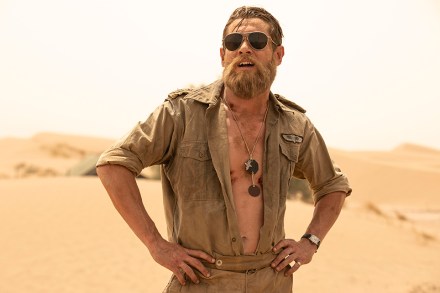
Sunday’s SAS Rogue Heroes – about the founding of perhaps Britain’s most famous regiment – began with a revealing variation on the usual caption in fact-based dramas about how everything in them really happened, except the things that didn’t. ‘The events depicted which seem most unbelievable,’ it read, ‘are mostly true.’ https://www.youtube.com/watch?v=gTWqFccBsgg And from there the same sense of somewhat incredulous, head-shaking admiration for its subjects remained. The unexpected result was a 2022 BBC drama that took an unashamedly gung-ho approach to macho heroism – and that, give or take a spot of swearing and heavy-metal music, didn’t feel very different in tone from those classic British second world war films of the 1950s.

A Soviet version of Martin Parr: Adam Curtis’s Russia 1985-1999 –TraumaZone reviewed

Russia 1985-1999: TraumaZone – even the title makes you want to scream – is Adam Curtis’s Metal Machine Music: the one where he frightens off his fans by abandoning the trademark flourishes that made him so entertaining and instead goes all pared-down and raw and grim. If you don’t know or remember what those trademark flourishes were, let me refer you to a cruelly funny pastiche which you can easily find on YouTube called The Loving Trap. This sends up poor Adam as a pioneer of the collage-umentary, a genre resembling ‘a drunken late-night Wikipedia binge with pretence to narrative coherence’ which ‘vomits grainy library footage onto the screen to a soundtrack of Brian Eno and Nine Inch Nails.

Touchingly free of cynicism: C4’s Somewhere Boy reviewed

At the start of Somewhere Boy, an 18-year-old boy is rescued from an isolated house by his aunt Sue following his father’s suicide – and what she, the police and social services regard as a lifetime of abuse. Since he was small, Danny’s father, Sam, had forbidden him from going outside, telling him the world was full of monsters who’d kill him if he did. He’d therefore grown up listening to old songs and watching old films – all the while believing that his beloved dad was keeping him safe. Yet once Danny was installed in Sue’s house, sharing a bedroom with his cousin Aaron, it soon became clear that this was by no means a simple tale of parental cruelty.

An enjoyable new Ageing Dad drama: Disney+’s The Old Man reviewed

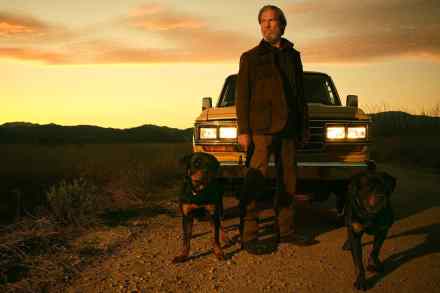
We men all think we’ve still got it, even when we’re well past 50 and young women look straight through us and every time we get up or sit down or lift something off a shelf we sigh or grunt with the effort. But sure, if push came to shove and we had to defend our loved ones, we’d definitely be able to fight off our attackers with our bare hands, no problem. It’s for people like us that The Old Man was created. It belongs to that venerable tradition of Ageing Dad movies which stretches from Taken (featuring Liam Neeson and his particular set of skills) through to James Bond (Daniel Craig is now 54) and the Mission Impossible series (Tom Cruise is now 60).

Fairly desperate: BBC1’s Unbreakable reviewed

On first impression, you might have thought that Unbreakable was just a fairly desperate reality show cobbled together from I’m a Celebrity, Mr and Mrs, Taskmaster and It’s a Knockout. After all, the format is that people of varying degrees of fame – from Simon Weston to, er, the bloke who presents MTV’s Celebs on the Farm – arrive with their partners at what presenter Rob Beckett calls ‘a big posh gaff in the country’. Once there, they’re made to perform a series of game-like tasks as Rob looks on and guffaws. Naturally, the series does make a few cunning tweaks to its obvious forebears. Unlike in Taskmaster, for example, some of the tasks are extremely boring.

The makers of Fauda have another hit on their hands: Sky Atlantic’s Munich Games reviewed

You’d have to pay me an awful lot more than I get for this column to review Monster: The Jeffrey Dahmer Story. As I write, it’s the number one trending show on Netflix, but the most I’m prepared to stomach is that snatch of footage you get forced to watch (because of Netflix’s impertinent and intrusive automatic play function) if you linger over the title image for too long. It shows two cops at an interview desk gradually revealing to Dahmer’s increasingly aghast dad (Richard Jenkins) that his son Jeffrey might not be quite the straight upstanding citizen he imagined. https://www.youtube.com/watch?

Well-meaning thriller with moments of implausibility: BBC1’s Crossfire reviewed

Crossfire was a three-part drama in more ways than one. Running every night from Tuesday to Thursday, it brought together a Die Hard-style thriller, an exploration of the complexities of family life (with particular reference to middle-aged womanhood) and a meditation on the nature of time. Odder still, it worked pretty well on the whole – though it was not without moments of frank implausibility. https://www.youtube.com/watch?v=4-oS6WIJFdw Keeley Hawes played Jo, whose decision to book a holiday in the Canary Islands for her family and two others seemed a good idea at the time. Granted, her marriage wasn’t in top shape, what with her habit of falling for any man who paid her more attention than her husband did (making it not her fault really).

The political cunning of Elizabeth II: BBC1’s The Longest Reign – The Queen and Her People reviewed

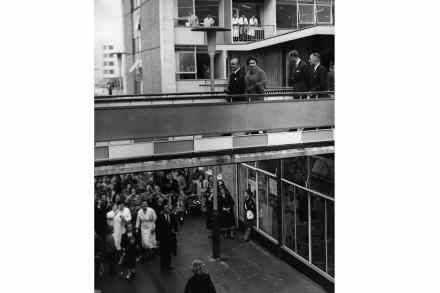
In all the tributes to Her late Majesty’s constancy, dignity, wisdom and devotion to duty, not enough has been said about her political cunning. But BBC1’s The Longest Reign: The Queen and Her People made a compelling case that Elizabeth II knew just how to tilt the balance. When she toured the new towns of the 1950s (see image), waving at the crowds with their little Union Flags and taking tea with the young families on the just-built housing estates, she was giving her wordless blessing to the welfare state.

Will you be able to get through the ponderous aphorisms without giggling? The Lord of the Rings: The Rings of Power reviewed

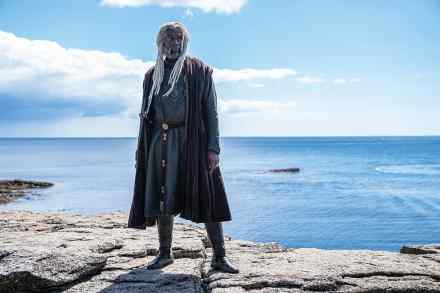
Amazon’s much-heralded Tolkien prequel The Lord of the Rings: The Rings of Power began by answering a question that has puzzled humankind – and possibly elves – these many millennia. Why is it that a ship floats and a stone doesn’t? The reason apparently is because ‘a stone sees only downward’, whereas a ship has ‘her gaze fixed upon the light that guides her’. And this, I’m afraid, set the tone for much of the dialogue that followed in the two episodes released so far – as, to their credit, the characters managed to exchange an endless series of ponderous aphorisms without giggling.

Shaping up nicely for some truly epic bloodletting: House of the Dragon reviewed

House of the Dragon got off to a pretty uninspirational start, I thought: no major characters brought to a shocking and premature end; no bone-chilling spookiness like that White Walker opening scene in the frozen woods; far too much dreary, half-inaudible talking round long tables in ill-lit halls. If this hadn’t been the long-awaited prequel to Game of Thrones, I doubt I would have bothered watching the second episode. But I did and guess what? More dank, chiaroscuro interiors; more old men out of Shakespeare history plays mumbling into their beards; more complicated, almost-impossible-to-follow-unless-you’ve-read-the-books disquisition on inheritance, lineage and succession.

The fiasco of Operation Yewtree: C4’s The Accused – National Treasures on Trial reviewed

At 4.38 a.m., one morning in October 2013, the radio presenter Paul Gambaccini was understandably asleep when the doorbell rang. He was then arrested for sexually assaulting a minor on what proved to be the word of a drug addict with a history of making false accusations. The trouble for Gambaccini, though, was that this wasn’t proved for another 11 months. In the meantime, the allegations were all over the news, he was dropped by the BBC, lost around £100,000 in earnings and started having panic attacks. And Gambaccini, of course, wasn’t alone in being arrested and publicly named like this – not merely without being charged, but before any investigation had taken place.

Identity politics is in retreat in Hollywood

‘Diversity is woven into the very soul of the story.’ If those words of praise from a rave review in a left-leaning journal sound to you about as inviting as a cup of cold sick, then my advice would be to stay well clear of The Sandman. Neil Gaiman’s epic graphic novel series (launched in 1989), set in the world of dreams, was relentlessly inclusive long before it became the norm. ‘I wanted to change hearts and minds,’ Gaiman has said in an interview. ‘I had trans friends and still do, and it seemed to me that no one was putting trans characters into comics. And I had a comic.’ If this TV version had been made five years ago, it would probably have been considered very cutting edge.