Television

Cosy catastrophe

When I was a child in the 1970s, the two big excitements of the run-up to Christmas were first the chocolate Advent calendar which, somehow, I managed to smuggle past the prison-guard inspection at my Colditz-like prep school; and second, browsing the Radio Times to see what televisual delights the Christmas hols had in store. Now I hardly bother with chocolate —unless it’s Artisan du Chocolat, in which case, yes please. And I find Christmas TV, all Christmas TV, even if it’s a Nick Park animation that has never been on before, so intrinsically depressing that I just want to string myself up from one of the giant black hooks hanging from our kitchen ceiling. They have been used for this very purpose once before, by one of the previous tenants.
Closing credits

BBC1’s The Missing has been one of the undoubted TV highlights of 2016. Yet, even thrillers as overwhelmingly thrilling as this one have been known to blow it in the concluding episode, when the biggest revelation of the lot turns out to be that the writers couldn’t really answer all the questions that previous episodes had so intriguingly raised. And of course, The Missing had raised more than most, with its fiendish plotting ranging across three timeframes — until last week, that is, when it added a fourth. So could Wednesday’s finale possibly avoid giving us that sense of outraged disappointment that comes from realising we’ve spent weeks looking forward to a full-scale solution that never quite comes?

Faulty ignition

Apart from the next Game of Thrones, there’s nothing I’ve been looking forward to quite as much as The Grand Tour (Amazon Prime). I like Clarkson, Hammond and May, I like banter, I like political incorrectness, I like exotic scenery, I like cars, I like puerile jokes and I liked Top Gear. Take the same ingredients but with a £4.5-million-per-show budget — more than four times what they had with the BBC — and you’d have to ask yourself: ‘What could possibly stop this from being the greatest TV show ever?’ Well, I hate to be a party pooper but it’s definitely not there yet. We had some friends staying for the weekend and we all sat down eagerly after supper, fully expecting to be wowed.

Old stamping ground

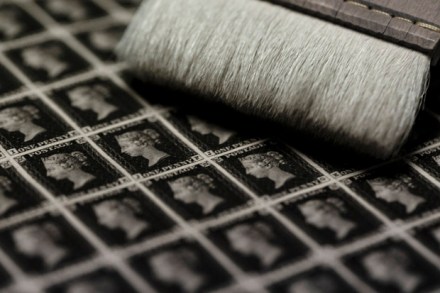
If I tell you that on Monday there was an hour-long documentary about the history of stamp-collecting, then you probably don’t need this column’s usual bit in brackets saying which channel it was on. Indeed, at times Timeshift: Penny Blacks and Twopenny Blues seemed determined to be the most BBC4-like programme in the history of BBC4: cheerfully niche, heroically indifferent to all notions of cool and so old-school in its production style that any mention of France was introduced with a blast of accordion music. Above all — and unlike so many other documentaries elsewhere — it was wholly confident that its viewers would be interested in interesting things without having to be shrilly reminded every few minutes of how interesting they are.

Crown jewels

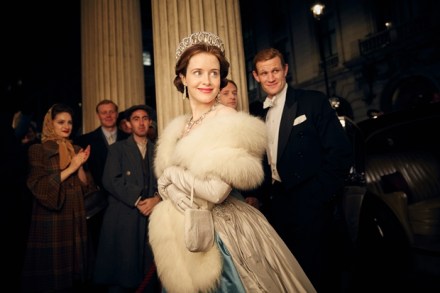
Nairobi. February 1952. Laughing children brandishing sticks are driving an indignant bustle of ostriches up a rudimentary 1950s-Africa semi-bush runway towards the camera, when — WHOOSH! — right over their heads skims the exact BOAC aircraft in which the actual soon-to-be Queen Elizabeth flew to Kenya, as painstakingly rebuilt by the world’s top aircraft restorers at a cost of only $27 million... Actually, I made up the last detail. But if you want to know why the drama departments at the BBC, Channel 4 and ITV are quaking in their boots just watch a couple of episodes of Netflix’s sumptuous, leisurely and immaculate recreation of the Queen’s early years on the throne. It’s like the moment when America entered the war: ‘Such materiel!

Losing heart | 3 November 2016

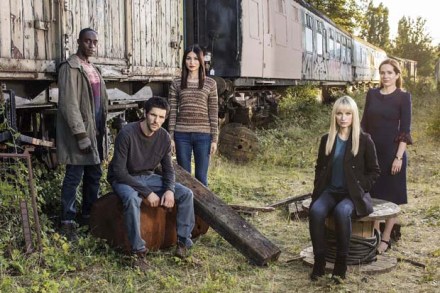
In 2015, the first series of Humans (Sunday) was apparently Channel 4’s most watched home grown drama since The Camomile Lawn: a programme broadcast when Neil Kinnock was still the Labour leader and given a obvious ratings boost by the tabloid outrage about its many nude scenes (and by its many nude scenes). In the case of Humans, though, the British people can’t be accused of ulterior motives, because this is a winningly intelligent piece of sci fi that ponders, among other things, the nature of consciousness and the future of the human race. Cleverly, too, it’s set, not in a domed city of jet packing commuters, but in a world very like our own.

The lying game | 27 October 2016

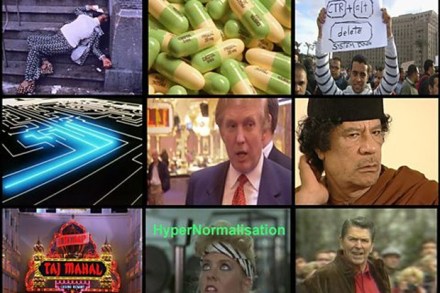
‘Adam Curtis believed that 200,000 Guardian readers watching BBC2 could change the world. But this was a fantasy. In fact, he had created the televisual equivalent of a drunken late-night Wikipedia binge with pretentions to narrative coherence...’ You really must watch Ben Woodhams’s brilliant 2011 Adam Curtis-pastiche mini-documentary The Loving Trap, which you’ll find on YouTube. It’s so devastatingly cruel, funny and accurate that when I first saw it I speculated that Curtis would never be able to work again. https://www.youtube.com/watch?v=x1bX3F7uTrg But this was fantasy. Of course, I knew that Curtis would be back, not least because to be parodied in this way is not an insult but a sure sign that you’ve seriously made it.

Digging for the truth

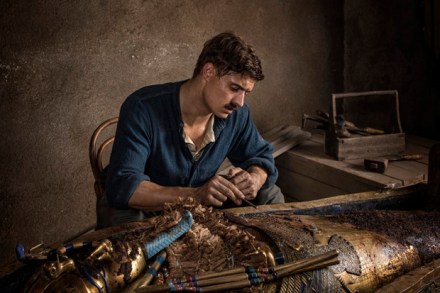
The discovery of Tutankhamun’s tomb may well be one of the 20th century’s great stories — but naturally that doesn’t mean a television drama won’t want to jazz it up a bit. Or, in the case of ITV’s lavishly produced but distinctly corny Tutankhamun, quite a lot. The programme gives us a Howard Carter younger and considerably hunkier than in real life. It throws in a couple of smitten hotties to emphasise the fact. Above all, it transforms Carter into the archaeological equivalent of a maverick TV cop: a man who doesn’t play by the rules, isn’t afraid to follow wild hunches but, by God, gets results.

Revenge of the robots

The other day James Lovelock, the sprightly 97-year-old inventor of Gaia theory, told a mildly surprised Guardian interviewer that he wasn’t remotely worried about climate change any more. A far more plausible threat, he explained, were all the killer robots that would soon emerge and find no use for us inconvenient humans. Apparently this is a fashionable worry. It has to do with something called the ‘singularity’, which is the theoretical moment when machines become so sophisticated than they can outthink us, then advance at such a pace that we become powerless to stop them.

Question time | 6 October 2016

At my wife’s first 12-week scan, I was expecting — and duly got — that much-documented sense of thrilled wonder at the grey blobby thing on the screen. What came as a genuine shock, though, was realising the scan also had the entirely undisguised aim of calculating the baby’s chances of Down’s syndrome, on the apparent assumption that, if they were high, we’d want to terminate. In the event, this wasn’t a dilemma we faced — which possibly makes it easy to take the moral high ground. Even so, the whole process left me feeling both uneasy and rather naive. How long had this been going on? Did everybody else know about it? And if so, when had they discussed it? A World without Down’s Syndrome?

Close encounters of the Eighties kind

Stranger Things is the most delightful, gripping, charming, nostalgic, compulsive, edge-of-seat entertainment I’ve had in ages. Like a lot of the best TV these days, it’s on Netflix, which I highly recommend so long as you can cope with the technical complexities of getting it to appear on your screen in the first place. Yeah, I know, all you bastard millennial types sneering at Granddad for his inability to do stuff that’s like so totally easy and obvious.

Cautionary tale

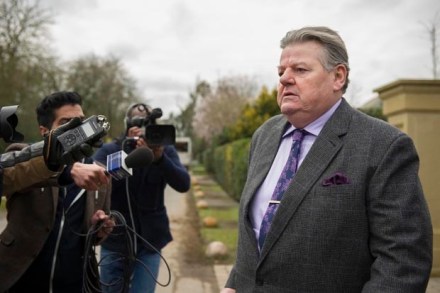
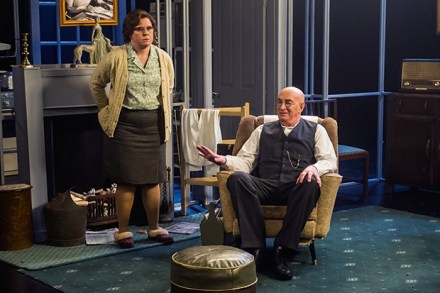
The closing credits of National Treasure (Channel 4, Tuesday) contain the usual disclaimer that any resemblance between its characters and real people is merely coincidental. Well, coincidental maybe, but also entirely inevitable — because this is a drama based on Operation Yewtree. With its choice of subject matter, a cast including Robbie Coltrane and Julie Walters and a script by Jack Thorne (author of the all-conquering Harry Potter and the Cursed Child), the series is clearly intended as an Important Piece of Television. Yet, partly for that reason, it’s so far proving a rather careful one. Nobody who watched the first episode could accuse it of sensationalism.

Victoria’s secret: none of it’s true

Did you know that Queen Victoria might never have married Prince Albert had it not been for an amazing stroke of luck on a woodland walk in Windsor Great Park, involving the queen’s beloved spaniel Dash. Dash, as good fortune would have it, managed to break his leg on a handy knife that someone had left lying around. And the hitherto remote and stuffy German princeling, carelessly ripping yet another of his shirts (the second in about a week) to create a makeshift bandage, splinted Dash’s leg with such tender care that flighty Emma knew at once that cold, disapproving Mr Knightley was the man for her. And that, I’m afraid, is why I’m not going to be watching another minute of this silly, facile, irresponsible series.

Fashion shoot

With documentary-makers these days, it can be hard to tell the difference between faux-naivety and the real thing. (Personally, I blame Louis Theroux.) Take BBC2’s Absolutely Fashion: Inside British Vogue (Thursday), directed and narrated by Richard Macer, who often seems suspiciously dazzled by whatever he sees: the editor’s office! The editor’s chair! He also has a tendency to proudly offer observations that aren’t necessarily as startling as he thinks: that the magazine appears to be largely run by women, for instance. But where it’s even trickier to decide whether he’s faking or not is when his off-screen voice anxiously wonders whether Alexandra Shulman, the editor in question, wants him there at all — because she so obviously doesn’t.

Pussy galore

I think I might be turning into Alf Garnett. When I was growing up I saw him as an obnoxious, cantankerous, ranting old git that my grandparents’ generation seemed to find funny but who left me cold. Now I’m beginning to identify with him as an unfairly maligned and surprisingly youthful fount of wisdom whose tragedy is to be ignored by maddeningly unsympathetic womenfolk and infuriating kids. That was my thought, anyway, watching Till Death Us Do Part (Thursday, BBC Four) — a one-off remake of one of Johnny Speight’s original Sixties scripts, with The Fast Show’s Simon Day as Alf.

When autumn comes

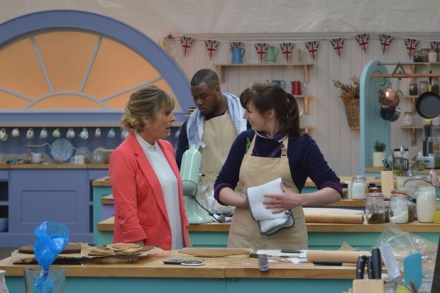
You know when late summer has arrived because conkers are starting to form on the horse chestnuts, your eagerness to get the kids back to school has reached fever pitch, and another season of The Great British Bake Off (BBC1, Wednesdays) has begun. If it feels like there has never, ever been a time when GBBO wasn’t on, this is because there hasn’t. Here are some key facts about our favourite telly comfort blanket you won’t find on Wikipedia. 1. Mary Berry has barely aged at all since the show’s first edition was broadcast in 1946 immediately after Muffin the Mule.

Rio, Rio

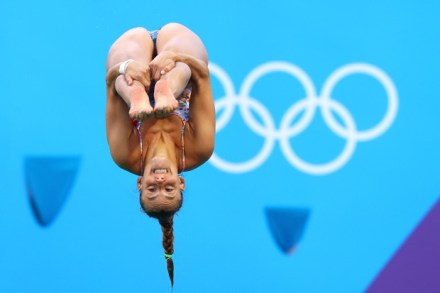
Stuff I have learnt after two solid weeks watching the Olympics on TV. 1. Tennis and golf shouldn’t be Olympic sports. Yes, I know we won both and Rose’s final chip on to the 18th green was great to watch. But you can see this sort of thing done with a tougher range of competitors at any number of majors all the time. Olympic medals should be there to reward the Corinthian spirit not just an opportunity for millionaires to add something a bit different to their mantelpiece. 2. I still don’t understand the judging system for the diving but had arse quality been included in the women’s events — as I believe it should — the Italian girl would have done much better. 3.

The decade of Delia

Proof that someone has really made it as a TV historian comes, I would suggest, when they join the likes of David Starkey and Simon Schama by getting their name into the programme’s title. So it is that Dominic Sandbrook’s The 70s, from 2012, has now been followed by The 80s with Dominic Sandbrook (BBC2, Thursday), a series that confirms his ability to put across moderately big ideas in a light easy style — and in a parka. Sometimes when watching television, you might be in the mood for a serious history documentary, and sometimes for a show that’ll just wash over you pleasantly. With Sandbrook — and I’m pretty sure I mean this as a compliment — you can have both.

Greenhouse or group hug?

The unacknowledged subtitle of Channel 4’s new reality series Eden (Mondays) is Die, Hippies! Die! Obviously they’re not going to admit this because that wouldn’t be right. But I’m sure Channel 4 is hoping that a terrible Lord of the Flies-type scenario will unfold for the 23 victims who’ve volunteered to get back to nature on a remote Scottish peninsula for 12 months, in which they hunt one another down with sharpened sticks, with hideously watchable consequences. In episode one, my money would have been on Anton as chap-best-placed-to-survive.

1966 and all that

In the song ‘All the Young Dudes’, David Bowie gamely tried to reassure the youth of the Seventies that, despite what their Sixties elders were always telling them, they hadn’t been born too late after all. On the contrary: it was the ‘brother back at home with his Beatles and his Stones’ who was missing out. Sadly, for those of us growing up at the time, even Bowie at his most thrilling wasn’t quite as persuasive as we’d have liked. OK, so it was definitely annoying to be surrounded by people banging on about how great the Sixties were. But once we’d heard the music, there was an uncomfortable sense that they might also be right.