Television

Courageous Kemp

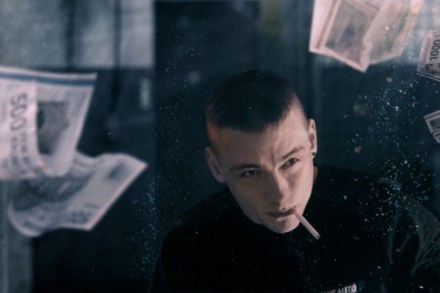
Before I set about reviewing Ross Kemp: The Fight Against Isis (Sky 1), I thought I’d have a glance to see whether other critics had been as impressed as I was. Clearly the flip groovester from the Guardian — who opened, inevitably, with a jaunty quip about Grant from EastEnders — had seen a very different documentary from the one I saw. Otherwise, he could not have failed to be moved by Kemp’s heartbreaking interview with the Yazidi woman from Sinjar who’d recently escaped from Isis. Her 10-year-old daughter squatted beside her — only survivor of the five children she had had when Isis captured her town.

The prodigy

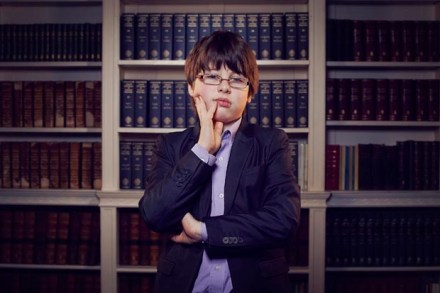
On Tuesday night on Channel 4, a stern male figure peered over his glasses (as equipped with one of those cords favoured by themiddle-aged specs-wearer) and offered us his robust views on how government benefits encourage laziness. Which might not sound that unusual — except that the male figure in question was 12. His name, no less improbably, was Mog and he was a contestant in the new series of Child Genius, now hosted by Richard Osman — these days almost as ubiquitous on television as Susan Calman is onRadio 4. As ever, the first few minutes were spent assuring us how fiendish the quiz would be; but, as ever too, this was no mere hype.

And your point, Professor?

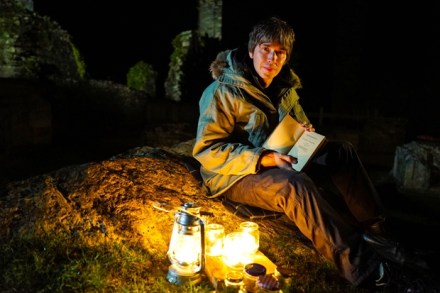
Pop idol turned top boffin Brian Cox doesn’t shy away from the big issues. With programmes such as Wonders of the Solar System, Wonders of Life and Human Universe, Cox, the heir apparent to His Eminence Sir David Attenborough, has dared to dream on a cosmic scale. Are there any limits to his mighty intellect? In his latest adventure, Forces of Nature (BBC1, Monday), the ambitious prof boldly seeks to illustrate the workings of ‘the underlying laws of nature’. As wistful electronic music tinkled Eno ishly in the background, he assured us, in a metaphysical tone, that ‘the whole universe, the whole of physics, is contained in a snowflake’.

The big chill | 30 June 2016

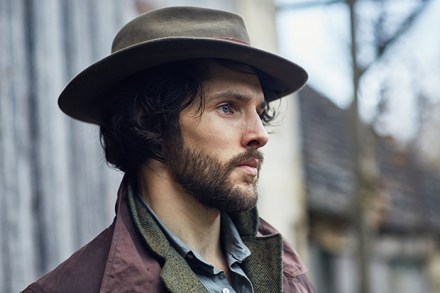
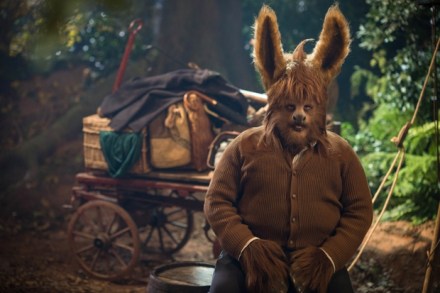
It’s sadly possible to imagine that The Living and the Dead was sold to BBC1’s commissioning editors as ‘Poldark meets The Exorcist’. Yet, while that wouldn’t be a completely inaccurate summary, the overall result is a lot more coherent, clever and ambitious than that. At heart, in fact, Tuesday’s first episode was a nifty twist on another genre: the one where a retired detective/gunslinger/master criminal comes out of retirement for one last job. The programme began in Somerset in 1894, where we met Harriet Denning, an unusually bright 16-year-old, whose intellectual curiosity alarmed her mother but who was encouraged in her reading of Ibsen, Zola and Darwin by her proud father.

Animal crackers

The other evening I was driving back in heavy rain from my pilates class when I noticed something rather upsetting in the gated road that goes through our estate. I stopped and got out of the car for a closer look. Yes, as I feared, it was a dead duck. Some bastard had squished her flat. What made me more upset still was that I could see her mate — a mallard drake — swimming forlornly in the ditch next to the road. I loved those ducks like Tony Soprano used to love his ducks. Especially the stupid way they waddled blithely across your path, forcing you to slow down and always making you smile whatever mood you were in. But clearly the tosser who did this was in too much of a hurry: either a van driver or someone in a 4 x 4, I guessed.

My big fat Gypsy fortune

In his latest documentary for the This World series, the Romanian film-maker Liviu Tipurita could have been forgiven for treading carefully — and not just because it meant him entering the world of organised crime. After all, his previous film in the series, the uncompromisingly titled Gypsy Child Thieves, was ferociously denounced by Roma groups for showing how some Roma parents send their children into European cities with strict instructions to beg and steal — the charge being not that this was necessarily untrue, but that it might confirm ugly prejudices. So how would Tipurita tackle the equally awkward facts behind The New Gypsy Kings (BBC2, Thursday)?

Arrested development

Sometimes I wonder whether, of all the literary genres, graphic novels aren’t the most stupidly overrated. I can say this because I’m old enough to remember when they were just this obscure thing you had to seek out in specialist stores like Forbidden Planet, understood only by pale, nerdy teens and twenty-somethings who felt superior to, but unappreciated by, the real world outside. Then Watchmen came along and spoiled the party in much the same way Britpop ruined indie. Suddenly, graphic novels became everyone’s domain. See how the Guy Fawkes mask from V for Vendetta (Alan Moore was the author; David Lloyd the illustrator) has become almost as recognisable a global symbol as the McDonald’s golden arches.

Impure thoughts

Spoiler alerts aren’t normally required for reviews of Shakespeare — but perhaps I’d better issue one before saying that in BBC1’s A Midsummer Night’s Dream (Monday) Theseus dies near the end. Not only that, but Hippolyta and Titania fly off on butterfly wings to become lovers, and the mechanicals’ play goes down a storm. Personally, I’ve never been sure about the existence of that mysterious tribe known as ‘Shakespeare purists’. If they do exist, though, Russell T. Davies’s heavily cut and cheerfully tweaked adaptation seems almost deliberately designed to flush them out.

Counting on sheep

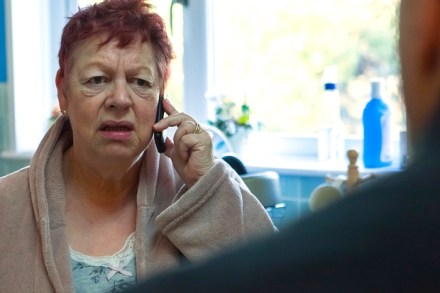
Going Forward (BBC4, Thursdays) is a BBC comedy about the continuing adventures of Kim Wilde, the fat, cynical but lovable nurse character played by former nurse Jo Brand. Now she has quit the NHS and is working in the private sector for a company called Buccaneer 2000 — which is, of course, exactly what a healthcare company would call itself in order to allay potential criticisms that it was backward-looking, heartless and rapacious. This is one of the series’ big problems. It wants to be naturalistic, almost fly-on-the-wall, observational comedy, with the dog wandering casually in and out, and parents and kids saying just the kind of things we all do in real life.

Animal attraction

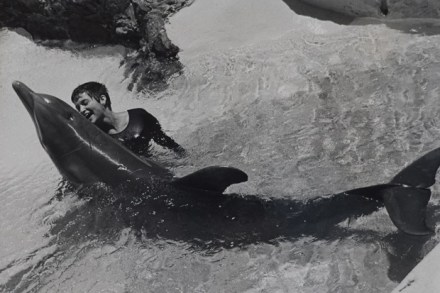
Let me start this week with an admittedly hard quiz question: in 1954, how did the sudden illness of Jack Lester, head of London Zoo’s reptile house, transform British television? The answer is that his reluctant stand-in as the presenter of BBC’s Zoo Quest was the show’s director, David Attenborough. Offhand, it’s not easy to think of many people whose 90th birthday could overshadow the Queen’s, but this month Attenborough’s is coming pretty close. The latest tribute was David Attenborough’s Zoo Quest in Colour (BBC4, Tuesday), which dedicated an appropriate 90 minutes to his first TV hit. As the title indicates, the big coup here was that the archive clips were no longer in grainy black-and-white.

Something to crow about

There’s no way of saying this without shredding the last vestiges of my critical credibility, but this new Ben Elton comedy series, Upstart Crow (BBC2, Mondays), about William Shakespeare: I’m loving it and think it’s really, really funny. Yes, all right, it’s very like season two of Blackadder — which Elton co-wrote with Richard Curtis.

That’s entertainment | 5 May 2016

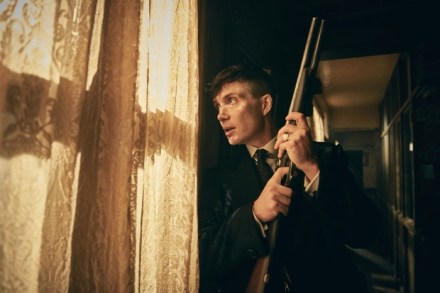
The big returning show of the week began with servants laying out the silverware at a large country house in 1924. But rather than a shock comeback for Downton Abbey, this was — perhaps even more unexpectedly — Tommy Shelby’s new home in Peaky Blinders (BBC2, Thursday). Which explains why so many of the guests were carrying guns, and why the family matriarch was using the word ‘fuck’ a lot more than Lady Grantham ever did. When we last saw gang-leader Tommy (Cillian Murphy), he was still based in the Birmingham backstreets. He was also having a fairly tough time — what with juggling two women, trying not to get murdered and being required by the government to start the Irish Civil War. Two years on, however, things are clearly looking up.

His dark materials | 28 April 2016

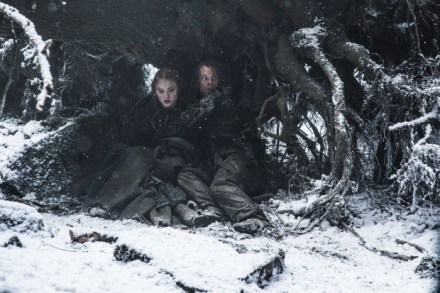
So: Game of Thrones. Finally — season six — the TV series has overtaken the books on which it is based and the big worry for all us fans is: will it live up to the warped, convoluted, sinister genius of George R.R. Martin’s original material? As regulars will know, the great thing about Martin is that you never know which of your favourite characters he’s going to kill off next. Really — and I can’t think of any other series of which this is true — they could die any moment, which is one of the things that makes it such gripping, unsettling, memorable TV. (The ritual immolation of that little girl last season, for example. Will it ever be surpassed?

Special delivery

Five Star Babies: Inside the Portland Hospital won’t, I suspect, have been a hard sell to BBC2’s commissioning editors. Childbirth and rich people are both reliably popular subjects for TV documentaries. So why not combine them into one handy package by showing us life at the UK’s only private maternity hospital? And yet, however artificial the programme’s conception, any sociologists studying contemporary Britain’s peculiar attitudes to the very wealthy could have done a lot worse than to tune in to Wednesday’s episode. ‘Parenthood: the great leveller,’ began the narrator — somehow managing not to add a hollow laugh. This sense of irony, though, was short-lived.

An inconvenient truth | 14 April 2016

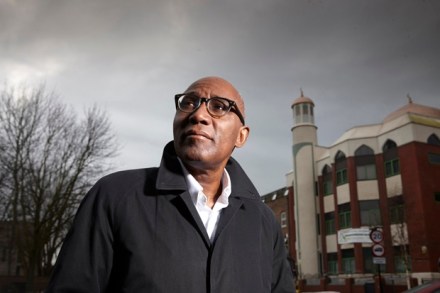
‘Our findings will shock many people,’ promised Trevor Phillips at the beginning of What British Muslims Really Think (Channel 4, Wednesday). But the depressing thing is that I doubt they will, actually. I think the general British public have known for some time what Phillips’s documentary professed to find surprising: that large numbers of Muslims don’t want to integrate, that their views aren’t remotely enlightened, and that more than a few of them sympathise with terrorism. It’s only the establishment elite that has ever pretended otherwise. As former head of the Equality and Human Rights Commission, Phillips was very much part of that elite. He commissioned the 1997 Runnymede report that popularised the word ‘Islamophobia’.

Singing Ireland into being

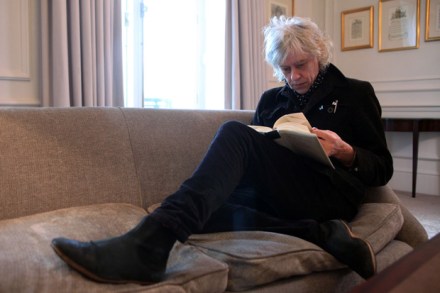
In recent years there’s been a fashion for arts documentaries presented by celebs rather than boring old experts — presumably on the grounds that knowledge and insight are no match for vague enthusiasm and a touch of showbiz glamour. (In a particularly gruesome episode of ITV’s Perspectives, Pop Idol winner Will Young established his credentials for discussing the life and works of René Magritte with the words, ‘I’ve been collecting bowler hats for 12 years now.’) Even so, one channel you might have expected to hold out against such frivolity is BBC4, the natural home of resolutely untelegenic academics telling us stuff they really know about. But then on Sunday came Bob Geldof on W.B.

Love at first sight | 31 March 2016

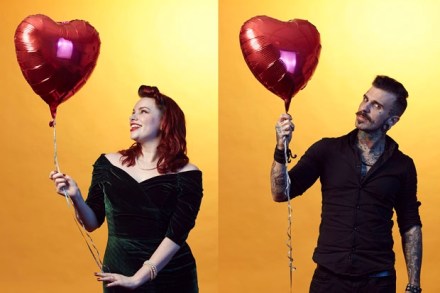
Now the kids are back for the school holidays, I have a licence to watch complete trash again. No more brooding Scandi dramas (though Follow the Money is shaping up very nicely — plus, as an added bonus, its anti-windfarm theme is really winding up Guardian readers) — just pure televisual soma, such as the masses use to anaesthetise themselves after another thankless day in their veal-fattening pens. First Dates (C4, Fridays), for example. You wouldn’t want to pig out on more than one episode at a time but it’s about as perfectly formed a TV experience as you’ll get: you laugh, you cry, you gawp, you cringe; you feel uplifted by the stories with happy endings and reassured by the ones without as you realise — hurrah!

Good cop, bad cop | 23 March 2016

Which is better, British TV drama or American? A couple of years ago, merely asking the question would have had the hipsters chortling into their obscure US box sets — and even now a strange cultural cringe seems to persist. Nonetheless, I’d suggest, British television drama these days really is in the midst of an era that will have commentators in 20 years’ time routinely (if a bit unimaginatively) reaching for the adjective ‘golden’. Already in 2016 we’ve had War and Peace, Murder, The Night Manager and Happy Valley — and that’s before the hugely welcome return of Line of Duty (BBC2), Jed Mercurio’s riveting thriller about a police anti-corruption unit.

Greedy greenies

‘We have a problem. Yes. At the wind farm.’ Any conspiracy thriller with lines like that has definitely got my vote. Possibly most of you are unaware of this, because it’s not something I talk about often, but I happen to be not too fond of the things I call bat-chomping, bird-slicing eco-crucifixes — nor of the charlatans, crooks, liars and parasites who make their living out of them. Indeed, whenever I try to think of an industry that’s worse than wind farms I keep coming unstuck. At least landmines serve a useful purpose for force protection; at least Albanian prostitutes make a few men very happy.

Just what the doctor ordered

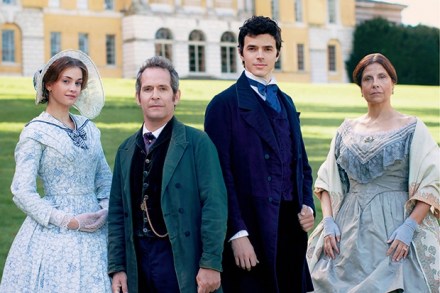
Every now and then, a costume drama comes along that’s so daringly unconventional as to make us re-examine our whole idea of what the form can achieve. ITV’s Doctor Thorne, though, isn’t one of them. Instead, Julian Fellowes’s adaptation of Anthony Trollope observes the usual rules with almost pathological fidelity. Extras dance gamely in ballrooms, scheming matriarchs stand in the way of sweet young lovers and characters express deep fury with the words, ‘Good day to you, madam.’ In the first scene, we even had a handy refresher on the genre’s use of hats as a social signifier. (Basically, toppers for the toffs, peaks for the proles.