Television

Pure, undiluted genius: Succession reviewed

I have never ever watched a TV series I have enjoyed more than Succession (Now TV). There’s stuff I’d put in the same league, maybe — Fauda, Babylon Berlin, Band of Brothers, Utopia, Gomorrah, Breaking Bad, The Sopranos, and so on — but absolutely nothing beats it. It is, quite simply, a work of pure, undiluted genius. Which wasn’t what I expected when my friend Toby recommended it to me a few weeks ago. ‘It’s about this media dynasty, a bit like the Murdochs. And the kids spend their whole time scheming and competing as to which one is eventually going to take over the company from the bullying patriarch Logan Roy,’ he said. This all sounded a bit grown-up, earnest and worthy to me.
A solid costume drama but Dame Helen has been miscast: Catherine the Great reviewed

It’s possibly not a great sign of a Britain at ease with itself that the historical character most likely to show up in a TV drama now seems to be Oswald Mosley. But the week after his starring role in Peaky Blinders ended, there he was again, right at the beginning of BBC1’s next Sunday-night drama. World on Fire opened with Mosley addressing a 1939 Manchester rally, where he duly whipped up his supporters and reminded the rest of us of the dangers of extremism. Luckily, there were two people in the hall brave enough to protest: salt-of-the-earth northern lass Lois Bennett and her much posher and therefore much stiffer boyfriend Harry Chase.

Gloriously un-PC: Ronan Bennett’s Top Boy reviewed

Sir Lenny Henry, the former comedian, is wont to complain to anyone who’ll listen that there isn’t enough ‘diversity’ on TV. Really, he should watch Top Boy (Netflix). Apart from the odd token walk-on whitey — skanky crack addicts, nasty immigration officers — it’s wall-to-wall BAME casting opportunities. The protagonist, Dushane (Ashley Walters), is black. So are all his friends, family and associates (his mandem, as they are colloquially known). So, mostly, is the urban music soundtrack, the work of various grime artists curated by the show’s co-producer, Canadian rapper Drake. What Sir Lenny might find not ooookaaaaay, I suppose, is that pretty much all the characters are ruthless, murderous, drug-dealing gangland thugs.

Abba, Twitter vs Instagram, and papal selfies: the modern face of the Catholic Church

As a lifelong Catholic, I’ve often thought that two of the Church’s chief characteristics are a) how weird it is when you think about it; and b) how weird it is that so few people in it think how weird it is when you think about it. Happily, if a little smugly, I have to say that nothing in the first episode of Inside the Vatican (BBC2, Friday) caused me to revise this theory. There was a time, of course, when allowing TV cameras to film your institution was a risky strategy, as St Paul’s cathedral and the Royal Opera House can testify after those fly-on-the-wall series of the 1990s showed us their dirty laundry with some glee.

With these documentaries, the BBC has lost any claim to impartiality

Because the rise of the Nazis is a topic so rarely mentioned these days, least of all in schools, the BBC has produced a helpful three-part explainer of that title (BBC2, Mondays) showing why the story of Hitler is even more relevant today than it was in the 1930s. Back in the day, the BBC might have been content to strive for an objective take on the subject, perhaps with a voiceover by Samuel West and lots of period footage. But the danger of that approach, the BBC has since realised, is that it runs the risk of viewers making up their own minds what to think. Some of them might not be aware, for example, of the obvious parallels between Hitler, Nigel Farage, Donald Trump, Brexit and, to a lesser extent, Michael Gove.

I have no clue what’s going on but can’t wait to find out: BBC1’s The Capture reviewed

How did the police ever solve any crimes before CCTV? That was the question which sprang to mind watching the first episodes of two highly promising new crime dramas this week. It’s also the central question now facing the detective in one of them. Part police officer, part career women, Rachel Carey in The Capture (BBC1, Tuesday) is being fast-tracked through the system to the traditional disapproval of her grizzled, old-school boss DCI Alex Boyd — imaginatively known as Boydy. Fortunately, Rachel (Holliday Grainger) won’t be with his unit for long. Having saved Britain from a deadly terrorist attack while working for special ops, she’s been sent there temporarily to see how she might handle a high-profile murder or kidnapping.

I like Brassic but the reason it’s getting such glowing notices is depressing

Brassic (Sky One) feels like the sort of TV comedy drama they last made about 15 years ago but would never get commissioned now, certainly not by the BBC. Almost all of the main characters — apart from love interest Michelle Keegan — are white, male and heterosexual. And it’s set in the kind of Lancashire market town surrounded by rolling sheep country where the opportunities for plausible diversity casting are really quite limited. So how come it has been getting such glowing notices from all the previewers and reviewers? You’ll be depressed when I tell you. Well, it has depressed me anyway. The main character Vinnie — played by Joe Gilgun — is bipolar.

The Octopus in My House left you with an overwhelming sense that octopuses are astonishing

Professor David Scheel, the presenter of a BBC2 documentary on Thursday, instantly brought to mind that American scientist in The Fast Show: bearded, bespectacled, softly spoken and willing to try an experiment just for the hell of it. A marine biologist in Alaska, Scheel has been studying octopuses (his own preferred plural, incidentally) for 25 years. But what, he whispered excitedly, ‘would I find out if I invited an octopus into my house?’ Well, one obvious answer we got from the starkly titled The Octopus in My House is that a TV film crew would be happy to show up and record what happened — which was essentially that he and his 16-year-old daughter Laurel spent a lot of time peering wonderingly into the animal’s tank.

Rave revolution

Jeremy Deller’s Everybody in the Place: an Incomplete History of Britain 1984-1992 (BBC4) began with some footage of kids queuing up outside a warehouse rave in Stoke-on-Trent in 1991. It was at once banal and extraordinary: everyone was white; nobody was overweight; none of the clothes were designer, expensive or branded; nobody wore facial hair. This was the England of my late youth and I remember it vividly. But it feels so remote from the present that it might just as well have been a lithograph of extravagantly side-burned men in stiff woollens captioned: ‘The Camp before Balaklava’. Deller is probably a bit more left-wing than me — how could he not be?

Perfectly grim, and gripping

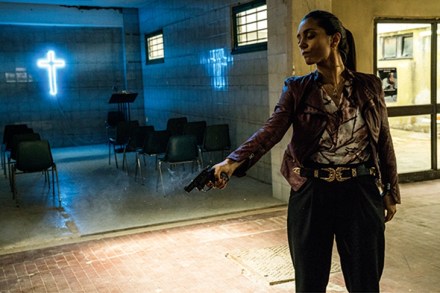
My favourite epithet about my favourite TV series was the headline in a review by the Irish Times: ‘Gomorrah. Where characters die before they become characters.’ The review appeared to suggest that this was a bad thing. But I disagree. What made Game of Thrones so original and compelling, especially in the early seasons, was its refreshing willingness to break convention by murdering key players at the drop of a hat. Gomorrah (Sky Atlantic) merely pushes that troubling edginess a step further: whether you’re the head of the Neapolitan mob, an adorable, cute child, or just some random, decent civilian briefly introduced in vignette, there is never a guarantee that you’ll survive the episode.

How not to make TV

BBC2’s How the Middle Classes Ruined Britain (Tuesday) began rather promisingly. ‘I’m a working-class comedian who voted Leave,’ announced presenter Geoff Norcott, ‘and I think it’s about time you lot heard some home truths.’ But then came the programme itself — which turned out to be the TV equivalent of a footballer who, faced with an open goal, dribbles about aimlessly before falling over. The first bit of aimless dribbling followed the shock news that middle-class parents often try to get their children into the best local schools, sometimes by claiming to live nearer to them than they do.

Saints and sinners | 18 July 2019

I’m beginning to feel like Donald Sutherland in Invasion of the Body Snatchers: almost the last person on Earth who hasn’t been assimilated by the evil, shapeshifting, floral pod creatures from outer space. Losing my comrade Christopher Booker the other day didn’t help. Nor did turning to the once robustly sceptical Sun newspaper this morning to find a spread on how to cut your carbon footprint and recycle. The final ‘reeeee!’ moment (fans of the movie will get the reference) will no doubt come when I next bump into Matt Ridley and he tells me: ‘We really must heed the wise things the Prince of Wales and Greta Thunberg are telling us about climate change!

Rocket men | 11 July 2019

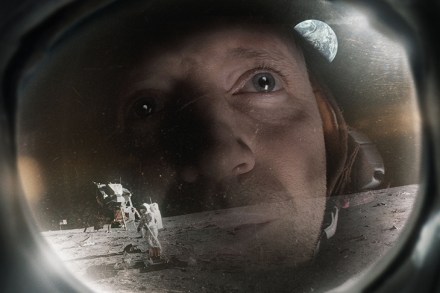
As the title suggests, 8 Days: To the Moon and Back (BBC2, Wednesday) comprehensively disproved the always questionable idea put forward by Elton John’s ‘Rocket Man’: that being an astronaut is ‘just [a] job five days a week’. More importantly perhaps, by concentrating purely on how Apollo 11’s lunar voyage unfolded over the eight days in question, without any pesky hindsight or analysis, it stirringly reminded us how uncomplicatedly thrilling the first moon landing was at the time. And also, you couldn’t help noticing, how madly risky. A key piece of equipment throughout the mission appears to have been the seat of the pants.

Go, West

My plan to cut the BBC out of my life entirely is working well. Apart from the occasional forgivable lapse — that excellent Margaret Thatcher documentary; Pointless and Only Connect because they’re the only programmes we can all watch together as a family — I find that not watching or listening to anything the BBC does is making me calmer, happier and better informed. I’m also learning stuff about myself that I never imagined possible. Like the fact that I have a massive man crush on the rap star Kanye West.

Just another Sunday soap

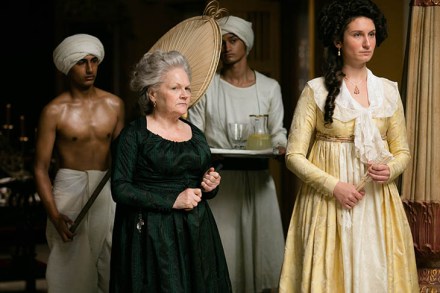
ITV’s new drama Beecham House is set in late 18th-century India where the British and French were still battling it out for supremacy. Its opening credits feature the east at its most exotic, with a montage of ceremonial elephants parading, sari-clad women gliding and lotus flowers opening. The hero is John Beecham (Tom Bateman), a hunky Englishman who proves honourable to the point of mild priggishness as he navigates his way through a world of dusky beauties, inscrutable orientals and treacherous Frenchies. If there were any Indians around at the time who weren’t gorgeously attired rich people, violent bandits or servants who took real pride in their work, we’ve yet to meet them.

What women want | 20 June 2019

Six hundred and thirty years ago, Chaucer revealed in ‘The Wife of Bath’s Tale’ that what women really want is to be totally in charge of everything. With Girl now back home permanently having done her A levels, I can confirm that this is true: no longer am I in control of what we watch on TV, not even when I plead that it’s my job and how else am I going to be able to afford the extensive tour of Magaluf and Bali etc. that she’s got planned this summer? But I don’t mind really because it means I’m forced to watch stuff there’s no way I would have seen otherwise. And in doing so I become a better and wiser person because of all the fascinating things it teaches me about the female psychopathology.

Stranger things

Usually, the return of Killing Eve would be pretty much guaranteed to provide the most unconventional, rule-busting TV programme of the week — where genres are mixed so thoroughly as to create a whole new one. This week, though, there were two new series that were even harder to classify. One was ITV’s Wild Bill: a show so bonkers that the fact it stars Rob Lowe as the recently appointed chief constable of East Lincolnshire mightn’t be the weirdest thing about it. When the resolutely American Bill Hixon (Lowe) first arrived in Boston, Lincs, it looked as if we’d be in for a standard fish-out-of-water comedy, with the traditional differences between Brits and Yanks played for knockabout laughs. And for much of the opening episode we were.

Blast from the past | 6 June 2019

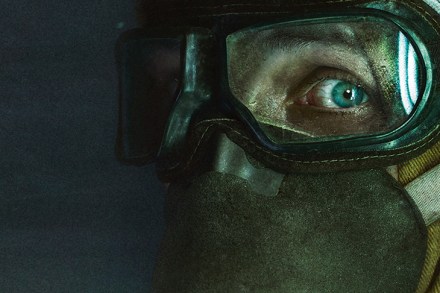
How many people do you think died at Chernobyl? 10,000? 50,000? 300,000? The correct answer, according to the never knowingly understated World Health Organisation — in a thorough report released nearly 20 years after the 1986 explosion — was ‘fewer than 50’. Ah, but what about all the mutant babies who ended up with two heads and webbed feet? What about the inevitable epidemic of cancers? Well, yes, it’s true that 4,000 more cases of thyroid cancer were loosely attributable to Chernobyl, mainly in children and adolescents. But the survival rate was 99 per cent.

Here comes the sun

When you see the opening caption ‘4.6 billion years ago’, it’s a pretty safe bet that you’re watching a programme presented by Professor Brian Cox. And so it proved again this week, as his latest exploration of the solar system began on BBC2, with an episode about Mercury and Venus. Being an officially designated ‘landmark’ series, The Planets (Tuesday) has many of the features you’d expect: lush music, an impressive CGI budget, a ten-minute behind-the-scenes segment at the end. More surprising is Cox’s willingness to anthropomorphise the planets — and to regard the ones that aren’t lucky enough to be Earth with a touching level of sympathy. After all, it’s not their fault they’re so lifeless.

Get your kit off

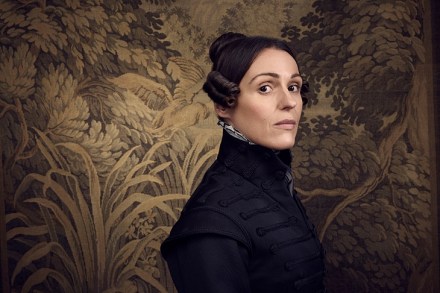
After its new costume drama You Go, Girl! (Sundays) about how amazing, empowered and better-than-men women are, especially if they are lesbians, the BBC ran its first ever Nike ad. At least that’s what I thought initially: rap music, moody shots of athletes, very high production values. Then I saw they were all grim-faced women and the word ‘RISE’ in flames and I thought: ‘Big new drama series? About girls who’ve been sucked into this very strict Christian cult, a bit like the Handmaid’s Tale, maybe?’ Then I noticed they were all wearing football kit and kicking balls around, and went back to my original Nike idea. Finally came the big reveal. It said: ‘#CHANGE THE GAME. FIFA WOMEN’S WORLD CUP 2019.