Television

Sumptuous and very promising: A Suitable Boy reviewed

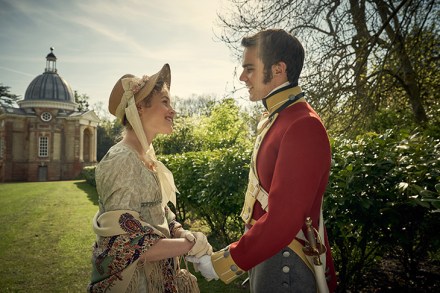
Nobody could argue that Andrew Davies isn’t up for a challenge. He’d also surely be a shoo-in for Monty Python’s Summarise Proust competition. After turning both War and Peace and Les Misérables into satisfying, unhurried six-part drama series, he’s now taken on Vikram Seth’s 1,300-page novel A Suitable Boy. The first episode started with a wedding that immediately established the programme’s visual sumptuousness, while also serving as a handy introduction to the main characters. The groom’s rebellious brother Maan, for example, chafed at the idea that he was supposed to be next.

Why I love French telly

There’s a scene in the French espionage series The Bureau — about the DGSE, France’s equivalent of the CIA or MI6 —where one of the characters loses a limb while on active service. ‘Excellent,’ jokes the station boss on his return. ‘This will greatly improve our diversity quota for disabled employees.’ This is why I prefer foreign language dramas to homegrown ones. You can’t imagine a joke like that making it into a BBC drama, can you? When, in 2015, the first season of The Bureau was shown to members of the real DGSE (Direction générale de la sécurité extérieure) they gave it a standing ovation.

Michaela Coel’s dazzling finale reminds me of Philip Roth: I May Destroy You reviewed

It might seem a bit of a stretch to see deep similarities between Michaela Coel (young, female, black and currently very fashionable indeed) and the late Philip Roth (increasingly discredited as an embodiment of all those phallocentric white guys who once ruled American fiction merely because they were great writers). Nonetheless, this week’s television made it hard not to. On Tuesday night, as an adaptation of Roth’s The Plot Against America began on Sky Atlantic, Coel’s I May Destroy You was serving up a dazzling final episode that confirmed how Rothian the series has been.

A documentary about the M25 that will make your heart soar

When a 90-minute documentary is introduced with the words ‘This is the M25’, you’d be within your rights not to feel your heart soar. Nor would you necessarily expect what follows to be full of wonders of all kinds — natural, historical, literary and scientific. Yet this is exactly what happened in BBC Four’s The Hidden Wilds of the Motorway, presented by Helen Macdonald. Macdonald is best known for her 2014 bestseller H is for Hawk, which mixed memoir and falconry with a biography of the author T.H. White. In Tuesday’s programme, she was on similarly genre-blending form as she set off on a television journey that, in a rare twist, was an actual journey: clockwise around the M25 from junction one in Kent.

Pure poison: BBC1’s Talking Heads reviewed

The big mistake people make with Alan Bennett is to conflate him with his fellow Yorkshireman David Hockney. But whereas Hockney’s art is generous, warm, bright, life-affirming, Bennett’s is crabbed, catty, dingy, insinuating. The fact that the BBC-led establishment keeps telling us he’s a National Treasure tells us more about the BBC-led establishment than it does about Bennett. Bennett is typical of the English intelligentsia Orwell anatomised in his ‘The Lion and the Unicorn’ essay: ‘It is always felt that there is something slightly disgraceful in being an Englishman and that it is a duty to snigger at every English institution, from horse racing to suet puddings.

A fine, even rather noble drama: BBC1’s The Salisbury Poisonings reviewed

This week, BBC1 brought us a three-part dramatisation of an ‘unprecedented crisis’ in recent British life. Among other things, it featured a lockdown, an extensive tracking and tracing programme, much heroism from people on the front line, and much confusion among scientists as to how to provide the facts when they didn’t really know them. The Salisbury Poisonings (Sunday–Tuesday) was presumably made well before you-know-what. Yet watching the programme in the current circumstances, it wasn’t easy to decide whether the timing was good or bad luck for the makers. The obvious parallels did lend a haunting, drone-note resonance to proceedings. On the other hand, they sometimes threatened to overshadow what was a fine, even rather noble drama in its own right.

Jeffrey Epstein really was a streak of slime

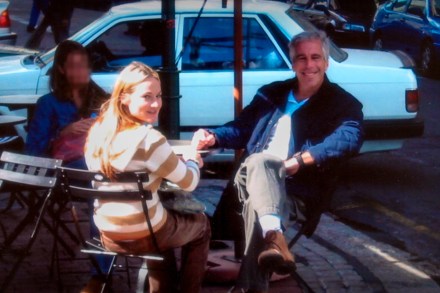
Did Jeffrey Epstein kill himself or was he murdered — and frankly who cares? Actually, having watched the four-part Netflix series — Jeffrey Epstein: Filthy Rich — about his secretive, sordid life, I care very much. Sure, his squalid death in jail, apparently from suicide while awaiting trial for numerous sex crimes, was thoroughly deserved. But justice would have been far better served if this noisome creep had spent the rest of his days rotting in prison, deprived for ever of all sexual activity save the involuntary variety provided in the showers whenever he dropped the soap. I hadn’t expected to respond quite this viscerally to the Epstein tale. Indeed, before I watched the documentary I was inclined to think that perhaps the nefariousness had been overdone.

Another drama about how women are great and men are rubbish: C4’s Philharmonia reviewed

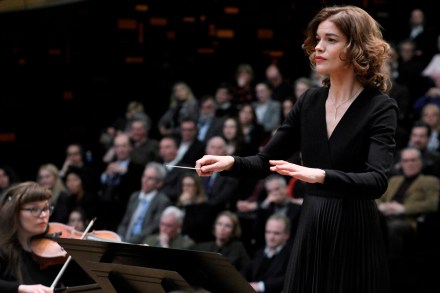
On the face of it, a French-language drama about a Parisian symphony orchestra mightn’t sound like the most action-packed of TV watches. In fact, though, Philharmonia (Sundays) is pretty much Dallas with violins. The first episode began with the eponymous orchestra blasting out a spot of what Shazam assured me was Dvorak, before its elderly conductor dropped his baton and collapsed to the floor, never to rise again. Cue a pair of Gallically elegant female lower legs making their way through the airport as one Hélène Barizet arrived from New York to take over the role. David was left in a tartan bag in Belfast; Helen was discovered in a tartan bag in a Dundalk phone box Not that her appointment was universally welcomed.

I so wanted to enjoy White Lines but it’s spectacularly uninvolving

If I could live my life over again my plan used to be that I’d make my fortune very early, spend my winters fox hunting through the season and my summers taking loads of ecstasy in Ibiza and having meaningless sex with beautiful strangers. But having seen the first two episodes of White Lines I’m not so sure about the second part of that equation: it all looks a bit sordid and depressing and really not much fun. ‘Do you know this is not making me want to live in Ibiza AT ALL,’ said the Fawn, as we watched, morosely. And I have to admit, I agree. I so wanted to enjoy this series.

One of the more disturbing films I’ve seen: Arena’s The Changin’ Times of Ike White reviewed

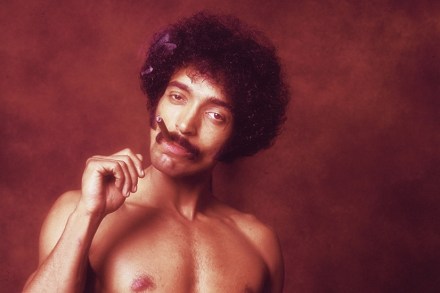
Arena: The Changin’ Times of Ike White (Monday) had an extraordinary story to tell — but one that, halfway through the documentary, already seemed to be complete. So, you might well have thought at that point, how would it fill the rest of the time? The answer, it transpired, was by taking an even more jaw-dropping turn. In the 1970s, Ike White was serving life for murder in a Californian prison when reports of his musical talent reached the record producer Jerry Goldstein. A prodigy on guitar, bass, drums and keyboards, White had until then been making most of his music in the prison’s gas chamber, which he was allowed to use as a rehearsal room.

Netflix’s Caliphate is all too frighteningly plausible

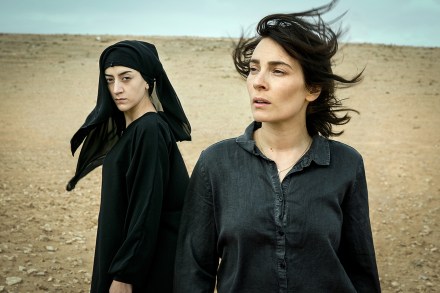
Sweden is now properly celebrated as the Land that Called Coronavirus Correctly. But in the distant past, those with long memories may recall, it had a less flattering reputation as the Land Absolutely Ruddy Swarming With Jihadists. Caliphate — an eight part Swedish-made drama on Netflix — takes you back there in vivid and compelling detail. Partly, it’s an edge-of-seat thriller about a major terrorist attack on Swedish soil —from its conception in Isis-held Raqqa to its execution (or its foiling by the security services: I haven’t got there yet so I don’t know) by a mix of radicalised locals and hardened Isis killers flown in from Syria.

Not merely funny but somehow also joyous: Sky One’s Brassic reviewed

Danny Brocklehurst, the scriptwriter for Sky One’s Brassic, used to work for Shameless in its glory days — although if you didn’t know that already you could probably guess. For a start, the central characters are another close-knit group of ducking-and-diving working-class northerners not overburdened with a social conscience. But there’s also the fact that, no matter what they get up to, they’re clearly supposed to be lovable — coupled with the rather more mysterious fact that they are. However dark the storylines theoretically become, the programme presents them with such an infectious swagger, and such a thorough blurring of realism and wild imagination, that the result is not merely funny but somehow joyous.

Superbly convincing: Unorthodox reviewed

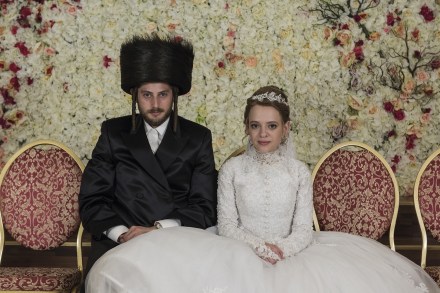
When I lived briefly in Stamford Hill I was mesmerised by the huge fur hats (shtreimel) worn by the local Hasidic Jews, and the wigs worn by their wives, and the almost tubercular pallor of their children. I often wondered how such a remote, aloof and archaic sect could possibly relate to 21st-century London. The answer, of course, was that they didn’t: they were like ghosts from another age, walking the same streets but not of this world. I wished I could get a glimpse of their private lives — and now, thanks to Unorthodox (Netflix), we all can. Loosely based on a memoir by Deborah Feldman, it tells the story of 19-year old Esther ‘Esty’ Shapiro (Shira Haas) who flees her ultraorthodox Jewish sect in Williamsburg, Brooklyn, for a new life in very secular Berlin.

Classic tangled thriller: Sky’s Gangs of London reviewed

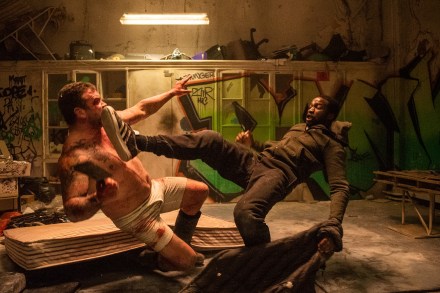
There were plenty of TV shows around this week designed to cheer us up. Sky Atlantic’s Gangs of London, however, wasn’t one of them. After decades of desensitisation, it’s not easy for any film or television programme these days to make its screen violence genuinely horrifying. Yet, by my reckoning, Thursday’s first episode managed to do it at least twice before the opening credits had even rolled. By the time they did, it was clear that two terrified Welsh lowlifes from some kind of travellers’ camp had been tricked into carrying out a hit on Finn Wallace (Colm Meaney), London’s most powerful criminal boss — rather than, as they’d fondly imagined, ‘just some paedo’. But that was clear only to us.

The Amazon Prime doc that will convert anyone to cricket

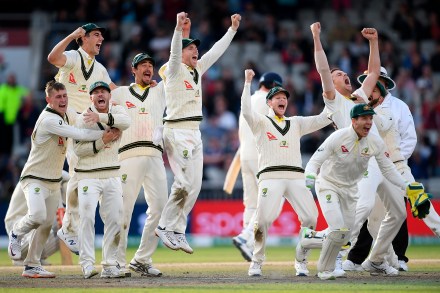
Imagine rooting for the Australian cricket team. If you’re Scottish, Welsh or Irish — or Australian obviously — it might not be such a stretch. But for an Englishman, I suspect, it’s nigh on impossible. It would be like supporting Germany in the (football) World Cup. Or yearning for the All Blacks to win the rugby. We invented cricket, after all. And in that particular sphere, Australia is our natural enemy. They burned our bails in 1882 — ‘the Ashes of English cricket’ — and quite properly we have never forgiven them. But if that’s how you feel — and I really don’t blame you — then you should treat yourself to the marvellous Amazon Prime series The Test: A New Era for Australia’s Team.

An extraordinary tale: BBC2’s The Countess and the Russian Billionaire reviewed

There can’t be many programmes that bring to mind quotations from both Henry Kissinger and Boney M., but BBC2’s The Countess and the Russian Billionaire was one of them. While Kissinger’s idea that ‘power is the ultimate aphrodisiac’ may be a little out of fashion in the #MeToo age, it was hard not to think it played a part in the eye-popping events that Wednesday’s documentary laid out with some relish. As for Boney M., rarely has ‘Oh, those Russians’ from ‘Rasputin’ felt so penetratingly insightful. The programme began filming in 2015, with the apparent aim of providing a ringside seat at a fight between an excitingly wealthy British-based couple and the Russian government.

A Formula 1 doc for people who hate Formula 1

Some years ago I was invited to the British Grand Prix at Silverstone courtesy of a watch manufacturer. As freebies go it was one of the best: endless champagne, overnight in a posh hotel near the track (wife invited too), then a trip by helicopter so as to avoid all the frightful traffic jams. All was going swimmingly until the actual race… God, it was boring. Noisy too. You’re stuck in an elegant marquee with endless booze and as many gold-plated, jewel-encrusted lobsters as you can force down your gullet, but it’s impossible to relax or chat or enjoy yourself because screaming endlessly in your lughole is the ‘neeaaawwww’ noise of those stupid bloody racing cars.

Perfectly serviceable – at points even charming: Four Kids and It reviewed

This film contains flying children, time travel and a sand monster that lives under a beach — yet the most incredible thing of all is that a family get to go on holiday. They actually leave their house, drive down an actual motorway, rent an actual seaside cottage and go for actual walks, passing well within two metres of actual other people! And not once do Derbyshire police film them with a drone, then post intimidating footage of it on the internet. The movie’s producers couldn’t have known they’d be releasing their creation into a locked-down world, but now that they have, who’s to say more people won’t watch it at home than would have watched it at the cinema? We are literally a captive audience.

Riveting documentary about a remarkable man: Harry Birrell Presents Films of Love and War reviewed

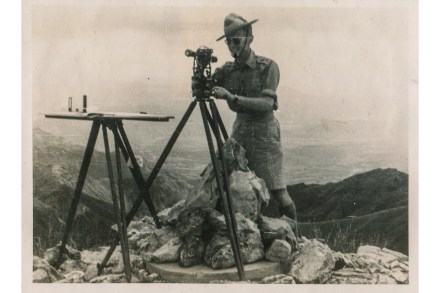
First shown on BBC Scotland, Harry Birrell Presents Films of Love and War (BBC4, Wednesday) was the documentary equivalent of a William Boyd novel, showing us a 20th-century life shaped by 20th-century history. The programme was made by Harry’s granddaughter Carina, who’d been eight when he died, and known him only as ‘a lovable, frail, blind old man’. But then she came across 400 carefully labelled reels of film in the family shed, together with an equally well-organised collection of diaries. Exactly — or even vaguely — when this discovery took place was one of many details that Carina tantalisingly failed to disclose. (Now and again, we did see her dusting off old cannisters with a look of surprise, but this felt distinctly like re-enactment.

Old-school Sunday-night family viewing: ITV’s Belgravia reviewed

The world may be going to hell in a handcart but some things remain reassuringly unchanged: Julian Fellowes period dramas about feisty dowager duchesses, social climbing and snobbery, say. I like and admire Fellowes so I don’t want him to take this the wrong way. But when I say that his new series Belgravia (ITV) borrows from the same template he employed so successfully with Downton Abbey, and before that Gosford Park, and also in that series set on the Titanic that didn’t do quite so well, I’m not trying to suggest he’s a one-trick pony. More that he’s a canny chap who understands his market, has found the perfect formula and is damned if he’s not going to milk it for all it’s worth.