Television

The creators of Breeders are locked into a game of How Far Can You Go

Sky One’s Breeders (Thursday) bills itself as an ‘honest and uncompromising comedy’ about parenting. To this end, the opening scene featured Martin Freeman as Paul trying to do some work while his two children under seven made a bit of noise a couple of rooms away. Having given himself a little pep talk about not screaming at them, Paul then screamed at them — bursting in on their blameless fun to yell: ‘Jesus fucking Christ! How many times do I have to tell you to be quiet?’ He further informed them that he was going to leave home and they should ‘tell mummy that daddy’s gone cos he couldn’t stand the fucking noise anymore.

Too edgy and clever to be wasted on kids: Netflix’s Locke & Key reviewed

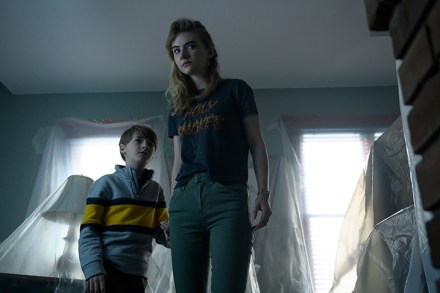
One of my perpetual gnawing terrors is that I’ll recommend a series that looks initially promising but turns out to be total rubbish, meaning I’ll for ever have thousands of viewers’ wasted lives and disappointment on my conscience. But my even greater fear is that I’ll peremptorily condemn something after one or two episodes which subsequently reveals itself to be a near-masterpiece. This almost happened with Locke & Key (Netflix). ‘You realise I’m watching this on sufferance. The second you’ve seen enough to review, we’re moving on to something else,’ declared the Fawn. And I could sort of see her point.

Sharp family saga with a thriller uneasily attached: ITV’s Flesh and Blood reviewed

As in many thrillers, the characters on display in Flesh and Blood (ITV, Monday to Thursday) often seemed locked in a fierce competition as to which of them we could trust the least. The early front runner was Mark (Stephen Rea), a retired surgeon whom the not-long widowed Viv (Francesca Annis) introduced to her three grown-up children as her new boyfriend. But was Mark all he appeared to be? And if not, was this necessarily a bad thing — given that what he appeared to be was spectacularly shifty? Soon, though, the grown-up children had plenty of other people to worry about, including themselves, as they messed up their lives in an impressive variety of ways.

The appeal of psychopaths

Ever since the end of Gomorrah season four (Sky Atlantic) I have been bereft. I eked it out for as long as I could, going whole weeks without watching an episode — rationing it and savouring it as you do when you’re down to your last Rolo. But eventually I could put off the climax no longer, I watched them all die — as everyone always does in Gomorrah, so I’m not spoiling anything — and now I’m on the hunt for a substitute. So far the most obvious candidate is Narcos: Mexico season two (Netflix). This contains most of the same key ingredients: bling, convoys of vehicles ripe for ambush, drugs shipments, betrayal, tense stand-offs that could end up either in extreme violence or a cunning, game-changing new arrangement, torture, etc.

Odd but gripping: BBC1’s The Pale Horse reviewed

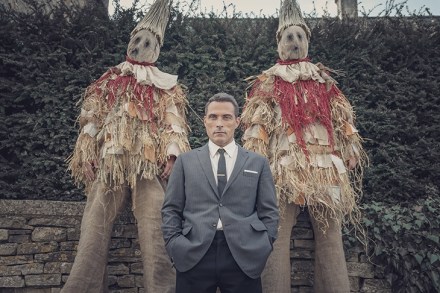
Not much was clear in the opening scenes of The Pale Horse (BBC1, Sunday), which even by current TV standards were admirably committed to confusing us with a series of baffling fragments. One thing that did seem apparent, though, was that Mark Easterbrook (Rufus Sewell) wasn’t having much luck with the ladies. In one fragment, he cradled the corpse of his new wife who’d just electrocuted herself in the bath. A few fragments later — some of them featuring an old woman lying in bed with her hair falling out — he woke up in a Soho starlet’s flat to find a rat dead in the sink and the starlet dead in the bed.

SAS: Who Dares Wins is harsh, gruelling and transgressively countercultural

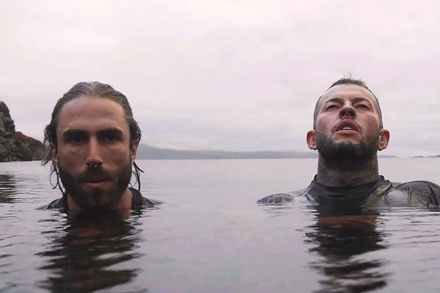
SAS: Who Dares Wins (Channel 4, Sundays) is literally the only programme left on terrestrial TV that I can bear to watch any more. And I’m only slightly exaggerating. Where else, anywhere from the BBC to Channel 4, would you see a woman being punched in the face and made to cry by an ex-SAS soldier for your amusement and delectation? Where else would the competition not be rigged in one way or another so as to ensure that the appropriate race and gender mix made it through to the end? Yes, of course it was shocking a few weeks back watching midwife Louise Gabbitas, 29, get thumped several times in the head by a bloke. Especially when we viewers knew that he was in fact undercover ex-special forces and had been sent to spy on her.

Understated, unashamedly patriotic and heartbreaking: The Windermere Children reviewed

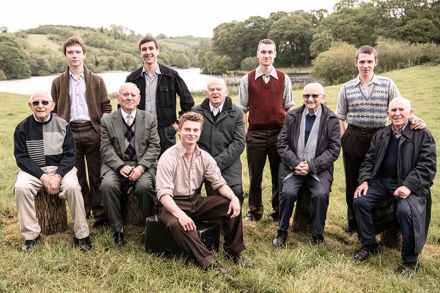
One of the many astonishing things about the BBC2 drama The Windermere Children (Monday) was that the real-life story it told isn’t better known already. In August 1945, 300 Jewish children, who just a short time before had been starving in Nazi concentration camps, arrived at a converted seaplane factory in the Lake District. None, as far as they knew, had any family left, and none could speak any English. Waiting to welcome them was Leonard Montefiore of the Central British Fund for Jewish Relief who’d raised the money to turn the factory into a carefully thought-out rehabilitation centre — and amid the wreckage of Eastern Europe had liaised with the Red Cross, the RAF, the Czech authorities and the British Home Office to fly them in.

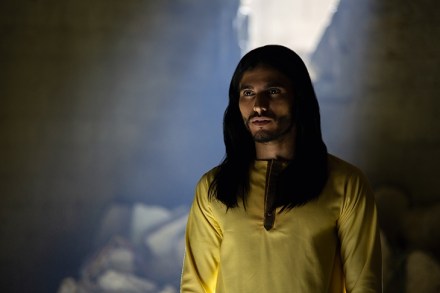
Netflix’s Messiah is a great concept undermined by implausible politics

Sky’s latest bingewatch potboiler Cobra can’t quite make up its mind whether it wants to be an arch, knowing House of Cards-meets-The Thick Of It satire about parliamentary intrigue. Or a full-on post-apocalyptic thriller in the manner of Survivors or The Walking Dead. It ends up succeeding in neither. The premise is that a powerful solar flare is heading towards Britain, leaving the government little time to prepare, and subsequently causing all manner of chaos: plane crashes, hotel fires, escaped prisoners, mass blackouts. Will mild, likeable Conservative prime minister Robert Sutherland (a miscast Robert Carlyle), his fractious cabinet and his civil service prove up to the job of extricating Britain from a new Dark Age?

Undeniably eye-popping: BBC2’s Louis Theroux – Selling Sex reviewed

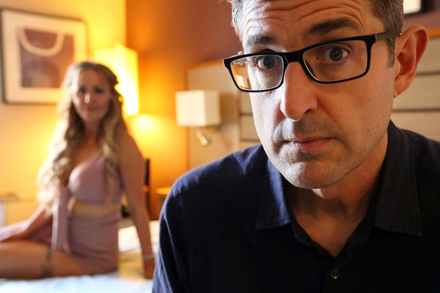
Victoria, a single mother in her early thirties, is getting her children ready for school — ensuring an equitable distribution of toast and issuing a series of determinedly patient instructions. (‘Listen to Mummy, you need to put your socks on.’) Once they’re gone, she then heads to a hotel to meet the first man that day who’ll be paying her £250 for sex. ‘It’s the perfect job for me,’ she explains cheerfully. ‘Very flexible.’ Victoria was one of three women featured in Louis Theroux: Selling Sex (BBC2, Sunday) for which Louis furrowed his familiar brow, adopted his finely honed bemused expression and set off to investigate transactional sex in digital-age Britain.

Did everyone in punk sell out?

For many people of a certain age (full disclosure: mine), punk has been a weirdly persistent presence. These days, we may not often be tempted to sit down with a glass of wine and an album by the Cortinas, Chelsea or Eater. We may even have belatedly realised that the most revolutionary record of 1977 — the year punk officially conquered Britain (and, incidentally, the country’s five bestselling singles were by Wings, David Soul, Julie Covington, Leo Sayer and David Soul again) — was Donna Summer’s ‘I Feel Love’. Nonetheless, the sight of Joe Strummer barking out a load of heartfelt if incomprehensible lyrics while the Clash thrash away in the foreground still somehow feels like a thrilling homecoming. But what to make of the whole business 42 years on?

The only way to survive Christmas TV is to avoid anything seasonal and watch Giri/Haji

The key to surviving the next couple of weeks of TV is to avoid like the plague anything that smacks of seasonal viewing. So, no Christmas specials (such as the semi-celebrity, elderly grown-ups version of University Challenge where the questions are even more laboriously PC than on the student edition), no Harry Potter, no adverts featuring tinsel, dragons and patronisingly diverse families making merry. Basically, you want to steer clear of terrestrial TV altogether — but with one exception. You may use BBC iPlayer to download the only decent drama series that slipped through the net: Giri/Haji. Joe Barton’s blackly comic Anglo-Japanese thriller was by some margin the most original and inspired thing on the BBC all year. But it was a bit unlucky with the reviews.

Why on earth did Glenda Jackson give up acting? BBC1’s Elizabeth is Missing reviewed

Watching BBC1’s Elizabeth Is Missing made one of the more puzzling decisions of recent decades seem more puzzling still. Entirely her call of course, but why on earth did Glenda Jackson give up acting (something she was better at than pretty much everybody else in the world) to become an unremarkable Labour MP (something that any number of people could surely have done just as well) for more than 20 years? Whatever her thinking, though, Jackson’s first TV role since 1992 was an overwhelmingly powerful and therefore quite sad reminder of what we’ve been missing.

The only bearable TV series these days are the ones with subtitles, like Der Pass

True to the Andrew Roberts rule that the only bearable series on TV these days are ones with subtitles, I’ve started watching Der Pass (Sky Atlantic). Not unlike The Bridge and The Tunnel, it starts with a dead body exactly straddling a border, thus requiring the intervention of detectives from two national jurisdictions. This time, it’s a shambolic male Austrian and a perky blonde German. It’s fascinating to see what quirks foreign authors choose to give their detective characters.

Is the patriarchy as all-powerful as it’s cracked up to be? The Baby Has Landed reviewed

Anybody who watched the opening episode of The Baby Has Landed (BBC2, Wednesday) might have found themselves wondering if the patriarchy is quite as all-powerful as it’s cracked up to be. The programme follows ‘six families over six life-changing weeks’ as they welcome a new member — and on the whole features women who radiate authority and men who do what they’re told. The most experienced parents are Nigel and Helen Pierce, first seen embarking on a lengthy quest for shoes as they tried to get their four children under five out of the house so that Helen could go to hospital and have a fifth. As old hands, they passed the time during labour doing crosswords. (‘Breed of hunting dog? You have your contraction and get back to me.

War of the Worlds is as bad as Doctor Who

Edwardian England deserved everything it got from those killer Martian invaders. Or so I learned from the BBC’s latest adaptation of The War of the Worlds (Sundays). Everything about that era, apparently, was hateful, backward and ripe for destruction: regressive attitudes to women and homosexuality; exultant white supremacy (cue, a speech from a government minister on the superiority of the Anglo-Saxon race); a general prevailing bone-headedness and stuck-upness; stiff, stuffy, relentlessly brown clothing with superfluous belts; and as for those ridiculous bristling moustaches… Still, I don’t think H.G. Wells would have been totally appalled by this travesty of his 1898 potboiler.

Patronising, clichéd and corny: BBC1’s Gold Digger reviewed

Some last taboos, it seems, can remain last taboos no matter how frequently they’re confronted. Grief, the menopause, masturbation, mental illness are all routinely described that way whenever they get depicted on television — i.e. quite often. But perhaps the sturdiest last taboo of the lot is that older women can have sexual feelings: something that appears to come as a rather patronising surprise to TV folk every time they tackle it — i.e. quite often. The latest example of such bravery is Gold Digger (BBC1, Tuesday), a drama keen for us to understand that a woman of 60 can still be both desirable and a goer — although not so keen as to cast a woman of 60 in the role.

God awful: BBC1’s His Dark Materials reviewed

‘Here’s your new Sunday night obsession...’ the BBC announcer purred, overintoned and mini-orgasmed, like she was doing an audition for a Cadbury’s Flake commercial, ‘... a dazzling drama with a stellar cast.’ My hackles rose. Did no one ever mention to her the rule about ‘show not tell’? And my hackles were right. His Dark Materials has indeed become my Sunday night obsession: how can the BBC’s most-expensive-ever drama series possibly look, sound and feel so clunkingly, God-awfully, disappointingly flat? Yes, I know Philip Pullman’s trilogy is an extended, bitter rant against Christianity disguised as children’s entertainment.

BBC wildlife documentaries are just a chance to tell us all off

Older readers may remember a time when landmark BBC wildlife documentary series were joyous celebrations of the miraculous fecundity of the planet we’re lucky enough to find ourselves living on. Well, not any longer. In our more censorious age, they’ve become another chance to essentially tell us all off. So it was that Seven Worlds, One Planet (BBC1, Sunday) began with Sir David Attenborough presenting the usual highlights package of the wonders to come, with each episode focusing on a different continent. But then he put on his special serious voice to add the dark warning that ‘This may be the most critical moment for life on Earth since the continents formed.’ (Quite a long time, I think you’ll agree.

If we do get a good Anglo-American trade deal, we should thank Trump’s mother

In an uncharacteristic fit of almost-robustness, Culture Secretary Nicky Morgan has said she is ‘open-minded’ about scrapping the BBC licence fee and replacing it with a Netflix-style subscription service. Good idea. What would we actually miss if we didn’t subscribe? Not an awful lot in my view. Some people cite David Attenborough’s nature documentaries but I certainly wouldn’t now that they have become so obtrusively propagandistic. The problem with the BBC isn’t — and never has been — lack of talented filmmakers, wildlife camera crews, presenters, actors, writers or production teams. It’s that, from news to drama, the BBC’s woke politics now subsume and corrupt its entire output.

Should we be playing the surveillance state for laughs? Celebrity Hunted reviewed

One of the many great things about The Capture was that we could never be sure whether the British authorities’ capacity for virtually blanket surveillance was a nightmare vision of the future or a nightmare portrait of the present. Celebrity Hunted, though, suggests a third possibility: that virtually blanket surveillance is simply proof of how marvellous the authorities are, and so untroubling that it can be played for laughs. This third series is, once again, part of Channel 4’s annual Stand Up to Cancer season, and features four teams of two, whose job is to go on the run for a fortnight and avoid capture by intelligence experts equipped with the latest snooping technology.