Television

Relentless and shouty: BBC2’s Then Barbara met Alan reviewed

BBC2’s one-off drama Then Barbara Met Alan (Monday) told the true story of how two disabled performers on the cabaret circuit of the 1990s fell in love and campaigned together successfully for disability rights. Most of the cast and a lot of the crew were people with disabilities themselves, and the programme provided a startling reminder of how recently Britain was still a country that made little provision for the disabled – and, even more startlingly, of how controversial the idea of such provision then seemed. The central performances were rivetingly good, and the overall sense was of a heartfelt tribute being paid to a couple who did much to improve the lives of many thousands of people.

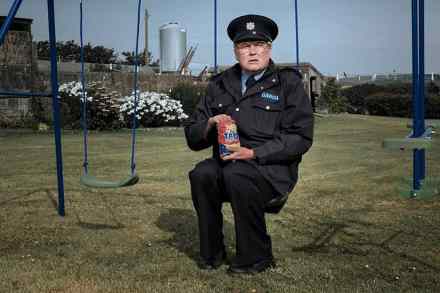
Unhurried and accomplished whodunit: ITV’s Holding reviewed

A couple of years ago, I happened to read Graham Norton’s third novel Home Stretch. Rather patronisingly, perhaps, I was surprised by how accomplished it was, especially in its sympathetic but melancholy portrait of life in a West Cork village. Yet, judging from ITV’s new adaptation of his first novel Holding, this was something he’d pulled off before – because, here again, it’s pretty clear both why Norton would want to write kindly about the kind of place he grew up in, and why he would have wanted to leave it. Monday’s first episode efficiently established the rural-Irish setting with shots of fields, cows and wind turbines. We then saw the village policeman P.J.

What’ll happen next – or what’s happened so far – is anybody’s guess: The Ipcress File reviewed

ITV’s new version of The Ipcress File began with a close-up of a pair of black-rimmed glasses just like those worn by Michael Caine in the 1965 film. They were then put on by their owner (Joe Cole), thus transforming him into Harry Palmer – but also neatly establishing the kind of show we were in for. Sunday’s first episode did a fine job of setting up an impeccably twisty (i.e. confusing) Cold War plot. It spared no effort in its quest to show us that the Britain of 1963 was on the Brink of Social Change. And yet, neither of these things really got in the way of its main aim: to be as cool and stylish as the 1960s films and TV it was paying tribute to.

Enthralling and unusual – even if you don’t care about Kanye: Netflix’s Jeen-yuhs: A Kanye Trilogy reviewed

The most disappointing pop performance I’ve ever seen – and in the course of my 15-odd years as a music critic I saw an awful lot – was Kanye West at Glastonbury in 2015. Perhaps he was making some kind of ironic statement on the nature of celebrity and fan expectation: blinding lights all focused on himself; no attempts to engage with the crowd; relentless, mechanical rapping but with most of the amusing samples and catchy hooks removed, the better to punish us all by ordeal with loud, righteous verbiage.

For all its absurdity, it delivers the goods: BBC2’s Louis Theroux’s Forbidden America reviewed

In the latest episode of Louis Theroux’s Forbidden America, Louis asked a rapper called Broke Baby if ‘it’s important to keep it real’. ‘You have to play your role,’ replied Broke by way of apparent agreement. Given how stoned he was, this neat paradox — that you keep it real by pretending to — mightn’t have been wholly intended. Either way, however, it was hard not to apply it to Louis himself. More than 20 years into his TV career, does anybody know for sure whether his familiar schtick is genuine or faked? Certainly not, I’d suggest, Louis — whose elaborate stage-English courtesy, wide-eyed bemusement and spectacular naivety are now so practised as to have become completely ingrained.

Amusing and entertaining – though not very taxing: Amazon Prime’s Reacher reviewed

Jack Reacher is back on the screen and aficionados of the hugely successful Lee Child airport thrillers in which he appears must be hugely relieved. This time he is played not by pint-sized Tom Cruise but by someone much closer to his 6ft 5ins height: a musclebound giant called Alan Ritchson. Not having read any of Child’s 100 million-selling oeuvre (probably because I’m bitterly envious: he’s a Midlands-born ex-media type, like me, but has a slightly larger bank balance), I can’t tell you how true to the original Ritchson is. But he plays him as if he’s on the autistic spectrum — a loner uncomfortable with too much dialogue or human emotion of any kind, who just wants to get the job done. That job is killing all the baddies.

The medical equivalent of The Responder: BBC1’s This is Going to Hurt reviewed

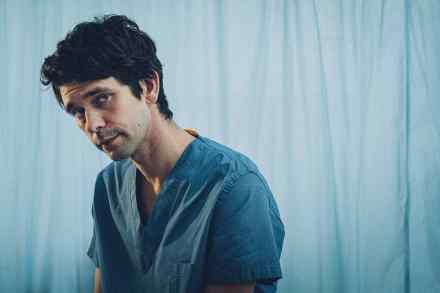
According to the makers, This is Going to Hurt is intended as ‘a love letter to the national health service’. If so, however, it’s certainly not a soppy one. Few non-British people who watch it will, I suspect, find themselves wishing they had an NHS of their own — where the mission statement could easily read: ‘We Aim to Muddle Through Somehow, Despite Everything.’ Adapted by Adam Kay from his own phenomenally successful memoir of life as a junior doctor, the programme opened with Adam (Ben Whishaw) realising he’d slept in. On the plus side, his journey to work wouldn’t take long, given that he’d woken up in his car outside the hospital, having been too tired to drive home the night before.

Horrifying but gripping: Netflix’s The Puppet Master: Hunting the Ultimate Conman reviewed

It’s 1993 and you’re studying at a top agricultural college with a bright future ahead of you, perhaps in farming or land management, when a chance conversation with a barman all but ruins your life. The barman tells you that he is an agent working for MI5, spying on an IRA cell in college, one of whose members happens to be your flatmate. You might be sceptical but the agent is very persuasive; and besides, someone from your college has indeed just been arrested for supplying bomb-making equipment to the IRA. When the agent warns you that you and your flatmates are in serious danger and must go on the run, you’re inclined to take him seriously.

Shades of Tony Soprano: BBC1’s The Responder reviewed

Older readers may remember a time when people signalled their cultural superiority with the weird boast that they didn’t watch television. These days the same mistaken sense of superiority is more likely to rely on the equally weird one that they don’t watch terrestrial television. So now that the BBC and ITV find themselves in the historically improbable role of plucky underdogs, it’s pleasing to report that this week saw the launch of two terrific new terrestrial shows — one of which already looks set to be as good as anything on Netflix, Amazon or Disney+ (except for Get Back of course). The programme in question is The Responder.

A dog’s breakfast but I’m rather enjoying it: Sky Atlantic’s Yellowjackets reviewed

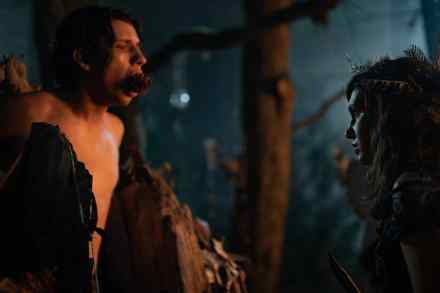
It has taken me a while to watch Yellowjackets because I found the premise so offputting: in 1996 a plane carrying a New Jersey girls’ school soccer team crashes in the mountain wilderness, stranding the survivors for nearly two years. Through flashbacks, we learn that the girls went through some kind of Lord of the Flies horror scenario, perhaps including cannibalism and ritualistic tribal sacrifice. All of which might explain why the forty-something women we meet today are so raddled, bitter, secretive, paranoid and messed up.

A cut above TV’s usual #MeToo fare: BBC1’s Rules of the Game reviewed

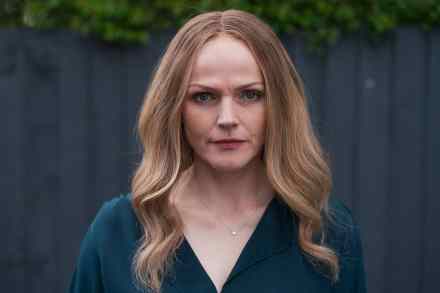
As you may have noticed, it’s something of a golden age for TV shows about how invisible middle-aged women are — except perhaps, in all those TV shows about how invisible middle-aged women are. At first sight, Rules of the Game — a crime drama set in a northern sportswear company — seemed a fairly standard example. The company in question, Fly Dynamic, has a management style that some might consider a little sleazy, run as it is by a group of men who’ve never met a 16-year-old girl they didn’t want to ply with booze and drugs. Meanwhile their neglected wives amuse themselves as best they can with cheese evenings.

Vital, damning docudrama about the Sacklers: Disney+’s Dopesick reviewed

One of my first jobs in journalism was as the arts correspondent of the Daily Telegraph. I’d hop on my motorbike in my greasy leathers (which I used to wear around the office, much to my then editor Max Hastings’s consternation) and zoom off to all manner of exhibition and gallery openings, many of them somehow related to the name Sackler. The Sackler family at the time were the world’s greatest arts philanthropists, with galleries and museums and rooms named after them from New York, London and Paris to the Far East. Like almost everyone, I had no idea of the source of their apparently limitless wealth. But I knew for sure that the Sacklers were a good thing, for art is beautiful and philanthropy admirable, right? That, though, was another time and another world.

Tells us more about today than the early 1960s: BBC1’s A Very British Scandal reviewed

For people who like a good upper-class scandal (or ‘people’, as they’re also known), 1963 was definitely a vintage year. Even before the Profumo affair came along, the divorce of the Duke and Duchess of Argyll offered plenty to enjoy, with its courtroom tales of her 80-odd lovers and that famous Polaroid of her pleasuring a titillatingly anonymous man while still wearing her pearls. All of which presented something of a problem for BBC1’s three-part dramatisation, A Very British Scandal — and not just because it had to pretend not to be titillated itself.

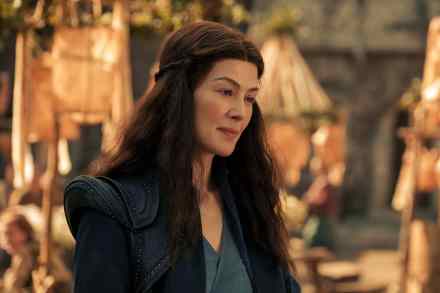
Even worse than the book: Amazon Prime’s The Wheel of Time reviewed

A couple of years ago, in that near-forgotten era when we could travel almost freely, I canvassed social media as to what should be my relaxing but involving holiday read during a fortnight in Greece. One suggestion — and this is why you should never trust the literary advice of random strangers — was Robert Jordan’s The Wheel of Time series. I started the first book full of bright hope. It would be my new Tolkien-meets-Game of Thrones. Besides the strong personal recommendation and the slew of five-star reviews on Amazon, what persuaded me was the fact that the late author had served two heavily decorated tours of duty as a helicopter door gunner in Vietnam. Then he went on to do a physics degree and worked for the US Navy as a nuclear engineer.

More mesmerising than it should be – Disney+’s The Beatles: Get Back reviewed

My late friend Alexander Nekrassov loathed the Beatles, which I used to think was a wantonly contrary position akin to hating kittens or blue skies or Christmas carols. What could there possibly be not to like, love and admire about the band that gave us ‘Eleanor Rigby’, ‘A Day In the Life’ and ‘Strawberry Fields Forever’? Since then I’ve encountered so many Beatles sceptics that it has given me pause for thought.

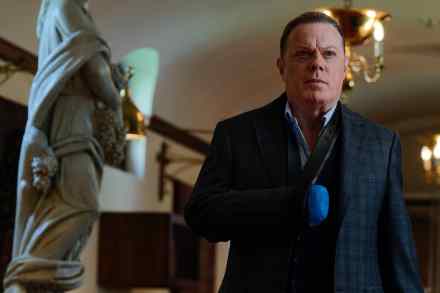
Eddie Izzard is so bad I’m hoping he gets dismembered: Sky’s The Lost Symbol reviewed

If it weren’t for this job I sometimes wonder whether I’d even bother watching TV at all. This mood strikes me particularly in those weeks when I find myself casting round for anything new and vaguely interesting to watch and I end up in front of something as epically dire as Sky’s new Dan Brown adaptation The Lost Symbol. Brown’s hero Robert Langdon, whom we first met on screen in the The Da Vinci Code, is like Indiana Jones with a charisma bypass. Remember that wonderful scene in the first Indie movie where hunky Harrison Ford is giving a lecture to some besotted female archeology students, and one girl closes her eyes to reveal that she has written ‘Love’ on one eyelid and ‘You’ on another?

Some jolly TV artifice and a rare moment of authenticity: C4’s Miriam and Alan – Lost in Scotland reviewed

Thanks to Covid, the days are gone — or at least suspended — when a TV travel programme meant a thespian in a Panama hat wandering around souks and bravely trying some funny foreign food. Instead, we now have shows in which the presenters, often operating in pairs, drive around picturesque parts of Britain cranking up the bantz, with plenty of aerial shots of their car bowling along an abnormally empty road. Take Miriam and Alan: Lost in Scotland — by my reckoning approximately Exhibit P. The premise here is that Alan Cumming and Miriam Margolyes are seeking to reconnect with their proud Caledonian roots, which is why the first stop was a Glasgow front door behind which Miriam’s father lived as a boy in 1901.

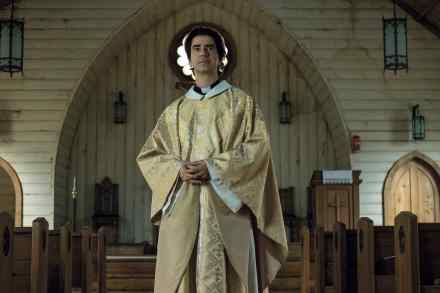
Profound and original and unashamedly religious: Midnight Mass reviewed

I was turned on to Midnight Mass by Ricky Gervais who raved about it in one of his social media chats: ‘I absolutely loved it, and it got better and better. It’s like all the themes like love and death, regret, second chances, but it’s about good and evil in a biblical sense.’ Yes. Midnight Mass is very unusual in that (so far, at least; I’m only two and a bit episodes in) it seems to take Christianity at its own estimation. God is real, miracles do happen, even (or especially) the most miserable sinners can find redemption through repentance. Watching it is quite unsettling because you keep expecting the rug to be pulled from under your feet and, say, the hero priest Father Paul Hill (Hamish Linklater) suddenly to be revealed as a secret agent of Satan.

A blisteringly bonkers first episode: Doctor Who – Flux reviewed

BBC1 continuity excitedly introduced the first in the new series of Doctor Who as ‘bigger and better than ever’ — presumably because the more accurate ‘bigger and better than it’s been for a bit’ doesn’t have quite the same punch. Still, Sunday’s programme was a definite, even exhilarating improvement on those of recent years. Since Chris Chibnall became the showrunner in 2018, thrills have taken a firm second place to solemn lectures on how the most dangerous monster of all is human prejudice. Yet at no stage here did the Doctor (Jodie Whittaker) encounter some acknowledged hero of black and/or women’s history — and so allow us a self-satisfied bask in having risen above the bigotry of less enlightened times.

A highly polished exercise in treading water: Season 3 of Succession reviewed

At one point in an early Simpsons, Homer comes across an old issue of TV Guide, and finds the listing for the sitcom Gomer Pyle, U.S.M.C. ‘Gomer upsets Sergeant Carter,’ he reads — adding with a fond chuckle, ‘I’ll never forget that episode.’ Even for British viewers unfamiliar with the show, the joke is clear: that’s what happens in every episode. Sad to say, this popped into my head while watching the first in the new series of Succession. The acting, script and direction are as brilliant as ever.