Wine Club

Our merchant partners – Armit Wines, Brunswick Fine Wines, Corney & Barrow, FromVineyardsDirect, Mr Wheeler, Private Cellar and Yapp Bros – represent the cream of the UK’s independents and boast centuries of experience between them. They all have particular areas of expertise and stock wines that you would never be able to find on the supermarket shelves or local off-licence.

Wine Club 20 July

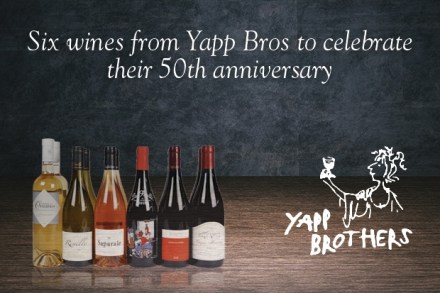
A bumper offer this week from our old chums Yapp Bros. Led by step-brothers Jason Yapp and Tom Ashworth, the much-lauded Wiltshire wine merchant is celebrating its 50th anniversary and corks have been popping for weeks. Indeed, having just returned — more than a little liverish — from a trip to Alsace in their company, I can vouch for the fact that Jason and Tom take their celebrations seriously and I was led badly astray in Colmar. The wicked step-brothers have form in this regard. I’m still haunted by that night in the transvestite nightclub in Avignon and I should have known better. What a naïve fool I am… Anyway, to the wines.

Wine Club 6 July

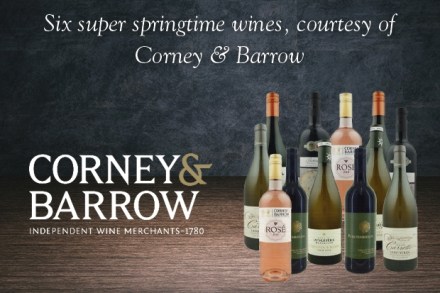
Our offer from Corney & Barrow is absolutely jam-packed this week so I trust you’ll forgive me if I get straight to the nitty-gritty. Regular readers will recall the fabled Brett-Smith Indulgence, whereby C&B’s MD, Adam Brett-Smith, knocks a few extra quid off a case for anyone buying two dozen bottles or more (on top of the existing Speccie discount). Well, we’ve decided to streamline things and apply said discount to just the one case. How’s that for good news? The following prices are therefore as tasty as the wines they apply to. 2018 La Muse de Cabestany Chardonnay/Viognier (1) is an undemanding light and fruity white from the excellent Celliers Jean d’Alibert co-operative in Languedoc.

Wine Club 22 June

Ah, how lovely! The sun’s out and the birds are tweeting. My boys’ wretched A-levels and GCSEs are finally over and, bless them, the chaps remembered Father’s Day unprompted for once. I’ve got my Ashes/World Cup cricket and Glyndebourne tickets and, well, everything seems to be coming up rosé. And, goodness me, don’t we Brits get through a lot of the pink stuff? Sales show no sign of doing anything other than rocketing. Indeed, I understand that pink wine is still the fastest growing wine category of all. Of course, here in my home town of Brighton, we’ve been out and proud about our fondness for anything pink for yonks and knock back more than our fair share.

Wine Club 15 June

We were quite the merry band. Forty or so Spectator readers — many of them veterans of our fabled Spectator Winemaker Lunches and graduates of our equally celebrated Spectator Wine School — joined me for a bespoke wine tasting at Majestic’s St. John’s Wood store last week. One impressively hardy soul polished his drinking boots especially well and joined us for the Seresin Estate Winemaker Lunch the following day too. Excellent work! We tasted almost 50 wines, all Spanish, and our six favourites are herewith offered to fellow readers at generously discounted prices. All wines were tasted blind.

Wine Club 8 June

We’ve four wines from Château Belles Eaux this week, one of the leading lights of the Languedoc and a long-standing favourite of mine. I remember a very jolly visit to the estate in the days when it was in the hands of AXA Millésimes, the vineyard-owning arm of AXA Insurance that’s led by the canniest of canny old foxes — Christian Seely. CS is celebrated for snapping up and turning around under-performing estates and making them great again. Given that the AXA portfolio currently includes such top-notch properties as Quinta do Noval, Ch. Pichon Baron, Ch. Suduiraut, Ch. Petit-Village, Domaine de l’Arlot and Disznókó, you will have some idea of the company Ch. Belles Eaux has been used to keeping.

Wine Club 25 May

We’ve not had an offer from Messrs Corney & Barrow in a while and it’s a treat to welcome them back to these pages, especially since they come wafting such scrumptious bottles under our beaks. There’s much to enjoy here as we head into supposed summer and I trust you’ll take advantage of the fabled Brett-Smith Indulgence whereby C&B’s MD, Adam Brett-Smith, knocks a few extra quid off a case for anyone buying two dozen bottles or more (on top of the existing Spectator discount that is). Get stuck in, I say. The 2017 Domaine Carette Saint-Véran ‘Les Chatenays’ (1) is from a small family-owned estate in the southernmost appellation in the Mâconnais.

Wine Club 27 April

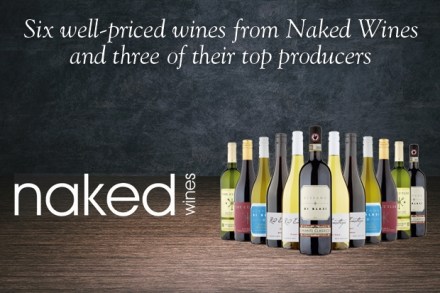
Something new this week, with our first-ever offer from Naked Wines, the online retailer that’s been much in the (wine) news thanks to the proposed rebranding of Majestic. Majestic — which, along with venerable, old-school merchant Lay & Wheeler, is part of the Rowan Gormley--led Naked Wines stable — will close some of its stores while renaming its remaining ones as Naked Wines. Watch this space. Anyhow, it was Naked Wines that famously shook up the trade a dozen years ago with its novel concept, whereby so-called ‘angels’ stump up £20 a month and lob it to selected winemakers in return for decent vino, available at what NW claims to be knock-down, wholesale prices.

How Britain can make life difficult for the EU during the Brexit extension

It is not good form for the British to be awkward and obstructive. The art of the compromise was the polite British way of doing things. Or so it used to be thought. But Europe’s axis has tilted since Theresa May’s inability to secure an exit from the EU. Jacob Rees-Mogg’s recent tweet calling for Britain to be 'difficult' and paralyse the workings of the EU from inside sums up this toppling of conventional etiquette. Now that the extension has been granted until 31 October with few constraints on British membership, should Britain form an awkward squad in Brussels to block Europe’s institutions? And if so, where do we look for inspiration and lessons in how to be difficult?

India should not ask Britain to apologise for the Amritsar massacre

On the afternoon of 19 April 1919, troops commanded by brigadier-general Reginald Dyer opened fire on thousands of unarmed Indian protesters massed at an enclosed garden in Amritsar in Punjab known as Jallianwala Bagh. When the shooting stopped – and it stopped only because Dyer ran out of ammunition – some 500 people, mostly Sikhs, lay dead. Dyer lost his job but kept his life, liberty, and reputation. Bigots in Britain, energetically vilifying those who denounced him, raised thousands of pounds to lubricate his transition from the subcontinent to the English countryside. Edwin Montagu, secretary of state for India, was traduced in the press and in the corridors of the Commons as a disloyal ‘Jew’ for demanding tougher sanctions against Dyer.

Notre Dame’s loss is too much to bear

Civilisation only ever hangs by a thread. Today one of those threads seems to have frayed, perhaps snapped. It is impossible to watch the footage coming out of Paris, all that can be done is to groan and turn away. It is not possible to watch the spire of Notre Dame collapse. It is not possible to watch the great cathedral consumed by fire. Evelyn Waugh once said that in the event of a fire in his house, if he was able only to save his children or his library, he would save his library because books were irreplaceable. Only at a moment such as this is it possible to concede the slightest truth in that remark. Almost anything could be borne rather than the loss of this building. There will be recriminations, of course.

Eight reasons why young voters are turning away from the Tories

It's plain to see that the Conservative party has a youth problem. Millennials are turning away from the party in their droves. But what is actually causing this dire Tory performance among young voters? There are eight reasons, any of which on their own would present a problem. Together, their combination is creating a conveyor belt towards oblivion for the party. Part of the reason why youngsters are not voting Tory can be explained by the higher number of them who come from an ethnic minority. Only two in 100 voters aged 85 or over are black or ethnic minority; this compares to around 20 per cent of those aged 29 or under. Such voters tend not to back the Tories.

The problem with no-fault divorce

It looks as if I’m the only one who wants to keep fault in divorce then. Perhaps it’s because I’ve seen so many divorces where there was actually fault, usually one of the parties running off with someone else. I can see why the adulterous party in the business should want to remove the distasteful fault element; I can’t quite see how it improves the situation for the cuckolded or otherwise wronged spouse. Some women I know whose husbands have moved onwards and upwards to marry their mistress have referred to them in a fashion that would make that poor woman who was banged up in Dubai for saying that her ex husband was an idiot and that his second wife looked like a horse sound like Justin Welby.

Theresa May and Jeremy Corbyn have been undone by Brexit

One could almost look on Theresa May and Jeremy Corbyn and see a story of frustrated love. They could be happy, the soppy observer might think. If only they could get some time on their own, and unburden their hearts, they would find they were in perfect agreement. Alas, their inability to be honest with each other keeps them apart, and prevents them knowing their true feelings. Brexit is not a romance but a national tragedy. But in one respect at least it matches stories of unrequited love. Brexit is being defined by the inability of political leaders and much of the media to be honest with themselves – and indeed anyone else. The result is the greatest outbreak of political lying of my lifetime.

Wine Club 13 April

Everyone loves the wines of Villa Maria. Its so-called Private Bin range is hugely reliable and, heaven knows, I’ve drunk enough of it in my time. But there’s much more to VM than its entry level vino. Head further up the scale and you will find some corkers in the Cellar Selection, Platinum Selection, Reserve and Single Vineyard ranges, exquisitely made in tiny quantities. Little wonder that Villa Maria is New Zealand’s most awarded winery and that founder/owner George Fistonich was knighted for his efforts. Thanks to Mark Cronshaw of Mr Wheeler, we’ve some top examples here which — so Mark assures me — are priced as keenly as you will find anywhere else.

Corbyn might win office, but he’ll struggle to win power

The vote of no confidence in Dominic Grieve shows the Tories are, like Labour, vulnerable to bolshiness in their own local associations. In fact, the Conservatives might turn out to be more effective at purging MPs because, for all of the noise, the Corbynites have not done much. And if Jeremy Corbyn ends up in No10 after a snap general election, he may soon wish that he had done more. Two polls in the past 24 hours have been pretty good for Labour. Opinium has them level-pegging with the Tories on 35 per cent while Delta gives them a five-point lead (though this falls to three points when respondents are given the option of Change UK). On these polls, Labour would form the largest party in the Commons - but it would not have a majority.

Revealed: the Cabinet bust-up over May’s soft Brexit plan

When Theresa May stood in 10 Downing Street earlier this evening and announced that she would try and break the Brexit logjam by liaising with Jeremy Corbyn, she gave the impression of speaking with cabinet backing. However, the full story is now emerging. In a stormy seven-hour meeting, minister after minister protested at her proposal to use Labour votes for a softer Brexit (potentially a customs union) in order to pass a deal. As many as 14 ministers said they’d rather keep no deal on the table. Around ten ministers actively supported May's final plan. I understand the point where the tide turned in May’s favour came after eight ministers had spoken in favour of no deal.

What Jon Snow meant when he talked about ‘white people’

Jon Snow has had a lot of flak for his ‘white people’ comment at the tail end of his report from the Leave Means Leave march on Friday. But in my view he hasn’t had enough. Because it seems pretty clear to me that he wasn’t simply disparaging whiteness and openly commenting on the racial make-up of a protest, which would have been bad enough — since when was it the job of newsreaders to point out people’s skin colour? No, he was also being classist, a bit of a snob.

Don’t call Corbynistas ‘cultural Marxists’

Suella Braverman, the Conservative MP for Fareham, said yesterday that the radical left is increasingly hostile to open debate and is now obsessed with ‘snuffing out’ freedom of speech. And how did the radical left respond to her comments? By trying to snuff out her freedom of speech. It was almost too perfect: a politician says lefties are easily offended and determined to shut down opinions they don’t like, and lefties respond by stamping their feet and saying, ‘I’m offended! Shut her down!’ Self-awareness isn’t the new left’s strong suit.

A snap election simply cannot happen – and yet it might

Here are the reasons why there must be and cannot be a general election. First, the drivers of a general election: 1) Tomorrow, MPs will start the process of identifying, via so-called indicative votes, a route through the Brexit mess that a majority of them can back. 2) This process is likely to continue next Monday, when a range of Brexit or no-Brexit options should be whittled down to one. 3) There will then be a vote, maybe the following day, compelling the prime minister to negotiate with Brussels whatever MPs have decided. It is too early to say what option MPs will coalesce around. And maybe they are too fractious and divided to coalesce around any practical solution.

The shame of Jacob Rees-Mogg

Until this morning Jacob Rees-Mogg had had a remarkable Brexit. From being an obscure backbencher he had risen, without any formal position, to being just about the most powerful figure in the Conservative party after the Prime Minister. He controlled a party within a party, influencing the votes of seventy or so MPs. He became the most lucid of all MPs on Brexit, speaking with a logic and clarity which disarmed his opponents. He introduced a term to the debate – vassalage – which identified perfectly the weakness of Theresa May’s deal, and emphasised how the EU had successfully driven the Prime Minister into a corner. But this morning, all that has gone.