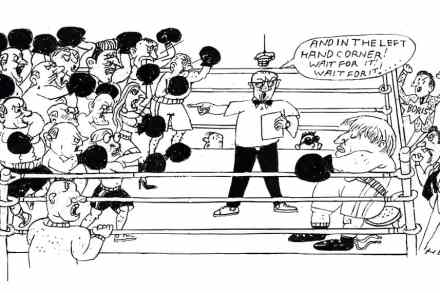
Portrait of the week

Portrait of the week: Sue Gray reports, ScotRail slashes trains and monkeypox spreads

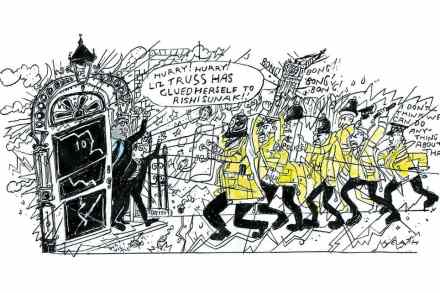
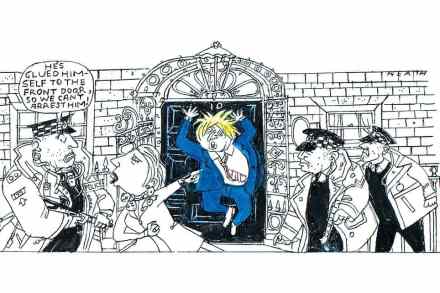
Home Sue Gray starched and ironed her report for publication after the Metropolitan Police wound up its own enquiries into breaches of coronavirus laws in and around Downing Street, with 126 fixed penalty notices being issued, only one to Boris Johnson. Meanwhile the nation contemplated photographs published by ITV News of the Prime Minister raising a glass at Downing Street on 13 November 2020. Liz Truss, the foreign secretary, said in an interview: ‘I would want to see Moldova equipped to Nato standard. This is a discussion we’re having with our allies.’ A ballot of 40,000 members prepared the Rail, Maritime and Transport Workers union for a national strike. ScotRail cut a third of trains from its timetable in a dispute with Aslef, the train-drivers’ union.

Portrait of the week: Inflation’s 40-year high, Tory MP’s rape arrest and monkeypox in Britain

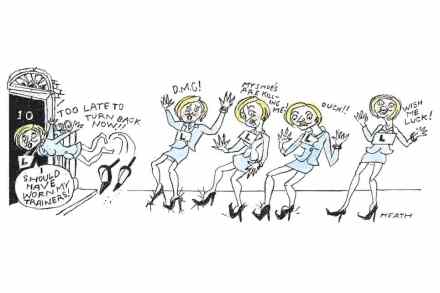
Home The annual rate of inflation, impelled by energy costs, rose to 9 per cent, its highest since 1982. Unemployment fell to 1.2 million, 3.7 per cent, its lowest since 1974 and below the number of vacancies of 1.3 million. Britain said it wanted to do something about the Northern Ireland Protocol, but the EU said it couldn’t. The Democratic Unionist party said it would not take part in the power-sharing executive of Northern Ireland unless Britain did. Liz Truss, the Foreign Secretary, told the Commons that a new law would adjust Northern Ireland’s trading status. Maros Sefcovic, vice-president of the European Commission, said the EU would ‘respond with all measures at its disposal’.

Portrait of the week: The Queen’s Speech, Sinn Fein surge and an £184m lottery win

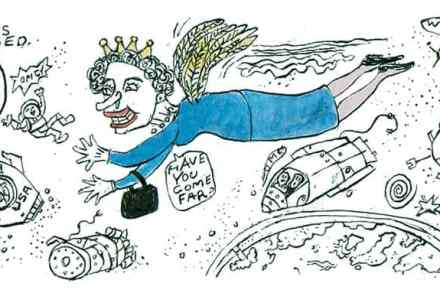
Home The Prince of Wales delivered the Queen’s Speech at the State Opening of Parliament sitting on a throne next to the crown put on a table by Lord Cholmondeley. Prince Charles acted with the Duke of Cambridge as counsellors of state under the Regency Act 1937, since the Queen cannot walk easily; the other two counsellors, the Duke of York and Duke of Sussex, are not seen as fit to act in the role. The Speech mentioned 38 laws to level up, regenerate, bring safety online, secure ‘Brexit freedoms’ in the amending of legislation, regulate railways and ferries, promote heat pumps, prohibit protestors glueing themselves to buildings, deter puppy smuggling and enforce school registers, but nothing to stop the import of fur or foie gras.

Portrait of the Week: pornography, ‘sulky livers’ and abortion

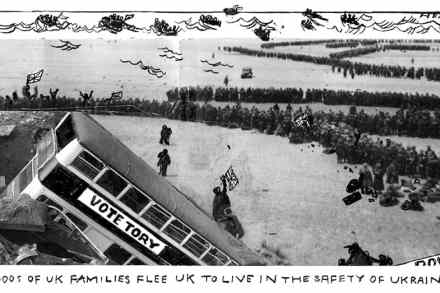
Home Boris Johnson, the Prime Minister, announced £300 million more in military aid for Ukraine. Speaking by video to the Ukrainian parliament, he said: ‘This is Ukraine’s finest hour, that will be remembered and recounted for generations to come.’ BP lost $24.4 billion by withdrawing from its shareholding in the Russian energy giant Rosneft, but would have otherwise made a profit of $6.2 billion in the first quarter of this year. Only 27,100 refugees from Ukraine had arrived in Britain by 27 April, the latest figures available, though 86,100 visas had been issued. At least 254 non-Ukrainian migrants were brought ashore from small craft in the Channel on 1 May, when the weather had improved after 11 days, and 293 the next day; more than 7,000 had arrived in 2022.

Portrait of the week: Twitter takeover, late nights for pubs and a row over leg-crossing

Home Ben Wallace, the Defence Secretary, said Britain assessed that 15,000 Russians had been killed in the war against Ukraine and at least 530 Russian tanks, 530 armoured personnel carriers and 560 infantry fighting vehicles had been lost or captured. Sixty Russian helicopters and fighter jets had also been lost. He told the House of Commons that Britain was sending to Ukraine some Stormer armoured vehicles, with launchers for Starstreak anti-aircraft missiles. Liz Truss, the Foreign Secretary, called for aircraft to be sent too. In the seven days up to 23 April, 2,207 people had died with coronavirus, bringing total deaths (within 28 days of testing positive) to 173,693. In the previous week 1,289 had died.

Portrait of the week: Boris packs his bags, XR blocks bridges and Netflix viewers switch off

Home Boris Johnson, the Prime Minister, told the House of Commons that it did not occur to him that the gathering in the Cabinet Room on his birthday (for which he had been issued a fixed-penalty notice) could amount to a breach of the rules on coronavirus. ‘That was my mistake and I apologise for it unreservedly,’ he said. He packed his bags for a visit to India to coincide with a Commons debate on whether he had misled parliament. Priti Patel issued a ministerial direction (the second in the Home Office in 30 years) to implement a scheme whereby people deemed to have entered Britain unlawfully since 1 January could be flown to Rwanda, where they would be allowed to apply for the right to settle there. More than 6,000 people had crossed the Channel in small craft in 2022.

Portrait of the week: Boris in Kyiv, Rishi in hot water and crystal meth in a cereal packet

Home Boris Johnson, the Prime Minister, travelled to Kyiv in secret and joined President Volodymyr Zelensky for the cameras in his office and in empty streets. He was given a pottery cock by local people. He said: ‘We are stepping up our own military and economic support.’ Mr Zelensky said: ‘It is time to impose a complete embargo on Russian energy resources.’ Britain would send 120 armoured vehicles, Starstreak anti-aircraft missiles, 800 anti-tank missiles and anti-ship missile systems. Supporters of Extinction Rebellion sat down in the road at Oxford Circus in London. The tyres of 100 SUVs were let down in Edinburgh by campaigners who left notes saying ‘Your gas-guzzler kills’.

Portrait of the week: Covid fines, cancelled flights and sunflower oil shortages

Home Jonathan Reynolds, Labour’s business spokesman, said that the government should be preparing for energy rationing, but Grant Shapps, the Transport Secretary ruled it out. Kwasi Kwarteng, the Business Secretary, asked the British Geological Survey to reassess the effects of fracking, Essex police arrested 192 people from Just Stop Oil in a weekend of protest at oil refineries. By the end of March, 4,700 visas had been issued from 32,200 applications to sponsor accommodation for Ukrainian refugees; under the family visa scheme, 24,400 had been issued from 32,800 applications. Britain’s biggest bottler of sunflower oil had stocks for only three weeks left and said that food manufacturers were turning to rape.

Portrait of the week: Partygate penalties, Oscars drama and Dairy Milk shrinks

Home Twenty fixed-penalty fines were issued after the police inquiry into Downing Street parties that broke Covid rules, but the Metropolitan Police refused to say who was fined for which events. Peter Hebblethwaite, the chief executive of P&O Ferries, admitted to a parliamentary committee that the company had broken the law by sacking 800 workers without consulting unions. He said that foreign replacements would earn an average of £5.50 per hour, which is below the British minimum wage. Grant Shapps, the Transport Secretary, said he’d change the law to stop that. Lord Grade of Yarmouth, a former BBC chairman, was announced as the preferred candidate to be chairman of the media regulator Ofcom.

Portrait of the week: Spring statement, weapons for Ukraine and no more free-range eggs

Home Britain had provided Ukraine with more than 4,000 Next Generation Light Anti-tank Weapons, the Ministry of Defence said. Shell reconsidered its decision to pull out of investing in the large Cambo oil field, 75 miles off the west coast of Shetland. The government was expected to put into special administration Gazprom Marketing & Trading Retail Ltd, with which several councils have contracts to buy gas, though it does not come from Russia. Among those seeking to buy Chelsea Football Club, on sale after the sanctioning of its owner Roman Abramovich, a group called the True Blue Consortium was given support by John Terry.

Portrait of the week: Russian forces move in on Kiev

Home More than 100,000 people registered interest in giving a place in their homes for Ukrainian refugees under a government scheme, after widespread criticism of bureaucratic obstacles, though refugees would still require a visa. The scheme was the responsibility of Michael Gove, the Levelling Up Secretary; asked if he would take in a refugee, he said: ‘Without going into my personal circumstances, there are a couple of things I need to sort out – but, yes.’ He thought it might be an idea to lodge refugees in oligarchs’ empty properties. Anarchists occupied a house in Belgrave Square belonging to Oleg Deripaska; four were arrested.

Portrait of the week: Zelensky channels Churchill, Russia blocks BBC and Bercow banned from parliament

Home President Volodymyr Zelensky of Ukraine addressed a packed House of Commons by video, echoing Winston Churchill by declaring that Ukrainians would fight in the fields and in the streets. He said: ‘Please make sure that our Ukrainian skies are safe.’ Wearing a blue and yellow tie, the Speaker, clearly moved, thanked him. Earlier, Boris Johnson, the Prime Minister, announced a ban on Russian oil imports in the coming months, but no ban on gas imports. He proposed a six-point plan that included an international humanitarian coalition and maximising economic pressure on Vladimir Putin’s regime in Russia. Mr Johnson also said the government would publish a strategy for producing more energy in the UK. Petrol rose above 155p a litre.

Portrait of the week: Russia bombs Ukraine, MPs get a pay rise and Tube staff strike

Home Boris Johnson, the Prime Minister, said of the invasion of Ukraine by Russia: ‘Never in all my study or memory of politics and international affairs have I seen so clear a distinction between right and wrong, between good and evil, between light and dark.’ He was speaking during a visit to the Ukrainian Catholic cathedral in London, where he lit a candle. He flew off to visit Poland and Estonia, and said he was worried that Vladimir Putin might ‘Grozny-fy’ Kiev, which would be ‘an unalterable moral humanitarian catastrophe’. Britain might take in 200,000 Ukrainian refugees after a scheme for close relatives of Ukrainians in the UK was widened to include other family members.

Portrait of the week: Storms rage, Covid curbs end and Russia’s ‘renewed invasion’

Home Boris Johnson, the Prime Minister, announced, in the House of Commons, sanctions against Russia after its ‘renewed invasion’ of Ukraine. These included the freezing of five banks’ assets and those of three Russian billionaires (Gennady Timchenko, Boris Rotenberg and his nephew Igor Rotenberg). The price of Brent crude oil reached a seven-year high of $99.38. A day earlier, the Prime Minister had told parliament that all coronavirus restrictions in England were to end on 24 February. People who tested positive for Covid would no longer be required by law to self-isolate, but would still be advised to stay at home.

Portrait of the week: Inflation hits 30-year high, Andrew settles out of court and Turkey changes its name

Home Boris Johnson, the Prime Minister, made ready for a Russian invasion of Ukraine by cutting short a planned visit to northern England for a Cobra meeting. ‘We are on the edge of a precipice,’ he said. He said Britain was prepared to target Russian banks and companies, and stop them raising money on London’s financial markets. Sir Keir Starmer, the Labour leader, condemned an online rally called No War in Ukraine: Stop Nato Expansion, organised by the Stop the War coalition, of which Jeremy Corbyn is the deputy president. Petrol prices reached a new high of 148.02p a litre. Inflation rose to 5.5 per cent, its highest for 30 years. Unemployment fell to 4.1 per cent and job vacancies reached a record of 1.3 million; wages fell by 0.

Portrait of the week: Queen Camilla, a cabinet rejig and NHS waiting list warning

Home In a message for the 70th anniversary of her accession, the Queen said it was her sincere wish that ‘when that time comes, Camilla will be known as Queen Consort’. She signed the message: ‘Your servant, Elizabeth R.’ Rishi Sunak, Chancellor of the Exchequer, said that the government would pay energy suppliers to discount bills by £200 in October, but customers would then have to pay back £40 a year for five years. People living in houses of the A-D council tax bands would receive a £150 rebate. The regular Ofgem energy price cap adjustment meant that a typical household would pay £693 extra a year, a 54 per cent rise.

Portrait of the week: Sue Gray speaks, Boris goes to Ukraine and 477-mile bolt of lightning strikes

Home Sue Gray, the second permanent secretary in the Cabinet Office, in a 12-page ‘update’ on her investigation into 16 gatherings in Downing Street, refrained from comment on particular cases, 12 of which were being looked into by police. ‘Some of the behaviour surrounding these gatherings is difficult to justify,’ she concluded. ‘There was a serious failure to observe… the standards expected of the entire British population.’ Some events ‘should not have been allowed to take place’. She said that ‘excessive consumption of alcohol is not appropriate in a professional workplace’. Boris Johnson, the Prime Minister, told the Commons that he ‘wanted to say sorry’.

Portrait of the week: Unease in Ukraine, tensions in No. 10 and hamsters escape Hong Kong

Home Boris Johnson, the Prime Minister, told the Commons that Britain was prepared to send troops to protect Nato allies in Europe if Russia invaded Ukraine. The Foreign Office named Yevhen Murayev, a former Ukrainian MP, as a candidate that President Vladimir Putin of Russia was plotting to install in Ukraine. About half the staff at the British embassy in Kiev would come home. The Queen took a helicopter from Windsor Castle to Sandringham, where she is expected to stay for the 70th anniversary of her accession on 6 February.

Portrait of the week: Saving Big Dog, scrapping the licence fee and tsunami hits Tonga

Home Sue Gray, Second Permanent Secretary at the Cabinet Office, having been asked by Boris Johnson to look into accusations of parties held at 10 Downing Street, in turn formally asked him about them. Newspaper reports about such gatherings continued day after day, and Dominic Cummings, the Prime Minister’s former chief adviser, said that he had warned Johnson in advance about one for 40 people in the garden on 20 May 2020, telling him: ‘You’ve got to grip this madhouse.’ ‘Nobody warned me that it was against the rules,’ the PM said. The commentariat at large talked of Operation Save Big Dog, by which officials would take the blame to preserve the Prime Minister.

Portrait of the week: No. 10’s garden party, Djokovic’s visa row and France’s vaccine protests

Home Boris Johnson admitted to attending evening drinks for about 40 staff in the garden of 10 Downing Street on 20 May 2020, when lockdown regulations made social gatherings illegal. ‘We thought it would be nice to make the most of the lovely weather and have some socially distanced drinks in the No. 10 garden this evening,’ said an email from the Prime Minister’s principal private secretary, Martin Reynolds. ‘Please join us from 6 p.m. and bring your own booze!’ Mr Johnson said that he had been talking to Rishi Sunak, the Chancellor of the Exchequer, about how people could be helped with soaring energy bills.