Notes on...

I’m a grockle and proud

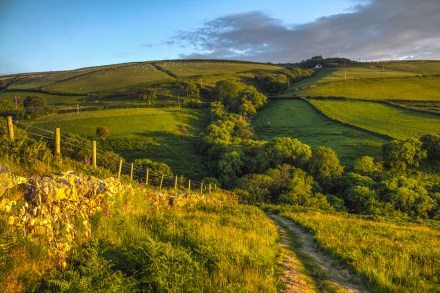
“How long have they been here?” “Three generations.” “Ah, just grockles, then.” Exchanges such as this must have taken place in countless Devon villages. A “grockle” is a Devonshire term for a tourist or incomer. I suppose it could be offensive. But being called a grockle is not usually a term of abuse and in general, the word is spoken with a half-smile rather than a grimace. Not least because, in Devon at least, ceasing to be a grockle and becoming its opposite – the local lad or girl – is a generational endeavor. I am definitely a grockle. I moved to Devon from Huntingdonshire when I was 20 to work on a dairy farm near East Worlington.
Don’t grow a beard

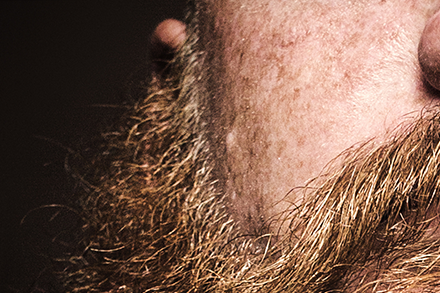
I was looking at a photo of my great-grandfather the other day and admiring his beard. A magnificent spade-shaped affair, it reached halfway down his chest. He was a Victorian, of course, and his era was, above all, the century of the beard. All the eminent Victorian males, such as Darwin, Dickens, the Earl of Salisbury and Prince Albert wore them.  When Donald Trump and Pete Hegseth decreed recently that all US military men should be clean shaven, it struck me that, had that rule been around in the 1860s, the American Civil War would never have been fought, since all the leading generals on both sides were endowed with substantial forests of facial hair. One Union commander, Ambrose Burnside, was so notably hirsute in this respect that he lent his name to sideburns.

There’s no excuse for a plastic plant

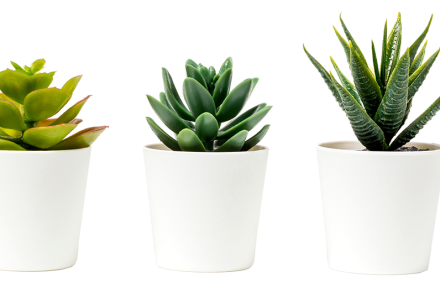
Monstera deliciosa, otherwise known as the Swiss cheese plant, is perhaps the most popular houseplant of them all, probably because it’s so easy to care for. In normal circumstances, you almost have to try to mess it up. A heatwave, however, can put a monstera under stress. Subject one to warm weather for too long and you’ll find its poor leaves scorched, its roots damaged and its stems desperately dehydrated. For this reason, you might feel the temptation to turn to a shockingly popular alternative: the plastic plant. It should be resisted at all costs. A potted history takes us back to the 1950s, when a postwar manufacturing boom saw the mass production of cheap polyvinyl chloride and polyethylene.

plastic plant

Should politicians have tans?

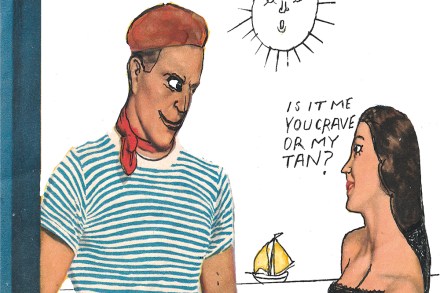
The cult economist Adam Tooze generally discusses matters far beyond my understanding on his podcast Ones and Tooze. While roasting in my flat during London’s heatwave, however, I found myself gripped by a segment he did on the economics of beach recreation. Did you know that 50 percent of Americans going on holiday regard getting a tan as more important than the actual holiday? This correlates with the rise of the “tanfluencer” and “tanmaxxing” among Gen Z and the revival of the full-on, George Hamilton-style tan. As a bit of an old tanorexic myself (remember, fellow boomers, the smell of Bergasol?), I’m quietly thrilled. First, because if this is a competition I will almost certainly win it – spot the brownest white person in the room: that’s me!

tans

Are you a party bore?

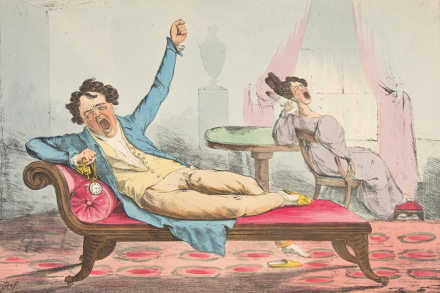
Some years ago, I managed to get an invitation to a very exclusive party. One of the guests was Prince Philip, consort to Elizabeth II, and some way into the evening he drifted over in my direction. He used the classic royal conversation opener: “Hello, what’s been keeping you busy?” “I work in marketing,” I replied. “Oh dear,” he said. He turned away and went to find someone more interesting. I was officially boring. That’s fine, because I have made it my lifetime’s work to seek out the boring at parties. Those who drone on, those who tell the same story over and over, and those with that odd nasal monotone that makes most people desperate to escape their company. I am not alone in this. C.S. Lewis did the same thing.

bores

The ADHD-ification of squishy toys

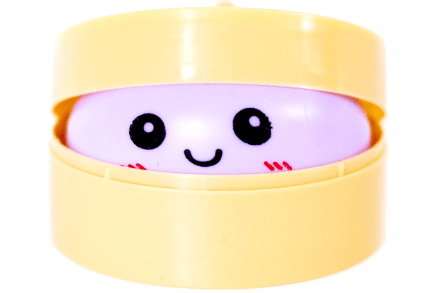
“Feeling a bit stressed or anxious? Want to practice more mindfulness? Looking for good vibes and your best mellow and chill?” This is not an advert for a life coach but the official sales pitch for NeeDohs, the much-coveted new children’s toys. These are not mere playthings, you see. Thanks to the ADHD-ification of childhood, they are “sensory fidgets.” NeeDohs are produced by American manufacturer Schylling. They are “the original sensory squish toy”, but others have appeared on the market, such as squishy “original viral dumplings,” produced by RMS International. Squishies are the latest craze – brightly colored blobs of plastic to squash, squeeze, stretch and supposedly help children who have trouble focusing. Squishy, stretchy toys aren’t really new.

squishy

The glorious silliness of tribute band names

Seeing a tribute band can be a strange experience. There are your heroes on stage once more, magically rejuvenated and playing the music of your youth. You too feel briefly young again – until you notice everyone else at the gig is also at least 57. But as often as not the band is brilliant. They have lovingly tracked down the right guitars, effect pedals and amp settings in search of the perfect sound. They have styled their hair just so, applied the requisite tattoos and, at some obvious expense, commissioned perfect replicas of signature stage outfits. See Björn Again and the girls might come complete with the purple capes worn for ABBA’s 1980 world tour before changing into the white-booted “SOS” look.

tribute

Tequila slammers all around!

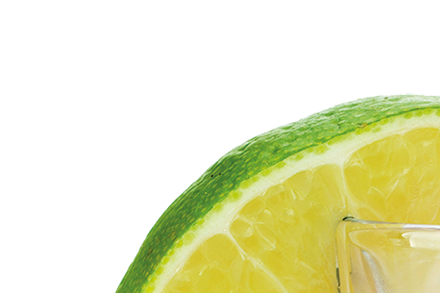
“Tequila, it makes me happy, / Con Tequila it feels fine” goes the student anthem by Terrorvision. It is midnight, somewhere around the turn of the new millennium, and we are on the sticky dancefloor of a grotty union bar in Edinburgh, but it could be Bristol, Cambridge or Newcastle. You get the picture. The song is greeted by whoops and an influx of revelers throwing drunken shapes. Meanwhile, some bastard in your friendship group who’s feeling flush is already elbowing his way to the bar to spank part of the student loan that’s just hit his account on a bottle of José Cuervo tequila, shot glasses, lemons and salt. Slammers all round! Bleurrggghhhhh.

tequila

Forties’ love: tennis serves me a perfect midlife crisis

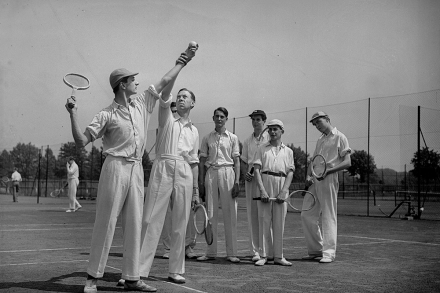
There comes a time when every man must choose how to tackle an impending midlife crisis. A Maserati? A marathon? A mistress? Lacking the wealth, stamina or sheer Italian-ness for any of the above, I’ve plumped for that most gentile of sports to feel alive again: tennis. The problem with a new hobby, of course, is that you immediately feel more infantile than raffishly young. Picking up fresh skills means relearning how to learn, decades after university, when you actually had the appetite for self-improvement. Sure, tennis is, as studies have found, one of the most effective activities for staying healthy. But it’s also infuriatingly finicky. Technique-wise, I can fire off a decent groundstroke (forehand and backhand), thanks to lessons as a mopey teen.

tennis

Who cares if fridge magnets are tacky?

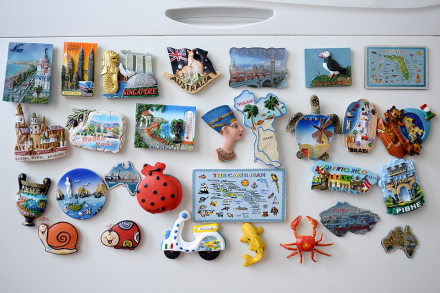
Let’s dispense with the obvious question first. Are they common? While there’s a clear temptation to consult Nicky Haslam on such matters, I don’t think I can be bothered. Not least because first, I am a Prusso-Italian immigrant, second, I was born in Essex and third, I adore fridge magnets. We should be honest and admit that, like everything in life, they are signifiers. The aim is to show our friends how cultured, traveled, well-read, ironic and amusing we are. They are our lives writ in ceramic. Where to begin? One of my favorite magnets, designed to strike fear and dread into any intruder, dates back to Iraq circa 2004: “Caution Stay 100 meters back or you will be shot.” No punctuation, not even an exclamation mark!

The joy of licorice

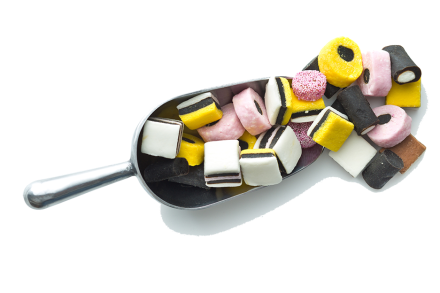
“I’ll swap you two of my rolls for three of your spogs.” That was the sort of thing you’d hear round the tuckshop in morning break when we schoolboys swapped and bartered our Liquorice Allsorts. We all had our favorites, spogs being the round pink or blue jelly buttons that had a coating of tiny sugar grains, while the pink or yellow coconut rolls featured a plug of licorice surrounded by coconut ice. Pontefract Cakes were another schoolboy favorite: small round discs of licorice that were allegedly one of, if not the oldest commercial sweets in the world. In the 11th century, Benedictine monks introduced licorice to Pontefract, Yorkshire. At that time, the plant’s roots were commonly chewed to soothe sore throats, ease coughs and help digestion.

A journey to the dark side of the Moon

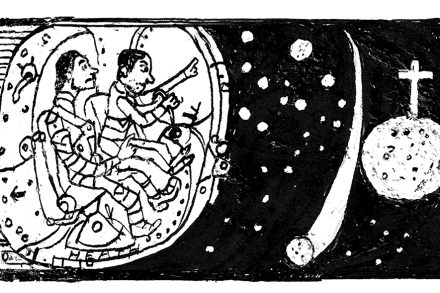
The climax of the Artemis II mission lasted just a few hours. The capsule, named Integrity, rounded the Moon, the crew becoming the most distant humans in history as they moved from its sunward side into its shadow. The familiar features of the permanently Earth-facing side made way for the more heavily cratered far side. This is not the Moon we know. The far side is different. It has a thicker crust, no major solidified lava plains and is more heavily cratered, like the aftermath of the final war. Before reaching it, the crew saw two Apollo landing sites: Apollo 12 touched down on Oceanus Procellarum (Ocean of Storms), and Apollo 14 landed on the plains of Fra Mauro, the target for the aborted Apollo 13 mission. There have been travelers here before, but not like this.

dark side moon

Potatoes are one of life’s great simple pleasures

My wife found the list in the back pocket of my gardening trousers. That ought to have been a clue, but she didn’t pick up on it. She marched into the study with an interrogative stride. “Who the hell are Mimi? Orla? Charlotte? Anya? Lady Christl!?” I felt a pang of relief that she hadn’t found my “tasting notes” as well. “Charlotte – firm, puts out well, nice finish.” If my wife had been a gardener or an allotmenteer she would have recognized the names as varieties of spud. Still, I can’t blame her. The faintly porny air does persist, as do some mysteries. Mimi, for instance – a redhead, “small, but plentiful” – disappeared suddenly some years ago and no one knows exactly why.

potatoes

My phobia is not to be sneezed at

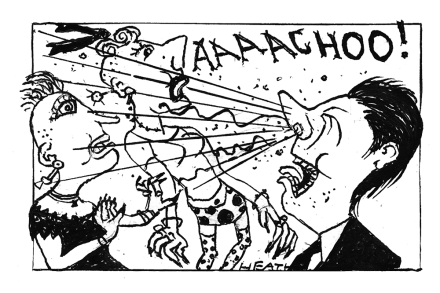
In January 1894, an assistant of Thomas Edison made a five-second silent film of Fred Ott taking snuff and then sneezing. It was the second ever film to be copyrighted – and it started with a sneeze. The sneeze is a blessing and a curse, associated with both good fortune and ill omen. In ancient Greece it was a prophetic sign from the gods – a sneeze could confirm the gods’ blessing of a decision. By the end of the 6th century, with plague sweeping through Rome, it had become associated with illness and death. Pope Pelagius II died from plague midsneeze. His successor, Gregory the Great, declared by papal decree that “God bless you” was the appropriate response of a Christian when someone sneezes, to keep the wildness and danger at bay.

Why my mustache had to go

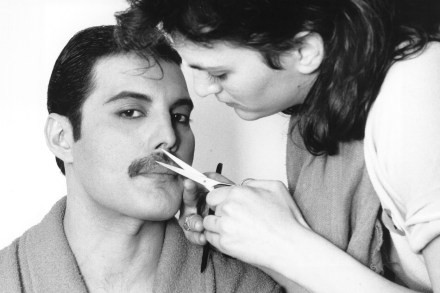
I loved my mustache. Unfortunately, my fondness for it seemed inversely proportionate to its popularity among my peers. After much unsolicited feedback from friends ("You look like a young Peter Mandelson") and online strangers ("You look like a 1970s porn star"), I put a poll on my Instagram asking my followers whether or not I should scrap it. Four-fifths said I should. After a brief consideration of my options (ignore the results? Rerun the vote? My mustache was making me think like a Latin American dictator), I reluctantly shaved. God how I miss it. There is something intoxicating about a mustache – a small hedgerow on his top lip can convince even the dowdiest man that he looks like a Battle of Britain pilot.

The horror of the male wig

Horrible injuries are commonplace in boxing but none, surely, has been quite so devastating as that sustained by the heavyweight Jarrell Miller. In the moment it took for an uppercut to land, the Brooklyn boxer’s life changed forever. Miller went from professional athlete to, well, "the man who got his wig punched off." I have rewatched Miller’s hairpiece getting punched off countless times, my hand clamped to my mouth. Why didn’t his team throw in the towel? Why didn’t the referee just stop the fight? Why didn’t Miller, his wig flipped up at 90 degrees like a kitchen trashcan lid, simply step out of the ring, exit the arena and start a new life several thousand miles away under an adopted identity?

wig

What Freud would say about Andrew Mountbatten-Windsor’s teddy bears

It is widely known that when a Duke of York is down, he is down, and the recent hit-piece in Heat – "'Pathetic' Andrew’s tantrums over prized teddy bears" – found a new way of kicking Andrew Mountbatten-Windsor. Its royal source said that "being forced to move [out of Royal Lodge] has sent him into a full-on meltdown because he keeps telling people the bears won’t cope with the change… as he says, it’s their home too." When it was reported last month that Andrew’s teddy bear collection was being sent to a south London storage facility, I was on the verge of feeling sorry for him; until I realized I was actually feeling sorry for the bears. There are no wonderful games to play in a lock-up. Of course I anthropomorphize teddy bears: that is what they are for.

The politics of long hair

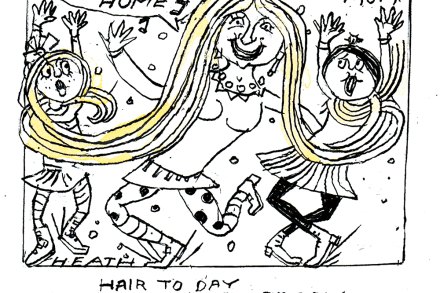
What is the literal cut-off point for women having very long hair (and by “long” I mean where it almost goes into the toilet bowl)? Thirty? Forty? Fifty? Try 65 – the age I turned this year. If this strikes you as grossly inappropriate, in theory I’m with you. The unspoken rule is that the older you get, the shorter your hair should be. Nobody within ten or even 20 years of me has hair as long as mine. What can I say? As with wearing inappropriately colored nail polish, it is just another small act of defiance women d’un certain age can employ to remind this cruel world that we do actually still exist. My hair has been this length for so long it has become a part of my identity: how I see myself in the universe. I am my hair and thus find it hard to imagine life without it.

Make mine a Moka pot

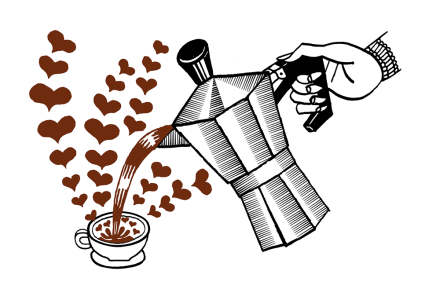
It’s strange the things that can trigger amity or affection. At the beginning of the capsule/pod coffee-maker craze, when George Clooney, with his come-to-bed eyes, was seducing the world with Nespresso machines, I bonded with my eldest daughter’s Italian boyfriend over the Bialetti Moka pot. Notwithstanding the expense and waste of the capsule coffee makers, I need at least three pods to get the lights on in my head in the morning. I’ve never had a good coffee from any of them. Contrast that with the cute, economical, environmentally friendly little Moka, the smallest of which – one cup – costs about $30 and, depending on the quality and freshness of the coffee used, makes a better cup than any café or restaurant.