No life

Man vs lobster

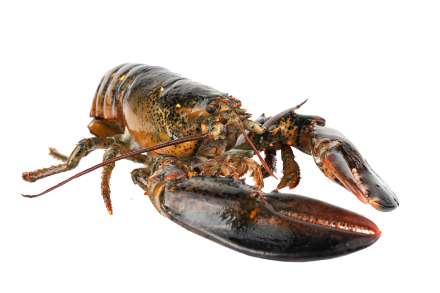
She was doing a postgrad course in a town by the sea, and a strange thing happened to us one afternoon. On the quayside we saw lobsters being sold from a trestle table. Only one of them remained and I squinted at it, close up. The sharp oval claws, like holsters, had been bound in elastic bands to stop them nipping customers. It seemed a small-minded precaution. These imposing pincers were cumbersome and useless on dry land. But in the sea, with the water’s buoyancy to give them mobility, they would be swift and lethal weapons. Yet the lobster-catcher had neutralised them with a pair of turquoise bands. What for? The beast was already defeated, plucked from its natural habitat by a giant human being, and yet the victor was fearful of the tiniest nip from his prisoner’s claws.

My lesson in misery from an anti-AI march

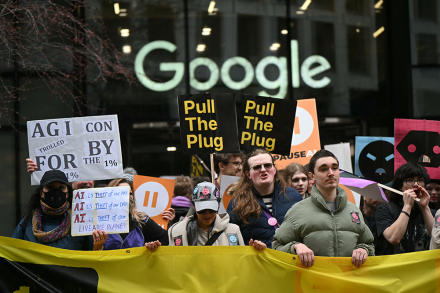
Automation is about to take over the world, apparently. But the fightback has begun. On a cold, blowy day a few weeks ago, I joined a stop-the-bots demonstration that marched through the Knowledge Quarter of King’s Cross where Facebook and Google have their headquarters. A group of 100 activists gathered on Pentonville Road for a warm-up rally addressed by a charismatic young woman in a leather skirt. ‘Can we trust the tech bros with our data?’ she cried into the mic. ‘No! Do we need regulation now? Yes we do!’ She congratulated us for ‘making history by joining the largest anti-robot march ever’. And she promised us a hot meal afterwards. ‘Who doesn’t like free food? No one. Am I right?’ The crowd didn’t reply.

Do I have what it takes to be a magistrate?

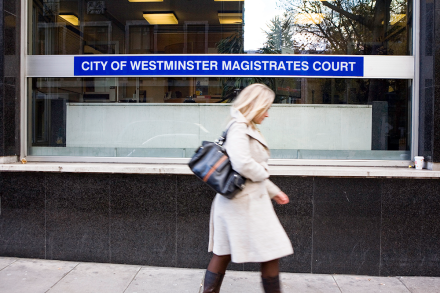
I’m thinking of becoming a magistrate. Before applying, I was advised to attend a few sessions and find out how it all works. My first case was a bag theft from a London pub. The accused, an Algerian football ace, pleaded guilty through an interpreter. The court heard that his glittering football career had been cut short by ‘an accident’ and he was currently living in London ‘with the support of friends’. The magistrate, a kindly, soft-spoken redhead, fined him £60 and made a note of his ‘good character’. She reduced his fine by £20 as a reward for pleading guilty. The defendant lounged against the rail of the dock looking irritable and impatient as his sentence was pronounced. Outside the court, he spoke to his lawyer without a translator.

Should I be a Jew, Muslim or Hindu? 

Time is running out. We all have to meet our maker at some point, and although I’m fit as a fiddle I like to plan ahead. God has many brands and many names and I want to show up at the right shrine and to use the correct form of address. Technically, I don’t believe in a creator, because my rational mind accepts the agnostic theory. Existence is an attribute of entities that are bound by time and space. God is unbound by time and space, therefore existence is not among his attributes. QED. And yet something in me rejects this logic and yearns to believe – just in case. What if he really is up there? I should pick a team.

My advice to the next generation

Everyone went to the same school as someone famous. In my case it’s Spider-Man, Tom Holland, who joined my former school about 30 years after I left. Back in the mid-1970s, the most famous old boy was another superhero, Major Pat Reid, who’d been captured by the Germans during the war and briefly imprisoned in Colditz. His bestselling memoir popularised the notorious jail and led to a TV series, an Action Man model and various other spin-offs. He was known as the only man to have escaped from the Nazis and turned it into a board game. He showed up on sports day, in July 1975, to give us a pep talk and hand out prizes to the school’s top athletes. I wasn’t among them, of course. My great days as a sportsman lay ahead of me. They still do, in fact.

The art of having no friends

Apparently it’s easy to make money on YouTube by teaching a course in your specialism. Mine is having no friends. And I share my aversion to humanity with a number of very distinguished names. Isaac Newton, Charles Darwin, Emily Dickinson and Howard Hughes were all solitary creatures who didn’t allow social frippery to dilute the focus of their ambitions.  Psychologists tell me I have ‘autism’, which is promoted so widely in our society that we ought to call it ‘taughtism’. But I take issue with these experts. I don’t believe I have a neurological disorder. And I’m not some crazy hermit who lives in a cave or a ditch. I simply can’t help noticing that most human beings are a waste of space – myself included.

Yoga is slow-motion pole-dancing for grannies

It’s hard work being rich. I gave up trying years ago. You must waste money on everything, even the basics, to advertise your status as a big spender. Food and drink are easy. You buy organic veg from a dim-witted aristocrat at a farmers’ market. And you choose sparkling water filtered through the porous flanks of a Malaysian volcano. A tougher challenge is oxygen. The rich need top quality air as well. But how do you let people know that your breaths are costlier and more refined than the inhalations of the mob? Well, yoga. Yoga turns breathing into a five-star indulgence. You hire a servant (known as a ‘guru’ to make her feel important) who stands in attendance while you fill and empty your lungs for 45 minutes.

Nutrition is a bogus creed

Time to think about my diet. A test kit arrives from the NHS screening team who want to inspect a stool sample to see if a hostile cluster of cells is growing in my guts. What I eat horrifies everyone – except me. I live on Bran Flakes and Frosties straight from the box, and I enjoy chocolate bars or digestive biscuits coated with redcurrant jam (Lidl, 51p). Each year I spend about £600 on food – mostly processed pap full of fructose and additives. ‘Chemical rubbish,’ my mother called it. I avoid restaurants because I can do better at home. I like boiled rice or noodles smothered with sauces that glow like the core of a nuclear reactor. Ketchup is my favourite. The perfect condiment. A delicious creamy blend of sugar and tangy vinegar suspended in a thick scarlet relish.

Death was easier when I was a kid

Somebody dies and his friends say ‘he passed’. Passed what? He didn’t pass. He failed. He took the most basic test of all, ‘are you responsive?’, and his answers fell short of the required standard. True, he was awarded a bit of paper, a death certificate, but it’s no use to him on his CV. Death was easier when I was a kid. People spent most of their lives dying. They ate burgers, pork chops and potatoes fried in lard. They shunned exercise and fresh fruit. They filled their cars with leaded petrol (which gave the air a pleasing lavender tinge). They glugged down beer and gin galore. And they sucked burning tobacco fumes into their lungs. My grandparents smoked 30 or 40 cigarettes a day, which was normal back then. They died in their early seventies.

Will the Irish ever forgive the English?

Leaving home is the best way to find out who you are. In my case, it’s a muddle. Welsh dad. Irish mum. English upbringing. And I feel pleasantly detached wherever I go. In England, I’m considered Welsh. In Ireland, I’m considered English. In Wales, I’m considered inadequate because I don’t speak the language, apart from the odd term like ‘popty ping’ (microwave). From childhood I’ve been a scholar of English preconceptions about my Celtic brethren. ‘Welsh? Cave-dwellers who love sheep.’ ‘Irish? Bog-trotters who love horses.’ The Irish are preferred, especially by the English upper classes, who are infatuated with Ireland as an abstract concept. But they’re less keen on the real thing. An Irish accent in the family is an ornament.

The naked truth about life modelling

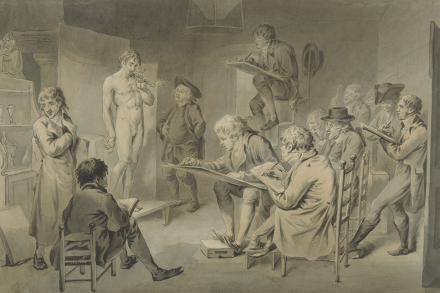
When I left university, I prepared for a short spell of poverty while I sent off amusing and opinionated articles to newspaper editors who needed the work of smart alecks like me to entertain their readers. My short spell of poverty lasted 17 years. In the meantime, I survived on odd jobs, including a stint as a life model. ‘Starts at ten,’ said Piers, a friend who taught at a college in Kensington. Before my shift, I flipped through Ernst Gombrich’s The Story of Art in case a life model was expected to know the classical poses by heart. I imagined Piers starting me off with an easy one: ‘The Thinker’ by Rodin, or ‘Moses’ by Michelangelo, or ‘The Martyrdom of St Sebastian’ by Mantegna.

My brush with a rabid monkey

India A crowded bus station. A lady monkey with a baby clinging to its neck sidled past me, eyeing the banana I was eating. I barely noticed them. A moment later, claws dug into my back. A skeletal hand darted forward to grab my banana. The baby monkey was on my shoulder. I leapt up and shrugged vigorously but it climbed on to my head, so I twisted sharply this way and that to unseat the little nuisance. I felt a painful scratch on my neck. The furry bundle leapt off me and scampered away. I’d been bitten. A few bored locals gathered around to see if the kerfuffle was worth getting overexcited about. A samosa seller helpfully dabbed my neck with a rag soaked in oil from his smoking cauldron. I thanked him diplomatically for this pointless gesture. The crowd retreated.

The uncomfortable truth about boozing

‘Good for you. Amazing. I should do the same.’ ‘You must feel great. Lucky you.’ This is what I hear when I tell people I haven’t touched alcohol for a year or more. Behind their bland words, I detect an air of pity and bafflement, even a hint of contempt. I know what they’re thinking because I used to feel the same way. The teetotaller hasn’t escaped a disease, but contracted one. Perhaps they’re right and the ill-effects of alcohol are wildly exaggerated. Plenty of all-day boozers lived to a ripe old age. Winston Churchill, Frank Sinatra, Elizabeth Taylor, Robert Mitchum, Joan Crawford. Then there are the rock stars in their eighties who drink Jack Daniel’s for breakfast with no problems.

Confessions of a political gambler 

What could be more exquisite than the life of the professional gambler? I began my career in 2016 with a modest punt of £1,000 on the London mayoral election. Bingo. Sadiq Khan won and I banked a profit of £100. Then Brexit. My guess was that the pollsters had overestimated support for Remain and that the country was keen to evict the conjoined twerps, David Cameron and George Osborne, from Downing Street. The referendum was our chance to vaporise both their careers simultaneously. One cross, two graves. That’s what happened. And I cleared another tidy sum. I cursed the day that I’d ever started gambling. I was a fool. A dunce. A clueless moron But I was haunted by a wager I’d laid in the winter of the same year while watching Fox News over a relaxing pint of Tesco claret.

How I lost my faith

God used to exist. He doesn’t any more, but back in the early 1970s he was a major presence in my life. The world at that time was run by President Nixon and his adviser Ted Heath, but their power was limited, and even they had to defer to God’s authority. That’s how it seemed to me. A howling spirit or a weeping martyr might burst forth, dripping blood or swathed in tongues of fire I was encouraged by the adults to converse with God and to ask for his guidance and I spoke to him often, in class when we prayed, at night in my bedroom, and at Mass on Sunday. God listened to everyone, regardless of their wealth or status, and even great leaders had no better claim to his attention than I did. This made me feel special and powerful.

Being mugged changes you forever

Being mugged changes you forever. My encounter with highwaymen occurred three decades ago in a south London street, in the early evening as I emerged from a corner-shop. I was transferring some coins from one hand to the other when four men pounced on me from behind, tipped me over and dragged me down a lane between a derelict pub and a car park. I lay there surrounded, waiting for the inevitable violence, but my attackers grabbed the cash that had fallen from my hands and melted away into the night. I always avoid high-risk areas: towpaths, churchyards, parks at dusk – anywhere without cameras I was left feeling shocked, humiliated and grateful I’d escaped with my life. Sadism was part of their motive, I expect.

Next time, I’m swimming to Calais

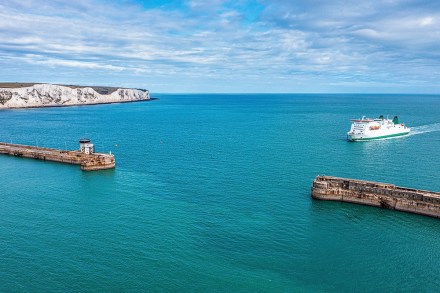
Friends in Calais invited me to their baby’s birthday party. He’s a year old. They suggested an overnight stay and I planned to reach France by about mid-afternoon and have a stroll, visit the sights, buy a bit of tat for the nipper and a litre of plonk for the proud parents. Clouds of sweet diesel vapour enveloped me. My pulse quickened. In the 1970s, it all smelt like this The morning express sped me south and I was entertained on board by the Bing-Bong Pixie who referred to the train as ‘this 10.02 service from London Victoria to Dover Priory’. She recited the name of every stop on the line and repeated it twice each time we reached a new station. Her chirpy tone concealed a rather malevolent side.

Admit it – Italian food is rubbish

Every year I’m summoned to a gathering which I strive to avoid. My first cousin, who loves a boozy party, assembles the extended clan in an Italian restaurant for a convivial lunch. I fear that my list of excuses – ‘back pain’, ‘gout’, ‘baptism in Scotland’, ‘last-minute undercover journalism assignment’ – is wearing a bit thin and I’ll have to show up this year. No sane human could feel fondness for a cuisine whose leading dish, pizza, can’t be eaten with a spoon It’s not my relatives that I dislike. It’s the stuff on the plates. No sane human could feel any fondness for a cuisine whose leading dish, pizza, can’t be eaten with a spoon.

My (surprisingly) decent proposal

‘Like being chained to a lunatic.’ That’s how a man feels in relation to his libido. And the lunatic latches on to anything, irrationally, and without warning. In Cambridge recently I dropped into a lecture given by a beautiful historian, Lea Ypi, from Albania, whose discourse included this observation about revolutionaries: ‘Once they attain power they lose all interest in revolution.’ Good point. Her blonde hair spilling over her shoulders absorbed far more of my attention than her political reflections and I was desperate to speak to her afterwards, but I had no way to orchestrate a meeting. She raised one eyebrow at me suggestively.

Why I’m selling my vote to my son

‘How are you going to pay me back?’ This is the eternal question of the hard-pressed dad as he hands £10 to a teenage son with an urgent appointment at the snooker club. ‘My Saturday job,’ says Isaac satirically. He hasn’t got a Saturday job and that’s my fault, apparently. His friends all have immensely well-connected parents who can offer them high-powered internships at Miramax and Coutts. But Isaac hasn’t secured one of these coveted placements. His mother, an archivist, employs an assistant who doesn’t need a second assistant. And the only professionals I know are narcissistic scribblers who sit at their laptops in a fug of crack fumes and unwashed laundry.