More from life

Would I still hate actors’ rants if they all agreed with me?

I feel a bit sorry for Piers Morgan. On Tuesday, Ewan McGregor was due to appear on the sofa with Piers on ITV’s Good Morning to talk about the Trainspotting sequel, but he failed to turn up. Later, the actor explained on Twitter that it was due to the journalist’s remarks about the women’s marches that took place last weekend, in which he described some of the participants as ‘rabid feminists’ and suggested he should organise a men’s march in response. I had a similar experience about five years ago when the actor Matthew Macfadyen pulled out of an interview he was due to do with me.

Long life | 19 January 2017

I am very bad at remembering my dreams: I would have been a poor patient for Dr Freud. But I know that as a little boy most of my dreams were rather frightening, even if I can’t recall them in detail. An oft-repeated dream involved a monstrous apparition that would rush down from the sky into my bedroom and be about to attack me or gobble me up, when I would suddenly leap awake, much relieved that nothing unpleasant had happened. I can’t describe what the monster looked like, except that it was amorphous and not human. Occasionally the dressing-gown hanging from my door would suddenly transform itself into its hideous form and rush at me from across the bedroom. Then, too, I would wake up in time to save myself.

A myth that keeps growing and growing

I had lunch recently with an assistant head of a leading independent school and he told me about their ‘growth mindset’ work. He was excited about this and he’s by no means exceptional. Eton, Wellington and Stowe have all enthusiastically embraced it, as have thousands of state schools. Highgate Wood, a comprehensive in north London, says on its website that ‘growth mindset is the cornerstone of our learning ethos’. I hesitate to call growth mindset a ‘fad’ because that implies it lacks the imprimatur of academic respectability when the opposite is true. The term was coined by Carol Dweck, a professor of psychology at Stanford, who made a startling discovery in the course of researching children’s cognitive performance in the 1970s.

The turf | 19 January 2017

You had to feel for ITV’s new racing team on their opening day at Cheltenham. It was cold, wet and utterly miserable but they opted not to take refuge in a warm studio but to stay close to the action under their brollies, putting a brave face on things. During what I nowadays look back on as my misspent youth as BBC political editor, I once did the same. As I began a live interview for the Nine O’Clock News from an outside balcony at a Labour party conference, bursting to reveal some exclusive information, the heavens opened. I was drenched within 30 seconds but continued, only for the newscaster to cut me off after just one question with a brisk ‘Thank you, Robin Oakley in Brighton.’ Furious, I called the programme editor: ‘What the hell were you doing?

Long life | 12 January 2017

Mark Zuckerberg, the founder of Facebook, likes making and keeping New Year resolutions. In recent years he has learnt Mandarin, read 25 books, run one mile every day, and created a robot-butler to organise his home. But this year his New Year resolution is more high-minded than usual. ‘My personal challenge for 2017,’ he writes, ‘is to have visited and met people in every state in the US by the end of the year.’ Why should he want to do a thing like that?

Why we need more universities

In 1961, shortly after getting a job as a lecturer at Cambridge, my father had an idea. The faculty buildings, he discovered, were largely unused for six months of the year. The colleges, too, were empty. Why not create two Cambridges, one for term time and one for the holidays? Unlike the Cambridge of dreaming spires and glittering prizes, the second would be for ordinary people who’d missed out on the chance of a university education — labourers, tradesmen, clerks, housewives. It wouldn’t be a place of privilege and over-indulgence, but of hard-working people eager to soak up knowledge. And instead of propping up the English class system, it would turn it on its head. When he presented this proposal to the university authorities he was met with near universal derision.

Long life | 5 January 2017

The past year has been tumultuous, full of upheaval and tragedy, but my chickens have been spared it all. Indeed, their year has been unusually pleasant and peaceful. After years in which they have been regularly subjected to murderous assaults by foxes and dogs, they were finally fenced into a section of the garden that savage animals could not penetrate. In consequence, there has been a year of rare tranquillity in the chicken world. The worst that my little flock of six chickens has had to endure is the company of a guinea fowl, which I originally got because guinea fowl have a reputation for being good guard birds that make a great din whenever a predator is in the vicinity. But this particular guinea fowl is interested more in bossing chickens than in protecting them.

The turf | 5 January 2017

The biggest oohs and aahs on the entertainment scene this winter were nothing to do with the ‘He’s behind you ...oh no he isn’t’ of pantomime. They were the collective gasps of astonishment from 21,000 spectators at Kempton Park on Boxing Day as Thistlecrack, a novice steeplechaser in only his fourth race over the big fences, took on two previous winners of the King George VI Chase and beat them hollow. He beat them not just because of the massive engine within his spectacular frame but thanks to the sheer majesty of his explosive jumping, often taking off far beyond the wings of the fences and soaring over them as if they were matchwood.

Why meritocrats are the new aristocrats

After Sir Stafford Northcote and Sir Charles Trevelyan completed their report on civil service reform in 1854, in which they made the controversial recommendation that recruitment should be based on a competitive exam, the government carried out what today would be called a consultation. Among the more interesting objections was the view that the reforms would make the civil service less democratically accountable. This argument was summarised by Helen Andrews, an Australian policy wonk, in a fascinating essay entitled ‘The New Ruling Class’ published last summer: ‘Civil servants who felt they owed their jobs to no one and nothing but their own merit would be independent, which was also to say impervious to checks and balances.

Long life | 29 December 2016

New Year’s Day is the most depressing of holidays. It doesn’t celebrate anyone or anything worth celebrating. It simply marks the passage from one year to the next, something so predictable and uninteresting that it’s hardly worth mentioning. Yet people see it as a great opportunity to start again, to turn over a new leaf, to make times better and happier than before. It’s an odd moment in which to be optimistic, when the winter is deepening and the debts incurred over Christmas are waiting to be paid. But nothing stops millions from greeting this non-event with wine and song and gaiety as the clock strikes midnight.

Italy: I’ve got Rome on repeat

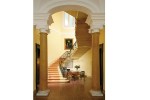
My year was topped and tailed with trips to Rome. In March, as the blossom unfurled along the Tiber and the city’s churches prepared for Easter, I met four girlfriends from university, one of whom was working as a chef for the Rome Sustainable Food Project based at the American Academy. Then, in late November, I went back by myself and stayed at the Villa Spalletti Trivelli. It’s hard to say which was more pleasurable; Rome is Rome in every season. In spring, we all crammed ourselves into a bedsit in an old pasta factory in the fashionable Trastevere district.

Do I hang myself out to dry again?

And so it begins again. This time last year, I decided to see how long I could last without alcohol. Not just a dry January for me. Oh no. I saw myself lasting right the way through till the following December. According to a doctor friend, your liver only really regenerates after 12 months. Less than that and the health benefits of not drinking are negligible. You know how this story ends, although, to be fair, I lasted until 8 February. I’d been booked to give an after-dinner talk to a group of head-teachers at one of England’s most prestigious private schools and I assumed that the wine would be so good — it was an elite group of about a dozen top heads — that I’d have to abandon my teetotalism for one night.

Switzerland: What makes Geneva tick

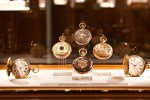
In a quiet backstreet in Geneva, a few blocks from the lakeside, there is a museum which will change the way you think about that watch upon your wrist. When I first came here, a few years ago, I must admit I wasn’t expecting much: a glorified salesroom, exit through the gift shop… I couldn’t have been more wrong. This isn’t a suave exercise in soft sell — it’s a first-class museum, with one of the finest collections of watches in the world. Like all the best museums, the Patek Philippe Museum is a labour of love, not a clever sales gimmick. Most of these watches aren’t made by Patek Philippe, and none of them are for sale. The museum is only 15 years old, but it feels as if it’s always been here. Against all expectations, I was enthralled.

Sweden: Multiple thrills, minimal risk

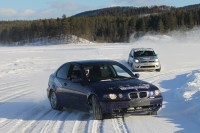
All too often in life there’s a gap between expectation and reality. Not with driving on ice. The expectation is tantalising, but the reality is demanding, exhilarating, and so much fun you’re surprised it’s legal. I’ve been doing it for 13 years, taking groups of around 15 on an annual trip to Sweden. Every single time it’s an absolute joy to witness the hilarity, thrills and sense of satisfaction that our guests enjoy in just three days. We start each visit with a little bit of theory for the technically minded — though nothing really prepares you for driving on a frozen lake. The fundamental skill to master is how to manage the gap between you telling the car to do something and it actually happening.

Long life | 8 December 2016

While American conservatives, including Donald Trump and the Cuban exiles in Florida, whooped with joy at the news of the death of Fidel Castro, and while millions of America-haters throughout the world extravagantly mourned his passing, Barack Obama was circumspect. ‘History will record and judge the enormous impact of this singular figure on the people and world around him,’ he said. This was a restrained comment by an American president about a foreign leader whose 47 years of dictatorship had been sustained almost entirely by stirring up hatred of the United States; and we won’t have to wait for history’s verdict on his impact on that particular country, for we know already how enormous it was. He not only humiliated JohnF.

The turf | 8 December 2016

It is a long time since I spent a morning on the gallops with the footballer-turned-racehorse trainer Mick Channon (he was in Lambourn at the time), but it proved an education for me and for two inappropriately dressed young owner’s daughters who also turned up. Their vocabularies were extended considerably. National Treasure though he became, as one of our great footballers, Mick Channon the trainer is expletive-driven and easily angered to a Basil Fawlty level, which is disheartening for the jockeys and apprentices he often fires at roughly fortnightly intervals, who are still there the next week. His default mood is somewhere on the downside of grumpy.

Who will rid me of this turbulent beast?

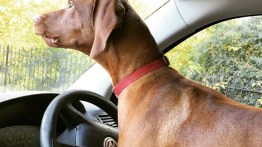
I’m keeping my eyes peeled for one of those billboards saying ‘A dog is for life, not just for Christmas’ so I can gleefully point it out to Caroline. Regular readers of this column will know that my wife brought home a Vizsla puppy last December, her surprise ‘gift’ to the family, and that the cute little fellow has turned into a snarling, slobbering hound who has ruined my life. Mealtimes in our household now resemble a scene from Jaws, with Leo circling unseen beneath the table then bursting out to grab a leg of chicken or a baked potato, or, if he can’t get hold of any food, just bite one of the children. In our darker moments, Caroline and I have discussed how best to get rid of the beast.

Answers to GCHQ puzzles

1. Tea – the initial letters spell MERLOT. 2. 9th – taking the identified letters spells ‘Beethoven’. 3. Northern Ireland. It is, for example, ‘West of Scotland’. 4. Papa. ‘Mike lives in Quebec, and is very fond of Golf’ etc. 5. a) Charles Dickens, b) Arthur Conan Doyle, c) Evelyn Waugh. 6. Forty (winks!) 7. 2017. They all had prime number ages in a year which was a prime number. 8. THE LIST. The words are anagrams of ROSE, LEEK, SHAMROCK, and THISTLE, which are the symbols of the parts of the UK. THE LIST is an anagram of THISTLE. 9. Anagrams of members of the Rolling Stones: Charlie Watts, Keith Richards, Bill Wyman, Brian Jones, Mick Jagger.

Long life | 1 December 2016

Most people who die in Britain are now cremated — more than 70 per cent of them — but there is often uncertainty among the bereaved about what to do with the ashes. When dead bodies aren’t burnt, it is straightforward: they are buried in coffins. But the options for the ashes of the dead are various. They may be interred in a churchyard or a cemetery, they may be planted among the roots of a new tree, and they may be scattered in the countryside, in a river, or at sea. But these are just the conventional choices. Lots of exotic alternatives are also offered.