Low life

The horror of Heathrow

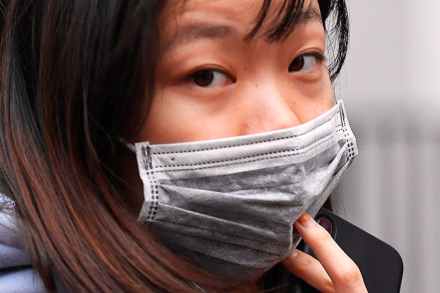
There are no stairs or escalators to take you up to Terminal 4 from the underground Heathrow Express platform. Beyond the ticket barriers are four lifts, summoned by a single button. As lift buttons go it’s a big one, about three inches square. As I advanced, finger outstretched, I thought of the tens of thousands of forefingers from all over the world that have pressed that button since people started dying in China from what my Sun newspaper graphically calls ‘snake flu’. I withdrew my finger and stood aside: let someone else risk pressing this virus capital. Two seconds later a smartly dressed woman marched up and jabbed it without compunction with a scarlet fingernail. I stayed overnight at a hotel close to Terminal 4. On the television news: glad tidings.
Whisky and striptease: stories from an old people’s home

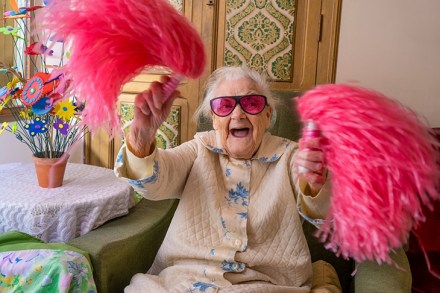
For the last four years of her long life, this upstairs room and this magnificent sea view belonged to Mrs Lock. Mrs Lock never fully understood why she was living here and I’m not certain she knew who she was either. She had thick, strong legs and was prone to delightful auditory hallucinations, including pealing church bells, heavenly choirs and gentle rain. ‘Is it raining?’ she would ask with incredulity on clear days. After a long, hard-working life, Mrs Lock could never accept that she no longer had responsibilities. ‘Any duties?’ she’d enquire anxiously a dozen times a day. Evenings, I might glimpse her through her open door in her nighty, praying on her knees like a child. The room is unoccupied now, the furniture gone.

War has broken out between me and my siblings

Last night I watched a boxed set. Parade’s End is a small box set as box sets go, and quite old, but my snobbish vow never to watch one is broken. The lead character, Christopher Tietjens, played by Benedict Cumberbatch, is an old-fashioned Tory aristocrat. His wife and almost everyone else in the film takes against him, offended by his uprightness, his anachronistic virtues, his always being on parade. Everywhere he goes, he is subjected to calumny and abuse. Baseless gossip nearly ruins him. He weeps occasionally but refuses to lose his temper or defend himself. Apart from plucked staccato violins punctually underlining the lighter moments, I enjoyed every moment of it. I am one of three siblings. Our mother died in September. She prayed for us impartially all of our lives.

The death of my desert-island fantasy

I was on the back seat of a golf buggy being driven down to the marina from my beachside villa through grossly exotic tropical gardens. From the many seaside and sporting activities the resort had to offer, I had opted this morning for the ‘island adventure’. I would be whisked away by speedboat and deposited on a desert island to snorkel or relax, then picked up again two hours later. Driving the buggy was a tanned, virile-looking young man with short hair. Smoking wasn’t allowed on the island, and I was dying for a fag. Sticking to my theory that people with short hair must always be told the truth, I leant forward to ask him if he minded if I had a cheeky fag on the way down.

A young Rwandan scholar left a profound impression on me

In the Rwandan Genocide Memorial gift shop I bought a handy Kinyarwanda–Kiswahili–English phrase book. The tipping point in the decision to buy it were the phrases ‘This gentleman will pay for everything’, ‘Would you like to dance?’ and ‘What do you call this?’ Our Genocide Memorial museum tour was the sobering prelude to a cycling tour of the volcanoes in the northwest of the country. With this phrase book in my possession, I now felt equipped to deal with almost any situation should I become detached from the rear of the peloton and lost. In the event, however, I kept up because every hour or so there was a rest stop to take on fluid and allow the laggards to catch up.

Smoking opium with Mr Nazim – and a gecko

‘I used to go to India for a few months every year. A couple of times we even drove there. You could in those days. One year I went to Benares. I rented a place for next to nothing and stayed about three months. Back then there were a lot of hippies in India. They’d run out of money and you’d see them begging. In Benares the hippies all hung out in the same places but I was staying in another part of the city. I think I paid something like three quid a month for my place, which I shared with two other Indian guys.’ I’d brought a bottle of gin and two tall glasses and a lemon and tins of tonic. I’d carried these in a basket the 100 yards or so along the path between his house and ours.

Hell is an expat dinner party

I just don’t understand it. Emigrating from Britain to France is a big step. Shifting from one culture to another takes courage and enterprise. Especially if you are of maturer years. But let’s assume it’s now or never and you follow through with it. You look for a house in France, buy one, go through all the bureaucracy, the rigmarole. You put all your worldly goods into a high-top van and get someone to drive it down. You move in. You go through the further circle of French bureaucratic hell and get your family saloon reregistered. At first you don’t know your way around. When you are driving, young and old French people tailgate you, hooting and giving you the finger. On foot, you can’t understand a word anyone is saying. You become discouraged.

When Brexiter meets Catalexiter

After the hostel breakfast, I stood on the tropical grass lawn smoking the first fag of the day and mulled things over. For the past three days I had been pedalling my electric power-assisted bike up and down Rwanda’s green hills. I was bruised from falls, physically and mentally tired, and prone, as I always am in Africa, to mood swings. Today I was not depressed exactly but overwhelmed with pessimism. Now, after breakfast, for example, the conviction struck me that before my mother died I thought I knew everything, and since her death I’ve realised that I don’t know anything. Lying on the grass a few yards away was a football. I walked up and sliced it with the outside-edge of my foot in a satisfying curve into the fauvist shrubbery.

The lessons I learned cycling across Rwanda

The backmarker of the peloton was Eric, a tall, stick-thin Rwandan. Under his cycling helmet he wore a baseball cap with a long peak which give the whole a fashionable Peaky Blinders look. Eric carried the peloton water supply in two rear panniers and it was also his job to ensure that nobody fell so far behind that they got lost. Which basically meant me. Even though I had chosen to ride an electrically assisted bike, I was always last. We were riding along the base of a chain of volcanos in the north-west of the country on undulating but relatively smooth black cinder roads.

The joy of a Rwandan airport

Our plane touched down in Rwanda at 7 p.m. Stepping outside on to the metal steps, I smelt that unmistakable peppery, earthy, decomposing smell that says you have landed in tropical Africa and that for the foreseeable future things will be different. I crossed the tarmac to the arrivals halls and, sweating already, lined up to show my passport and visa. Stupidly and inadvertently I had applied for the visa via a private online company called the Rwanda Visa Service, which charges a handling fee of nearly 200 per cent on top of the normal visa price. Four weeks before my departure date, I had successfully gone through all the online hoops and was informed that my visa was ‘pending approval’. Three and a half weeks later it was still the case. I wrote an email. No reply.

My image of the young Jeremy Corbyn is not a flattering one

I found the stone and the key underneath and let myself into the cottage — brr! I immediately made a fire in the wood-burning stove and put the kettle on. Could I imagine myself living here under this deep thatch, within these Babylonian walls, under these adze-scarred beams, in this 17th-century silence? This is what I had come to find out over two days and nights. The silence was a bit unnerving. I switched on the CD player and let it play whichever CD was loaded. It was Bryan Ferry. Simple, plain, tasteful furnishings emphasised the cottage’s interior spaciousness. Oh, but cold, colder than outside. I made a pot of tea and had another word with the fire I’d made in the wood burner.

My journey to the heart of prehistoric England

‘Can I get a taxi around here?’ The man standing behind the counter of the convenience store looked at the floor and slowly shook his head. ‘What about buses?’ I said. ‘Taxis? Buses? You’re joking, aren’t you?’ said a chap standing behind me. He was wearing bedroom slippers and clutching a tin of processed carrots. ‘Where are you trying to get to?’ he said. ‘Stanton St Bernard,’ I said. His knees gave way in a pantomime stagger of incredulity. ‘Stanton St Bernard! Taxis? Buses? Are you mad? It looks like you’ll be walking, my friend.’ He peered through the window at the blackening sky. ‘And — oh dear — it’s coming on to rain.

The divine comedy of Friedrich Nietzsche

I’ve come back to the empty house for the second time in the six weeks since my mother died. The last time I came back, I felt her lingering presence: benign, modest, humorous. But this time she’s absent. Alison, who came once a week to clean, told me that my mother’s last words to her were: ‘Don’t forget to clean the skirting boards behind the beds.’ My mother liked her house to be clean. She kept on top of it, wielding the vacuum cleaner when she’d reached the stage where she couldn’t stand unaided. It’s a lovely old house on a rainswept promontory overlooking the bay.

The truth behind those Airbnb snaps

Catriona and I had agreed that a terrace for smoking, eating, drinking and painting was a necessity rather than a luxury, blow the expense. One of the photographs of an Airbnb just above my price range showed an elegant round table with two romantic champagne flutes and an uninterrupted terrace view of a ridiculous sunset over the Ligurian sea and the coast of Italy. The faintly aphrodisiac image was a mug punter’s eyeful and I greedily tapped the button committing me to three nights at Sandrine’s Airbnb apartment, perched in the heart of Menton old town. Free parking was to be had next to the cemetery of the Old Château, resting ground of tubercular Russian nobility and upper-middle-class English.

What had the chambermaid made of my penis vacuum pump?

Fumbling outside my door in dripping swimming trunks for my room key, I was hailed cheerily by the maid from a doorway further along the corridor. I hadn’t met her, but her greeting was not without a touch of familiarity, if not intimacy, I thought. The latter, I guessed, must be predicated on the fact of her coming into my junior suite when I was out and restoring it to a holiday-brochure photograph, then arranging my tawdry collection of toiletries into little islands on the marble counter. What she made of my penis vacuum pump, I couldn’t guess. I rather think that while she could only speculate as to its function, she probably imagined it to be the latest Western bourgeois ‘must-have’ gadget.

Will mindfulness turn me into a Remainer?

Mindfulness at our all-inclusive Turkish beach resort began at 11 o’clock. Our mindfulness teacher was a tiny, smiley, flexible-looking woman who was not much bigger than the wheeled amplifier she dragged in behind her on to the beachside ‘wellbeing’ platform. With her musical voice she led us in a few brief arm stretches and neck rolls, then asked us to lie flat on our backs and think about what we were thinking about. Our intention this morning, she said, was to bring our minds back from elsewhere in time and space to the here and now and try and keep it there. This is what mindfulness is, basically, she said. Eight of us had turned up: four men, four women, all middle-aged. We were all hungover, I think.

Why Sodom and south Devon are a million miles apart

We gathered around in the sunshine and watched the coffin being lowered into the freshly dug trench. Stratifications visible on the interior sides of the excavation showed that she was being laid to rest in shallet (compacted broken slate) and I felt sorry for whoever it was who had volunteered to dig it by hand. The 180-year-old graveyard was perhaps seven eighths full; her allotted plot was in a pleasant, even beautiful spot, far away from the cold shadow of the church, with a small, wind-bent hawthorn tree close by and panoramic view of the blue bay. I think some of those present will remember this dazzling September and our joyful singing at her funeral service and our blinking, whey-faced silence as the coffin was lowered into the ground for years to come.

Semi-recluse (me) seeks dilapidated cottage on Dartmoor to rent

So now I must find somewhere else to put my books and live sometimes. Dartmoor, I thought: one of the wildest places left in England yet just 20 minutes to Exeter St David’s station, if my car starts, and another 20 to Torbay hospital along the new bypass for appointments and treatments. What I have in mind is a miner’s cottage with bracken growing against the granite walls and an indefatigable little stream passing close by for use when the pipes freeze. There would be no wifi, no phone signal, no BBC radio or television. Final demands would be left in a postbox at the end of the unmade track half a mile away. The cottage would be a bit dilapidated but the roof would be mostly sound and the chimney would draw.

The woman laid out in the coffin in front of us wasn’t Mum

The receptionist with brown lipstick showed my son and me into a faultless waiting room, whose centrepiece was a big colour photograph of out-of-focus lavender florets. A couplet written underneath said: I’m the colourful leaves when autumn comes around And the pure white snow that blankets the ground. Had we made an appointment, she asked. We understood that it wasn’t necessary, we said, and that we could view the body ‘at any time within normal business hours’. She wrestled with her thoughts for a moment, then said she would have to get a man to come over from Torquay to help lift her out of the fridge. ‘Can we help?’ I said. ‘No. No,’ she said. ‘Health and safety, you understand.’ We understood, we said.

The mysterious ways of the French

These new tablets that will save or at least prolong my life have unpredictable side effects which only now, a month after starting to take them, are making themselves felt. Breasts, round and wobbling that I can cup in my palms and jiggle up and down; breasts, moreover, with painfully sensitive nipples. Fatigue: it is almost impossible to be both immobile and awake. By early evening, trapped upright in a chair drawn up to a crowded restaurant table, I’m longing for sleep or even death. And wind, which is perhaps the least expected and most disastrous side effect. Quelling the Boxer Rebellion is the only thing keeping me awake.