Low life

Is left the new right?

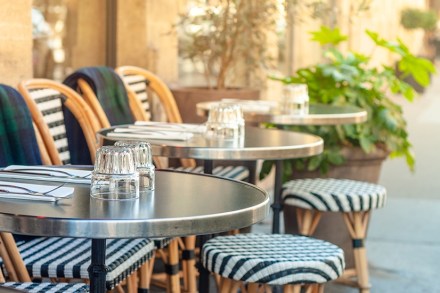
I took a table on the terrace of the reopened bar and ordered une pression from the waitress. ‘Back to normal, thank goodness,’ I ventured to the chap sitting alone at the next table. He was staring at the centimetre of lager remaining in the bottom of his glass. The cheapness of his clothes and the loneliness enveloping him like a caul was contradicted by his youthful glamour. ‘Normal?’ he said. ‘Normal doesn’t work. You can shove your old man’s normal up your backside.’ My sociable, celebrant spirit recoiled from the aggression. ‘I only meant that it was good to see the bars and shops open again,’ I said lamely.
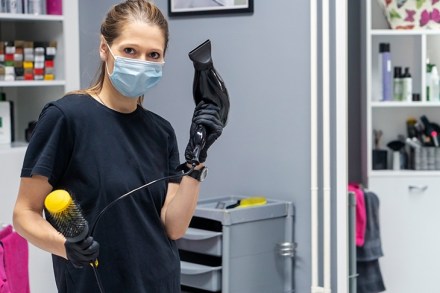
My hairdresser cured my depression

I walked to the salon in fiery sunshine. Gorgeous, zaftig Elody was wearing a short satin dressing gown of silver and gold. She was alone. ‘Ça va?’ she said, helping me into the gown. ‘Black dog,’ I said. ‘What is black dog?’ she said. ‘Cafard,’ I said. ‘A black ox trod on my foot.’ I sat in the chair, removed my glasses and stared in the mirror. The straps of my black face mask made my ears stick out. And strewth, the hair. ‘Two owls and a hen, four larks and a wren,’ I said. Elody speaks no English and my French is rudimentary. ‘What?’ she said. I had a stab at translating the limerick into French. She stared at me via the mirror with rapt, sceptical attention.

An 11-year-old’s birthday party was hijacked by Brexit

Saturday night we ate outside next to the floodlit rock face. Four adult guests came puffing up the path and one child, George, celebrating his 11th birthday. A string of low-wattage coloured bulbs hung above our heads. Chicken curry. Dahl. Pink wine. Yellow champagne. Little brass oil lamps on the table. John Mayall & the Bluesbreakers — trite lyrics, sublime guitar — for the birthday playlist. A cream-filled birthday cake in the fridge awaited the right moment. Dominic Cummings was all the rage that day and every one of our adult guests was an ardent Remainer.

We have a communist bar and a fascist bar. If only I could remember which is which

When I first came to this village, I was told that one of the bars was a ‘communist’ bar and the other ‘fascist’. The information was appended with vague mutterings about the Nazi occupation being a live rail in the collective village memory even after 60 years and that it was probably best not to enquire too persistently or deeply into the subject. French bars are great for getting very drunk very quickly while standing up on a tiled floor, but are not comfortable or cosy like a British pub. Therefore I haven’t yet made a habit of patronising either of the village bars except occasionally during the busy summer holidays to meet friends who are staying in the area.

Rules for a deconfinement dinner party

The most visible local landmark is a solitary two-headed Jurassic mountain called Le Bessillon, six miles long and 800 metres tall at the highest peak. These are unimpressive vital statistics for a mountain perhaps, but the Bessillon exerts a tremendous, almost uncanny presence on us all. The foreign correspondent and his wife have bought an 800-tree olive farm on a nearby hillside. From their outside dining table this great primeval slab and its forested sides can be seen in profile, like a finely drawn illustration in a Victorian encyclopedia. Between the dining table and the mountain is nothing but oak forest and pylons, and beyond it more oak forest until a distant village on a plateau. (The elegance of French electricity pylons and barbed wire makes me laugh.

My first post-lockdown party

France is divided into a red zone and a green zone. We’re green. Green for go. From this morning we no longer need a signed and dated permit to leave the house; we can socialise with up to ten other people at a time; and we can travel up to 60 miles in any direction. In theory we could fill a minibus and go on a beano down to the coast tomorrow. And in spite of the government ordering bars and restaurants to remain closed, the village beer bar unexpectedly opened for business last Saturday, and the lights were on in the poshest village restaurant where people inside could be seen tucking in. Perhaps, in truth, the delicate decision about when to open the bars and restaurants has been quietly devolved to the local mayors’ offices.

In praise of French doctors

From my hospital bed in Hyères I could look out of the window and see the old town and Edith Wharton’s old house, the Castel Sainte-Claire, away on the hillside. Christophe, a male nurse, came in to welcome me and take my temperature, pulse and blood pressure. He was masked and gloved against possible infection from the old Covid Dix-Neuf and he spoke English. As he slipped on the finger thermometer and inflatable sleeve, he reminisced about his rugby-playing days. Thirty-five years ago, he said, he had competed against an English team who played rugby with a violence that was incredible.

How the French view their weekly clap for carers

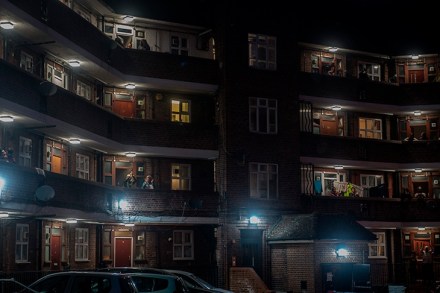
Once a week we break French emergency law and have a friend round for drinks on the terrace. The terrace overlooks the village rooftops as if it were a box at the theatre. Two weeks ago we were pleasantly lit up, when, at one minute to eight, the villagers below came out on to their terraces or stood at their windows and front doors to make a noise in support of the ‘essential’ workers: nurses, doctors, carers, postmen, shopkeepers, council workers, and so on. Some banged saucepans together or beat them with wooden spoons. Some blew horns of one kind or another, including what sounded to me like one of those long prayer horns blown by Tibetan monks from monastery rooftops.

Vodka, kaolin and morphine: my welcome drinks at The Spectator offices

In 2001, aged 44, I was hired to write a weekly column for this august paper, and for the first time in my life there was a London door on which I could knock or ring, at any time of the day or evening, and be welcomed in. And what a door! To walk along the Regency terrace sun trap of Doughty Street in Bloomsbury on a summer evening, then breeze through the open door of number 56, and to know that the people to be found inside were the funniest, cleverest, most unsnobbish collection of individuals, and that booze was the second language, was a dream come true. I would trot up the steps beneath the stripy awning, enter the magic portal and turn left into a seedily ornate reception room. There I could take a running jump into secretary Ann Sindall’s ample bosom.

Would my success in growing cannabis plants translate to nasturtiums?

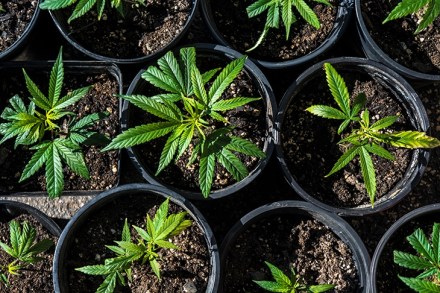
In a cave once used as a stable and now abandoned, I found a wooden crate containing a dozen tiny clay flowerpots. They were of a simple design and looked old. I found two packets of seeds in a bric-à-brac drawer — sunflowers and nasturtiums — and I sowed them in the pots, which I arranged in a row on a shelf on the terrace. It was my first attempt at growing anything since 1979, when I raised six cannabis plants in my father’s greenhouse with such spectacular success that I had to permanently leave the roof panes open to accommodate them. Rarely have sunflower and nasturtium seeds commanded such loving and indefatigable attention from the sower.

I was relishing the lockdown a week ago, but now I need urgent hospital treatment

In France the rule for going for a walk stipulates an hour in duration or a kilometre in distance. We are fortunate here in having a 40-minute circular walk that starts at the front door, most of it on a footpath, though beginning with a steep climb that makes me pant like a greyhound after a course. Then the path levels and runs pleasantly through olive groves and vineyards. One is never out of sight of houses and at three points along the route house dogs — in order: a pair of Weimaraners, a Jack Russell and a pedigree sheepdog — enjoy intimidating passers-by by throwing themselves in a frenzy of barking at the wire boundary fences containing them. Otherwise the route is bucolic and quiet enough to quieten the mind and exhaust the frail old mongrel.

Had the entire village population been wiped out since last week?

With my signed and dated laissez-passer in my pocket, I trotted down to the village to see if I could buy anything to eat, drink or smoke. A sensation of being out and about in the world was also high on the agenda. Cycling and jogging earns you a fine, of which a quarter of a million have been doled out in a fortnight. But we are permitted to walk the dog for one kilometre, or 546 yards there and 546 yards back. We cheat a bit, Catriona and I, by taking the dog separately, meaning she gets two walks a day. She’s elderly and frail, the poor bewildered thing, and completely knackered. And if we tick the box on the laissez-passer we can also go out to the nearest grocery shop and tobacconist. Nevertheless confinement is beginning to chafe a bit.

I am socially isolating in a cave in France

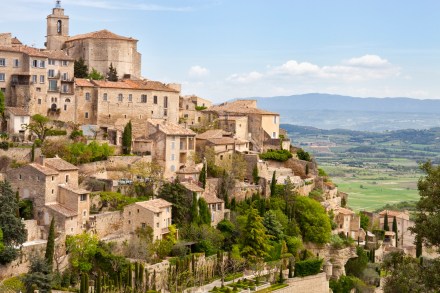
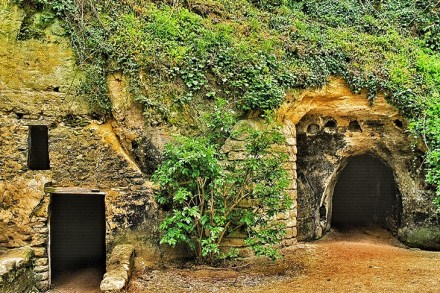
This Provençal village clusters around the base of a cliff 300 feet high and a kilometre wide surmounted by two crumbling look-out towers. The cliff is riddled with dry caves, used since time immemorial by troglodytes and fugitives. In the early 19th century a section of the rock face was walled and the caves used as a convalescent hospital for Napoleon’s wounded soldiers. An earth tremor largely destroyed the village’s medieval quartier in 1905. The stoutly built military hospice survived, as well as a few other ancient cave dwellings higher up the cliff. Catriona and I live in one of these. House and garden sit on a high ledge accessible via a steep and rocky footpath.

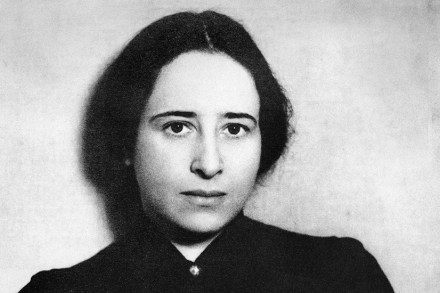
My love affair with Hannah Arendt

The three of us — me, Catriona and her daughter Skye — were having a wash and brush-up before going out for a meal ata restaurant in the village, when we learnt that President Macron’s smooth dishonest face had just addressed the nation on TV and told it that he had ordered bars, cafés and restaurants and all places of entertainment to be closed until further notice. The news both exhilarated and disappointed: real life had begun in earnest but the bars were shut. Skye assembled a round of gin and tonics and we three settled down in a row with our feet on the coffee table to make our own evening’s entertainment, the first perhaps of many.

The joy of Xanax

The greater the enervation, it is said, the greater the appreciation of a work of art. There was no place in Mme Benoit’s energetic life for art, if the austere interior of her huge consulting room was anything to go by. Human dynamos don’t need pretty pictures to look at. On a tiled floor the size of a tennis court were metal shelving racks filled with cartons of various sizes and loose piles of documents. The decorative theme of her workspace could be described as ‘warehouse’. The only nod to domesticity was a sink in one corner. This was my second visit to Mme Benoit in as many years to describe symptoms of a suspected urine infection. And once before that I had sat at her desk and told her that life had lost its savour and I felt cast among the flints.

Shrieks, shots and broken china: a visit to my rural French GP

On a hard chair next to the waiting-room door, I sat for an hour defusing thoughts of my own demise, if all else failed employing conscious untruths. As is the custom here in the hot sweet south, a person entering a room greets it. Being nearest to the door, and the first encountered face, I felt responsible for setting the tone of the waiting room’s responses. Interrupting my morbid sophistries, I returned each new entrant’s greeting in a spirited, democratic, welcoming manner. In this I failed as usual to sound that exact native demotic note and suspect I came across rather as a psychotic waiting for his monthly depot injection. There were five before me waiting to see the doctor.

The film that shaped my vision of the world

Joyce Marriott of Pyrton, Oxford, has written a letter to the Times on the subject of how a person’s imagination can be unduly influenced by one particular film. The film Old Yeller, she says, had such a powerful effect that for the past 30 years she has devoted her life to animal welfare, dogs particularly. ‘Such is the power of movies,’ she concludes. Although I haven’t seen Old Yeller, I agree that a film can sow seeds in the imagination which prosper and flourish and eventually overrun it.

How to sample your own urine

Seven round the table for dinner. Wild mushroom risotto. I was told to sit next to Michael. Good. Michael makes Palissey ware, which is to say ceramics made in the style of the 16th-century French potter Bernard Palissey. A typical piece of Palissey ware is a platter decorated with three-dimensional casts of snails, snakes, frogs, lizards and fish forming a glazed aquatic or reptilian menagerie. The casts are made by placing a mould around the freshly killed or expired creature. The realism achieved is startling, even slightly shocking. Michael is always on the lookout for undamaged reptile corpses. He also collects 18th-century champagne bottles and probably knows more about old glass than any living person. His knowledge is so comprehensive that I would say he probably needs help.

How I found salvation in a church in Torquay

Last Tuesday a Mistral wind blowing across the Bay of Angels jerked the plane all over the shop as it circled to land. The French lady in the next seat but one to mine vomited raucously and copiously on the carpet and a speedy boarder sprinted for the toilet. A second before the wheels should have touched down on the runway at Nice, the pilot had second thoughts and accelerated the plane back up into the air. Afterwards he came on the loudspeaker to explain. Most surprising of all was the distinct tremolo in his voice. Five days later, flying in the other direction, our touchdown at Bristol in the gathering Storm Ciara was accomplished at the first attempt, but jarring buffets of wind on the approach made we adults secretly brace ourselves and the infants wail.

Is gluttony no longer a sin?

I’ve no interest in food. None. But for the three other journalists on our press trip, eating was a consuming interest. In one Bahamian restaurant after another, I sat while they examined each other on their knowledge of this or that London or Bangkok or New York restaurant or lovingly described memorable meals. Celebrated chefs’ careers were discussed with devotion. When a dish was placed in front of them they photographed it and posted the image on social media. (Their mobile phones were as integral to dining as knives and forks.) Between meals they described how uncomfortably empty their tummies felt; after meals how uncomfortably full. They were gluttons, but saw gluttony not as a sin but as a virtue and a mark of cultural sophistication.