Low life

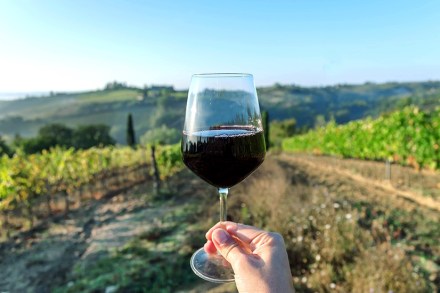
The joy of red wine

Everything is happening so fast. First we were put under a night curfew. A few days later M. Macron announced another lockdown. Then, pretty much overnight, I developed a taste for red wine. The Damascene conversion was a bottle of Clos de l’Ours, a local vineyard. It was pricey admittedly, even when bought direct from the vigneron’s shop, but it was a gateway. Now I’m guzzling red. It’s like finally liking sausages after a lifetime’s aversion. The suddenness and completeness of the conversion I can only put down to an organic deterioration in the brain. Old age, perhaps. Or years of drinking this unpretentious, paralysing brand of gin that is found on French supermarket shelves: it’s called ‘GIN’.

We’ve gone from summer to winter in the course of an afternoon

Wearing shorts last week in a mid-October heatwave, having worn shorts continuously since March, Les Murray’s poem ‘The Dream of Wearing Shorts Forever’ seemed achievable. Would we still be in shorts on Christmas Day, I wondered? Better still, no socks? I recently met an English chap who stated in all seriousness that his main reason for emigrating to the South of France was to stop wearing socks and he hadn’t put a sock on for 30 years. But at the exact moment when the dream of wearing shorts forever looked possible, it was winter. As I put it to the woman in the boulangerie the next morning: ‘Yesterday afternoon I went upstairs for a snooze. I fell asleep in summer and when I woke up it was winter.’ It was true.

The generosity of French doctors

My last NHS scan showed a shadow on a rib. The scan report couldn’t decide between a new cancer metastasis or scarring from an old injury. The first would mean the cancer had moved into my skeleton and was on a winning streak. I have fractured ribs in sharp collisions with steering wheels more than once and cling strenuously to the old-scar hypothesis. The image showed a second suspicious blur. Something, possibly a tumour, was putting pressure on my left kidney. Since then I’ve been going around with a length of plastic tube inserted in my urethra to drain it. Until that point my cancer was just a word. Now an occasional throb or ache there reminds me forcibly of my destructibility.

From half a shelf to a library: my life in books

‘Yes, I will have a coffee,’ said the van driver. He’d driven down to the south of France from Devon. I motioned him to take a pew at the kitchen table and asked him about himself. Ron was ex-army. Aged 17, he was faced with a stark choice: the building site or the army. Because he’d seen his builder father working in a trench all day with water up to his waist, he chose the army. He joined the Royal Engineers and trained as a driver. In the early 1970s he drove two SAS men around Belfast in an unmarked saloon car. That was the job. All day every day. Everywhere Gerry Adams went Ron followed him. Gerry Adams knew he had a tail and would give a friendly or an unfriendly wave, depending on how he was feeling. Yes, he enjoyed the army.

How I won €160 by mistake

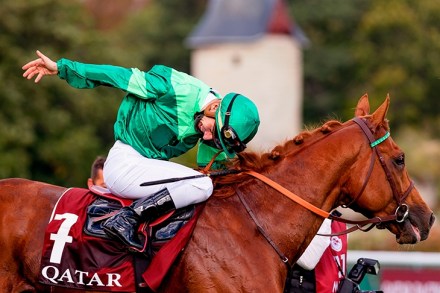
My French friend André speaks perfect English and is the kindest of men. After reading last week about my futile efforts to place a bet on the French state betting terminal in the village bar, he put himself out during the week to have a word with one of the bar staff. He gave her my description and told her to expect me to appear in the bar the following Sunday afternoon in time for the Prix de l’Arc de Triomphe. And he drew an assurance from her that she would help me decipher the betting-form multiple-choice hieroglyphics. Or, better still, take a verbal betting instruction over the counter. I know next to nothing about horses other than that they are frightened of crisp packets and can deliver a terrific kick if you loiter behind them.

French gambling is a mystery to me

Feeling oddly confident, clairvoyant even, I entered a bar to place a bet on Sunday’s Prix de l’Arc de Triomphe. I had researched the internet for advice on how to place a bet in France and I knew I wanted to bet on a couplé gagnant, that is to say make a prediction of the first two horses past the post. Feeling almost supernaturally confident, I thought I would follow up with a wilder bet called a trio ordre, adding a third horse from among the outsiders. Because my desire to bet large on a classic horse race was overwhelming, and my conviction that I would win grandiose, I think I was a bit off my head. Was this grandiosity perhaps a small manifestation of the vast irrational impulse that has apparently gripped the world?

Is my phobia of upmarket restaurants misplaced?

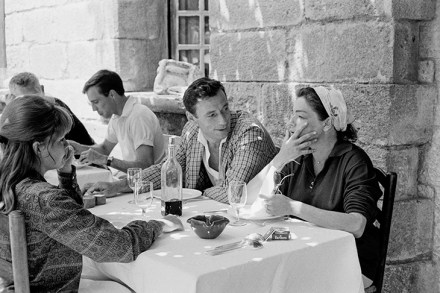
Scotching my bright idea of a stiff gin for Dutch courage in the bar across the road, Catriona bounded straight for the door of the Colombe d’Or. My restaurant phobia was fast upon me and I followed her into the bourgeois holy of holies more slowly than a nudist climbing through a barbed wire fence. We were half an hour early and directed to the bar. Here my plea for strong spirits was again denied and I had to make do with champagne. Speechless with ecstasy — this was her birthday treat — Catriona toddled off with her flute to cast her eye over the Miros, Matisses and Chagalls in the dining room. I sat alone on the windowsill in the bar where Picasso and Yves Montand and James Baldwin had once parked their famous arses and I mourned.

Why French car-boot sales are good for my mental health

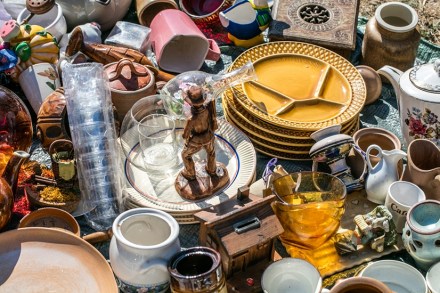
Hairpin bends in a stony forest. Downhill. Steep, then steeper. Smooth frictionless tarmac. I’ve got the car barely under control. A narrow bridge over a ravine. Single file only. A van hurtling uphill. A recessed drain — unavoidable. Bang, crash, wallop. The car continues but feels mortally wounded. We limp to a passing place 50 yards further down the hill and I cut the engine. I get out and inspect the damage. A back tyre is as flat as a dab. It’s not my car. I open the boot hoping to uncover the requisite tools and spare wheel. Jack, spare wheel, warning triangle — present. Excellent. Wheel brace? Unfortunately not. Bugger. Phone signal? One bar. From time to time. I call Michael, a neighbour. A French ring tone, then his voice. Thank the Lord.

The pleasures — and pain — of dog-walking

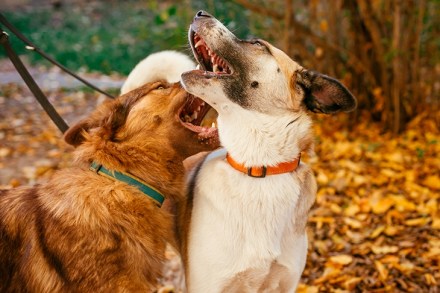
The old dog was in a companionable frame of mind and she trotted along at my side, glancing up now and then at my face with a grin, perhaps with happiness at being out and about in a pleasant temperature in a changing season. Each evening we tread the same 40-minute circuit out of the village and back. Along the route are several doggy equivalents of a message board, of which she is a fanatical reader and contributor. Her evening walk is the highlight of her day. Otherwise the old girl sleeps. The circuit is a popular one with other dog walkers. There is, for example, a French girl of about 15 who is Nature’s last word in animal beauty. It is better for me to look at the ground as we pass otherwise I have suicidal thoughts. She has a hairy mongrel.

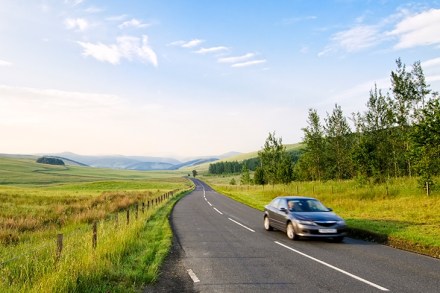
The A272 is a relic of the golden age of motoring

In France I own a dented old Mercedes and in England a dented old Mitsubishi Carina. The Mercedes is parked in a cave and covered in sand dust and curling police notices in French; the Mitsubishi rots away in a lay-by in a country lane under a layer of wet leaves, mud and thatching straw. Owing to lockdown and poverty neither is fully functional nor has been started for months. Very occasionally I worry about them or experience a stab of shame at my pedestrianism. Last week I hired a budget car from the brand-new car-hire centre at Bristol airport, the first time I’ve rented a car in 20 years.

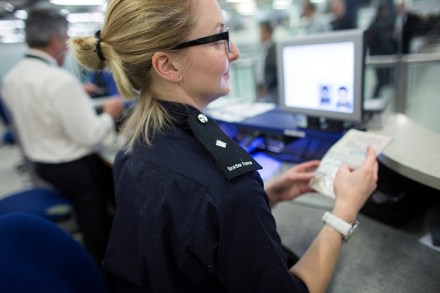
How to seduce a Border Force officer

There was only a handful of us arriving at Bristol on flight 6114 from Nice. Oscar and I had the leisure to choose which of the four available UK Border Force officers we most liked the look of. None of them were your usual bruisers. One was a careworn, perhaps broken old man and during the brief wait in the taped corridor we speculated on the nature of the tragedy that had brought him here to this. My speculative theory was that he had impulsively married an unpresentable woman, who had turned out to be an incurable alcoholic who beat him. Oscar’s was that he had been discharged from prison as being too frail to constitute any further danger to the public.

Bad news from my oncologist didn’t spoil my joyous reunion with my grandson

The Moulinards had inhabited the old stone hilltop house for centuries, ekeing out a hard living among the sun-baked boulders. They were peasants. In the winter of 1962 there was one Moulinard left. Henri: old, alcoholic, feeding the furniture into the fire for warmth. A delegation of relations came up the hill to persuade him to go into an old people’s home. When they’d left, old Henri took himself off to a large oak tree and hanged himself from a branch, dangling there for several days before being found. The house passed to a Marseille butcher who sold it on to an English couple who asked us to house-sit last week while they went on holiday to Austria. We were three: Catriona, me and my ten-year-old grandson, whom I hadn’t seen since Christmas.

Would this Marseille-bound flight be the death of me?

‘There’s no need to wipe down your tray table,’ screeched Heidi, chief steward of the ‘amazing team you have looking after you today’. ‘Because for your safety today,’ she went on, ‘the aircraft is deep-cleaned between flights by specialists.’ Which brought to mind the chain gang of depressed women that one sometimes sees filing aboard during a stopover to gather rubbish and flick a duster around. I wondered whether they had been inspired or lashed into devoting their lowly paid attention and energies to the tray-table catch, for instance, or to the overhead ventilation nozzle or to the locker handles.

A lament for the foreign correspondent’s house – and his hospitality

Provence-Alpes-Côte D’Azur Until January the foreign correspondent lived in a late-18th-century house with a vineyard, olive grove and vegetable garden close to the village centre. You’d go through a gate, then another gate, and find yourself suddenly in the countryside and being yapped at by Mary, the most spoilt and spherical spaniel in Christendom, and then the foreign correspondent himself would appear in front of his lovely old house with arms open to welcome you. Usually the first thing he would say was that he was thinking about having a drink and why didn’t he go and fetch a bottle and glasses.

How to survive a heatwave

Provence-Alpes-Côte D’Azur A burning ball appears over the brow of the hill at seven o’clock every morning and then you have roughly two hours to perform outdoor stuff such as shopping. After that you are roasted alive even sitting under a parasol with a hat on or swimming in a pool, and you flee indoors, closing the shutters, doors and windows behind you. The lizards hide; the birds go quiet. Yesterday I watched Reg, the friendly black carpenter bee who lives in a bamboo pole on the terrace, die from sheer exhaustion. For weeks he’s been terribly busy with the flowers and making love on the wing with a succession of delightful lady carpenter bees and suddenly he hit the buffers.

Jam and Opium on the Somme

Phone calls aside, the only human contact I had on my ten-day Somme battlefield tour was with the lady who ran the bed and breakfast establishment. My bed was on the upper storey of a disused light railway station in a clearing in a beech wood. Madame lived with her husband in a modern bungalow 100 yards down the line, but came along each morning to cook my bacon and eggs. The greater part of her clientele consists of British Great War buffs. But Covid-19 had kept them away and I had the breakfast table, the old station and indeed the Somme battlefield entirely to myself. The dining room was once the waiting room.

The beauty of military cemeteries

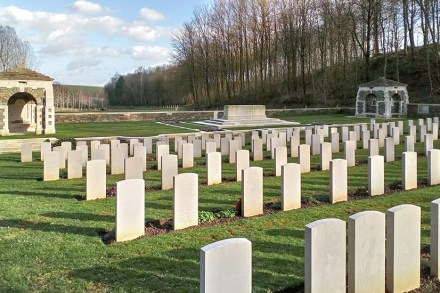
They are starting to cut the corn. But apart from combine harvesters and tractors, the roads up here on the Somme ridges are empty, the villages more or less deserted. It’s been just me and my bike, the wind, the skylarks, the familiar English sky, the chalk ground, the strange flints, the green and famous woods, and the thousands of British dead lying under Portland headstones in these beautifully kept military cemeteries, the grander ones designed by Sir Herbert Baker. They dot the hillsides all around like defensive outposts of a lost civilisation of warrior gardeners. Airport bookshops a few years ago were selling a paperback called Is it Just Me or is Everything Shit?

My Great War obsession

Bernafay Wood B&B, Somme, France I came up on the TGV yesterday from the Midi to northern France and it went like the clappers. I fell asleep zipping through stony, sun-baked vineyards and olive groves and woke an hour later in dairy country obscured by rain. What I had hoped for was an empty carriage or at least a socially distanced one, but this particular Sunday train was packed to the rafters. A woman behind me sneezed at my head from one end of France to the other. A bloke across the aisle was soaked in sweat, his head lolling this way and that on the bends and he looked as though he might have to be carried off the train. I went north to walk the Somme battlefield for nine days and think about my old Mum, who passed away last September.

Nuns, a maquisard and the Devil’s Own Rum: a Provençale pilgrimage

Avid Spectator reader Mr Brown had endured the very strictest of lockdowns for family health reasons in Tunbridge Wells. Since March he had interacted only with delivery drivers, his wife and their two children. He was therefore quite unsocialised when he stopped with us for a night on his journey from Kent to the Pongo Delta in Guinea, where for the next 12 months he will be organising the security for a mining company trucking bauxite 200 miles through bandit country. I found him standing outside a village bar looking at his watch because I was an hour late. He heaved a shopping bag for life filled with booze and groceries into the boot of my car, urging that it must go into a fridge as soon as possible.

What angry young French men want

Chatting on the café terrace with my new friends Didier and Emile made me aware that certain political ideas, which before the Covid-19 pandemic I had comfortably assumed belonged on the wilder shores of political discourse, are now mainstream among the under thirties. I felt a little envy, perhaps, for Didier’s undoubting conviction that questions of equality, gender, race and white supremacy were the ultimate verities for humankind. But a single word often betrays a great design, and his supplementary advocation of voluntary euthanasia for the chronically sick and elderly indicated all too clearly in which direction his ideal post-Covid society would be headed.