Food

Digestif | 25 June 2011

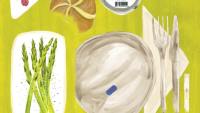
Hard-working, mercurial and good at playing mean – reformed hell-raiser Dominic West eats asparagus into the small hours with Imogen Lycett Green After nearly two decades hitting headlines as a womanising bachelor of the most hell-raising kind, Dominic West married the mother of three of his four children last year. Has family life brought tranquillity with it? ‘You must be joking,’ he screams, throwing his head back. ‘I am swamped by kids. The theatre is where the order is, the calm, the structure. Things begin on time. Family life is chaos. I have never been happier in my life but when it’s time to go to the theatre, I run out the door.

Cold Comfort

Ice-cream is one of the joys of a British summer – and, says Cookie Bellair, it’s not as hard to make the true, delicate, flavoursome stuff as you might imagine The West London home of ice-cream gurus Robin and Caroline Weir is an Aladdin’s cave filled with all things related to ices. The walls exhibit beautiful early prints depicting the first Neapolitan sellers; curiously-shaped moulds and serving implements catch the eye and spark the imagination; and the piece de resistance is a mid-20th century ice-cream counter around which their kitchen is built. Robin’s passion stems from an early experience buying ice cream for his children. He was so appalled at the ingredient list that he tipped it down the drain.

Heavenly simplicity

Borgo Egnazia in Puglia opened last year and immediately gained a reputation as one of Europe’s most spectacular holiday resorts, not least thanks to its cookery school under the tutelage of the resort’s executive chef, Mario Musoni. Until recently Musoni had his own Michelin-starred restaurant outside Milan. When I asked why he didn’t seem unhappy to be uprooted from his hometown relatively late in life, he grinned and replied: ‘This is where the best food is. Milan’s vegetables come from down here. Puglia is the garden of Italy.’ Indeed, Borgo Egnazia is surrounded by orchards, olive groves and vegetables thrusting up from rich soil.

Apéritif

It’s been a long cold winter, but here we are at last in the blossom-laden, golden days of spring. It’s been a long cold winter, but here we are at last in the blossom-laden, golden days of spring. There’s plenty of seasonal produce for food and wine lovers to enjoy within our pages, much to excite and inspire, and maybe even one or two things to annoy — if you run a supermarket. You may take sides with the inimitable Jason Yapp as he rails against the iniquities of the ways we are sold wine by our retailing giants, in which case Dave Waddell’s ‘How to… liven up the supermarket shop’ might come in handy.

An A-Z of Scoff

Q IS FOR QUANTITY The problem with food and health can now be summed up in one phrase: ‘too much’. More than six out of 10 men and five out of 10 women in the UK are overweight or obese. Talk to medics such as cancer experts and they say it’s especially important not to put on weight around your middle — the dreaded middle-age spread. How to lose it? ‘Eat less’ is obvious — but too simple. Increasingly, obesity experts think the environmental aspect of overeating also needs to be addressed. In the 1990s, the phrase ‘obesogenic society’ — in which we in the West live — was coined.

Rage against the tagine: Supermarket swipe

Wine is one of life’s great joys – so why, asks Jason Yapp, do major retailers do such a dismal job of flogging it? I have several items to declare: bags of prejudice, a heap of self-interest, a smidgen of latent snobbery and chips on both shoulders. But even accounting for all of the above it can’t just be me who finds buying wine in a supermarket a joyless, soulless and utterly dispiriting experience. Wine is one of nature’s most precious gifts, and its acquisition should be a joy, not an ordeal. Most of the major multiples employ a smattering of Masters of Wine (of whom there are only 288 in existence), so there is no shortage of in-house product knowledge, but sadly this is seldom evident at the point of sale.

Pie in the Sky

Airline food does not enjoy the best of reputations, but with a new breed of on-board cooking and menu selection systems now emerging, its future could be a journey back to basics – with boiled egg and soldiers. Dan Jellinek reports Airline food has long had a poor reputation — odd-tasting, odd-sized and arriving at odd times. In recent years, however, innovations in preparation and ingredients have seen huge improvements, not only towards the front of planes, but in the cheap seats where most of us travel as well. To understand the challenges faced by airlines in serving any halfway decent food at all to passengers, you have to grasp the logistics.

Taste test: British Charcuterie

Overall, we were a little disappointed at the quality of British offerings, but perhaps it’s not surprising given the newness of our charcuterie traditions. And, in the sparkling setting of Harrods’ new wine rooms, we did unearth a few treats Panel: Tilly Culme-Seymour, Deputy Editor, Spectator Scoff (tcs) Dan Jellinek, Co-Editor, Spectator Scoff (dj) Bruce Langlands, Director, Harrods Food Halls (bl) Sudi Pigott, Food writer (sp) CLASSIC CUTS Deli Farm Charcuterie: Cornish coppa (£5.30/100g, www.delifarmcharcuterie.co.uk) This was an odd combination of ‘perfumed, but salty’ (sp). ‘Chewy — doesn’t really melt in the mouth, taste lingers’ (bl). ‘Slightly pepperami texture, quite earthy’ (tcs).

The Cure | 9 April 2011

On the continent, the creators of cured meats can draw on a tradition imbued in the genes (in the case of Parma ham, for example) since the time of Hannibal. Can a much newer generation of British charcutiers possibly hope to compete, boosted by the surge of interest in hand-made food with clear, local provenance and with a potent mix of bloody-minded determination and passion? Of course, there has long been a tradition of British hams — think Cumbrian or Carmarthen — but somehow they’ve never quite enjoyed the recognition and kudos of their European counterparts. But now at last we’re seeing British coppa (air-dried pork collar) and culatello (taken, as Antonio Carluccio once put it, from the plumpest part of the arse) jostling for position.

Advertisement Feature: Beauty and the Beast

Advertisement Feature UNNECESSARILY WELL MADE The objective at Glenmorangie is whisky perfection; there are no quick fixes and, at each stage, only the best will do. The distillery has been pursuing this same goal since 1843 and makes Scotland’s favourite single malt. Glenmorangie is known for having the tallest stills in Scotland, standing at an impressive 5.14 metres (16ft 101/4 inches). In a Darwinian idiom, the more the alcohol vapours have to defy gravity as they climb to the top of the stills, the greater the likelihood that the fatter, heavier ones won’t survive. Thus, the tall stills result in only the very lightest and purest spirit making it over the top of the elongated necks, giving a more elegant and less oily whisky.

Rooftop chic

Paris’ s top restaurants, the Opéra, Louis Vuitton: rooftop beehives are the latest must-have for the best French addresses. Margaret Kemp samples the sweetness Ever since the achingly chic Left Bank restaurant La Tour d’Argent announced the installation of six beehives on their rooftop overlooking the Seine, beekeeping is the new black in Paris. The Tour’s ‘must have’ honey pots, with notes of linden and lavender, are sold in the restaurant's boutique (www.latourdargent.com) and used by chef-patissier Guillaume Caron in his fig and honey dessert. Pollinating bees thrive in Paris where pesticides are banned, working balconies, parks and tree-lined boulevards.

Hidden gem

Britain is a country that loves its imports: its BMWs, its Egyptian cotton, its Russian vodka and its hardworking Polish builders. And with our history of imperialism and exploration, our palates have developed a taste for a smorgasbord of flavours. We delight in the Kama Sutra pleasures of Indian food in Brick Lane, Birmingham or even in the wilds of Scotland in places such as Lossiemouth. We have Cantonese food; Szechuan food; Vietnamese food; Japanese noodle bars; Thai restaurants; Greek restaurants and now Polish restaurants as well. Over the past 15 years or so, a British food revolution has also taken place, with the consequence that we are forever in the quest for the Holy Grail of new flavours or seasonings or food experiences.

Hit and miss

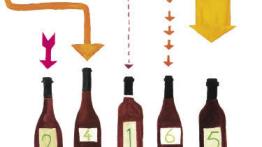
Going out for a meal shouldn’t be an occasion for stress; other than first dates or tricky business lunches of course. Yet often, simply being handed the wine list can cause your palms to sweat and pulse to race — and not in a good way. The problem is two-fold. Those of us with limited wine knowledge feel overwhelmed by the range of options on even the shortest of lists. As a result, the temptation is either to opt for the second-cheapest wine on offer — you wouldn’t want to look stingy, after all — or to buy something flash and spend the rest of the meal wondering whether you’ve paid over the odds.

Moveable feasts

It’s midnight, and I’m hanging upside down in the bilges, diesel-polluted seawater sloshing under my nose, trying to pull a greased pig through the locker hole. Or, more accurately, a dry bag containing enough food to feed 20 tired, wet, hungry people for a day. The outside is anything but dry, and I’m hoping the pasta, biscuits and tins within have survived. The boat falls off a wave, and the bag (along with my head) slams against the side. There go the biscuits. Each night, two of our round-the-world yacht-racing crew go through this rigmarole — the start of mother watch.

Keeping it real | 9 April 2011

Italian food is about simplicity and seasonality, and in Sicily spring brings the fragrant lemon harvest – eagerly awaited in one corner of Devon. Hattie Ellis takes a trip to the mother country with a pioneer of real lemonade Do you remember when lemonade used to be just that harshly fizzy clear stuff you bought in big plastic bottles? Now you can find a fragrant, sweetly-sharp drink that’s the soft yellow of a summer’s evening. Often called Sicilian lemonade, it is similar to what you’d make at home. Add a slosh of gin, vodka or rum and it’s something else again. One of the best Sicilian lemonades is made by Luscombe Drinks in Devon, the pioneer of the trend, starting back in 1997.

Blonde Bombshell

The Czech town of Plzeň is the birthplace of the world’s first golden lager, and both are elegant, spicy and hugely enjoyable. Adrian Tierney-Jones visits brewing Disneyland Lunchtime at Na Parkánu, a restaurant attached to the Museum of Brewing in Plzeň (or Pilsen). A glass of Pilsner Urquell, served unfiltered and unpasteurised from a tank beneath the bar: graceful and golden, elegant, spicy, toasty with a bitter finish. On my plate: a massive joint of pork knee, skin glistening with fat, wispy strands of steam carrying the mouth-watering aroma of the cooked meat upwards; the waitress then plonks down the accompanying bowl of horseradish, mustard and spicy cabbage. I also have a helping of ‘hairy’ dumplings (see recipe).

Sugar daddy

Rum is a relatively young drink – 15th century – and still under-appreciated, but at its best can match any whisky or brandy for complexity and sophistication. Peter Grogan enters the darkness A long time ago a knuckle-dragging ancestor of mine left a gourd-ful of palm sugar out in the rain. Trolling along, the right little speck of yeast eventually came to rest in it, causing the sugar to spontaneously ferment. The result probably didn’t taste too good but it had something that helped the day pass in a pleasant blur. Fast-forward 10,000 years — at a guess — and that same something can apparently be had from mixing some mashed-up tinned fruit with water, bread (for the yeast), sugar and a dollop of ketchup (to improve the taste) in a zip-loc bag.

Advertisement Feature: The King’s Ginger Liqueur

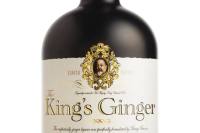
There can be no more appropriate drink with which to celebrate the forthcoming Royal union than The King’s Ginger. There can be no more appropriate drink with which to celebrate the forthcoming Royal union than The King’s Ginger. Prince William’s great, great, great-grandfather was King Edward VII who ascended to the throne 110 years ago. He was a thoroughly clubbable chap who had greatly enjoyed the high life as Prince of Wales. The King was a customer of Berry Bros, the wine and spirits merchant established at No.3 St James’s Street, London, in 1698.