Food

Scott’s vs Mayfair

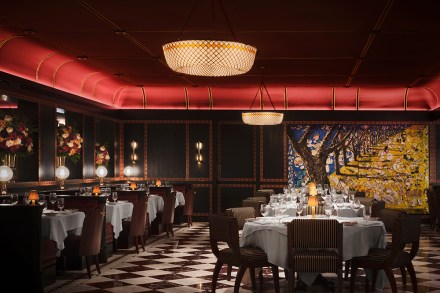
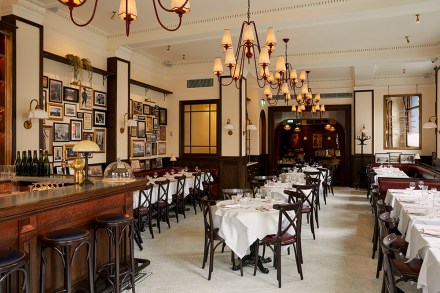
Kingsley Amis was obsessed with Scott’s on Mount Street, Mayfair, and he knew a lot about food. He ate himself to death. In his unwise James Bond continuation novel Colonel Sun – Ian Fleming also loved Scott’s – Amis had Bond ponder that ‘every meal taken in those severe but comfortable panelled rooms [is] a tiny victory over the new hateful London of steel and glass matchbox architecture’. Bond then presumably dropped his knickers, because there is as much projection in Amis and Fleming as there is in this column. Even so, I know how they feel about Scott’s. Mayfair is now the UAE with democracy and rain. It is gold and pink for toddler princes, and Scott’s, which is the colour of a Barbour, remains a tiny victory in brown. Of course Amis loved it.

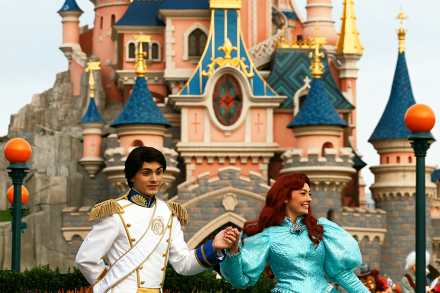
Survival here is about logistics: Disneyland Paris reviewed

Alcoholics know that hell is denial, and there is plenty at Disneyland Paris in winter. This is a pleasure land risen from a field and everyone has after-party eyes, including the babies. The Disney hotels operate a predictable hierarchy: princesses at the top, Mexicans at the bottom. We, the Squeezed Middle, are at the Sequoia Lodge with Bambi, where I learn that I like canned birdsong, and that is fair. You don’t consume dream worlds, because that is not their nature. They consume you. We stand in the Magic Kingdom and stare at Mickey Mouse-shaped food and a fake Bavarian castle – it’s Ludwig’s, not Sleeping Beauty’s – painted pink. Disney culture is impregnable: hence the fortress. It only needs – it only feeds on – itself.

A right royal travesty: Lilibet’s reviewed

Elizabeth II was a god and a commodity: now she is gone it is time for posthumous exploitation. Lilibet’s is a restaurant named for her childhood nickname at 17 Bruton Street, Mayfair, on the site of the house where she was born. It was inevitable that Elizabeth II would eventually get a personal restaurant. Princess Diana ate in the Café Diana – English breakfasts and kebabs – on the Bayswater Road and George VI is the inspiration for the superb Guinea Grill – mostly sausages, or rather it is the sausages I remember – near Lilibet’s. Because that is what the British do to our monarchs and their intimates. We eat them and call it love.

‘The food is not the point here’: Carbone reviewed

People say that Carbone is Jay Gatsby’s restaurant – Gatsby being the metaphor for moneyed doomed youth – but it is something more awful and, because people are asleep, no London restaurant has been this fashionable since the Chiltern Firehouse a decade ago. It lives in the basement of the former American embassy in Grosvenor Square, which is now the Chancery Rosewood Hotel. I thought this building would smell of fear, of why-can’t-I-have-a-visa-please? The truth is that it does, but that fear is now a commodity: you can be the person saying no-visa-for-you. (‘Uniquely yours,’ says the advertising copy. It means it.

Bagels that even New York can’t beat: Panzer’s Delicatessen reviewed

That Panzer’s Delicatessen in St John’s Wood is called Panzer’s – for the instrument of Blitzkrieg – is mad, until you remember that Jews love to eat near catastrophe, and then it is merely funny. I love Panzer’s so much I am reluctant to share it, but we need all the friends we can get. I keep telling non-Jewish friends: when we burn, you will burn with us. Though I mean it as consolation, they tend to run. St John’s Wood has always existed on the edge of hysteria. Edwardian psychopaths put their mistresses here, and I once went to a children’s birthday party where Peppa Pig couldn’t park, and there was a fight with recriminations. The high street sells corsetry and facial reconstruction.

Almost too interesting for Notting Hill: Speedboat Bar reviewed

When you are old enough, you can measure your life in restaurants. I remember, for instance, when the Electric Diner on Portobello Road (named for a long ago and far away war) was a place to eat brunch, a meal that shouldn’t exist and doesn’t really, though if it belongs anywhere it belongs here. It was fine but glib – Notting Hill is either a place with no imagination or too much of it, I’m still not sure. How it can tolerate the truth of Grenfell Tower across the way I don’t know either, but I don’t live here. The diner is gone, replaced by a Thai restaurant that is too interesting for Notting Hill The diner is gone, replaced by a Thai restaurant – the Speedboat Bar, twin to a branch in Soho – that is almost too interesting for Notting Hill.

So boring it’s mesmerising: The Place to Eat at John Lewis reviewed

I am, like a strain of Withnail, in the John Lewis café by mistake. I meant to review the new Jamie Oliver café and cooking school on the third floor of John Lewis Oxford Street, but they have run out of food beyond pink cake. We have no choice but to go upwards to the fifth floor and the electricals. I have always felt safe in John Lewis, a despicable thing to think, let alone type, but that is done now. It is called The Place to Eat, which echoes, though unconsciously, Ecclesiastes 3. It is preeningly ugly. I wonder if this is another strain of common British humble-brag, like our teeth, our town centres and our clothes. Because this is ugliness by design: it’s too ugly to be anything else.

A Mayfair brasserie for people who work, or at least pretend to: 74 Duke reviewed

There is an immaculate brasserie called 74 Duke at 74 Duke Street, Mayfair: this is postcode etymology. Duke Street runs from Selfridges to what used to be the American embassy in Grosvenor Square but is now (I assume) a paranoid hotel: the Chancery Rosewood, which has kept the monstrous eagle on the roof. If Duke Street was ever interesting – I like to imagine Mrs Dalloway having a panic attack in the road – it isn’t now. It sells the eternal detritus of the British rich – watches, capes, meat – who I suspect are into crypto these days. It is all a feint anyway: fake London for fake people, and life is at the edges now. A brasserie for the undead, then, and what to say? It’s very nice, but the last restaurant I reviewed near here was Mister Nice, which wasn’t nice at all.

I doubt there’s a better ravioli in London: The Lavery reviewed

The Lavery in South Kensington is named for Sir John Lavery, official artist of the Great War and designer of the currency of the Irish Free State, who lived here, though he died in Ireland and is buried in Putney. Lavery, of course, would no longer recognise South Kensington as his home, and his white, monumental mid-Victorian house – it’s too cold to be compared to a wedding cake, it’s a power cake – is now a fashionable restaurant and ‘event space’, which I put in quotation marks so you know I didn’t write the words ‘event space’, I just typed them out. In houses like The Lavery, I wonder how tall the Victorians were in their heads.

A fictional Edwardian waif’s hungry fantasy: Fortnum & Mason’s food hall reviewed

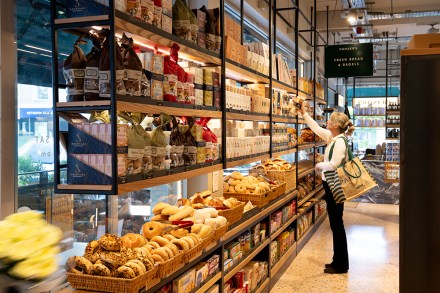
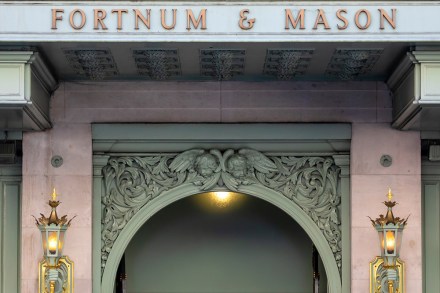
I like a picnic weighted with history and class terror, which means Fortnum & Mason on Piccadilly, which is historical re-enactment with dreaming. I have written about this for years or tried to: food is never just food, only fools say that. You can learn almost everything about people from the food they want. And here is St Narcissus in the form of a department store that works more powerfully as an idea than a mere shop, though it is a very effective shop. Fortnum’s sells a Great Britain that never was, designed for people who no longer exist, if they ever did. It has much to say to Brexiteers and worse, though in biscuit.

‘Italian that just works’: Broadwick Soho reviewed

This column sometimes shrieks the death of central London, and this is unfair. (I think this because others are now doing it.) It is not the city we mourn but our younger selves. Even so, the current aesthetic in restaurants is awful and needs to be suppressed: beiges and leathers, fish tanks and stupid lighting, all are nauseating. But I hated Dubai. You say Atlantis, The Palm, I say enslaved maid crying for her dreams. But there is refuge, at least from the aesthetic, and it is as ever the child of imagination and nostalgia. Broadwick Soho, the newish hotel in the street where typhus was chased down to a water pump, is a rebuke to desperate minimalism.

The chef does not understand sandwiches: Raffles London at the OWO reviewed

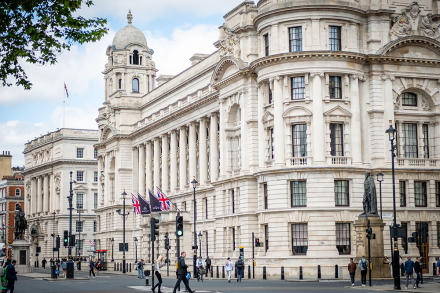
I am mesmerised by the restaurants of Raffles London at the OWO (Old War Office) because war approaches and the Old War Office is now a stage set for food, floristry and linen. If this is civilisation – it isn’t really, but it thinks it is – who will protect it now? Will we even know if war has started – or care? It was a fine building when I first came – I have reviewed its chilly Mediterranean food, its manic Italian and its tepid French – and it still is. Grand hotels exist to suppress time. It is a preening Edwardian palace with crazed plinths, over-pliant staff and ever sillier restaurants, today’s being the Drawing Room. It looks like how people who are not posh imagine posh country houses to be.

Picture perfect: Locatelli at the National Gallery reviewed

I feel for Locatelli, the new Italian restaurant inside the National Gallery, whose opening coincides with the 200th anniversary of the gallery and a rehang which I can’t see the point of because I want to watch Van Eyck in the dark. Locatelli must compete with the Caravaggio chicken, which is really called ‘Supper at Emmaus’ if you are an art historian or an adult. In the publicity photographs the chef Giorgio Locatelli is actually standing in front of the Caravaggio chicken. It looks as if Jesus is waving at Giorgio Locatelli but the chicken is unmoved. It stole all the gravitas.

‘This is as good as food gets in London’ – Town, in Drury Lane, reviewed

Town – well-named, it has vitality – is on the ragged part of Drury Lane WC2 near the Majestic Wine Warehouse and Travelodge. Like musical theatre, whose home this district still is, it is so ebullient and desirous of being loved that it is impossible not to love it back, because it seethes with that rare thing in days of ennui: enthusiasm. It is Judy Garland before the drugs won out and Max Bialystock of The Producers before he lost the pearl in his cravat pin and fell to shagging little old ladies to fund bad plays. It is not exactly the fag end of Covent Garden reborn – we need ragged parishes in over-polished London – but it is more interesting than the awful deadness of the piazza, which is now Westfield-near-Thames.

A man’s restaurant: Victor Garvey at the Midland Grand reviewed

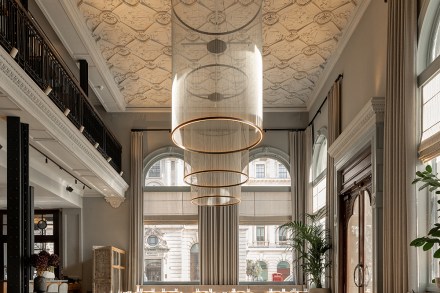
The Midland Grand Hotel at St Pancras Station is George Gilbert Scott’s masterpiece: his Albert Memorial in Hyde Park (a big dead prince under a big gold cross) has just too much sex to it. Late Victorian architecture seethes with erotica. The facetious will say imperialism was really just penetration, and there’s something in that. It is now the St Pancras Renaissance Hotel, London – oh, the fretted imaginings of marketing departments – and, on a more conscious level, the closest you will get to the great age of rail, though spliced with plastic now. The modern station is ugly and translucent and sells face cream to tourists, and buns. But it hasn’t lost its drama. This is the gateway to Europe and Derby.

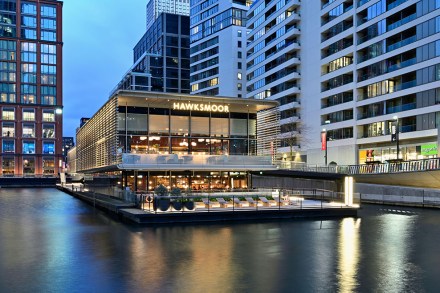
‘Rushed and under-loved and lacking conviction’: Hawksmoor Canary Wharf reviewed

Hawksmoor is the finest steak chain in London, because it lacks pretension and cares about blood. Years ago, at the Guildhall branch in a basement near Old Jewry, I ate the best breakfast of my days: hot bacon chops in a restaurant named in homage to the architect of the English Baroque. This is Dr Johnson’s steak house for populists. Further branches have sprouted in Borough, Knightsbridge, Seven Dials, Manchester and the Isle of Dogs. This was the West India docks, built with slaver gold on Stepney Marsh. When they closed in 1980, they threw up Canary Wharf, an eerie impersonation of Manhattan, which expressed all the preening blankness of Thatcherism. Still, I love this place: it has the medieval strangeness the West End has lost, and you can still get a boat to Putney.

Food that’s both serious and serene: Babbo reviewed

After a week in which Israel triumphed at the Eurovision Song Contest with second place – western Europe is for them, eastern Europe slightly less so (plus ça change) – I review Babbo, the new neighbourhood restaurant in St John’s Wood. Restaurants tend to drift in, settle and drift onwards here. The Victorians knew it as a land of mistresses and smut; now it is a world of private hospitals, bad parking and MCC members, who seem bewildered by it all, as if Lord’s landed like a spaceship in an alien land. Only Oslo Court seems impregnable, because it manifests Jewish solidity – it is disguised as the home of your cousin in a mansion flat – and Jewish subversion. It is a specialist in seafood and cream cakes. Everything else comes and goes.

Everything Ottolenghi should be but isn’t: Delamina Townhouse reviewed

Delamina Townhouse is on Tavistock Street in Covent Garden. It is an Israeli restaurant, and a very fine and subtle one, though Israeli restaurants are rebranding as ‘eastern Mediterranean’ these days due to growing Jew hate on London’s streets, which fills me with rage. (I am not talking about criticism of Israel. I welcome all criticism. I am a critic. I am talking about demonisation, and the glib urge to annihilation. Plenty of restaurant critics have a line on the war. I have checked.) But not enough rage to stop eating. I ate for Ukraine at Mriya in Hammersmith: now I eat here. If you think I am decadent, well, I am hardly the only one. You are lucky.

Northern Europe doesn’t get salads: Claro reviewed

Claro is at 12 Waterloo Place, St James’s, and, when I tried to find out what it used to be – it has the energy of a bank – I found an advert from the Crown Estate offering the lease for a ‘retail or wellness opportunity’. 12 Waterloo Place was pictured in pen and ink, with a woman holding a yoga mat idling past, and a woman in cycling shorts hanging back. I wonder why the Crown Estate is pushing wellness, which I think is being rich, bored and female while not dying. (I have never heard a woman with a good book talk about wellness.) The price is upon application. I looked further: 12 Waterloo Place is 20th-century Baroque pastiche, it was a bank, and it wants to be a wellness opportunity. It should talk to the ducks in St James’s Park. They live inside a wellness opportunity.

Smart even for Chelsea: Josephine Bouchon reviewed

Josephine is a Lyonnaise bistro on the Fulham Road from Claude Bosi. It is named for Bosi’s grandmother and is that rare, magical thing: a perfect restaurant. Bosi runs Bibendum (two Michelin stars, and in Michelin House) and Brooklands at the top of the appalling Peninsula hotel (two Michelin stars). He opens a second Josephine this month in Marylebone, which needs it since the Chiltern Firehouse, always a restaurant that felt like Icarus with a kitchen, burnt down to rubble. I haven’t eaten in Brooklands – I wish the Peninsula were an island, so that it could float to Victoria and then away, being an oligarchic monstrosity. But my instinct is: this is the good stuff.