Food

My magic Fortnum’s moment

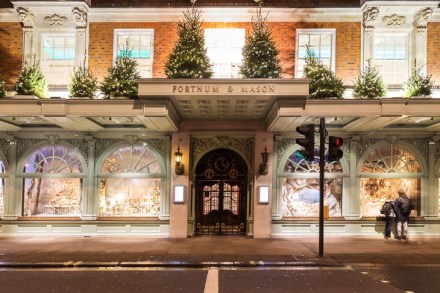
I admit I had a falling out with Fortnum & Mason a few years ago over its new brasserie on Jermyn Street. It replaced a restaurant that looked like a toilet-roll cover or wedding dress, and although I had never eaten there, I felt protective of it. Why was she blown away and on what wind? Why can’t London resemble, always, something unseen in a Graham Greene novel, because I want it to? It was replaced by a smooth and very expensive restaurant for rich people, which looked like every other brasserie that has opened in London since 2000. I remember it had orange banquettes. It was too Mayfair — that means too Zurich, today — and not enough St James’s.
A great Venetian confection

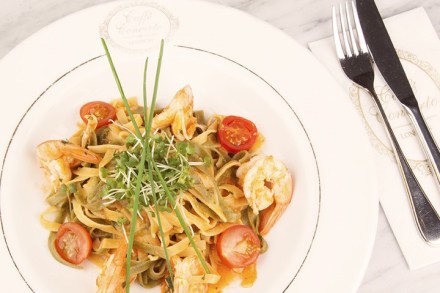
Caffè Concerto is a chain of Italian cafés sprouting, lividly, across London and the world. There is one on Piccadilly, one on Regent Street, and one on the Haymarket. There is one in Birmingham, and one in Westfield. (The precise address is an ungaudy unit 2000a, but presumably it is hidden behind florist-ry). There is one in Qatar. There is one in Saudi Arabia. There isn’t one in Venice, although the website has a photograph of Venice. It’s too Venetian for Venice. The style is very Italian, in that it is a combination of great style and no style at all. (Not bad style. Just an absence, something forgotten or dropped.) It is a homage to the Italian custom of scrubbing your front step in a full-length fur coat.

Nova kosher

Tish is a new grand café in Belsize Park, north London, but kosher. There are not really enough Jews to fill a kosher restaurant in London, and they tend to fall into dust, like the ten tribes, and the temple. 1701, the unwise and subtle restaurant by Bevis Marks synagogue, has gone; Bloom’s in Golders Green has gone, too. Most British Jews aren’t kosher because chicken without butter isn’t worth having, even if you do believe that bushes speak and people want to kill you. Mostly, the food will kill you. But not always. The north London restaurant most favoured by Jews is Oslo Court, which is actually a specialist in seafood, plus cream cakes. Oh Jews! What do you want — really?

Pigging out

The Pig at Combe is a restaurant in a country house hotel in a valley in Devon. I actually went to the Combe when it was only a country house hotel but, unlike Martha Gellhorn looking around a hotel function room in Spain and realising it had been an operating theatre in the Civil War, I did not recognise it. I spent three hours eating there, and I missed it until I looked it up and realised I spent a slightly haunted night here 15 years ago, after covering something Jane Austen-related nearby. That is an occupational hazard of the female newspaper feature writer, and that cold blue-and-white wall-paper will be dead now too. It was swallowed by a suave pig. There are multiple Pigs; it is a growing brand in country house hotels.

Breakfast for idiots

I couldn’t find Gazelle. I walked up and down Albermarle Street, in which Oscar Wilde once plotted his own doom in the Albermarle Club, and I couldn’t find it. I had to go to Caffè Nero opposite the Ritz Hotel and email my dining companion — where are you? Are you there? Does Gazelle exist? Or is it a modern European restaurant and cocktail bar so exclusive that it exists only in the imaginings of the International Private Jet Set who have turned Mayfair into something so ugly it could only be purchased at Harrods? Is it an imago that serves breakfast? It’s not an imago that serves breakfast, he replied, via Caffè Nero’s free wifi, which is always useful when you wonder if restaurants are semi--mythical.

Cora Pearl’s conundrum

Cora Pearl is the new, and second, restaurant from the people who made Kitty Fisher’s in Shepherd Market, Mayfair. Kitty Fisher was a celebrated 18th--century courtesan, as the saying goes, and Cora Pearl, whose shrine is in Covent Garden, was likewise the happy and well-paid whore of myth. (Her real name was Emma Crouch, she was from Ply-mouth and she died broke and working as a common prostitute, with not a pearl, if you will, to her name.) I suppose the raging second-wave feminist in me should mind that fashionable restaurants are named for women whose daily work was so bitter and intimate I can’t even detail it here, and that is fair enough, because I am reviewing dead, not living flesh.

Cuisine for cadavers

Politicians are having a terrible time of late, along with the rest of us — it’s not much fun watching the remnants of the post-war consensus shatter — and so here is Albert Roux consoling them with a new, glossy restaurant on the door-step of their rotting legislature palace. Food at the Palace of Westminster is not the best, although Corbynistas think it is. They think peers bathe in champagne while laughing and that MPs don’t have to butter their own toast. Well they will learn post-Revolution. They will learn to use a butter knife and how to talk righteously to a nationalised media. It’s called Roux at Parliament Square, and it is, of course, from Albert Roux of Le Gavroche, the proudest and fustiest of Mayfair’s French restaurants.

Crimes against breakfast

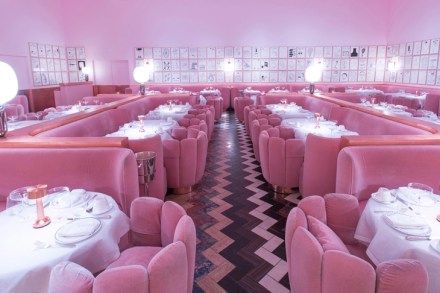
Sketch is a restaurant and art gallery in Conduit Street, Mayfair. There is a photograph of the Queen in the lobby. It is a wonderful photograph of her because she is covered in white fur and her eyes are closed, as if she just can’t bear to look at us any more. She looks like a tired rabbit human rebuking God. Sketch, then. Its website shows a video of a rotating floral egg. It lives in the former atelier of Christian Dior in a house by James Wyatt — what is grander than that? It is a white miniature palace with three bays, which is a lot in this particular housing crisis, in which other restaurants must make do with only one bay, or even no bays.

Back to the Eighties

I wouldn’t normally visit Coq d’Argent, which I think means the chicken of money. It is a moderately famous restaurant in a pink and brown tower in the City of London, once owned, as so much has been, by Sir Terence Conran, and now by D&D, specialists in soulless food barns. As restaurants go, it feels unlucky. It has — how to put this? — a circular roof garden from which people sometimes throw themselves off. One was a restaurant critic, but his last meal was not at Coq d’Argent. That was at Hawksmoor in Spitalfields. He had good taste, then, and he quoted Samuel Johnson on Twitter as he left: ‘When a man is tired of London, he is tired of life; for there is in London all that life can afford.’ How true.

Temper your expectations

Temper is a new pizza restaurant in Mercers Walk, Covent Garden, and it is as glib and polished as you could wish. Temper is the third of that name; it follows restaurants in the City of London and Soho, which served BBQ and breads, and did them well enough to merit a sister. (The founding chef, Neil Rankin, was at Barbecoa, Jamie Oliver’s failed meat barn in Piccadilly.) It lives on the ground floor of what appears to be a new building, or development, made of bright orange bricks, with bright green false balconies, above an L-shaped court that runs from Mercer Street to Langley Street. On the ground floor, on pale grey tiles, is written the word, in lower case: temper. It’s a good name.

Pecking order

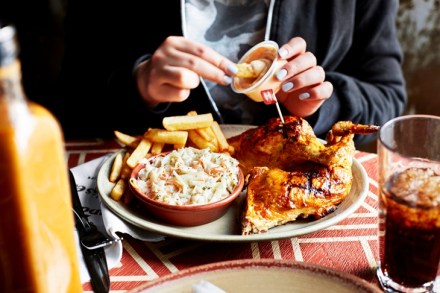
Nando’s, c. 1987, is a restaurant in the Great North Leisure Park, Finchley, N12, off the North Circular, which is my favourite orbital, solely from familiarity. The Great North Leisure Park includes a cinema, a bowling alley, a Pizza Hut, something called Chimichanga, and Nando’s. But the real draw of the Great North Leisure Park is the car park. If you live in north London, free parking is a destination in itself. Put it next to a nuclear reactor, and they’d come bearing toddlers. I fell into Nando’s due to sloth. I was with children, and people who can’t vote shouldn’t have destination restaurants, but they do, based on their firmly held conviction that Blu Tack coated in sugar is an ideal food, plus speed of delivery.

A smashing tea

Claridge’s is a toff sanctuary and one of the best hotels on earth. It specialises in its own myth, which is easy when Winston Churchill fell into a suite at the end of the war, and missed Dwight Eisenhower running the other way. Eisenhower was not afraid of the Axis, but the soft furnishings at Claridge’s felled him utterly and he fled to Kingston-upon-Thames like my mother did. The kings of Greece, Norway and Yugoslavia also spent the war at Claridge’s, in a sort of unlucky king convention. There is a story, perhaps apocryphal, that Yugoslav earth was laid under the Yugoslav queen’s bed, not because she was a vampire, which was what I thought, but so the heir could be born on Yugoslav soil. Toffs are weird.

A Tudor feast

Sargeant’s Mess (2018) is a tourist catcher’s net in restaurant form by the Tower of London (c. 1078). It has views of the wide, fat Thames — an old man now, like Falstaff — on its slow journey to Southend-on-Sea. The City of London grows like a glass parasite, but it can’t do anything about the Conqueror’s keep. It is partly made of Norman stone — a joke for historians only? — and it won’t be gentrified, amended, or moved. The Tower squats inside those insanely over-repointed medieval walls like a dowager abutting a conservatory. It will never, and I say this happily, be a block of flats, or an Apple shop, or a Starbucks. Henry VIII added the cupolas, and they are very gay, but that was it.

A culinary wasteland

The Allis is a restaurant inside the new Soho House at White City — it is called White City House — and it is every bit as ghastly as it sounds. I do not really object to Soho House’s attempt to colonise the entire planet and furnish it with purple velvet armchairs, which are now being replicated in people’s homes, leaving us in a sort of velvet fun palace you cannot escape, while silently crying. It also feels like a poor model for capitalism, even late capitalism. I quite like the one in Dean Street — if you can ignore the people, that is, which you can because they don’t lift their eyes from their MacBooks to your hideous face.

Reach for the Skye

The Petersham is a fading hotel on Richmond Hill. I went to a bar mitzvah there in 1986, which gives you a good idea of how fashionable it is. I grew up near Petersham. I always thought it smelled of eternal summer, but it was the late 1970s. The Petersham is also a new restaurant in Covent Garden, a sequel to Petersham Nurseries, the garden centre café by the Thames, in Petersham, that won a Michelin star in 2011. So, the name is either a deranged lack of imagination or a monument to Petersham. I hope it is a monument. It deserves it. Now there is another Petersham restaurant, in Covent Garden, in a square off Floral Street which used to be interesting but now looks like a Lego city of the future built on the ashes of Charles Dickens.

Above – and beyond

Hide is a £20 million restaurant at the Green Park end of Piccadilly, on the three lower floors of a brutalist box by Clarges Street. From outside it looks like an illustration from a storybook: people eating while illuminated in glass boxes. It is a restaurant to be looked at from outside, a restaurant with no skin. Hide is the fourth restaurant from Ollie Dabbous, who is the most talented British chef of his generation, even if you think that dowsing food in flowers is very irritating. Dabbous, which opened in 2012, offered fairy food near Tottenham Court Road, which needs it badly: strange decapitated eggs, a carpet of flowers, nuts, hay. It was glintingly metaphorically, instantly famous, then it closed.

Curry heaven

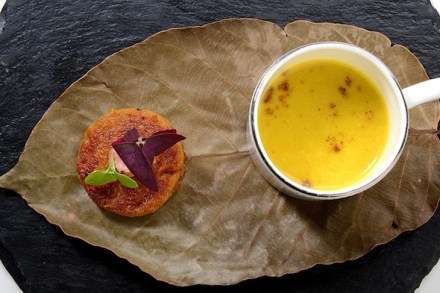
Indian Accent is an Indian restaurant in Albermarle Street, deepest Mayfair, on the site of Rohit Khattar’s Chor Bizarre (‘thieves market’). It follows branches in New York and New Delhi, which featured at no. 9 in the 2016 Asia’s 50 Best Restaurants List, sponsored by S. Pellegrino and Acqua Panna. Apparently you have to mention that, or they shut the water off. The chef is Manish Mehrotra, praised in the New York Times, and a man of growing fame. Indian Accent offers ‘progressive’ Indian cuisine, which, translated, means you cannot summon the waiter and ask for a secret chicken balti. I call this the Howard Jacobson Experiment, because he does this with more success than I do.

Dishes heavy with history

Le Gavroche is named for ‘the urchin’ in Victor Hugo’s Les Misérables and lives in a basement on Upper Brook Street, Mayfair. It is the most famous French restaurant in London, and the first to win three Michelin stars. It was opened by Albert and Michel Roux in 1967 in Lower Sloane Street, moved in 1981, and was taken over by Michel Roux Jr., Albert’s son, in 1991. It has nurtured — or the opposite — Marco Pierre White and Gordon Ramsay in its kitchens. The website is a garland of awards, self-worship and the minutiae of the dress code. The involvement of lawyers, at some time, is hinted at. No reservation may be given as a prize in a competition and you may be refused entry, even if you comply with the dress code.

Too grand to be joyful

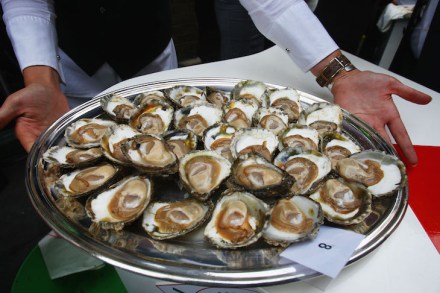
Bentley’s Oyster Bar & Grill is on Swallow Street, an alley between Piccadilly and Regent Street, which swallowed most of Swallow Street in the early 19th century. But that did not give it the name. Property developers only memorialise their crimes accidentally and Swallow Street is named for Thomas Swallow, about whom I know nothing else. He does not appear in Ed Glinert’s The London Compendium. Bentley’s is both inside and outside a squat, ugly and very interesting yellow brick house. It preens like an ugly clever man. It has fine large windows with angry brick eyebrows. Outside, diners sit under square black umbrellas and behind a partition, with glass, in a parody of a private members’ club, but in the middle of a street.

How Soho became so-so

Sometimes I fret that Soho House & Co is doing to this column what it does to London. It places its smooth tentacles in my prose and suddenly the column has a pointy beard and is playing table tennis, while doing something monstrous in advertising. But I have no choice. I cannot hide in ghostly seafood bars for ever. (Next time, Bentley’s.) Because now Soho House & Co has invaded Kettner’s, which has duly gone the way of the Odeon West End in Leicester Square, a lovely art deco cinema that these days is only a void. It will become something else — a hotel and maybe a cinema again — but it will remain a void. The transformation of Soho into the kind of advertorial you find in an airport lounge in Dubai goes on.