Food

Vaulting ambition

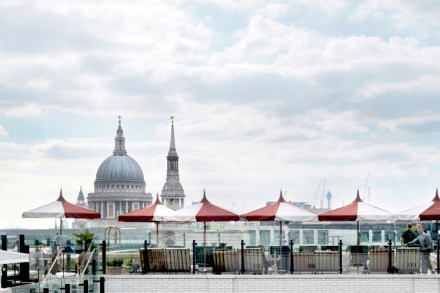
To the Ned, as diarists say when they can’t provide a rational reason for their voyage: the colossal banking hall transformed into ten restaurants, or one super-restaurant with ten menus, by the owners of Soho House, who are sucking up all the press coverage the age of churnalism can grant. I cannot yet decide what is more chilling: a Soho House open to all or a Soho House safely hidden behind its semi--weaponised membership criteria. I began to loathe the brand when I saw the table-tennis tables and selfie booths at Shoreditch House.
Food | 25 May 2017

Pollen Street Social lives in a Georgian house on Pollen Street, Mayfair, a narrow curve between Hanover Street and Maddox Street. Vogue House, HQ of Condé Nast magazines, is nearby, and Pollen Street is very like it: almost nothing can get in or out. The Tatler in-house dachshund Alan TBH Plumptre tried leaving Vogue in 2013, and was murdered by the revolving doors. Did he want better — or fewer — things? We will never know. Pollen Street Social is a ‘modern urban meeting point’ according to the babble on the website, which is ever more deranged, and makes me think: as opposed to what? It is the flagship restaurant of Jason Atherton, who was named best restaurateur at the GQ Food and Drink Awards last year.

Character floors

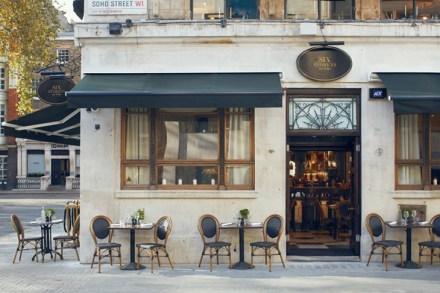
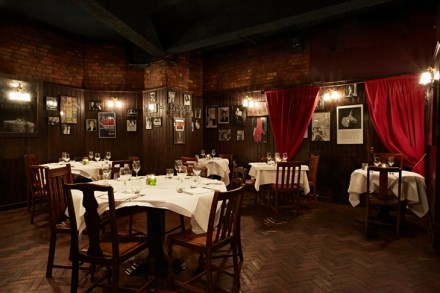
Six Storeys on Soho is in a slender grey townhouse on Soho Square: a bar, restaurant and club. It is technically art deco, but it feels much older; it grasps back for 18th-century Soho without the typhoid epidemic and the corpses. It used to be a gay bar called the Edge, but the gay bars are closing in London, victims of a new epidemic called Grindr. Now it feels like Mary Poppins’s house after she lost hope. I came to the Edge with my friend the artist Sebastian Horsley, who wore purple suits and a top hat, and made A.A. Gill look slovenly. He kept a gun by his bedside on Meard Street, but in the end he did not need it. He fell asleep on heroin and did not wake up, and he would love it here. He would match the furniture, and they have a lot of gin.

Fowl play

Cafe Football is in the Westfield shopping centre in Stratford, east London, a shopping centre with a faulty name. It isn’t in the west, and it isn’t in a field. (The original Westfield is in Shepherd’s Bush. That is in the west, but not in a field. It is by the A40 and it is like America without the joy.) Westfield Stratford City sits in a puddle of chain cafés and restaurants and shops. It has been on my review list for three years, 2.9999999 of which I have spent cowering in north London. Stratford was — shall we call it renovated? — for the London Olympic Games in 2012, and it is now a windy building site full of air pollution and hipsters and thwarted hopes.

Jamie’s latest plank

Barbecoa is Jamie Oliver’s new restaurant on Piccadilly, and no matter how many times I mutter the name, I do not know what it means, if it means anything; it may be a posh riff on barbecue, which does not need gentrifying, because barbecue is cuisine’s mass murder. The only other mention I can find is the original Barbecoa in St Paul’s. This is Barbecoa 2, then: the sequel. I used to like Jamie Oliver, or the idea of him. I liked his willingness to be a spokes-chef; to damn parents who feed their children Turkey Twizzlers and roof insulation; I liked that he is fat.

Eat at Joe’s

It is rare for me to write a love letter to a London restaurant, but Joe Allen, which is 40 this year, deserves it; if you have any sense you will throw off misery and go there now for hamburgers. It is not really a London restaurant, which may be why I love it, but a Manhattan restaurant (established on 46th Street in 1965 by a man called Joe Allen) that was transplanted to London in 1977; the idea of Manhattan, anyway, which is more vivid in imagination than in life. I like to imagine the cast of All About Eve in Joe Allen, talking nonsense about ‘the theatre’ as they did in Joseph L. Mankiewicz’s words, because they were possessed. (‘You’re too short for that gesture.’ ‘What a dull cliché.’ ‘I hate men.

Norse code

Aquavit is a ‘uniquely Nordic--style’ restaurant in the St James’s Market development between Regent Street and the Haymarket. This development — a pleasingly neutral word — is seriously misnamed, for there is nothing of the market about St James’s Market which seems, rather, to have stripped itself of the ordinary bustle of life; it is a shell for a management consultancy that has landed on the already overpolished West End. With its cool stones, tinted window and alarming orange woods, it is, stylistically, a tribute to the international luxury hotel and, is, therefore, a place entirely devoid of culture. It is a glossy blank that harms — and charms — no one. It is nowhere.

Rich desserts

Ferdi is a café in Shepherd Market; I write about it only to comfort you, because you are not rich, and so you cannot afford to go there, because you would have to pay £140 for two courses without wine. It probably thinks it is a restaurant, wants to be a restaurant, but it isn’t. Its defining characteristic is claustrophobia, and even bad restaurants allow the critic to breathe as they polish their spite. It is a copy, or satellite, of a fashionable café in Paris. The Parisian Ferdi is popular with fashion models and ‘Kim and Kanye’ (Kardashian and West), which is always a terrible sign. Shepherd Market, in Mayfair, is a district that is losing its charm faster than Paul Nuttall.

American English

Ralph’s Coffee & Bar is in the Polo Ralph Lauren flagship store on Regent Street. It is rare that fashion admits food exists and when it does, it usually does something insane with it, like when the Berkeley Hotel celebrated fashion week by inventing a shoe biscuit, so you could eat your shoe. But Ralph Lauren, who dresses Melania Trump because other designers will not — believing that the withholding of couture equals meaningful opposition to tyranny, a position that makes me laugh even as I place my head in the oven — goes beyond couture and into the weird lands of lifestyle. Don’t know who you are, but want to pretend that you do? Find a lifestyle brand that approximates who you think you might be, and follow it into a Polo Ralph Lauren coffin.

Vanity project

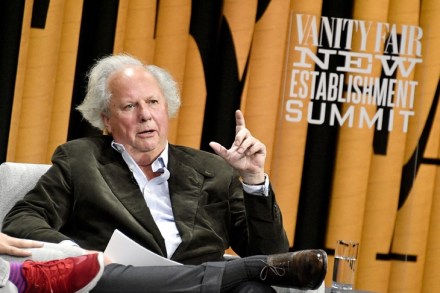
The Waverly Inn is the house restaurant of Vanity Fair magazine in New York City. It is part-owned by Graydon Carter, the editor of Vanity Fair, whose life, at least since Trump rose, is dedicated to the realisation of social justice using his favourite weapon, which is being friends with celebrities. Carter’s political engagement is like a blusher brush’s political engagement. It is unfit for purpose, and it is too late anyway. Even so, Carter has declared war on Donald Trump by slagging off his restaurant in New York City — the Trump Grill in Trump Tower, which I reviewed, or rather crawled out of whimpering, in my last column after attempting to eat a taco bowl to prove I don’t hate Mexicans.

Trumped!

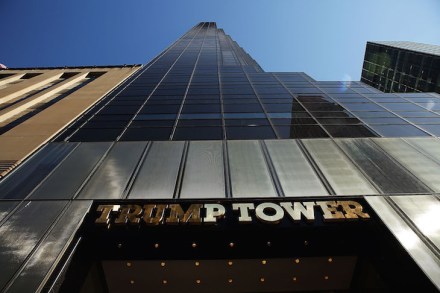
Trump Tower sits between Gucci and Tiffany on Fifth Avenue in New York City. It looks like infant Lego, the Duplo brand, but black — porn Duplo, then. It is militarised; by the door are the fattest police officers I have ever seen. They look like they have been dragged out of Overeaters Anonymous and given automatic weapons; and I wonder how much the NYPD really want to keep him alive. He is in the penthouse. The obvious comparison is with Al Pacino’s penthouse in The Devil’s Advocate, in which Pacino played a devil in a penthouse in New York City, but Trump Tower is less subtle than that, and I cannot decide whether it is more or less sinister.

Garden variety

Margot is an Italian restaurant on Great Queen Street in the still interesting part of Covent Garden. The uninteresting part is the piazza, once the first classical square in London but now a shopping district so devoted to famous brands that it is essentially Westfield in WC2, and WC2 has no need of it, already having a superior culture of its own. Even so, I expect some day to find St Paul’s church a smouldering pile of ash waiting for an Audi concession. Margot used to be Moti Mahal, an unlamented Indian restaurant next to Freemasons’ Hall, which posed as MI5 in Spooks, a BBC drama in which a one-nation Tory called Harry repeatedly saves the city from apocalypse with his one-nation Tory goodness.

Wiltons wonderland

I have agonised over this Christmas review. I ate the Christmas lunch at Harveys Nichols 5th Floor Restaurant, Knightsbridge, next to a roof garden sponsored by Nutella chocolate spread. (The review of that restaurant is 17 words long: don’t go there, especially if you like Nutella chocolate spread, because it will ruin it for you.) The stunt critic dies hard in any writer, for it is easy work laughing at roof gardens. I considered eating in a plastic igloo — an igloo that is not an igloo, but a tent — by Tower Bridge.

Meat and greet

Zelman Meats — catchphrase ‘great meat’ — is sustenance for a hard Brexit — a harder Brexit, if you will. It is a snorting meat shack in north Soho; it is also, comfortingly for the reader, mid-market. It is from the owners of Beast, who display their meat in cases, as trophies — and Burger and Lobster, where you get burgers and lobsters for £20 a head. It is thrillingly monomaniacal and simplistic: what do you get at Zelman Meats? Meat, that’s all, comrade. It could theoretically be a butcher’s shop; no, it could be a cow sitting on a bonfire wondering what went wrong. Don’t come here if you don’t like meat because they have nothing for you. Go somewhere else.

The cheesecake of the apocalypse

Harry Morgan is a Jewish delicatessen and restaurant in the style of New York City on St John’s Wood High Street in north London. St John’s Wood is home to wealthy Muslims and Jews, who are attracted by a lone mosque, many synagogues and more cake shops than even the greediest hedge-funder could eat his swiftly receding feelings in. I am aware I sound like an estate agent. It is really a stage set for the inter-faith organisation the Imams and Rabbis Council of the United Kingdom, about which the joke is, although it isn’t very funny: the Jews pay for it all. I am also aware that I am writing about being Jewish.

No place like Rome

Roma sells ancient-Roman-style food near Fenchurch Street station at the east end of the City, near Aldgate. It is, therefore, a themed restaurant in a conventional, ebbing financial district, a cursed place in need of Windolene; and this is something to applaud, at least theoretically, because it is ambitious. Who remembers ambition, which is more interesting than greed? The last themed restaurant to open in these parts was Fable, a repulsive fake library and fusion destination for lawyers on Holborn Viaduct which I hope has burnt down, or at least been sued for copyright infringement by-makers of fairy tales everywhere. It was as magical as date rape, and the fairies fled. A Roman-themed restaurant could work here now, if you want to eat metaphor; the parallels are thick and easy.

Some like it posh

Daphne’s serves Italian food in South Kensington. (I like the name because Daphne was the name Jack Lemmon chose for his female self in Some Like It Hot, although Tony Curtis — Josephine — wanted to call him Geraldine. I know no one else called Daphne, and I do not need to. Lemmon sated me.) This district, you may recall, is currently a building site, as residents try to dream their houses bigger and their noses smaller; it is a tangle of cranes, personal trainers, tax avoidance, lipstick, adultery and Ferraris swamped with parking tickets. And so Daphne’s, which was a 1980s mini-series restaurant wrought from assorted Nigel Dempster columns and Judith Krantz novels, recently restored, now has the soothing grace of a National Trust interior.

Pens, sex and potatoes

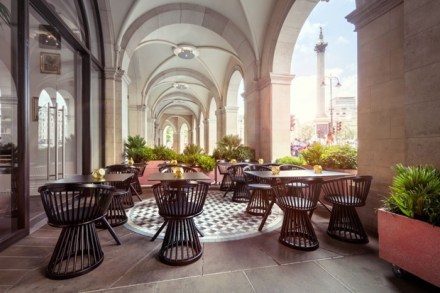
I hoped that Bronte would be filled with Victorian writers licking ink off their fingers and bitching about Mrs Gaskell being a third-rate hack; but it is not to be. (Do not think I am vulgar. My description is accurate. Wuthering Heights is a rude novel, and Jane Eyre is worse. St John Rivers, its Christian Grey, is surely a Spectator subscriber). It is, instead, a finely wrought and glossy restaurant off Trafalgar Square, designed, I suspect, for advertising executives. It used to be the Strand Dining Rooms but it died and now there’s this. It is named for Horatio Nelson, the Duke of Bronte. His title, it is believed, was borrowed by Patrick Brunty, the Irish blacksmith’s apprentice who educated himself and came to England to father a literary dynasty by mistake.

Not much to smile about

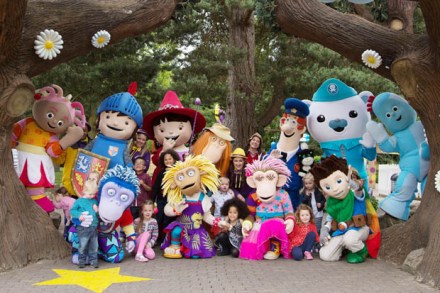
CBeebies Land is a small dystopia inside Alton Towers, a theme park where people sometimes get their legs chopped off by a rollercoaster called The Smiler. There is a gothic mansion by Augustus Pugin, the Nietzsche of cushions, which has been allowed to fall into ruin, because it is less important than the Runaway Mine Train and a ‘ride’ covered in plastic frogs. It broods like Manderley; around it, people play with water cannon and eat sugar until their eyes are dead. I was going to suggest that parliament convene at Alton Towers while the Palace of Westminster is repaired, so they could feel the Pugin; but they might be maimed by The Smiler.

Real legs and fake people

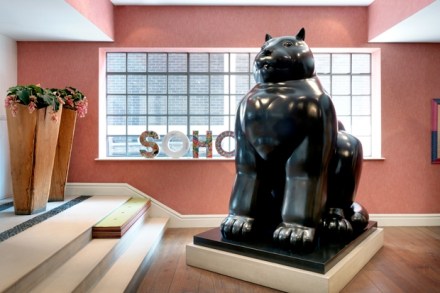
The Soho Hotel is an actors’ hotel. They come for press junkets and interviews that reveal nothing because there is nothing to reveal; in fact, I have long suspected that this consuming nothingness, screamed across newsprint with all the conviction of denial, is the point of them; anything to evade reality and bring forth the realm of stupid. So it doesn’t matter that the Soho Hotel doesn’t know what it is; that is a benefit, quite possibly a design. Actors don’t know who they are either, and this is why they feel comfortable in the Soho Hotel. It is another mirror. It is part of the Firmdale Group, which has upholstered a series of London hotels in large, gaudy prints. They favour huge blooms, small ones being of no interest to cocaine users.