Festivals

Trump, Diogenes, the Mitfords and Malaysian comedy: Edinburgh Fringe round-up

The Mitfords is a superb one-woman show by Emma Wilkinson Wright who focuses her attention on Unity, Diana and Jessica. In the early 1930s, Unity became Hitler’s lover and she lived in a luxurious Munich apartment confiscated from a wealthy Jewish family. The Führer, whom she nicknamed ‘Wolfie’, gave her the pearl-handled revolver with which she shot herself in the head shortly after Britain’s declaration of war. To carry out this bizarre act of self-sacrifice she chose a favourite spot in Munich’s English Garden where she used to sunbathe naked. In wartime Britain, Diana was held in Holloway prison and she complained bitterly about being separated from her baby boy, Max, and about the hefty sandbags that prevented daylight from reaching her cell.

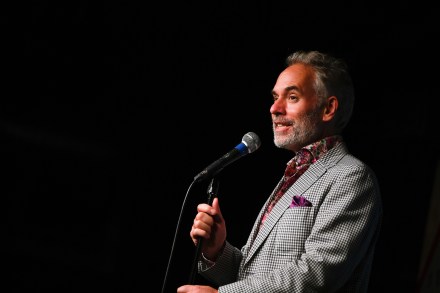
Rizal Van Geyzel races through his 60-minute set peppering the material with snatches of Chinese, Tamil and Malay

Northern lights | 16 August 2018

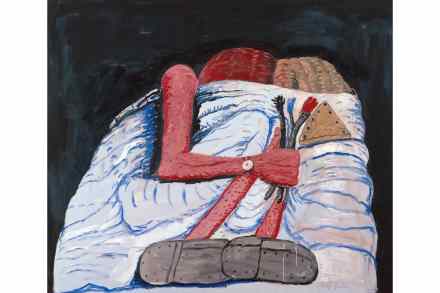
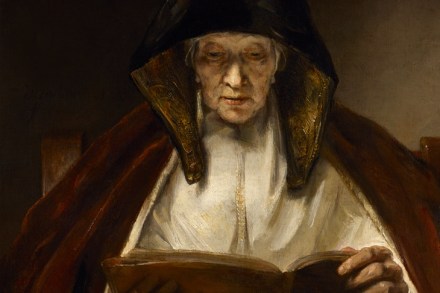
The Rembrandt show at the National Galleries of Scotland (until 14 October) has a problem. A mighty haul of Rembrandt paintings and prints are arrayed against a backdrop that mines the historical impact of his work on British artists and collectors. This is interesting. The problem is that the Rembrandt works are so astounding that there’s a danger you won’t bother with the rest. You should, because here Reynolds and Raeburn and Ramsay and more, all inescapably influenced by Rembrandt, tell fascinating and sometimes complicated tales of artistic heredity and homage. There’s no disgrace in going only for the Rembrandts, though.

A tragicomic lecture about Gold at Edinburgh Festival

A chilly August in Edinburgh. Colder than it’s been for 20 years and the city looks scruffier than ever. Locked Portakabins squat in elegant stone courtyards. Unused site machinery lies abandoned outside neoclassical museums. Pavements and bridges are scarred by ugly steel roadblocks, and lurid street signs mar the visual harmony of virtually every thoroughfare. The place seems to be governed by a crew of philistine control freaks whose bossy urges affect the festival staff. You can’t move anywhere without a lecture. ‘Go this way, not that way, mind your head, ascend the steps on the left to avoid those coming down on the right, and take off your jacket for your own protection and comfort.

The company has a hit on their hands: Scottish Ballet’s Coppélia reviewed

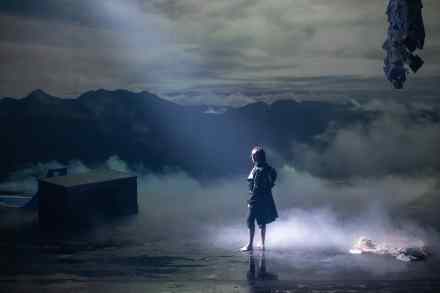
With the major companies largely on their summer breaks, the Edinburgh International Festival struggles to programme a high standard of dance (though, having said that, I have memories of being taken in short trousers to the 1967 festival and seeing New York City Ballet during its glorious prime). The dearth tends to be masked by falling back on what used to be called ‘ethnic’ product and that peculiarly French phenomenon, the multimedia event spanning circus, mime, video and spoken text, usually sewn up with some thread of an over-arching theme thrown in. This year it’s the turn of something called Room, presented by La Compagnie du Hanneton, whose chief cook and bottlewasher is James Thierrée, formerly of the whimsically charming Le Cirque Imaginaire.

A four-way race between poet, actor, video artist and sound engineer: Edinburgh Festival’s Burn reviewed

In a new hour-long monologue, Burn, Alan Cumming examines the life and work of Robert Burns. The biographical material is drawn from Burns’s letters, and the poems are read out in snatches. You won’t learn much except that Burns was a poor farmer who later worked as a taxman. To represent his many flings with women, a few high-heeled shoes are dangled on strings above the stage but this looks strangely cheap given that huge sums have been lavished on graphic imagery projected onto a big screen at the rear. Flashing lights and surges of music add to the sense of distraction. Cumming’s performance centres on dance, which looks like a new departure for him.

Sensational: Herbie Hancock, at the Edinburgh Festival, reviewed

‘Human beings are in trouble these days,’ says Herbie Hancock, chatting to us between songs. ‘And do you know who can fix it?’ ‘Herbie!’ comes the instant reply, shouted from somewhere in the stalls. Hancock might be a jazz legend, but he’s not quite the Saviour. Kicking off this year’s excellent contemporary music programme at the Edinburgh International Festival, he’s a hit from the moment he strolls into view. In his long black frockcoat, Hancock has come tonight as the High Priest of Cool. When he straps on a keytar, he’s a funky gunslinger. When one of his outstanding trio takes a particularly inventive solo, he cracks up with undisguised glee at the sheer showdown-slaying audacity of their playing.

Real rock

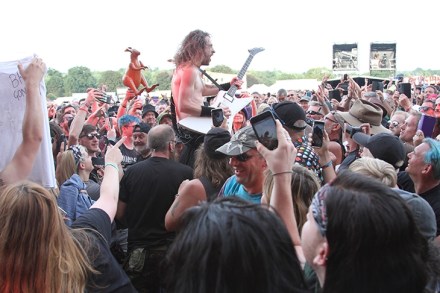
Last weekend, in a pleasant park outside Maidstone, a most unusual rock festival took place. For one thing, it was a rock festival. Despite ‘rock festival’ being a common term for any live music event featuring multiple artists taking place outdoors, there are very few actual rock festivals any more. There are festivals for specific forms of rock — the metal events Download and Bloodstock — and there are festivals that have a few rock bands amid everything else. But not festivals that feature a broad range of bands, all of whom can be called ‘rock’ — hard rock, prog rock, country rock, blues rock. For another, there was the crowd.

Simpson, Skinner and socialists

For recovering teetotallers, like me, Thinking Drinkers is the perfect Edinburgh show. On stage, two sprucely dressed actors perform sketches about booze while a team of well-trained ushers race around plying the audience with strong liquor from plastic beakers. In under an hour, I swallowed a can of ale chased by vodka, gin, rum and Irish whiskey. It’s a decent show but, for obvious reasons, forgettable. Nina’s Got News is the first fringe play written by Frank Skinner. Nina has split up with her besotted boyfriend, Chris. When he answers a summons to her flat he’s hoping for a valedictory romp. But Nina has asked her best pal Vanessa over and the three chums engage in amusing wordplay as they try to place their friendship on a new footing. Then a shock announcement.

The problem with Edinburgh

Edinburgh. Why do comics do it? We almost invariably lose money. Even if you don’t pay for your venue, the cost of accommodation is astronomical — I’ve met Edinburgh natives who pay their annual mortgage with the rent for August. You could conceptualise it as a loss-leader; but there are 1,333 comedy shows this year, and a loss-leader that can’t lead to anything is just a loss. Yet comics still go up. Partly because, for three weeks, there’s the thrill of having a real job: instead of travelling for gigs, you’re at the same place at the same time every day.

London calling | 10 August 2017

What is the Edinburgh Fringe? It’s a sabbatical, a pit stop, a pause-and-check-the-map opportunity for actors who don’t quite know where to go next. Alison Skilbeck has written a ‘serio-comic celebration’ of Shakespeare and her performance attracts a decent crowd for a show that starts at noon. She plays a fruity-voiced thesp, Artemis Turret, who delivers lectures about the Bard’s older females to groups of layabout pensioners gathered in a scout hut. It’s pure Joyce Grenfell. Good fun, too, but without much potential beyond the fringe. Dominic Holland’s show, Eclipsed, is about his life as a fallen comedy god. In the 1990s he was on telly all the time and he accepted the royal command to perform at Prince Charles’s 50th birthday party.

Balkan brass

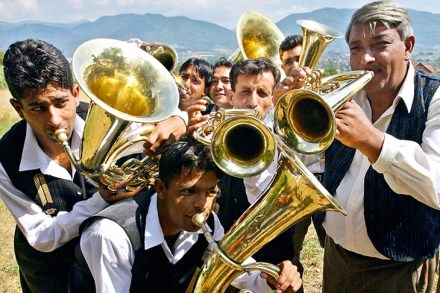
When brass instruments with button-operated valves were introduced in the first half of the 19th century, music-making changed. Once requiring a semi-professional approach, it could now be quickly mastered by large groups of working people. A noisy result were Britain’s colliery bands: but a more spirited upshot was Serbia’s trumpet tradition. Like the colliery bands, Serbian brass music had a political imperative — re-weaving national identity after 500 years of Turkish occupation. The leader who first hit on trumpets as a vehicle for this joie-de-liberté was Prince Milos Obrenovic, who created the first Serbian brass ensembles in 1831. They took swift hold, providing an outlet for everyday south Slav exuberance.

A familiar Ring

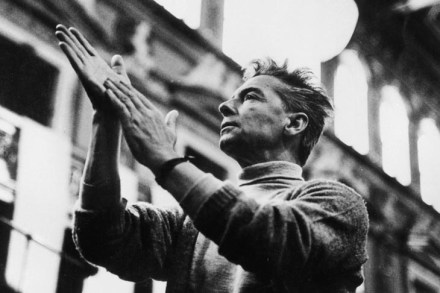
Herbert von Karajan established the Easter Festival in Salzburg 50 years ago with a production of Die Walküre that is now considered legendary. In the sense that legends are rooted in memory, and mythological in substance, that much is true. Which is not to damn it with faint praise. This revival, staged by Vera Nemirova, was an old-fashioned representation of Wagner and many Wagnerians, having endured too many modern presentations of the Master, who has suffered more than any other composer from the curse of Regietheater, would say that that is No Bad Thing. A giant ash tree, in whose hollowed-out trunk reside Hunding and Sieglinde, was the single, simple prop for the first act.

Tartan-ing up the arts

Many years ago an arts spokesperson for the SNP launched an extraordinary attack on Scottish Opera, saying, ‘If push comes to shove, if I were arts minister and had to choose between the survival of Gaelic music and Scottish Opera, I would say rich people could always go to Salzburg for lieder and Sydney for opera.’ With various parties now competing for the class-war-and-grievance vote, I sense a return of this kind of rhetoric in debates on Scottish culture, arts and politics. Scottish Opera routinely invite Scotland’s politicians to their productions and their invitations are routinely ignored. The feeling is that there are votes to be lost in being seen supporting elitist culture.

Northern exposure | 11 August 2016

As the festival grows, the good acts are harder to find and the prices keep rising to meet the throngs of showbiz refugees who surge north in the belief that the glory, this year, will be theirs. Arriving at my one-star hovel (no breakfast, no towels, shared bathroom), I was given a security key and a disc of see-through soap that I could have hidden beneath a tea-bag. The bill, payable in advance, was a third higher than last year. Glory in this city belongs to the landlord. Marcel Lucont’s Whine List is performed by a suave, self-adoring Frenchman who starts by asking if anyone in the crowd is new to his act. ‘Lucky bastards. What I would give to see myself for the first time.

Fringe benefits | 30 June 2016

‘How do we feel about leaving the EU today? Who doesn’t give a fook?’ yelled Oli Sykes of Sheffield’s Bring Me The Horizon — instantly becoming my favourite act of this year’s Glastonbury Festival. Sorry, I’m just not buying the line put out by the Guardian, the BBC, Damon Albarn and the rest of the wankerati that the crowds were bummed out by the referendum going the wrong way. Most of the 160,000 revellers had more pressing matters to consider like: Adele or New Order; long queue for the shower or not bother; samosa or falafel; cider or reefer or both; and — of course — how to negotiate the Passchendaele-like vista of endless, wellie-slurping, soul-sapping mud without losing the will to live.