Drink

Drink: A taste of chivalry

In Rome, there is a palace which is the capital of the world’s smallest state. In Rome, there is a palace which is the capital of the world’s smallest state. The medieval Church had many mansions. As well as orders devoted to prayer and contemplation, there were other bodies, for whom the way of the cross was also the way of the sword. In the 11th century, the Papacy established the Knights Hospitallers, or Knights of St John, whose headquarters were in Jerusalem. The Knights protected pilgrims and fought to preserve the crusaders’ conquests. But as the power of Islam grew, they were thrown on the defensive. Driven from Palestine, they made a stand in Rhodes, where their great castle still dominates. In 1522, Suleiman the Magnificent invaded Rhodes.

Drink: Vines with deep roots

A limestone escarpment meanders south from Dijon. The product of prehistoric geological conflicts, it is now an arcadian idyll: the Côte-d’Or. Ducal Burgundy was one of the hauts-lieux of civilisation, and its resonances are all around you. But even before there was a duchy, Charlemagne enjoyed the wines of Burgundy, as had the Romans. That heritage is equally ubiquitous. In Gevrey-Chambertin, there is an unpretentious building, containing offices and a cellar: the headquarters of Pierre Bourée Fils, winemakers. When the cellars were excavated, Roman artefacts were found. The firm has only been in business for 150 years, but as its owners are well aware, they are part of a history almost as old as Europe. The creation of great wine is a consecration of past and present.

Drink: Life after Lafite

I had an old friend — now, sadly, dead — who spent his final years in terror of his wife. I had an old friend — now, sadly, dead — who spent his final years in terror of his wife. By the time he reached man’s estate, he had developed a taste for good claret. As he became a good lawyer, he was able to indulge it. Jolly expeditions to Bordeaux, long sessions with old-fashioned wine-merchants, his own estimable palate: the outcome was an enviable cellar. And an increasingly valuable one. My late friend refused to let counting-house considerations deter him from drinking his treasures; that attitude of mind was for billing clients, not opening bottles. Even so, he was astonished by the constant upward pressure on wine prices.

Success problem

Another great Bordeaux vintage on the cards? Peter Grogan examines the unexpected problems created by never-ending success The art of assessing the likely future quality of very young red wines by sniffing away at what are known as ‘barrel samples’ is a decidedly arcane one. I’m no good at it and I haven’t even been within spitting distance of Bordeaux during the current en primeur campaign for the 2010 vintage. This is where the leading châteaux effectively sell their wines as ‘futures’, long before they’re bottled, let alone ready to be shipped to customers. Nonetheless, even from here, I detect among the positive early reports something ineffable playing around the edges that seems suspiciously like the smell of fear.

Digestif

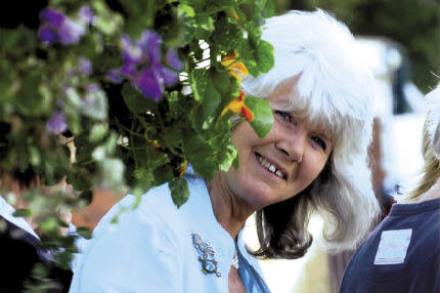
Heavenly jockeys, splitting trousers and plenty of Pinot Grigio – Imogen Lycett Green enjoys a breathless lunch in the Cotswolds with Jilly Cooper Two hours earlier she had rushed, panting, into the Crown Inn in Frampton Mansell. ‘I am SO SORRY I am late!’ she said, falling into the fire-smoky bar wearing leggings, knee-length brown boots, a white shirt and a belt that looks like a piece of horse tack. Sexy is the only word for it. Her instantly recognisable helmet/halo of thick grey hair frames her round, rosy-cheeked face. She is wearing a silver brooch of a galloping racehorse. ‘How are you?’ she says to the young barman. ‘I’m good,’ he replies. Jilly is thrilled. ‘I love the way the younger generation say I’m good.

Time is of the essence

We move through silent streets walled by shuttered houses and closed stores. I know that the French leave en masse in August, but in Cognac the ritual seems also to extend to wintertime. Even the landscape seems somnambulant. Skeletal vines whose cordons point crabbed fingers towards where the sun should be line the roadsides. Yet there is life. Something is stirring in the region’s black, mould-covered, thick-walled chais. At the bottom of a set of worn stone steps in Remy-Martin’s Domaine de Grollet is a collection of large and clearly ancient casks. It is here where the blend of Cognacs which comprise the house’s iconic prestige blend Louis XIII spends the final four years of its life. A sample is drawn, glasses are filled.

Hine: the vintage house

Bernard Hine has impeccable manners. However, as we meet for an apéritif at Hine House, he is a little disgruntled. The source of his unhappiness is a stomach upset which means he is unable to indulge in the foie gras and the 1953 Vintage port, among other treats. A lesser man would have made his excuses, but Bernard’s sense of duty and hospitality doesn’t permit such a course of action. Indeed, his discontent appears to be based more on his inability to fully participate in the dinner than any personal inconvenience. The surroundings are historic: Hine House, one of the oldest in Jarnac, has stood on the banks of the Charente for more than 250 years.

Liquid hideaways

Last year, in a nod towards austerity, I gave up my membership to Milk and Honey, a cocktail club in Soho. I rationalised that as a non-member, I could still book a dimly lit, silver-toned booth downstairs to enjoy their delicious Penicillin — a reviving concoction of peaty whisky, honey, ginger and lemon — at least until 11 p.m. However, as I sipped my farewell M&H dry martini, made with a twist of lemon and some fragrant Junipero gin, it struck me that there is something comforting in having a regular drinking den. Clearly, research was needed. My requirements were simple: superlative cocktails, convivial atmosphere and within walking distance of home. Life takes on a different perspective if you can stroll through London streets after a negroni or two.