Columns

The plot to stop Brexit

Every Wednesday morning in the House of Commons, about a dozen people can be seen making their way along the committee-room corridor to attend a ‘grassroots co-ordination committee meeting’. Before they get down to business, the group, a mix of MPs and campaigners, are treated to a monologue from their meeting chair, Labour’s Chuka Umunna. This speech varies but the agenda is the same: how to bring about a second referendum and stop Brexit. The ‘Stop Brexit’ campaign has taken many forms since the referendum result two years ago. There have been legal challenges, a surge of anti-Brexit campaign groups and plans for a new party — not to mention the one-man nationwide tour from Lord Adonis. He didn’t say that much on Europe before the referendum.


It’s not science I don’t trust – it’s the scientists

Everyone knows the real reason people like Donald Trump are sceptical of climate change is that conservatives are fundamentally anti-science. Some doubt science because it conflicts with their religious beliefs; others because its implications might mean radically shifting the global economy in an anti-growth or heavily statist direction, which goes against their free-market ideology; others because, being conservative, they are prisoners of their dogmatism, need closure and fear uncertainty. I hear this all the time from lefties on social media. And there seems to be some evidence to support it.

And I think to myself, not a wonderful world

The story of Jay Austin and Lauren Geoghegan is an interesting one, I think, for what it tells us about the right, the left and human nature. These two youngish people — both 29, one of them a vegan, the other a vegetarian — jacked in their wonkish jobs in Washington DC in order to experience the world in all its glory. Their itinerary included dangerous areas — or at least areas deemed dangerous by western governments with an axe to grind. As Jay put it: ‘People, the narrative goes, are not to be trusted. People are bad. People are evil. I don’t buy it. Evil is a make-believe concept we’ve invented to deal with the complexities of fellow humans holding values and beliefs and perspectives different than our own... By and large, humans are kind.

May’s exit strategy | 16 August 2018

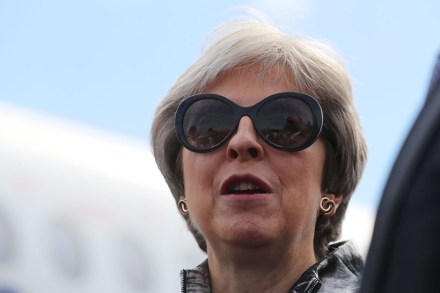
There’s an advertising campaign for the Swiss Alps at the moment urging people to go hiking there ‘and find the route back to yourself’. As Theresa May treks through the mountains of Switzerland on her annual summer holiday, Tory MPs are wondering what route she might find, or what life-changing ideas she might return with. The Prime Minister’s infamous decision to call a snap election occurred to her while hiking in Snowdonia. A year on from that vote, her problems have only increased — but she has clung on. The question, for her and for her party, is how much longer she clings on for. The standout achievement of the May premiership has so far been her extraordinary durability.

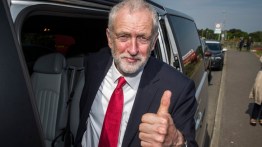
Corbyn’s peace process

The crowd were singing ‘Oh, Jeremy Corbyn’ again, at a festival in Cornwall, the words appended to a riff by the White Stripes which I once liked but now find a little nauseating. Vacuous, dimbo, middle-class millennials and — worse — their stupid, indulgent parents, all waving their hands in the air for Jezza. Meanwhile, the rest of us were trying to work out if Jeremy is a sort of even more retarded Forrest Gump and thus the most stupid man ever to lead a political party in the history of our nation, or something altogether more sinister.

Identity politics are by definition racist

To mark last weekend’s one-year anniversary of the violent right-wing demonstrations in Charlottesville, Virginia, a meagre two dozen card-carrying white supremacists showed up in the town, vs thousands of anti-racism protesters — proportions that may reflect the nation as a whole. Nevertheless, ever since the 2017 rally, the American left has thrown around the pejorative ‘white supremacist’ with such abandon that you’d think the country was jagged with peaked white hats from sea to shining sea. By fits and starts, the past 50 years have seen equality of opportunity for minorities in the States improve dramatically. Yet racial rhetoric, and the overall touch-and-feel of race relations on the ground, is deteriorating.

Obsessed with politics? Your life’s gone wrong

Timeless in its wisdom, the book Parkinson’s Law is of course famous for Parkinson’s law itself: that ‘work expands to fill the time available for its completion’. But scattered through the now 60-year-old book’s pages of tongue-in-cheek social science and cod-mathematical equations are remarks that lodged themselves deep in my thoughts when first I read the book as a young man. Stray observations keep resurfacing as being funny — yes — and flippant, I suppose, but these thoughts are more than flippantly funny: they contain too the germs of deep truths. ‘It is now known,’ wrote C. Northcote Parkinson, ‘that men enter local politics solely as a result of being unhappily married.

The History Boys of Brexit

What do Boris Johnson, Jacob Rees-Mogg and Dominic Cummings all have in common? They are Brexiteers, of course. Yet little is it known that they all studied history or classics at university. Add to this list John Redwood, Bill Cash, Daniel Hannan, Owen Paterson and Douglas Carswell — some of the most influential Eurosceptic MPs from the past 30 years. Michael Gove may have studied English literature, but as education secretary he sought to establish a ‘narrative of British progress’ in the history curriculum. Boris has written a biography of Winston Churchill and Nick Timothy has written a biography of Joseph Chamberlain. Even two of the so-called ‘Bad Boys of Brexit’, Arron Banks and Nigel Farage, are self-proclaimed history buffs.

Why Boris is wrong about burkas

Were you aware that men who transition into women can suffer period pains, despite not having a uterus? Oh, they can, apparently. There is of course no scientific explanation for this phenomenon, nor could there be, other than perhaps that the transitionee is mentally ill. But it is no longer enough simply to accept that a bloke who has had his scrotum turned inside out is as authentically female as a, um, female — you have to accept his right to a whole plethora of imagined victimhoods which are real enough in proper females but couldn’t possibly pertain to him (and which may, further down the line, include this new thing ‘period poverty’).

The joy of boredom

After an hour’s beach work I was just about done. I’d read some book, I’d skimmed the papers, I’d eaten some bits of cheese on some oat biscuits (the closest I’ll concede to picnics, which I hate), I’d drunk some water as per my instructions from the Fawn (‘Drink some water! You never drink enough water’), I’d dried off from the swim, I’d got a pair of very numb buttocks after sundry failed attempts to get comfy on the not very flat rock: surely I’d done enough now to earn my release? But I knew I’d never be allowed to get away with it. Not this soon. The Boy, maybe: he’d be OK with an early escape. Definitely not the Fawn, though. She’d see through my motives straight away.

Bigots of the world, unite!

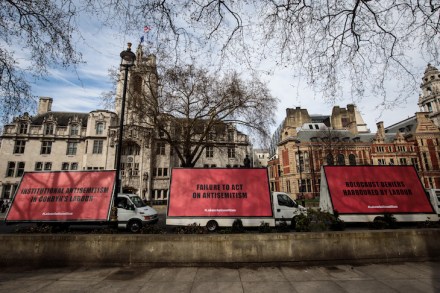
If Jews would get out of Israel and also stop drinking the blood of gentile children, perhaps the rest of the world would like them a little more. That seems to be the fairly broad view among the Hamas groupies on the white British left as well as throughout almost the entire Islamic world. But in particular within the left of the Labour party, which has imbibed this foul ideology for a long while (dating back to the Cold War). A member of the party’s National Executive Committee, Peter Willsman, has blamed Jewish supporters of Donald Trump for fabricating claims of anti-Semitism against Labour. Willsman then asked fellow members if they had ever witnessed anti-Semitism within the party, adding: ‘I’ve certainly never seen them.

Who wins when everyone is in crisis?

Britain’s three main political parties are in crisis. That isn’t meant to happen. If only by a process of elimination, one of the three UK-wide political parties should be doing well at any given moment. These simultaneous crises are one of the things that is making politics so volatile. Let’s start with the Liberal Democrats. The political circumstances seem almost perfect for them but their failure to even break into the teens in the polls when the two main parties are both in crisis does makes one question whether they can ever return to the levels of popularity they enjoyed before the ill-fated coalition with the Conservatives.

Ukip should return – our politics depends on it

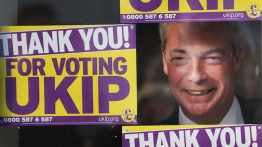
‘The return of Ukip’ declared the headline on our cover story last week. The polling boffin Matthew Goodwin to whose analysis this referred was in fact more careful. Professor Goodwin did argue, however, that the potential may be there for a Ukip revival. So it may. But the figures for new recruits that he cites are modest. The doubt he describes as surrounding Nigel Farage’s chances of a comeback is real. Ukip’s present stance under its latest leader Gerard Batten (who has developed links with the campaign for the disgraced and imprisoned former leader of the English Defence League, Tommy Robinson) looks crazier by the week.

No apology is ever enough for the digital mob

Promoting physical fitness, the left has developed a bracing set of competitive callisthenics. Participants vie over who can complete a marathon crawl on the belly like a reptile, who can flop onto the floor in a pose of the greatest prostration, and who can bend over the farthest, pants down, while begging to have large pieces of furniture shoved up the backside. Athletic displays of public remorse also constitute an increasingly popular spectator sport. The young American poet Anders Carlson--Wee was excited at first about getting ‘How-To’ published in a July issue of the Nation, a storied New Statesman-style weekly.

Why austerity is ending

The last day of the parliamentary term is usually an occasion for the government to get a whole bunch of bad news out of the way all at once. But this summer’s end-of-term announcements were used as a chance to put out some seemingly good news. Teachers, prison officers and members of the military will all receive pay increases of above 1 per cent for the first time in five years. The lifting of the public sector pay cap is another reminder of how politics and the Tories have moved on from the age of austerity that George Osborne announced in his 2009 conference speech. Much has been written about the 2017 election and how the loss of the Tory majority changed Brexit. But it had almost as big an impact on government spending rules.

The more extreme the left’s screeches, the greater the populist surge

The latest exciting news is that it may very soon be possible for surgeons to perform uterine transplants, so endowing a man who has ‘transitioned’ into being a strange approximation of a woman with the ability to gestate a child. And to give birth, after a fashion. The benighted child would need to be hacked out of the man’s midriff, because there’s not enough room down there for a child to come out naturally (yes, because he’s a man). Sweden — the world leader in uterine transplants — is anxious to reclaim the title of the world’s most batshit crazy nation, which the Canadians and that simpering idiot Justin Trudeau currently have in their grasp. The uterus stuff will undoubtedly help.

Why dismiss a Catholic priest for being Catholic?

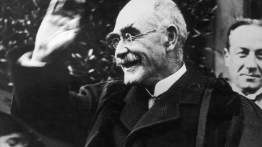
They’re just kids! What’s your problem? This has become the default reaction of a whole raft of clever people to anyone who gets hot under the collar about the fashion for students banning things in universities: speakers, ideas, books. It was ever this way, they say, and besides, sometimes the kids are right. The little episode of righteous vandalism at Manchester last week was a case in point. Students painted over a mural of Kipling’s ‘If’ in the newly renovated union building, on the grounds that he ‘dehumanised people of colour’. Kipling was a racist, they insisted, a man of Empire. Out came the whitewash and on top of it went ‘Still I Rise’ by the American civil-rights activist Maya Angelou. Newspaper columnists raged.

Why have we forgotten the greatest of all crusaders?

For your perfect summer read I’d recommend Zoé Oldenbourg’s 1949 classic medieval adventure The World Is Not Enough. It’ll comfortably occupy you for a good fortnight and while it’s thrilling, romantic and heartbreaking enough to keep you turning the pages, it’s also so beautifully written and historically illuminating that you won’t feel the emptiness and self-disgust you do when you’ve finally got to the end of a bog-standard airport thriller. It begins in 12th-century France but then moves to the wonderfully exotic-sounding Outremer, the contemporary name for the crusader states on the far side of the Med, such as the Principality of Antioch, the County of Tripoli and the Kingdom of Jerusalem.

May’s summer madness

The summer holidays couldn’t come soon enough for Theresa May. So desperate was she to get MPs away from Westminster that she wanted to send them home early. Normally, prime ministers would do almost anything to avoid headlines such as ‘MPs vote to go to the beach’. But in these circumstances, Downing Street decided that was the lesser of two evils. In the end, Members of Parliament persuaded No. 10 that it would be wrong for the government to send the Commons into recess at a time of looming national crisis. It would have looked like an abdication of responsibility. But the fact that this idea was even contemplated reveals the panic gripping the Tory hierarchy. Westminster is more febrile now than it has been in more than a decade.

We can delay Brexit – and we must

Omissions can be as instructive as inclusions. I noted a curious example in a column Nick Timothy wrote last month for the Daily Telegraph: ‘Why Dominic Grieve’s push for a “meaningful vote” really would mean stopping Brexit.’ Until he left Downing Street, Mr Timothy was jointly principal adviser to Theresa May. He wrote the following: ‘According to ministers, the choice Parliament will face is to leave on the terms negotiated by the government, or leave with no deal. And they are right: the European treaties assert that the withdrawal process can last no longer than two years…’ This is not the case. Mr Timothy seems to have overlooked a key provision laid out in Article 50 of the relevant treaty (my italics): ‘3.