Columns

Don’t judge a play by its audience

There is a new book out about the sun — the bright thing in the sky, not the newspaper. It sounds very interesting. ‘Science Museum The Sun — One Thousand Years of Scientific Imagery’. You can get it from that place ‘Science Museum’, which I seemed to remember was once called the National Science Museum but which has now ridded itself of that hateful word ‘national’ as well as its unfashionable definite article. In the introduction to the book, the authors Harry Cliff and Katy Barrett write: ‘The images and texts featured here are almost always the product of collaborative work.
What Theresa May’s successor must do

Jeremy Corbyn used to be a punchline at the Conservative party conference. Tories believed that his election as Labour leader guaranteed them electoral success. But the picture that emerged from this year’s conference is of a Tory party that is desperately trying to work out how to counter Corbyn, and how to win a fourth term in office — something that even New Labour couldn’t achieve. Senior Tories now recognise that the questions Labour are asking deserve a response. In his conference speech, Philip Hammond acknowledged that people feel ‘that they are working for the system but the system isn’t working for them’. And on the fringe, various Tories set out their own answers to Corbyn.

Yes, we cyclists really are nasty

One morning a long time ago, when the Spectator offices were still in Bloomsbury, I hopped my bike up onto the kerb outside the new Pret a Manger on Theobalds Road, locked it to a post and went in. A man followed me, his face vacuum-packed with fury. He shouted: ‘No bikes on the PAVEMENT’, then he spat in my face. Not a soul moved. Only a few looked up from their contemplation of the sandwich calorie count. They thought, I suppose, I deserved it. And since that day, I’ve defended my fellow bikers against any number of anti-cycle fanatics. We’re not innocent, I thought, but we’re undeserving of this terrible rage. We’re scapegoats. Well, I’ve been wrong. For 15 years I’ve been wrong.

The truth is we prefer to lie

There are no necessary truths any more. Everything is contingent. And those contingencies are the consequence not of what happens in the real world, but of the derangement in our own minds. Some will insist it was ever thus. Well, if so, it’s never been more evident. Take just two examples. We will never know the truth of the Kavanaugh case unless one of the two principal actors ’fesses up — and even then I wouldn’t be too sure. If the case went to court and Christine Blasey Ford were a reliable witness, and several of her contemporaries gave evidence that they witnessed the attempted rape and all Brett Kavanaugh did was mumble his repetitive idiocies, the right would still be insisting that it was a politically motivated put-up job.

The curse of having to go vegan

I’m on a no-alcohol, no-caffeine, no-sugar, vegan diet. It’s less fun than it sounds. Occasionally I cheat, but mostly I don’t, because I don’t want to upset the lovely doctors at the Infusio clinic in Frankfurt who gave me my stem cells for the Lyme disease treatment and who insist they need the right anti-inflammatory, alkaline diet to thrive. And besides, even though it’s horrible, I’m quite enjoying, in my masochistic way the rigour and the punishing asceticism. Also, it has given me insights into a world which I never imagined in a million years I would ever enter. Vegans walk among us. They are everywhere. But you don’t really notice this until you become one and suffer alongside them.

Why is no one sticking up for marriage?

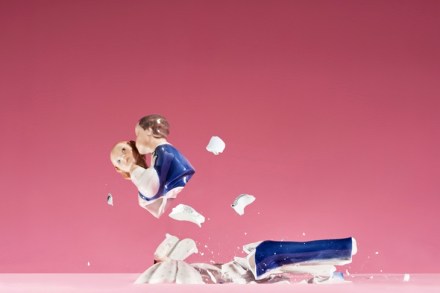
I took part in a debate organised by the Times this week about reform of our divorce laws. Well, I say a ‘debate’. There wasn’t much of that. Not much in the way of dissent. The four other panellists, who included a government minister, all wished to liberalise our divorce laws. And it was chaired with great impartiality by Sir James Lawrence Munby, who was until recently the president of the Family Division of the High Court of England and Wales. He made a stirring ten-minute speech on why we need to liberalise the divorce laws. Yes, it was like one of those exquisitely balanced Newsnight debates, then. The audience consisted of 100 or so lawyers who wished to liberalise the divorce laws. So I felt a little bit, you know, isolated.

What’s wrong with hearing #MeToo men’s side of the story?

‘There are two sides to every story’ is an aphorism you don’t hear often lately. Ask anyone amidst a family row: most stories have more than two sides. But in the take-no-prisoners world of #MeToo, there’s only one side. All women are victims and all women are truthful. Any man who’s had a shadow of doubt cast on his sexual behaviour since his first wet dream at 12 is deserving of permanent social and professional banishment and is forever forbidden from saying a word in his own defence. As the editor-in-chief of the respected New York Review of Books found out. Ostensibly Ian Buruma resigned, but resignation over your own dead body sounds awfully like ‘sacked’ to me. His fatal error, according to the usual Twits?

Don’t dismiss McDonnell as a loony

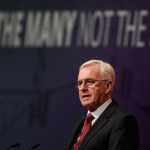
‘Wherever Sir Stafford Cripps has tried to increase wealth and happiness,’ wrote the Conservative Scottish journalist Colm Brogan, ‘grass never grows again.’ But Roundup has its uses. When Brogan made this comment, Sir Stafford was Britain’s postwar ‘austerity’ chancellor of the exchequer, a post he held from 1947 to 1950. Dry as dust, Cripps had rejoined the Labour party only two years previously, having served as ambassador in Moscow, then in Churchill’s war cabinet. A leading voice on the hard left, he had been expelled from Labour for his advocacy of co-operation with communists in 1939, but his judgment had proved shrewd.

The benefits of a blind Brexit

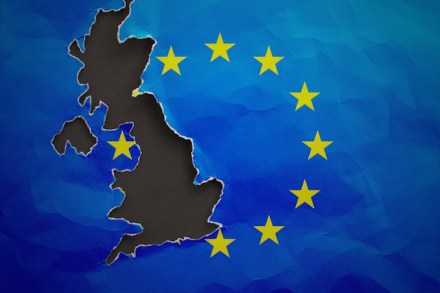
Brexit won’t be over by 29 March 2019. Britain will legally leave the European Union on that date. But that won’t tell us what Britain’s future relationship with the bloc will be, or how closely aligned the UK will be to the EU. Those are questions for which we will have to wait for the answers. What MPs will vote on before next March is not a ‘Brexit deal’ but a withdrawal agreement. Theresa May won’t come to the Commons and table her Chequers plan for approval, which is just as well given that she doesn’t currently have the votes to pass it.

If girls don’t like physics, it’s down to biology

I was delighted to see Claire Foy win an Emmy award for her portrayal of the Queen in the fine Netflix series The Crown. It may have helped assuage her annoyance at initially being paid £200,000 less than her co-star, Matt Smith, who did a fairly good impersonation of a young, brooding Duke of Edinburgh. Foy had more lines than Smith, is as capable an actor as Smith, was the leading role and, importantly, is at least as fit as Smith. This last point is vital because television often casts people on account of their attractiveness, because viewers like looking at attractive people rather than at hideous fat munters. Whatever, there is still sexism around and Foy’s treatment seems to be a good example of it. I can think of no other reason she was paid less, other than sexism.

Ich bin ein Frankfurter

Things I learned about the Germans after a fortnight living as a non--tourist in Frankfurt:   1. Germans, and Germany generally, are among the world’s most underrated things. True they are not so adept at wit, snark, banter, jocularity or general frivolity. But they are kind, welcoming, generous and unlike, say, the French, charmingly grateful when you attempt to speak their quaint, guttural, impossibly inflected language even though — stimmt! — they speak yours so much better.   2. Here’s what happened when I lost my wallet. I got back to my hotel — cursing each step of the way the hours I would have to spend cancelling and re-ordering my cards — to find a message from the front desk.

My thoughts on the Serena Williams controversy

[Update: Mark Knight, the Australian cartoonist accused of racism for drawing Serena Williams, has deleted his social media accounts after receiving death threats to his family. References to his social media accounts have been removed from this article]. I have spent the morning trying to draw a cartoon of a black person without it being racist. It’s bloody difficult. Especially the lips. Make them too big and anti-racist people will accuse you of being a white supremacist peddling, in their words, the old ‘sambo’ myth. But too small and they don’t look like the lips of very many black people. It’s the same with the colour. At first, on my cartoon, I used a black felt-tip pen and so the figure came out very black indeed.

Must ‘the will of the people’ always be respected?

I’ve always respected Alistair Darling and cannot imagine him saying anything ill-considered. But listening to him interviewed last Monday on the Today programme I heard him offer, as though it were obvious, an assumption so much less obvious than he appeared to recognise, that it set me thinking: not about the admirable former chancellor but about a real divide among civilised people that our age is perhaps insufficiently aware of. The presenter, Nick Robinson, had asked Mr Darling if he supported a second (or ‘people’s’) referendum on Brexit. No, said Darling: ‘You ask people what they think and clearly you’ve got to live with it.’ Seconds later, still speaking about Brexit, he said: ‘We’ve made a profound mistake.

One discouraging word and you’re a transphobe

This column is not in my interest. But then, not for the first time. I cannot count the conversations conducted in recent years with reasonable, moderate people when expressing what should be reasonable, moderate views, during which my companions exhibit signs of drastic anxiety: fidgeting, darting pupils, twisting hands. The mumbling under the breath can border on unintelligible. If we’re in public, they will look wildly around to see who might be listening. Even in private, friends and colleagues emphasise that they’re speaking off the record. These must have been the kind of uneasy, secretive exchanges whispered between folks not wholly on board with National Socialism in 1930s Berlin. But in 2018, what gets discussed in hushed tones? Transgenderism.

The spectre of no deal is receding – probably

Over the summer, a no-deal Brexit became less likely. Eurosceptic ultras have been forced to be less blasé. The return of Steve Baker to the European Research Group, the lead Brexiteer bloc of MPs, has injected more realism into their discussions on the subject. Baker was involved with no-deal planning in government and has made clear to colleagues that it would present significant challenges. Those intimately involved in the negotiations on the British side say that the EU is also more concerned about the talks failing. As deadlines approach, the focus is on the sheer logistical complexities that would come with Britain crashing out of the European Union. Senior figures on the EU side are alarmed at the challenge of helping Ireland through a hostile no deal.

Why do we care so little about child abuse?

Abusing children is one of the most terrible things men do. We all agree about that. And I think we’re all aware, as Sajid Javid announced on Monday, that it’s a growing problem. The same technology that allows millions to share videos of romping kittens has created an awful, expanding market for images of children — mostly very young girls. There has been a 700 per cent rise in reports of child abuse images since 2012, said Javid: an average of 400 arrests a month. Police think that there are now 80,000 people in the UK who pose a serious threat to kids. Javid is shocked by the scale of it, he says, but what has surprised me over the past few years is how little people really seem to care. Consider Facebook.

I’m up on memes and down with the kids

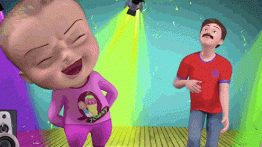
Boy and I have been driving the Fawn mad by singing the ‘Johny Johny Yes Papa’ song. It goes (roughly to the tune Twinkle, Twinkle Little Star): ‘Johny Johny/ Yes, Papa/ Eating Sugar?/ No, Papa/ Telling Lies?/ No, Papa/ Open Your Mouth!/ Ha Ha Ha.’ In the likely event that you don’t know it, you’ll probably find it as irritating as the Fawn does — especially the misspelling of Johnny and the bad Indian accent. But in the unlikely event that you do, you’ll be congratulating yourself on your pop cultural credibility. This is because for a brief period peaking around last weekend — ‘Johny Johny Yes Papa’ was the world’s most fashionable meme.

The lunatics have landed

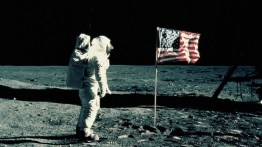
I remember the moon landing very well. I was nine years old. I can remember too my sense of outrage and disillusion. ‘This is a blatant violation of the moon’s dignity and sovereignty,’ I told my parents, as the astronauts Buzz Aldrin and Neil Armstrong attempted to secure the US flag to the lunar surface. ‘An act of imperialistic, Zionist barbarism and a statement of intent from the American government that it intends to export its white supremacy throughout the known galaxy. You will note that no people of colour were chosen as astronauts, nor women, nor people with fibromyalgia.

Corbyn has made criticism of Israel impossible

If I were Benjamin Netanyahu (and I’m not) I would be thanking whatever gods there be for sending me, at a tricky time, the most useful ally it is possible to imagine in UK politics. To Bibi’s aid has come probably the only man in Britain capable of single--handedly silencing public criticism of the Israeli government’s disturbing new Basic Law, entitled ‘Israel as the Nation-State of the Jewish People’. If I were a British crusader for the Palestinian cause (and I’m not) I would be cursing whatever gods there be for sending — at a time when it might have been possible to rally critics of this unpleasant eruption of ethno-nationalism in Israeli politics — the most effective British voice available to hamper my argument.

Taking offence has become a blood sport

In a recent column, I vowed to return to a point made in passing. To refresh your memory, the American magazine the Nation printed a formal apology for running a harmless 14-line poem by a white writer about homelessness. The poet’s sins: using the word ‘cripple’ and adopting a voice lightly evoking what I gather we’re now to call ‘AAVE’: African-American Vernacular English. Facebookers were incensed, comments huffy. The poet apologised, too. I decried this ritual progressive self-abasement as cowardly and undignified. But it’s worth taking a second look at that story as a prime example of screaming emotional fraudulence in the public sphere.