Columns

The last working-class people in the Labour party

A couple of people in the Hornsey and Wood Green Labour party have come up with a fascinating suggestion — a section of the party for working-class people. I don’t know their names, but let’s call them Bob and Hilda for the time being. Bob and Hilda, the last two working--class people alive in the Labour party. The two of them say that while middle-class party members are in general very nice, Bob and Hilda sometimes feel patronised and talked to as if they were children. Bob and Hilda have recommended ‘awareness--raising group workshops’ to address this problem. Hmm.


Why I’ll never become an MP

Every now and then someone asks me if I have ever thought of becoming an MP. My response tends to be a laugh so deranged that the question answers itself. When I manage to verbalise the answer it usually goes something like this: ‘No, because I enjoy saying what I think is true.’ Occasionally my conversationalist will persist: ‘But MPs have a huge variety of opinions. Parliament is not filled with silent types.’ Throughout such interactions various names and images flash through my head. I think of Sarah Champion, for instance — the Labour MP for Rotherham. Ms Champion got her seat in 2012 and among the problems she inherited was the fact that her constituency had recently been one of the largest crime scenes in modern British history.

Is Trump scared of Crazy Bernie Sanders?

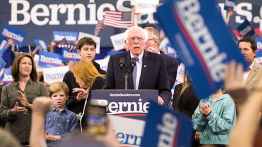
 Manchester, New Hampshire Democrats almost all agree that Donald Trump is ruining America and must be removed from the White House in November. The trouble is, nobody is sure who can or should do that. Democratic or Democrat-leaning voters talk nervously about the various candidates using their first names, as if trying to pick a love match in an episode of Blind Date. Should it be Bernie? Or Pete? Or Amy? Or Liz? Or Joe? New Hampshire isn’t meant to be like that. ‘Live free or die’ is the state’s motto. New Hampshirites are famously independent: they know their minds, at least that’s what everyone says. But in the Democratic primary this week, they all seemed indecisive.

Boris wants a 2024 election – and wants to start his building boom now

‘The clock is ticking.’ It is surely only a matter of time before Michel Barnier returns to his notorious catchphrase from the Brexit talks. The EU’s chief negotiator is already warning that if a trade deal cannot be agreed ‘within the constraints of the time limits imposed by the British PM’, then there will be ‘consequences’ as the UK and EU will end up trading on World Trade Organization terms. Or, as the Prime Minister prefers to call it, an Australia-style deal. Last time around, because Theresa May had no majority in parliament, Barnier was able to throw the British side into confusion: it was quite possible that Brexit could be delayed, or even abandoned.

Terror is the toughest issue facing the Tories

A prisoner is released early and just days later attacks people. It then emerges that he was known to still be a danger to the public before he was let out. Normally at this point in the story one would be expecting ministerial resignations. But in the case of Sudesh Amman, the Streatham attacker, we are not. Why? Because the law meant that there was no alternative to him being released. The government is now in a mad scramble to prevent this from happening again. Emergency legislation is being rushed through parliament to stop terrorists from being automatically freed from prison halfway through their sentence. Historically, one of the Tories’ electoral strengths has been their reputation as the party of law and order.

Wanting to kill us all is madness, not religion

Sudesh Amman was singularly unsuccessful in his wish to kill kafirs, as he put it, and thereby find himself surrounded by the hoor al ayn — beautiful handmaidens who’ll do anything you want, frankly — in the afterlife. He had perhaps not followed the instructions in the book he had about how to stab people. Two were injured by the madman on Streatham High Road; both, mercifully, should live. However, Amman was shot dead by plain-clothes policemen before he could even scream out the old ‘Allahu Akbar’ thing. The cops were already there because Amman was known to them — known very well to them. I suppose, under British law, they were required to wait until he’d tried to stab somebody before they shot him.

The concept of Evil is an evasion

A week of remembrance marking the 75th anniversary of the liberation of Auschwitz last month had me thinking hard about what we mean by Evil. ‘Evil’, that is, when used with a real or metaphorical capital letter. You cannot join discussion of the Holocaust without hearing the word again and again. And indeed, what other words are available when we want to express complete horror? ‘Regrettable’? ‘Immoral’? Such vocabulary won’t do the job. Only ‘wicked’ and ‘sinful’ come anywhere near, and all are allied with what Evil, as a proper noun, tries to capture. ‘Evil’ eschews any notion of understanding or explaining, and sits uneasily with the idea of rectification, compensation or apology.

I won’t read American Dirt – but not because the author has the wrong skin colour

Readers of The Spectator who keep up with the latest literary hissy fits could have predicted (perhaps with a groan) exactly what Shriver will write about this week. Maybe it’s hard to pity Jeanine Cummins. Her third novel, American Dirt, secured a seven-figure advance, an Oprah Book Club pick and a huge publicity campaign (waste of money; last week the Guardian alone gave the book a scale of promotion that its publisher Flatiron Books could never afford, although the paper’s worthies are sure testing that maxim about no publicity being bad). An author’s note, in which Cummins rues not being ‘browner’, suggests a faint premonition of the stir that her thriller would cause.

How to be a man

  The river of death has brimmed his banks And England’s far and Honour’s a name But the voice of a schoolboy rallies the ranks ‘Play up! Play up! And play the game!’ Even as long ago as the first world war, men bitterly mocked the tritely jingo-istic sentiment of Sir Henry Newbolt’s poem ‘Vitaï Lampada’. So it wouldn’t remotely surprise me if it turned out that I was the last chap on earth who still finds it an inspiration. Yes, I know all that G.A.

Britain’s relationship with booze is beyond abusive

I’m not one of these teetotallers who frowns on people who imbibe, like an angsty ex-smoker who petulantly swats away vape fumes. It would be rather hypocritical because for years, I was what you would describe as a ‘problem’ drinker. In the sense that, every time I drank it caused problems, not only for me but anyone in the vicinity. You know those people who end up going home in an ambulance instead of a taxi? That was me. Alcohol didn’t make me unwind; it made me unravel. Having grown up with an alcoholic mother I knew I wasn’t addicted to the stuff — it was more a case of bring allergic to it. So after a solid 15 years of drunken escapades, most of which I don’t remember, I knocked it on the head. That was about a decade ago.

Why I’m standing by my old enemy Selina Todd

Most people won’t have heard of Selina Todd. The only reason I had was because some years ago the BBC invited me to appear alongside her on one of those slots that used to be for intellectual discussion. ‘Would you be interested in coming on Radio 3 at about 10.30 p.m. to discuss class?’ I was asked. ‘Absolutely not,’ I replied, the subject being the only national obsession I would leave the country to escape. ‘That’s precisely why we want you,’ began the producer. And so eventually I ruined a perfectly good dinner and headed to the BBC where I met the aforementioned Todd. She turned out to be an Oxford professor whose area of study is the working class and whose specialism is resentment.

Brexit won’t end the Tory wars

Now that Britain is out of the European Union, it will be very hard to go back in. In the 2016 referendum campaign, one of the things that Vote Leave did most effectively was point out that because the EU was constantly evolving, no one could be confident that a vote for Remain was a vote for the status quo. And now Rejoin campaigners will be the ones who want to rip up current arrangements. There is no certainty about the terms on which the country could rejoin. Would the UK, for instance, be expected to commit to ‘ever closer union’ if in the future it were to return to the fold? Even if, say, a party were to win an election on a Rejoin platform, that would not be sufficient for Britain to actually rejoin.

Vegans are brave – and they have a point

It was a clear and icy night at home in Derbyshire last week. I love these times and, before bed, stepped outside to stand on the lawn in the moonless pitch-black and take it in. All at once the dark was pierced with an awful scream. I was not greatly alarmed — the rural night is full of strange noises — but stood there, puzzling out what it might be. The scream, almost human, was repeated, and its provenance seemed to be moving from one side to the other of the field adjacent to ours. Could it be a fox? Vixens do make some blood-curdling cries during the mating season but does that start as early as January? Or might it be a fox’s victim — a hare or rabbit, perhaps, fighting back as the poor creature was carried off — or even an owl’s prey?

Labour must change if it is to win

In the past 40 years, only two leaders of the opposition have gone on to become prime minister: Tony Blair and David Cameron. Both were elected on a platform of ‘change to win’ by parties keen enough for power to do just that. Looking at the current Labour leadership contest, it is painfully clear how far the party is from that position. The one candidate prepared to break decisively with the past four years has already dropped out. Jess Phillips has left the race because she can’t get the nominations from either constituency Labour parties or trade unions and other affiliated groups to make it on to the final ballot, which goes before party members next month.

Democrats are trying really hard to lose this election

Should Bernie Sanders become the Democratic presidential nominee, expect the media to overuse these sprightly English expressions: ‘between a rock and a hard place’, ‘between the devil and the deep blue sea’, ‘on the horns of a dilemma’ and ‘Morton’s fork’. After all, you wouldn’t call a Trump vs Sanders race a ‘Hobson’s choice’, which means ‘no choice’. Centrist voters would confront two options, all right — both of them dreadful. The past few weeks, the firebrand socialist from Vermont has pulled ahead in the polls in the early-voting states of Iowa and New Hampshire, and a Sanders pick has become more plausible.

A last chance to save the BBC

Whoever becomes the next director-general of the BBC should take a close look at last week’s Question Time. It came from Liverpool, which is perhaps the most left-wing city in the country, Brighton excepted. On it, the actor Laurence Fox was making sensible comments about the Harry and Meghan business (which is beginning to bore me into a stupor), when he was upbraided by a third-division academic from a glorified teacher training college. This was Rachel Boyle, a ‘researcher on race and ethnicity’. She trotted out the familiar, learned-by-rote cliché that Fox was possessed of ‘white privilege’ and was therefore, by implication, disqualified to comment on the matter.

I’m at risk of becoming a cat person

Just before Christmas our cat Runty died and I wasn’t in any rush to find a replacement. I like cats well enough but I wouldn’t consider them one of life’s essentials. You can’t ride them; they won’t come with you on walks or bark at burglars or gaze at you like you’re the most wonderful, special, adorable person in the entire universe; plus, of course, they are the most evil, deadly and inappropriate predator. Domestic cats kill an estimated 55 million birds each year in the UK alone — and an estimated total (when you add in all the mice, voles, slow-worms, newts and so on) of 275 million wild animals.

Vampire squids are killing Britain’s B&Bs

More and more of us are staying home for our holidays — but even so, our small hotels and B&Bs are folding at a scary rate. UK hotel insolvencies are up 60 per cent, it was reported last week. Why? Competition bites, said the papers, blaming Airbnb. But there’s another biter, too — more sinister for seeming more helpful. The majority of hotel bookings are now made on the internet, and most of those via one of the two enormous internet travel companies: Booking Holdings and Expedia. It might seem to you and me, as we click away the January blues, that there’s a swarm of jostling online travel agencies (or OTAs) — Trivago, Kayak, Agoda, Hotels.

We want one thing from our royals: patriotism

There is a fascinating social media group which I think we should all join. It is called ‘DeMOCKracy — 2019 12/12 UK Election Was Undemocratic’. I hadn’t realised, but apparently the election was ‘rigged by Tory billionaires’ to ensure Jeremy Corbyn was defeated. This was done with the aid of fraudulent postal votes, Tory lies, a media which was unanimous in rooting for the Tories — including the BBC and the Guardian! — and will lead, ineluctably, to fascism and the gassing of millions. Where is the evidence for this chicanery?

Why the cabinet reshuffle might not be so radical after all

Prime ministers are never more powerful than just before a cabinet reshuffle. Ministers fall over themselves to be helpful, hoping to secure their position or move up the pecking order. Backbenchers start hailing the Prime Minister’s every decision as an act of firm and enlightened leadership. This spectacle is underway ahead of next month’s well-trailed reshuffle, which has already been dubbed the ‘Valentine’s Day Massacre’ by Whitehall wags. It is not just the reshuffle that is propelling Boris Johnson towards the peak of his political powers. He has an 80-seat majority at his back. And with all the talk of reform, government departments are similarly keen to demonstrate their worth to No. 10.