Columns

What a relief to no longer have to pretend to be sociable

Hulking fat chavs pushing shopping trolleys full of lavatory paper back to their Nissan Micras. I can’t think of a better image to sum up the coronavirus crisis right now. I saw a bunch of them outside my local branch of Morrisons on Sunday morning, their expressions uniformly defiant and smug. One family had at least ten multipacks in their trolley — and nothing else. Surely one cannot live on toilet tissue alone, no matter how agreeably scented it might be? I assumed they were part of the panic-buying crowd, although having seen the size of their arses it may well be that this was simply their requisite amount for a single day of copious wiping. I had driven to the supermarket in time for its opening, at 10 a.m. All I needed were a few breakfast rolls and some cigarettes.

Coronavirus will be a test of trust

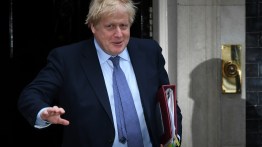
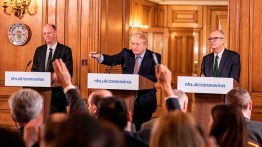
We are in a make-or-break moment for trust, not just in this government but in the British state itself. The measures that were announced by Boris Johnson and Rishi Sunak this week are extraordinary in economic, social and legal terms. When the Covid-19 crisis is finally over, the state will be judged against how effective they were. None of us will have lived through anything like what we are about to experience. If this country gets it broadly right, then trust in our politicians and the state will rise. But if it gets it wrong, then the nature of the relationship between the citizen and the state will be changed for at least a generation. People will be far more reluctant to follow official advice in future. Johnson now talks about this being a ‘wartime government’.

Why Hachette were wrong to drop Woody Allen’s memoir

Even amid plague, economic apocalypse, and the cancellation of 2020, dumb stuff keeps happening. Besides, loads of us will now beeline for any column not about coronavirus. Key words: Hachette, Woody Allen. See also: Douglas Murray. This isn’t the first time we’ve agreed on something. American publishing has hardly covered itself in glory regarding Woody Allen’s Apropos of Nothing, which my New York editor read on the memoir’s submission last year. ‘It was really good,’ she emailed me. ‘We took an easier way out, that is for sure. Not to be repeated!’ The easy way out, which nearly the entire industry took, was not to bid on the book. Hachette acquired the memoir with no competition and no fanfare.

The secret excitement that lurks beneath our distress

Something about the word ‘bomb’ has always thrilled me, and I know why. No school today. In the 1950s we lived in Nicosia, Cyprus, when the island was a British colony and Greek Cypriot terrorists were trying to kill us. Our house was near a big army camp and our Cypriot neighbours were friendly, so home felt protected. It never occurred to me, just starting school, that proximity to the military was not a guarantee of security; and it never occurred to Mum and Dad that our neighbours had a small bomb factory, later discovered underneath their chicken house; so indoors seemed safe. But outdoors was different.

Don’t tell me what I can read

At least none of us will have to pretend that we read Woody Allen’s memoirs. This week the publishers Hachette took that little responsibility away from us. After a staged walkout by staff in New York and Boston it was announced that the book (titled Apropos of Nothing) would be pulped rather than published next month. Allen has been accused of historic sexual abuse and the subject of allegations from his daughter and glassy-eyed son Ronan Farrow. No charges have ever been brought. Hachette’s announcement followed a number of other choices that have similarly been taken from us. The UK public did not get to choose whether to see Roman Polanski’s latest movie.

The true test of the Budget

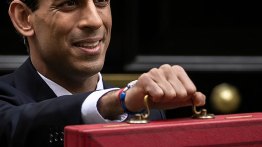
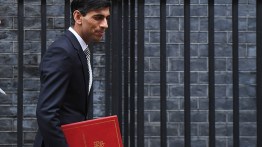
British politics has not lost its flair for the dramatic. If it was not enough to have Sajid Javid resign as -chancellor less than a month before the -Budget, Wednesday’s statement was delivered against the backdrop of a global economic crisis. Coronavirus is causing a shock to both demand and supply. We have not had a crisis like this in decades, and there is no obvious immediate solution for national or -global policy-makers. The £30 billion of emergency measures the new Chancellor, Rishi Sunak, announced in the Budget are not the last set of actions we will see in response to coronavirus. The government is still waiting to see how the situation develops, and how severe the economic and societal disruption will be.

There’s no sign of apocalypse in East Finchley – yet

I was mansplaining to my wife earlier this week about why we ought to be very, very concerned by the coronavirus. It wasn’t the prospect of one person in 50 dying, I said — or not just that. It was more, I said sagely, the knock-on effects. You know, if everyone self-isolates, you’re only about two missed Ocado deliveries away from starvation, looting, cannibalism etc. ‘You’re always catastrophising,’ said my wife. ‘You were like this about Trump. And Brexit. I think it’s because you spend too much time reading the news.’ ‘But Trump is very bad,’ I said, because he is. ‘He could start a war.’ ‘He hasn’t started a war.

Britain has its first punk-rock government

The most surprising thing about the letter from Guardian and Observer journalists moaning about Suzanne Moore’s supposed ‘transphobia’ is that it contained 338 signatures. This must be the first time a newspaper has had more writers than readers. What an extraordinarily bloated institution — how does it survive? Through those often advertised workshops where Owen Jones explains to people how to write a column? Most bizarre. Surprise number two was that these hacks were prepared to get themselves worked up about a perfectly reasonable piece, for once, by Moore — but found no problem what-soever with Steve Bell’s disgusting and frankly racist depiction of Priti Patel in a cartoon.

A guide to coronavirus hoarding

We have now got past the absurd stage of glaring in a reproachful manner at Chinese people on the tube. Coronavirus is disrupting sporting events, so this rather mild-mannered little bug has acquired crisis cachet and we must all take it very seriously. Lots of us will die of it, apparently — in this country some 500,000, according to one estimate. Almost certainly older people with under-lying medical conditions, i.e. the very people who voted for Brexit and ensured Labour’s red wall was dismantled in December. If this worst-case scenario does actually happen, expect the Remainers to demand a rerun of that referendum. Health professionals will be able to enumerate for you the stages of Covid-19 as it goes to work on the human body.

An open letter to the friend who dropped me after Question Time

I’ve put off sending a private email that’s been ready to go for weeks. Then last Sunday, I read Julie Burchill’s column in the Telegraph about the rigid ideological conformism amidst today’s purportedly ‘creative’ class, and it hit a nerve. Despite our sanctification of inclusivity and diversity, Burchill wrote, ‘exclusivity and groupthink still control the arts’. Because my own small experience of failing the progressive purity test this winter has been repeated up and down this country, it is not   small. Scaled up, the private becomes the public. So I’m finally sending my email as an open letter, allowing the Spectator readership in on a conversation germane to more than my social life.

The Budget’s corona contagion

When Sajid Javid resigned in a row with No. 10, there was much speculation about what would be in the coming Budget. No one, though, predicted that it would end up being overshadowed by coronavirus. The short-term economic effects of this outbreak are almost unknowable. It is still hard to work out how serious it is going to be. One of those drawing up the government response plan tells me they would be happy if, in a year’s time, people thought they had wildly overreacted. Boris Johnson once said that the mayor in Jaws — who keeps the beaches open despite reports of a shark — was his hero for resisting the clamour for action. But now that he is in Downing Street he has no intention of taking a similar risk.

The unbearable lightness of Boris Johnson

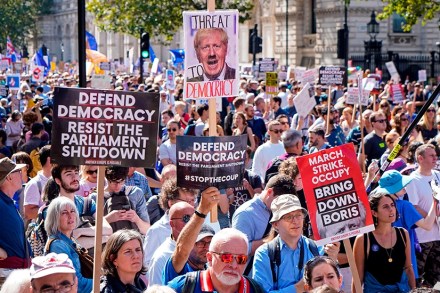
Months ago, not long after Boris Johnson’s 2019 general election triumph, I wrote a Times column of a cautiously hopeful nature about his prospects in Downing Street. The column was in reaction to well-sourced reports that Mr Johnson’s management philosophy was to encourage ministers to get their heads down and get on with the job, to avoid the TV sofas and broadcasting studios unless there was something important to get across, and not to suppose that media exposure should be equated with career success.

Why did no one believe Johnny Depp?

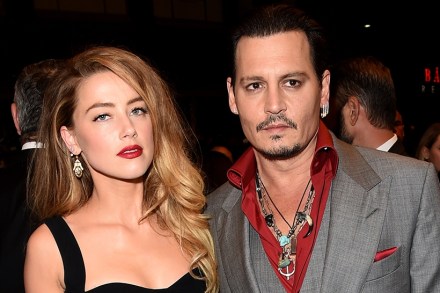
When it was first reported that Johnny Depp had been hit and pelted with crockery by his slight, blonde then wife, Amber Heard, I’m afraid my first reaction was disdain. Johnny and Amber recorded their rows on their mobile phones (as you do) and a ‘reliable source’ leaked the recording: ‘I was hitting you, it was not punching you,’ Amber says to Johnny. ‘Babe, you’re not punched.’ Then, exasperated: ‘You are such a baby. Grow the fuck up Johnny… I did not hurt you, I did not punch you, I was hitting you.’ At first my sympathies were with Amber. C’mon Johnny, c’mon Captain Jack Sparrow, can’t a lady throw a plate or two? Surely a slap, under provocative circumstances, is OK?

The best news for Bernie is that his rivals are so weak

‘Bernie beats Trump! Bernie beats Trump!’ That’s what Bernie Sanders’s fans keep chanting, and they have the polls to prove it. Survey after survey suggests that, of all the leading candidates for the Democratic party’s nomination, Sanders is most likely to defeat Donald Trump in the election in November. Voters like Bernie. Some 46 per cent of voters say they admire him. Only 26 per cent say the same of President Trump. Still, most political experts think Sanders will be a disaster for the Democratic party. He may be popular with the base, they say, but he is far too left-wing for the general electorate: 2020 would be a repeat of 1972, when the radical leftie George McGovern lost to Richard Nixon in a landslide.

How Sinn Fein got away with murder

The online world should be credited when it gets something right. And on Twitter an account titled ‘On This Day the IRA’ gets something very right. Granted, it’s not your usual internet fare. It includes no videos of cute animals sneezing. It is simply an archive-rich account which records what the IRA did on that day in history. Naturally, each day brings more than one thing to commemorate. On the day I’m writing, the account records James Keenan and Martin McGuigan, two Catholic 16-year-olds blown up by the IRA in 1979 while they were on their way to a Saturday night dance. There are also anniversaries from 1977 and 1988, and Reginald Williamson, a 46-year-old father of two who was killed in 1993.

In defence of Priti Patel

We will rue the day we all decided bullying was a bad thing. The consequence is that the inept, the imbecilic and the perpetually frit will hang on to their jobs and we will become a much less efficient country. By bullying I do not mean physically beating someone up and stealing their lunch money, which is what it used to mean when it had a proper meaning. I mean telling someone they’re useless and deserve to be sacked, which is what bullying means today. As R.D. Laing might have put it, that kind of bullying is a rational response to irrationality. The Home Secretary, Priti Patel, who is 5ft 6in tall, has been accused of using bullying behaviour with regard to her civil servants. Nowhere near enough bullying behaviour in my book.

The blindness of cultural Marxism

Words we are not allowed to use any more now include ‘cultural Marxism’. Suella Braverman, now the Attorney General, used them last year and was immediately upbraided by the organisation Hope Not Hate. Very right-wing people sometimes use it too, you see, so it must never be uttered by anyone else. Banning the use of the phrase ‘cultural Marxism’ is about as culturally Marxist as it is possible to get, but I don’t suppose the cultural Marxists at Hope Not Hate appreciated the irony. Cultural Marxism is a largely 1960s excrescence in which everything must be seen through the prism of unequal power relations, other than which nothing else matters at all. Especially power relations regarding race and gender, the basis of identity politics.

I’ve seen wars more amusing than BBC comedy

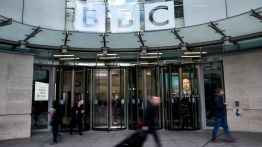
Last weekend’s papers claimed that the government desires a ‘massively pruned back’ BBC. Former Conservative cabinet minister Damian Green and someone called Huw Merriman spoke out against this, which allowed the BBC to put the headline ‘BBC licence fee: Tory MPs warn No. 10 against fight’ atop its characteristically impartial coverage. I suppose there are various reactions one can have to this, ranging from outrage at supposed ‘cultural vandalism’, via a vague shrug, all the way through to the full Charles Moore. In recent years I have moved through all these stages. The discovery that mattered most was the realisation that the less BBC I had in my life, the better.

The Brexit reshuffle: every great office of state is now held by a Leaver

One of the Tories’ tactical successes has been to push Brexit down the news agenda. But even if it no longer dominates front pages and news bulletins as it once did, the task of sorting out Britain’s future relationship with the European Union remains the government’s biggest challenge. Brexit also provides the best explanation for some of No. 10’s other actions. Last week’s cabinet reshuffle, for instance, can only be properly understood in the context of Brexit. The purpose was to create an all-powerful centre. The three greatest parts of government — No. 10, the Treasury and the Cabinet Office — have now been joined together. There is a combined No. 10 / No.

Cyclists have become an easy police target

Most Britons assume at the outset that any misfortune involving a cyclist is the cyclist’s fault. After all, many a two-wheeled hellion has earned contempt. But put aside the understandable cynicism. This is not one of those stories. A week ago, I was cycling around Buckingham Palace while some low-key royal whatnot was pending but not under way. The vicinity was closed to traffic but not to bikes. As usual, I was heading for Hyde Park Corner via Constitution Hill, because the bike path on the right-hand side in Green Park is insensibly ‘shared use’ — meaning, teeming with pedestrians, and I see no point in our inconveniencing one another. As I passed, an officer shouted ‘Cyclist!’ and then barked something I couldn’t make out.