Columns

What would ‘winning’ in Ukraine mean?

I awoke in the small hours last week and began worrying about the Ukraine war. A friend had earlier taken me to task over the airy way I’d introduced an argument with the words ‘Once we’ve won the war in Ukraine’ – as though this was a simple matter and just a question of ‘when’. But what does ‘win’ mean? Does the searchlight of our intelligence, backed by what we already know, really illuminate the landscape ahead? Might things come to pass that we just haven’t thought of? Even people as old as me remember wars that, though bloody and protracted, were fairly straightforward as narratives, with clear and final objectives and, in story terms, a reasonably clear-cut ending.

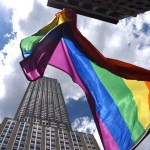
Pride comes before a fall

Hockey is one of those games, like lacrosse, that alters as it crosses the Atlantic. In Britain, if a man says he is a passionate hockey or lacrosse player, he may get a certain ‘Fnar fnar’ response. In North America by contrast, it would be most unwise to ‘Fnar fnar’ at your average hockey player. A good example comes in the form of Ivan Provorov. He is a big Russian-born ice-hockey player who currently plays for the Philadelphia Flyers in the National Hockey League. Not all readers will be following the NHL carefully, and I admit that I am teetering at the very edge of my knowledge as I type this. Still, the NHL grabbed my attention last week because Provorov became the latest victim of Big Gay’s overreach. Or to be precise, Big LGBTQI+’s overreach.

The war against words

The University of Washington technology department has banned the word ‘housekeeping’. Not because the ‘problematic’ noun is overtly ist (ableist, sexist, racist, ageist…; by now, you must know the ist list). No, because it ‘feels gendered’. Would that they’d simply banned housekeeping. I hate scrubbing the shower. This month, the University of Southern California’s School of Social Work proscribed the word ‘field’. ‘Field work’ might have unpleasant connotations for the descendants of slaves. (Sorry! Descendants of ‘enslaved people’. Nouns that reference persons – like, you know, ‘doctor’ – are reductive and dehumanising.) A ‘field of study’ is henceforth a ‘practicum’.

Sunak, Starmer and the Davos divide

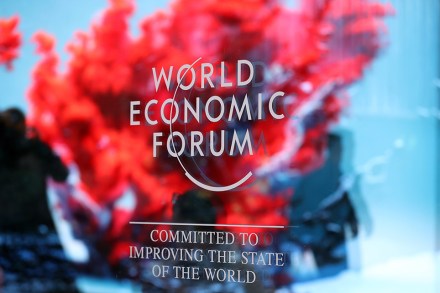
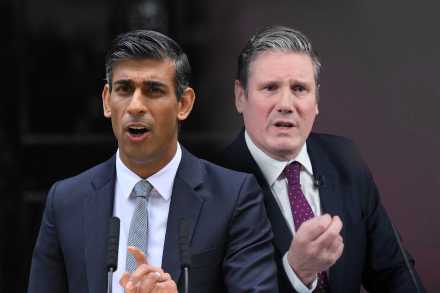
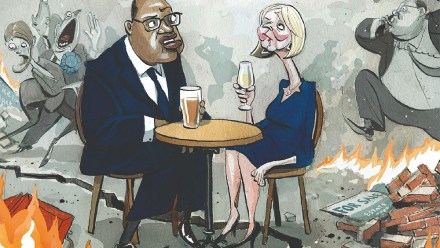
What self-respecting political leader would be seen in Davos? The World Economic Forum has become synonymous with sybaritic technocracy – champagne receptions, luxury chalets, £50 burgers and traffic jams of black limousines. David Cameron and George Osborne were in their element at these summits, sometimes staying to ski afterwards. But Rishi Sunak, a Goldman Sachs alumnus, has decided not to go this year, no doubt worried that his attendance would reinforce stereotypes he’s trying to dispel. Sir Keir Starmer has no such inhibitions. He’s making his debut as a Davos Man this week, alongside Rachel Reeves, his shadow chancellor. He will attempt to look like a prime-minister-in-waiting on a panel with Mark Rutte, the Dutch Prime Minister, about ‘repowering the world’.

Your child isn’t trans, she’s just a tomboy

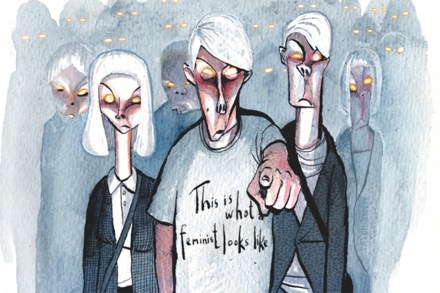
When the mist lifts and we can see clearly the carnage caused by the trans madness, and we blink and wonder what in God’s name we did to our kids, I hope we recognise the true heroes of the saga. By this I don’t mean the Jordan Peterson types or even J.K. Rowling, so much as the parents who somehow found the courage to stand up to their own children. Any child who makes the fashionable decision to identify as another gender is instantly surrounded by a supportive gang of fellow trans travellers – a ‘glitter family’, they call themselves – who’ll insist that it’s ‘literally dangerous’ for them to stay in touch with doubters. To question your child, when they tell you they’re trans, is to risk them rejecting you for good.

If not Biden, who?

Monday was Martin Luther King Jr Day in the United States. And this year it was most memorable for two events. The first was the unveiling in Boston of a new sculptural tribute to the civil rights hero. Unfortunately, depending on the position from which you view this inept work of public art, it resembles either a man holding his head in despair or some people holding aloft a giant turd. The 'Embrace' sculpture during its unveiling at the Boston Common, 13 January 2023 (Katy Rogers/Media Punch/Alamy) The second incident was Joe Biden doing what he does best. The President was careful not to politicise the day – apart from attacking the Republicans.

Everything in Britain is broken

It is rare to find an example of public art which one can applaud, unequivocally, but I think I have found one in London. The educational group Black Blossoms is running a series of lectures as part of the Art on the Underground scheme making the case that – as I had long suspected – photography is racist. This is true of colour photography (can we not find a different name for that!) just as it is for monochrome photography, in which black is the domain of shadows, the dark and what we might call ‘otherness’. The history of photography is rooted in white supremacy and subjugation, according to Black Blossoms, and it needs decolonising, sharpish. Quite right – and it is the job of all of us to swing the wrecking ball.

The genius of Adam Curtis’s TraumaZone

Topiary is the art of making something be something it wasn’t. This is achieved by subtraction. By clipping away everything about a yew bush that isn’t a swan, the topiarist creates a representation of that bird in living foliage. The topiarist’s swan is wondrous, but spare a thought for the clippings. Formless, meaningless to the human eye, they have meaning of their own. History is topiary. From a superabundance of data, the historian and his reader make themselves a story. The parts the narrative is constructed from stay: the rest, like foliage falling victim to the topiarist’s shears, is discarded. If one Wednesday morning W.E.

Are we kidding ourselves over Ukraine?

Optimism can be surprisingly hilarious. In my last novel, two spouses agree to quit the planet once they’ve both turned 80, and the book explores a dozen possible outcomes of their pact. No chapter made me chuckle at the keyboard more than ‘Once Upon a Time in Lambeth’ – in which the couple don’t kill themselves but live to 110 in perfect health because they eat their vegetables. Young people flock to their table for advice, as my protagonists grow only wiser and more physically riveting in old age. Meanwhile, modern monetary theory makes everything free. Limitless energy is derived from carbon dioxide. A new portmanteau religion, ‘Jeslam’, eliminates Islamist terrorism. The reader gradually twigs that this happy-clappy scenario is a piss-take.

If only Harry took after his grandfather

Do you remember the Duke of Edinburgh awards? Some of you may even have one somewhere. An award for map-reading, orienteering or otherwise managing to find your way around in the age before Google Maps and Uber. It was – and still is – a useful scheme, set up by a man who accepted his position as second fiddle, performed the role impeccably for decades and set up the awards to help millions of other people find their way. It was on my mind as I was reading the latest revelations from Montecito, California. For the memoirs of Harry Sussex are even worse than expected. If I was the head of Netflix, I would be hopping with rage that Harry had kept all his most snore-a-thon stories for Netflix only to deliver the real juice in his memoir.

Sunak vs Starmer: the race is on

There’s a new rule for members of Keir Starmer’s team on their WhatsApp group: no messages linking to opinion polls. It’s not because the Labour leader dislikes the figures. Labour polls consistently on about 45 per cent and the Tories on 25 per cent, which is landslide victory territory. The fear is that too much focus on such numbers will breed complacency. ‘We are a party scarred by its losses,’ says a member of Starmer’s office. Yet with the election expected next year, Labour and Tory MPs are talking less about whether Rishi Sunak can turn things around and more about the scale of Starmer’s victory. Will Labour have a majority of 20 or 200? It’s rare to find any MP, on any bench, who believes the Tories will win a fifth term.

Help me, I’m Scottish

I did not enjoy the Christmas festivities this year: I sang no carols, ate no turkey and failed to watch It’s a Wonderful Life. There were two reasons. First, I received my DNA heritage results from a company I’d bunged £100 or so back in the autumn. My family had been greatly looking forward to this event, hoping for a revelation that I was part Igbo or Hausa or, better still, related somehow to the unfriendly pygmies of the western mountains in Papua New Guinea. Meanwhile I was hoping to be 90 per cent English with the remaining 10 per cent Danish, as I have often considered myself to be distantly related to the Viking hero Ragnar Lodbrok, which may account for my political disposition.

Real memories aren’t ‘made’

If I could make a new year’s resolution for everyone in the English--speaking world, it would be that we all agree never to use the phrase ‘making memories’ again, or to think about life in terms of making memories, let alone post a photo with the hashtag #makingmemories. All of a sudden, all across the internet, it seems to me, merchandise has sprung up encouraging us to think of life as a ‘memory--making’ project: frames, filters and albums designed to capture and enhance every breathing moment. There are mats for lying babies on next to their age in months for memory-making photoshoots, though none I’ve seen yet for the other end of life: look how Granny changed through her nineties!

How to get nothing done

I sometimes wonder whether our government makes any decisions at all. In fact I’m trying to think of any area of public policy that is not the subject of a review, commission, inquiry or similar. The most charitable explanation for this trend is that it worsened in the coalition years. Whenever the Liberal Democrats and Conservatives couldn’t agree on anything they could always kick the matter into the long grass by commissioning a review. So much better than risking upsetting Nick Clegg. All this of course has a deep impact on the country, because it means nothing actually gets done. I am sure you will all remember the Casey review (2016). This was commissioned by David Cameron’s government from the admirable Louise (now Baroness) Casey.

A world of our own making

Two very brief excerpts from Radio 4 last week. First, my wife turned on her radio in time to hear an actor in the afternoon play utter the words: ‘But Bob, you’ve been helping young disadvantaged black kids all your life!’ At which point, she turned off. Two days later I switched on my car radio and the display announced a ‘radical updating of Oliver Twist’ and I had just enough time to hear an actor say something like: ‘Quick, come quick! Babatunde has been shot in de leg by de gangs!’ before I too turned off. They are nothing if not psychotically obsessive at Radio 4, I think. It is worth tuning in for three seconds every few hours at random just to see what gratuitous wokery they are spraying in our direction – before switching over to something else, anything else.

How to save the BBC

Towards the end of his life the art critic Hilton Kramer was overheard leaving a cinema with his wife. One of them said to the other: ‘Darling, from now on could we only see films that we’ve seen?’ I know the feeling. I find it almost impossible to watch most of the films that now come out, and have spent quite enough hours with serial killers on Netflix. In the same way that there comes a time when it is a greater pleasure to reread than to always read a new book, so perhaps it is the same with film and television. Yet I soon realised that there is a vast chasm in place of what I want to see. This first became clear when I was talking with a friend about Anthony Blunt. ‘Do you know A Question of Attribution?’ I asked, and it turned out he’d never heard of it.

Xi, Covid and seasonal schadenfreude

’Tis indeed the season to be jolly.  Over the holidays, we can all put our feet up to view a cracking remake of David and Goliath, ‘The Microscopic Nullity vs Winnie-the-Pooh’, in which a giant bear-like bully has been pushing around 1.4 billion people but cannot prevail against an opponent too tiny to be seen by the naked eye. Inverting the customary balance of power, the narrative arc is classically satisfying: a would-be omnipotent despot is driven to crazed distraction by the sneaky afflictions of the infinitesimal. I’m reminded of a favourite newspaper clipping: ‘Drunk tries to kill spider, sets house ablaze.’ Because you cannot lock up a coronavirus. You can’t censor a coronavirus or send a coronavirus to a re-education camp in Xinjiang.

The greatest threat to Holy Island since the Vikings

It’s hard to explain how sad it will be if, after Christmas, Defra officials ban fishing on Holy Island, also known as Lindisfarne, in the North Sea, where the Lindisfarne gospels were written and where men and women have fished for hundreds if not thousands of years. For some reason no one can quite work out, Holy Island has been placed on the shortlist to become a Highly Protected Marine Area – HPMA – in which no fishing of any sort is allowed. But banning all fishing will destroy the village; Lindisfarne, which has been inhabited since long before its most famous residents, St Aidan and St Cuthbert, set up there, will fade away. There’ll be tourists, but no actual community, no life. Even the Vikings didn’t manage that.