Columns

The great bee-smuggling scandal

The principal concerns of the electors vary rather more widely than the pollsters and pundits would suggest. One man in Guisborough – probably middle-aged, short of teeth, a little unkempt – suggested to me that the government needed to clamp down on foreigners importing bees into the country. This was being done covertly, he said. He himself had noticed a huge increase in the number of bees of late and – as a consequence of something he had read online – believed that this was clear evidence of smuggling. Why, I asked him, would people smuggle bees into the country? ‘That is exactly what I would like the authorities to find out,’ he replied.
Who will lead the Tories next?

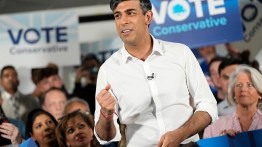
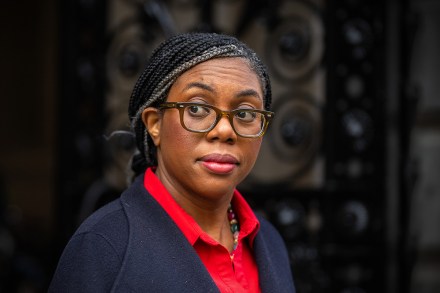
Rishi Sunak performed a mea culpa when his shadow cabinet convened on Monday, taking full responsibility for the election loss. There were, he said, lots of lessons to be learned. He tried rallying his team, reminding them it was time to knuckle down and prepare for the King’s Speech. When those around the table began agreeing, with some saluting Sunak’s performance during the campaign, Kemi Badenoch decided she couldn’t take it any longer. Isn’t it necessary, she asked, to say that the snap election had been a calamity, the Tory campaign had been even worse – and that it was about time to examine why?

History will judge Rishi Sunak kindly

Memorably sweeping statements tripping easily from the tongue have a habit of worming their way into assumptions we make and ending up as the judgment of history. The word ‘appeasement’ rather than the decisions Neville Chamberlain actually took have consigned the name of a defensible statesman to something approaching a term of abuse. ‘Milk snatcher’ did Margaret Thatcher immense damage. The ‘winter of discontent’ has become too easy a shorthand for the coinciding of deep-seated problems which Thatcher herself approached with great caution.

The Tories have only themselves to blame

I was amused the other week to read George Osborne’s Diary in this magazine. In it the man now in charge of giving away the British Museum’s collection recalled something John Major said to him in 1997. This was that the Conservative party ‘will never win while we remain in thrall to the hard right of our party’. It is news that the Conservative party ever was. Really this was a warning from Osborne that the centre-left tendencies of the Conservative party must be adhered to. Though it should be noted that there is a flaw at the source: citing John Major on electoral advice is like quoting a bankrupt on financial planning.

‘I have to forge my own path’: Rachel Reeves on her plans for the economy

Outside a café on the outskirts of Reading, Rachel Reeves is listening to the concerns of small-business owners. ‘Something that has affected us over the past couple of years is our relationship with Europe,’ says an attendee to nods from the others. ‘We end up not trading because it’s not worth it.’ Reeves sticks to the script that there will be no rejoining the EU (‘We’re not going to go back in, that ship has sailed’) but says that relations can be improved. The shadow chancellor is here to support the Labour candidate Yuan Yang, a former FT journalist. It’s one of the final stops on her campaign tour of the UK, which has ranged from Doncaster and Morecambe to Reading and Chipping Norton.

Calm down, it’s a joke

I have never been a contributor to Twitter, partly because my comments would not be subjected to the intensive hygiene and cleanliness vetting which goes on here, for example. Instead it would all spew out untreated and lumpily noisome, like a Thames Water pipe on to your nearest beach, and I would be toast within about 60 minutes. There are other reasons – it seems to me a convocation of obsessive, perpetually furious morons, plus I loathe its modernity in reducing the discussion of complex issues into 75 words of bile, usually ending ‘just like Hitler’ – but self-preservation is the main one.

Tory men are letting down women

Some of my good male friends, Tories, are sick of terfs. I can see it in their shifty eyes, in the way they won’t quite look at me when terfy issues creep into conversation, but stare gloomily at the skirting board. Terf stands for Trans Exclusionary Radical Feminist, and terfs are women who insist that you can’t change your biological sex, and that the whole notion that some humans are born in the wrong body is not only daft, but catastrophic for our culture and our children.

David Tennant’s pride and prejudice

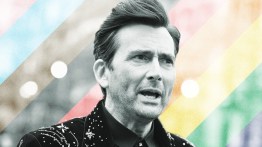
As all non-bigoted readers will know, this is the holy and most ancient month of Pride. The time of year when – like our ancestors of yore – we bedeck our banks, supermarkets and public buildings with the latest variant of the rainbow flag. For a while now, the flag has kept coming with added details, such as circles, triangles, squares and other ways to provoke epilepsy, all because some people felt the old ‘inclusive’ flag was not inclusive enough. Each year something happens that confirms the entire thing has got wildly out of hand So it had these extra bits added to celebrate everyone from gay men to asexuals and anything in between.

What’s the worst that can happen for the Tories?

When Rishi Sunak stunned his cabinet colleagues by calling a snap election, they feared the worst. Fast forward a month and what they originally saw as the worst-case scenario now looks like quite a good result. At the time, losing the election but retaining 200 MPs seemed plausible. While the polls vary, the consistent theme now is that the Conservatives are on course for their worst defeat in history – and could end up with as few as 50 MPs. The campaign has been dominated by gaffes, from Sunak’s rain-drenched election announcement to the D-Day debacle. And this week, most damaging of all, the gambling scandal. Five Tory figures (two of whom have been suspended as candidates) stand accused of using inside information to bet on the election date.

Milkshake me!

Nine days of campaigning to go and I haven’t been milkshaked yet. I’ve hung out near McDonald’s in the hope – anything to get ten seconds on the evening news. It seems that in my constituency, the rank, sanctimonious, narcissistic and dim-witted monomaniacs of the new, kind and gentle left are somewhat thin on the ground. Nigel Farage copped a milkshake early on, and members of rival political parties and the BBC tried to pretend they were concerned. It didn’t work with theBBC because when the side-splitting but fabulously unfunny comedienne Jo Brand suggested it would be better to throw battery acid at Farage, she was not sacked or even suspended.

Tory voters want to punish their party – and themselves

For progressive onlookers abroad, the Labour landslide now projected next month will seem a cheerful counterweight to the EU parliamentary elections’ lurch rightwards and will represent a huge, refreshing popular shift in Britain to the left. Yet according to at least one recent poll, this perception would be statistically mistaken. Add the Conservative and Reform support together, and on the ground the British left and right are neck and neck. But never mind the numbers. The notion that an historically extraordinary Labour majority would betoken a renewed British enthusiasm for socialism is off the beam. Where is the emotion in this election? What few passions July’s contest stirs fester almost exclusively among fed-up former Tory voters. They’re furious.

Cowards vs culture 

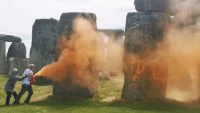
For some while I have marvelled at the way in which artworks seem to have become the focus of hatred for people wanting to say something banal. If you wish to make a point about politics, the climate or anything else, there are a range of ways to do it. But the least effective must surely be to glue yourself to a painting, throw soup on it or attack it with a knife. Nonetheless, artworks have become the means to communicate certain rote-like messages – with the violence stepping up a notch each time. It is two years since a couple of morons from Just Stop Oil decided to throw a tin of soup at Van Gogh’s ‘Sunflowers’ in the National Gallery. A glass cover protected the painting.

How to lose voters

During the 1983 general election, I campaigned every single day with great zeal and avidity. I knocked on quite literally thousands of doors enquiring of people if we, the Labour party, could count on their support on 9 June. I would start at 9 o’clock and finish 12 hours later, taking a break at about 7 p.m. because interrupting Coronation Street was considered a vote loser. The closest the party has to a geographical base are the poorer parts of our eastern seaboard I did all this with my hair spiked up in jagged tufts held in place by gallons of hairspray, and with a little bit of eyeliner and maybe a streak of blusher on my cheeks. My favoured shirt was fluorescent blue stripes on a pale blue background. My jeans were ripped at both knees.

Meet Surrey’s ‘M&S movers’

On a street in Camberley, Surrey, a pensioner stands in the doorway, rollers in her hair, staring with some bemusement at the Liberal Democrat canvasser in front of her. Her preparations for Ascot have been interrupted. ‘I definitely won’t be voting Conservative. I used to be a member, but you look around now and, no!’ she explains. Not that she thinks her vote will count for much: ‘My husband used to say you could put a blue rosette on a monkey and they would win round here. It is a very affluent area – there is a lethargic habit of voting Tory.’ The party may end up with dozens of MPs, slaying several Tory big beasts in the process It wasn’t a monkey but Michael Gove who stood in this true blue constituency of Surrey Heath last time.

There’s something very wrong with children’s history books

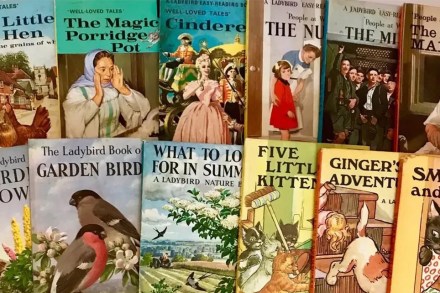
The first editor I worked for was Charles Moore and, like many of his old and ageing former staff, I still think of him as the boss. We’re like sleeper agents, the remaining skeleton crew of the old Daily Telegraph, ready to rise up at any moment and defend the right to hunt with hounds. I’m programmed to obey, so when Lord Moore recommended, in this magazine a few years ago, a series of out-of-print Ladybird history books for children written by a man called Lawrence du Garde Peach, I instantly bought the lot for my son: L. du Garde Peach on Cleopatra, Alexander the Great, Julius Caesar, Kings Alfred, Richard and Henry VIII. From Ramses II through to Queen Victoria, the fiercest humans are portrayed as giant babies Now I owe Lord Moore more than ever. Without L. du G.

The trouble with calling everyone ‘far right’

There is a favourite Fleet Street story about the legendary Sun editor Kelvin MacKenzie. While editing the paper, he discovered that his horoscope writer was recycling copy. He decided to dispense with her services in a letter that opened: ‘As you will no doubt have foreseen…’ You do not have to hold claims to being a mystic to predict certain things. The results of last week’s EU elections were easily predictable, as was the response from much of the British media. As I uncannily prophesied in last week’s column, the BBC’s Europe editor, Katya Adler, went with: ‘The far right is on the march.’ Elsewhere, she offered the claim that people across the continent often say: ‘This feels like the Europe of the 1930s.

The return of Douglas Alexander

It’s a sunny Friday afternoon in Gullane, an affluent seaside town on the Firth of Forth. For political campaigners, golden hour is the perfect time to speak to middle-class locals working from home at the end of the week. A huddle of Labour campaigners go door to door, ticking off names on a clipboard and shouting numbers to one another. ‘Eight,’ says one canvasser, smiling. She’s reporting back an undecided voter’s answer to the question ‘From one to ten, how likely are you to vote Labour on July 4?’ ‘We are getting a lot of“I have always voted SNP but am now voting for you”’ The candidate is Douglas Alexander, a former cabinet minister and one of several veterans of the last Labour government who hopes to return to frontline politics next month.

Why Britain isn’t following Europe rightwards

My father was fond of telling anyone who would listen that Britain would never entertain fascism because we all had a sense of humour which enabled us to see the ridiculousness of its hastily fabricated myths and legends. By contrast, mainland Europeans had no sense of humour at all and would happily follow any strutting oaf in a spittle-bedecked uniform. So, while the Germans had Hitler, the Spanish Franco and the Italians Mussolini, the closest we came was Roderick Spode and his Black Shorts, a hilarious creature who P.G. Wodehouse modelled on the scarcely less risible Oswald Mosley.