Columns

It’s not just Ashya King’s parents who the authorities despise

My first act upon returning from my holiday was to sign the online petition to have the supremely irritating children’s cartoon figure Peppa Pig banned from television. I have always found the creature half-witted, arrogant and sinister, and the tune which accompanies her exploits is both grating and didactic. Further, even allowing for the usual anthropomorphic licence employed by cartoonists, this Peppa does not remotely resemble a proper pig, and her snout is worryingly two-dimensional. She gave me hours of misery when my daughter was a toddler, although not quite so much as Balamory — a programme which made me feel physically unwell.

‘Rape is rape’ serves no one well, least of all rape victims

When Mary Jane Mowat remarked recently that rape conviction statistics would not improve ‘until women stop getting so drunk,’ the retired Crown Court judge knew there would be a row. It followed. The judge, knowing that only 60 per cent of rape charges that reach court end in conviction, was making a narrow point. There are big evidential difficulties in pitting the claimed recollection of someone who says she was too drunk to know what she was doing against the claimed recollection of someone who plainly wasn’t. But the row spread wider, as it keeps doing, into the moral status of taking advantage of an inebriated woman.

Is clicking on Jennifer Lawrence’s naked pictures really as bad as hacking and distributing them?

[audioplayer src="http://traffic.libsyn.com/spectator/TheViewFrom22_4_Sept_2014_v4.mp3" title="Isabel Hardman, Emma Barnett and Jamie Bartlett discuss the leaked photos" startat=1312] Listen [/audioplayer]‘If you click on Jennifer Lawrence’s naked pictures,’ said the headline on the Guardian’s website, ‘you’re perpetuating her abuse.’ That gave me pause. Even though I haven’t. In all honesty, I haven’t even had the opportunity, and I thought I actually followed quite a lot of invasive perverts on Twitter. But if I had, and I had… well, just clicking? Really? The creepy mouth-breather who hacked them, sure. Definite abuse there. Might as well be hiding behind her curtains. And the people who circulate them.

David Cameron’s next big European mistake

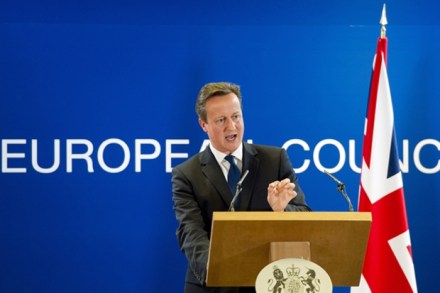
[audioplayer src="http://traffic.libsyn.com/spectator/TheViewFrom22_28_August_2014_v4.mp3" title="Isabel Hardman and Mats Persson discuss Cameron's European way " startat=830] Listen [/audioplayer]David Cameron loathes European Union summits, and with reason: they seldom go well for him. He has been ambushed by the French, betrayed by the Germans, seduced by the Swedes and even outsmarted by a Luxembourger — Jean-Claude Juncker, whom he tried to stop becoming President of the European Commission. He’ll meet them all again this Saturday, in Brussels, as they begin divvying up the plum jobs under Juncker’s presidency. As usual, the odds are stacked against Cameron. By now, every EU member has nominated a commissioner to work in Brussels for the next five years.

Frankie Boyle is a cowardly bully, and I’m ashamed I ever stood up for him

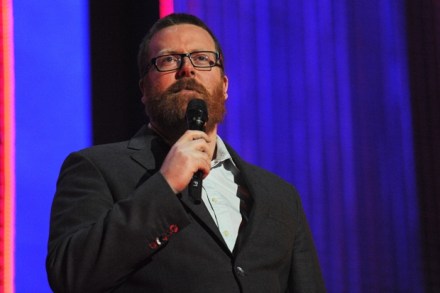
‘Outspoken comic Frankie Boyle has called on the BBC to sack “cultural tumour” Jeremy Clarkson.’ Can anyone tell me what’s wrong with this opening sentence from a recent news report? Clue: it’s that first word. In order to qualify as ‘outspoken’, surely, you need to be the kind of person who fearlessly, frequently and vociferously sets himself in opposition to the clamour of the times. Does demanding that a public figure lose his job for some mildly sexist/racist/homophobic/ableist remark fit into that category? Hardly.

David Cameron’s fog of war

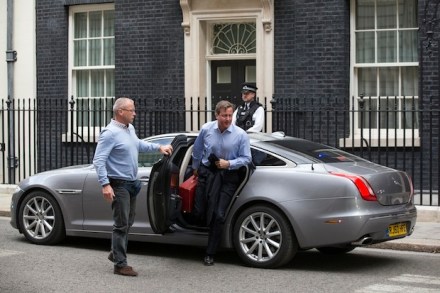
It was clear that things were going wrong for David Cameron when he had to say that his position on Iraq was ‘very, very simple’. To use that phrase was to admit that things had become very, very muddled. They remain so now. The Prime Minister started the week with a robust line on the bloodshed in Iraq. He declared the start of a ‘generational struggle’ against Islamic extremism that would last for ‘the rest of my political lifetime’. Michael Fallon, his Defence Secretary, gave a Churchillian address to airmen in Cyprus, informing them that the British mission in Iraq was not simply humanitarian and would probably last for months. An order was given for RAF Tornado fighters to leave Norfolk and jet off towards this new theatre of war.

Romance isn’t a religion. Stop looking for The One and join The Queue

[audioplayer src="http://traffic.libsyn.com/spectator/TheViewFrom22_21_August_2014_v4.mp3" title="Julie Burchill and Louise Mensch discuss whether 'The One' exists" startat=1773] Listen [/audioplayer]Pity the modern starlet. Be she steaming-hot pop-tart or reality-show show-off, her range of emotional experiences will, thanks mostly to the gentlemen of the press, be strictly limited. She will have ‘lonely hells’ (often but not always linked to ‘drug hells’), ‘sex romps’ (sometimes ‘three-in-a-bed’) and watch her life ‘spiralling out of control’.

Julian Assange is a narcissist and a nut — and if America comes for him we should take his side

Poor Julian Assange. Call me a contrarian but I’m genuinely starting to feel sorry for the guy. He’s just made such a mess of his life, hasn’t he? And with such promise. Only a few short years ago he was the world’s most prominent anti-everything activist, with hair like an indie guitarist, feted and worshipped wherever you might find hot Scandinavian revolutionaries, smug old men who work for ‘theguardian’ and Jemima Khan. Now he’s a hermit with hair like Noel Edmonds who lives in a cupboard. It’s a hell of a fall. Most crushingly, he’s become a figure of fun. Perhaps you noticed him holding a press conference last week, to announce that he might soon leave the Ecuadorian embassy but probably wouldn’t, or something.

The surer we are that machines can think, the less sure we’ll be about people

Having written (for a Times diary) a few sentences about consciousness in robots, I settled back to study readers’ responses in the online commentary section. They added little. I was claiming there had been no progress since Descartes and Berkeley in the classic philosophical debate about how we know ‘Other Minds’ exist; and that there never would be. A correspondent on the letters page referred me to Wittgenstein’s treatment of the subject and so I studied his remarks. I have to confess they are, to me, unintelligible. But I cannot let the matter rest. My earlier thoughts had been prompted by newspaper reports of the adventures of a talking, hitchhiking Canadian robot called Hitchbot. Every time such a ‘Whatever will robots learn to do next?

It costs £34,000 to become an MP. No wonder they expect higher pay

Mark Simmonds has been in politics long enough to know not to expect much sympathy from his constituents. He resigned as a Foreign Office minister this week because his £89,435 ministerial salary was not enough — at least, not enough for him to keep a family home in London. Many of those who live and work in the capital may sympathise with this struggle, but hearts will not be bleeding in his constituency, Boston and Skegness, where the average wage is £17,400. So he is not seeking re-election, and will leave politics next year. Simmonds was one of the lucky ones. He managed to find enough money to make it into parliament in the first place, which many would-be MPs cannot.

You’re never too old, they say. But I am

For my 49th birthday treat, I went to see Shakespeare in Love at the Noël Coward theatre in London. Expensive but worth it: spry, funny, uplifting and moving but also, for all the surface froth, quite a deep meditation on the creative process and the enduring power of art. What everyone secretly loves best about it, though, I suspect, is the way it so shamelessly flatters their intelligence. We’re all aware that Shakespeare wrote a sonnet that begins ‘Shall I compare thee to a summer’s day?’; that Marlowe was stabbed to death in a pub brawl; that Malvolio wears yellow stockings and cross garters. This is basic, middlebrow general knowledge.

It’s OK to mention anti-Semitic attacks – but not who commits them

I was attacked by a swan the other day, as I walked along the bank of the River Stour in Kent. The creature climbed out of the water and lunged towards me, wings puffed up, making this guttural and hate-filled coughing noise. I kicked out at its stupid neck and told it to fuck off and the bird backed away towards the river, still making that demented hissing, like a badly maintained boiler. At first I was mystified as to how I had gained its enmity. I wasn’t near its mate and still further distant from its sallow and bedraggled idiot children. Nor had I advanced towards it, or even given it a threatening glare. And then the horrible realisation dawned on me. The swan had attacked me because it believed — mistakenly — that I was Jewish.

Tread carefully! Your garden is saturated with racial meaning – and so is Ikea

Is your life saturated with racial meaning? The most common answer to this question, when I ask friends and acquaintances, and sometimes people in the street going about their business, is: ‘Your inquiry makes no sense whatsoever. It sounds like the sort of pretentious and thoroughly bogus question dreamed up by some idiotic sociology lecturer in a third-rate polytechnic. Now go away, I have lost my place in the queue at Burger King and will have to wait ages for a bacon double cheeseburger.’ The correct answer, however, is ‘yes’. Our lives are saturated with racial meaning — I have it on good authority. I don’t know what it means, but nonetheless we are all soaking wet with racial meaning, all of us. You especially, probably.

I found my inner fascist in a letterbox

There’s a little bit of a fascist in all of us. For some, the tragedy of human want may provoke an impatient urge to expropriate and centralise for the more efficient use of economic resources. Others, alarmed at the world’s exploding population, may be attracted by calls for a programme of mass compulsory sterilisation. But for me it’s letter boxes and street numbering. I want order. I want consistency. I want standards. And I want eye-watering penalties for property owners who try their fellow Britons’ patience and waste our time by making their addresses impossible to find.

You’ll mock me, but I have to ask: why don’t any of my friends have holiday homes?

This is to be one of those columns that makes the writer faintly wish there wasn’t an internet. It would be one thing merely in print — ephemeral, swiftly forgotten, to be stumbled across only by like-minded individuals en route from Charles Moore to Taki — but online I fear there may be sniggering. ‘What planet is he on?’ they will be asking on Twitter, but then, I suppose, they always are. The fact is, there’s been a question preying on my mind these last few weeks and I’m going to be bold, and ask it. You may snigger, you may mock and you may sneer, but that won’t make my question any less valid. So here goes. I’ll be nearly 40 in a couple of years. And I keep being told that I live a life of relative privilege. So.

Why this could be David Cameron’s last summer in politics

[audioplayer src="http://traffic.libsyn.com/spectator/TheViewFrom22_31_July_2014_v4.mp3" title="James Forsyth and Alex Massie discuss the election and the Scottish referendum" startat=1808] Listen [/audioplayer]At this time of year, whenever you see a British politician looking particularly busy, you can take it as a sign that they are about to go off on holiday. In this puritanical age, nearly all political leaders are afraid to be seen enjoying themselves, and few dare take a break without making sure we all know they’ve earned it. Both David Cameron and Nick Clegg are splitting their summer holidays in two this year to avoid being accused of slacking off. Any sensible politician should make sure of a proper rest this summer.

I was a slut too, Prime Minister, and I think you’re giving in to PC nonsense

Is it ever appropriate to use the word ‘slut’? I always take my lead from the Prime Minister and he has assured the country that it is never appropriate or acceptable, so henceforth I shall desist from employing the term. If, one evening, I come home from work to find my wife, naked, cheerfully and drunkenly providing sexual gratification to the entire first team squad of a Championship-level football club — Wigan Athletic, say, or Norwich City — I would simply remark: ‘How refreshing it is to see a woman unshackled from the oppressive sexist mores of our age and able to express herself in such an uninhibited manner. Would you like a cup of tea?’ The word slut would not pass my lips.

You owe it to yourself to visit John Clare country

This has been a terrible year for horseflies. It’s bad enough if you’re human: often by the time you swat them off the damage has already been wrought by their revolting, cutting mandibles and it’s not till 24 hours later, I find, that the bite reaches peak unpleasantness, swelling into a huge itchy dome which somehow never quite generates the massive sympathy you feel you deserve. But obviously it’s worse if you’ve no hands to swat them with, as Girl and I were reminded when we went out for a summer ride. Every few yards our mounts shuddered and twitched and twisted their heads back under sustained and vicious assault from the evil clegs. Sometimes, you could see the blood. ‘Kill them! Keep killing them!

Parliament’s next crisis: a dangerous shortage of middle-aged men

[audioplayer src="http://traffic.libsyn.com/spectator/TheViewFrom22_24_July_2014_v4.mp3" title="James Forsyth and Paul Goodman discuss why so many MPs are leaving the Commons" startat=873] Listen [/audioplayer]The House of Commons is off for the summer. But few MPs and ministers expect to make it through to September without the House being recalled because of the grim international situation. This has been the worst year for the West in foreign policy terms since 1979.

Why I’m against posthumous pardons, even for Alan Turing

Ross Clark is a columnist I try to read because he is never trite. So I was sorry to miss performances of his musical play staged earlier this month. Shot at Dawn is about a sister’s quest for a recognition (after his death) of her brother, Harry Briggs, a soldier in the Great War who was executed for desertion. The play is sympathetic to the idea of posthumous pardon; coupled with this, it’s a lament that society punishes people without trying to understand why they do what they did. A second theme emerges: homosexuality, and the difficulty (then) of living with this in a world that does not understand. I suppose you could say that Ross’s play is about looking back not in anger but in sympathy. Here’s a heresy, then.