Columns

The Birmingham ‘Trojan Horse plot’ is — like WMD — a neocon fantasy

[audioplayer src="http://traffic.libsyn.com/spectator/TheViewFrom22_12_June_2014_v4.mp3" title="Matthew Parris vs Douglas Murray on the Birmingham Trojan Horse plot" startat=55] Listen [/audioplayer]I can remember where I was when Colin Powell presented to the United Nations his evidence for the existence of Saddam’s weapons of mass destruction. I was taking a friend to an emergency medical consultation at Victoria station in London and while she saw the doctor I settled down in the waiting room to watch the presentation on TV. I found it compelling.

Now even Fifa’s dinosaurs have learned to cry racism

Are all white women really prostitutes who should be avoided, as some children at those schools in Birmingham were apparently informed? This is obviously a delicate, if not rather fraught, area and one should tread carefully for fear of giving offence. I have given the matter a lot of thought and have tried to fashion a sort of middle way, amenable to both sides in the debate. So, while everyone might agree that white women are to be avoided wherever possible, it seems to me to be overstating the case to characterise them all as prostitutes. I am not even certain that one could reasonably describe ‘most’ white women as being prostitutes. The Queen, for example, is not a prostitute, and nor, to my knowledge, is the Cambridge professor of classics, television’s Mary Beard.

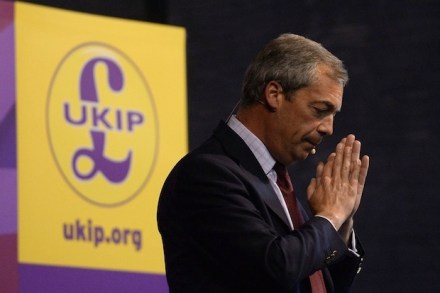
Nigel Farage is becoming a moderniser

[audioplayer src="http://traffic.libsyn.com/spectator/TheViewFrom22_5_June_2014_v4.mp3" title="James Delingpole and Michael Heaver debate whether Ukip stands for anything" startat=1222] Listen [/audioplayer]There are many words that you might associate with Nigel Farage, but moderniser probably isn’t one. Yet the Ukip leader is embarking on the process of modernising his party. He has concluded that it cannot achieve its aims with its current level of support. So he is repositioning it in the hope of winning new converts even at the risk of alienating traditional supporters. If this sounds similar to what David Cameron did after winning the Tory leadership in 2005, that’s because it is.

Why don’t my generation care if Britain fails?

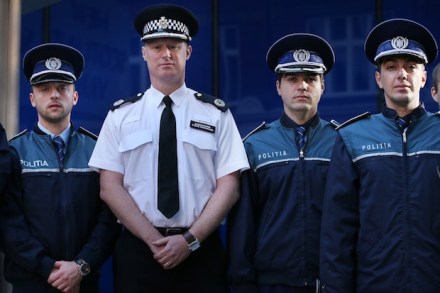
In my late thirties, I have become patriotic. It’s one of those things that’s happened with age, like cooking to freeze, plumping cushions and thinking policemen look too young. My heart stirs at the sound of a marching band and at the thought of great British inventions: the London sewer system, steam engines, float glass. On the slimmest pretext I’ll start lamenting the decline of our great industries and tell you that too often our brightest ideas are developed abroad. On most subjects, as we get older, my friends and I agree. On marriage and mortgages; grey hair and aching knees, but on Britain and its place in the world I am alone. Just a squeak from me in support of Britain, or British business, and my friends look taken aback, then almost appalled.

Does Ukip believe in anything any more?

[audioplayer src="http://traffic.libsyn.com/spectator/TheViewFrom22_5_June_2014_v4.mp3" title="James Delingpole and Michael Heaver debate whether Ukip stands for anything" startat=1222] Listen [/audioplayer]I’m worried about Ukip. It’s possible that my concerns are entirely misplaced but let me give you some examples of what I mean. First, a tweet from Ukip’s Newark candidate Roger Helmer (whose heroic stance on energy and climate change I greatly admire): ‘Meet Robert Jenrick, the Tory candidate for Newark: Gilded youth. Posh Tory boy. London property millionaire.

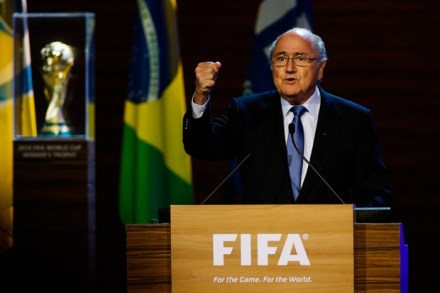
Did anyone really think that Qatar won the World Cup fairly?

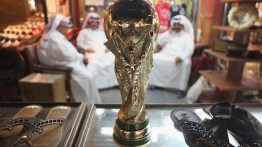
I suppose the appalling shock to the soul that was occasioned by the allegation that Qatar bribed its way to hosting the 2022 World Cup was exceeded only by the startling suggestion that it was Fifa’s African delegates who trousered nearly all of the illicit money on offer. Who’d have thought, huh? The money was doled out by the Qatari crook Mohammed Bin Hammam, according to leaked emails obtained by the Sunday Times. Mo did not find bribing the Africans terribly difficult, it would seem. My favourite of the various requests for money from these venal and grasping and not terribly bright Third World panjandrums was that of a chap called Adam ‘Bomber’ Mthethwa, of Swaziland: ‘I am in dire need of finance in the region of $30,000.

Why no one’s ready to oust Nick Clegg (except the Tories, of course)

[audioplayer src="http://traffic.libsyn.com/spectator/TheViewFrom22_29_May_2014_v4.mp3" title="James Forsyth and Isabel Hardman discuss the Lib Dem's internal warfare" startat=818] Listen [/audioplayer]Nigel Farage is pretty good at giving people hangovers, and on Monday morning all three Westminster party leaders woke up with one. Ukip’s victory in the European elections represents the first time in more than a hundred years that Labour or the Tories had not won a nationwide vote. It showed that the old allegiances on which our politics are predicated have broken down. It also reminded us that none of the parties are national affairs any more; Labour came third in four regions, as the Tories did in six.

Labour has proved that it speaks for London – and nowhere else

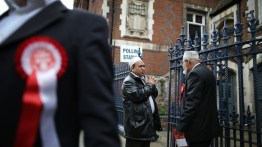
So, now almost all the votes have been counted — except for those in the Islamic Republic of Tower Hamlets, where the vibrant and colourful political practices of Bangladesh continue to keep the returning officers entertained. Allegations of widespread intimidation of voters at polling booths, postal voting fraud and a huge number of mysteriously spoiled ballot papers; so much more fun than the usual dull, grey and mechanistic western electoral procedure. You wonder, looking at the exotic political fervour of Tower Hamlets, how on earth the British people could be so mean-spirited as to have developed this sudden animus against immigration. White British people now make up less than one third of this exciting, go-ahead borough; how they must love it there.

Elliot Rodger and the Hollywood ending

I’ve found myself strangely drawn to the videos made by the 22-year-old assassin Elliot Rodger just before he went on his killing spree in his university town of Santa Barbara, California, last week. In a series of stabbings and drive-by shootings Rodger killed seven people, including finally himself, and wounded 13 more. The son of a film director, he had spent the first few years of his life in England, moving to America at the age of four. Rodger had been preparing for his murderous spree and made a series of videos, many of which are accessible on the internet as I write. The last was recorded by himself the day before his attack. He sits parked in his car, arranged so that the sun, low in the sky, spotlights his face in an orange glow.

The truth about being a politician’s child

It was a Friday morning in 1992, Britain had just had an election, and I was on an ice rink. No special reason. You’re in Edinburgh, you’re a posh teenager, it’s the Christmas or Easter holidays, weekday mornings you go to the ice rink. It was a thing. Maybe it still is. I was only quite recently posh at the time, having moved schools, and I was — in both a figurative general sense and literal ice-skating sense — still finding my feet. My new boarding-school life was pretty good, though. The way you went ice-skating in the holidays was a bit weird, granted, but you could smoke Marlboro at the side and it was a chance to meet girls. Even better, they were girls’-school girls, who had nobody to compare you against. Always my favourite.

I’d rather have a German next door too — and I have the figures to show why

Should we be worried about the vast numbers of German-born people living covertly in the United Kingdom? The Office for National Statistics estimates that in 2011 some 297,000 Germans were resident here, the fifth largest non-British-born contingent (after Indians, Poles, Pakistanis and the Irish respectively). What the hell are they all up to? Sitting in smartly furnished homes, biding their time, and waiting, waiting. That’s what I suspect. A report in the Guardian a while back suggested that our German community tended to ‘stay under the radar’, an ability which mercifully eluded them 70 years ago.

In praise of cyberchondria

There’s something perversely satisfying in discovering that your children have inherited your vices. That’s why I was so quietly pleased the other evening when Boy came to see me petrified that the huge fat spider with the sinister body-markings on the wall above his bed was in fact a deadly false widow with a bite — so the internet tells us — whose symptoms can range from ‘feelings of numbness, severe swelling and discomfort to various levels of burning or chest pains’. Though I’m not personally scared of spiders, I could most certainly claim proud authorship of the catastrophist tendencies Boy was displaying here. Also — being a fellow cyberchondriac — I was more than happy to indulge his urge to go straight onto the web (ho! ho!

How the Suzuki method changed my life

Do you ever wonder, as your little darling balks at doing her violin or piano practice again, what all the pain is for? All those battles, and then when she escapes your clutches she’ll give it up. In later life the blanket of amnesia will fall over those childhood years and it might be as if she’d never played at all. I learnt the violin by the Suzuki method from the age of three until about 14. It was a newish fad back then in London, although Shinichi Suzuki, the movement’s founder, was in his eighties and had been teaching in Japan since the war. Suzuki’s idea was simple and had come to him as he watched toddlers learn to speak: start a child young enough and he will learn music the way he does language — naturally and easily.

Nick Clegg’s weird war with a former Gove adviser

[audioplayer src="http://traffic.libsyn.com/spectator/TheViewFrom22_15_May_2014_v4.mp3" title="James Forsyth and Miranda Green discuss Nick Clegg's war with Dominic Cummings" startat=590] Listen [/audioplayer]We’ve come to expect strange things from coalition government, but the events of the last few days have been particularly odd. On Saturday, several newspapers contacted the Department of Education about a story claiming that its budget was in chaos. Officials set about drafting a clear rebuttal. But this was vetoed by David Laws, the Liberal Democrat schools minister, preventing his department from denying a damaging story. This act of self-harm was just the latest twist in the spat between the Liberal Democrats and Michael Gove’s former adviser, Dominic Cummings.

My application to be chairman of the BBC

To: Karen Moran, HR Director, BBC Dear Ms Moran, I have decided to give up on the gardening this year, after a number of dispiriting setbacks. Last year I invested a fairly large amount of money, and about four hours per week, in trying to grow vegetables. But despite the fence and the pellets and the presence of a large plastic falcon called ‘Mr Roberts’, almost all of my crop was eaten by wild things. Woodpigeons, rabbits, caterpillars, slugs etc. I once saw a woodpigeon eating some of my kale while perched on Mr Roberts’s head, a terrible indignity for such a proud and fierce bird. In the end I had about 20 courgettes, and nobody in my family is fond of courgettes. So henceforth I will go to Morrisons for my vegetables, like I used to do.

Scotland’s fate is more important than David Cameron’s

‘It is never difficult to distinguish between a Scotsman with a grievance and a ray of sunshine.’ So wrote P.G. Wodehouse, and he wasn’t just talking about nationalists. And right now, that thunderous cloud is me. What I would like, you see, is for English pundits to stop connecting with the Scottish independence debate merely in terms of what it means for David Cameron. It’s an interesting question the first time, and not long ago my colleague Matthew Parris crafted a must-read column out of the idea in the Times. Otherwise smart and sensible people keep wanting to bang on about nothing else, though, and it makes me want to chew rocks. ‘Will Cameron have to go if he loses Scotland?’ they say, which is the cue for other people to say ‘Yes!

Why Gary Barlow should hang on to his OBE

‘Strip him of his knighthood!’ Or life peerage, or CBE, OBE — or whatever. The cry goes up with a kind of automaticity these days, and with increasing shrillness. As I write, elements in Fleet Street are hyperventilating about Gary Barlow’s OBE. Barlow and two other members of the band Take That are reported to have avoided paying tens of millions of pounds in tax by investing in the Icebreaker Management scheme, deemed by HMRC to be a vehicle for tax avoidance. Note ‘avoidance’. Steer clear of the word ‘evasion’ because there has been no suggestion of criminality: Mr Barlow and others in his band are threatened only with a hefty bill for unpaid tax. And a fat lot it will do my own media profile to defend him.

Meeting George Osborne at Waterloo

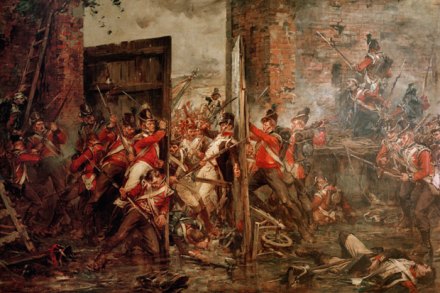
The defence of Hougoumont is one of the great British feats of arms. If the farmhouse had fallen to Bonaparte’s forces during the battle of Waterloo, Napoleon’s 100 days would have become a French 100 years. But history has not been kind to Hougoumont; it fell into disuse as a farm at the end of the last century and has become increasingly dilapidated. Now, however, Hougoumont has an unlikely champion: the Chancellor of the Exchequer. George Osborne first visited the site two years ago and was shocked by what he found. Souvenir hunters were simply removing bricks from the building. Osborne is a bit of a battlefield buff — he tries to visit a US Civil War site every time he goes to Washington for an International Monetary Fund meeting.

Being rich makes you mean: here’s proof

It’s all the rage these days to worry about the growing gap between rich and poor. Our fretting was fuelled by Capital in the 21st Century, by the French economist Thomas Piketty, which claims to show that over time this gap will grow inexorably. But we’ve been agonising about equality for aeons, and for aeons arriving at the same stand-off between rich and (relatively) poor. Here’s how the argument goes: those who don’t feel rich begin by saying that it’s disgusting how much of the world’s total wealth is owned by a small minority. Globally, the richest 10 per cent hold close to 90 per cent of the world’s assets. It’s just wrong, they say. To which the rich, aggrieved, reply: ‘Why? What’s wrong per se with being wealthy?

Without Paxman, the BBC will have just one interrogator: John Humphrys

In a double blow for the beleaguered BBC, the corporation has lost three of its most compelling attractions in little more than a month: the Newsnight presenter Jeremy Paxman, and Susanna Reid’s legs. Paxman has said he has had enough and announced his retirement from the thinly viewed current affairs programme. Susanna Reid’s legs have made their way over to ITV for its even more thinly viewed breakfast show called ‘Phwoar, Wake Up and Have a Look At This’ or whatever. The legs have attracted criticism for spending a substantial proportion of the show hidden from view under a desk while the rest of Susanna Reid jabbered about something with a slight smirk on her face in full view of the camera.