Cinema

The invisible man | 2 May 2019

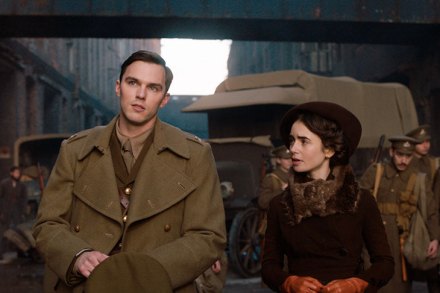
Tolkien is a biopic covering the early life of J.R.R. Tolkien (Nicholas Hoult) and it is not especially memorable. I’m even forgetting it as I’m trying to remember it. Yes, it’s one of those. Come back, come back, I need to remember you at least until the end of this review. But, no, it’s fading, fading, fading. Still, I’ll do what I can before it is fully gone, which may happen any minute now. This is quite the race against time, in fact. So, quickly, quickly. The film opens in 1916, during the first world war, with Tolkien, then 24, on the front line at the Battle of the Somme. As directed by Dome Karukoski, the horror of the battlefield is interwoven with imagery from Lord of the Rings — mythical characters thundering past on horseback etc.
Guns, Puccini and sex in the china cupboard

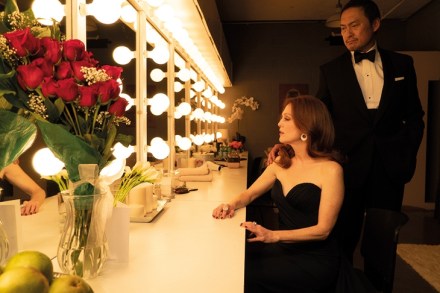
Bel Canto is an adaptation of the Ann Patchett novel first published in 2001, which I remembered as being brilliant and unputdownable, even if I recalled only a few of the details — hostages, an opera singer; that was about it. So I found it on the bookshelf and read it again, which was daft. The book is brilliant (and unputdownable) and now I can’t come to the film without comparing them, which is unfair and not helpful. But I’m going to say it anyway: this isn’t as good as the book. Not nearly.

Men behaving very badly

Fans of Paolo Sorrentino’s Il Divo, The Great Beauty (which won an Oscar) and his HBO series, The Young Pope, will have been keenly anticipating Loro, his take on the life and times of Silvio Berlusconi, the media tycoon and former Italian prime minister who has been involved in one lurid scandal after another. But if you were expecting some kind of blistering take-down, or satire, it isn’t that, and if you were expecting to somehow get under Berlusconi’s skin, heaven forbid, it isn’t that either. Hard to say what it is, beyond a sprawling mess that caters so exclusively to the male gaze it makes The Wolf of Wall Street look like a children’s tea party. Either that or this is: Manspreading, The Movie.

Dreaming of Nashville

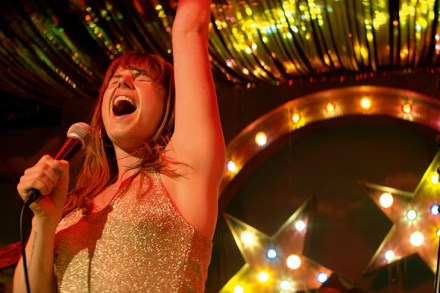
Jessie Buckley is the actress who, you may remember, was ‘phenomenal’ in Beast — I am quoting myself here so it must be true — and she is also phenomenal in Wild Rose. She plays a Glaswegian, ex-jailbird single mum who dreams of Nashville and making it as a country star and, good grief, the pipes on her. Sensational. And you can quote me on that. Indeed, I wish that you would. Bit fed up, frankly, of always having to quote myself. Like I don’t have enough to do! Directed by Tom Harper (War and Peace, BBC) and written by Nicole Taylor (Three Girls, also BBC), this opens with Rose-Lynn (Buckley) leaving prison after completing a year-long sentence for a drugs offence. ‘You gonnae be the next Dolly Parton!

I’m sorry I haven’t a clue

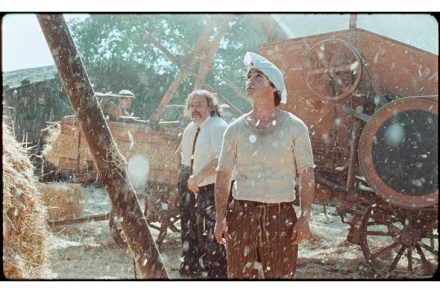
Alice Rohrwacher’s Happy as Lazzaro sets out as a neorealist tale of exploited sharecroppers, but midway through the story it falls off a cliff (literally) and returns as magical realism, although we mustn’t hold that against it. Or should we? I was sad to see the first narrative go, frankly — come back! Come back! — and the second half rather lost me. This film is beguiling and intriguing and poetic (she says, defensively) but God knows why it couldn’t have carried on as it began, and God knows what it adds up to. I haven’t the faintest. Written and directed by Rohrwacher (The Wonders, Corpo Celeste), the film won the prize for best screenplay at Cannes.

A circus film with no circus

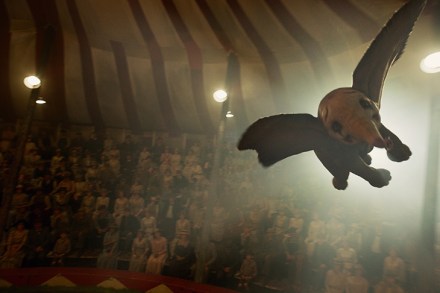
Dumbo is an elephant we can’t forget. More than 70 years since Disney’s 1941 film, the big-eared baby is still the most famous pachyderm on the planet. Director Tim Burton has dared to enter the ring with this iconic grey beast and remake the Disney classic not as a cartoon, but as live action. In his 2019 Dumbo, there are two competing circuses — a traditional, down-on-its-luck, tented American circus run by ringmaster Max Medici (Danny DeVito) that thunders across America by rail and the huge, sinister theme park Dreamland, run by the avaricious, unprincipled and flamboyant V. A. Vandevere (Michael Keaton), whose character bears a passing resemblance to Trump, not least the endlessly played with and thinning strawberry-blonde hair.

Double trouble | 21 March 2019

Us is a second feature from Jordan Peele after his marvellous debut Get Out, which was more brilliantly satirical than scary and may well be the best ever horror film for non-horror people (i.e. me). Us has also garnered five stars everywhere, as well as, at the time of writing, a 100 per cent rating on the aggregate review site Rotten Tomatoes, so I’m out of step, I know, but I found it disappointing. The second act is essentially a zombie-style, home-invasion splatterfest that goes on and on and on. Allusions that you think will pay off don’t. It’s ultimately baffling and although I’m fine with baffling as a rule, if I’m going to sit through a zombie-style splatterfest it would have to be for a good reason. The opening is terrific.

It’s all me, me, me

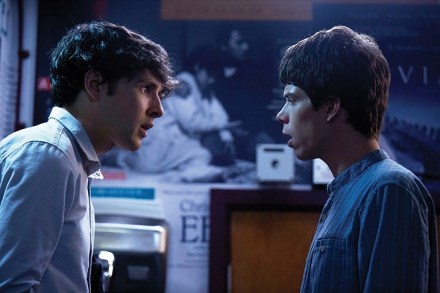
Simon Amstell’s Benjamin is a romantic comedy about a young filmmaker whose second feature is about to première, and he’s nervous. Don’t be, says his producer (Anna Chancellor). ‘Some people,’ she expands comfortingly, ‘will like it and some people won’t be into it, but each and every one of them is going to die, aren’t they? Because we are all going to die.’ Fair point. If you can ever say there is any point. Amstell’s career has always been predicated on his own existential crises, but as I’m one of those who is quite into that, I rather loved this film, not that it matters. Does anything?

Now, that’s better

Captain Marvel is the 654th film in the Marvel franchise — the figure is something like that, I think — and as the first one to be female-led it was mercilessly trolled before its release by the fan boys. ‘This movie is gonna bomb like no other and they only have themselves to blame,’ was one typical remark. The nastiness escalated further when the film’s star, Brie Larson, said she was sick of being interviewed by ‘white dudes’ while doing promotion and asked why so many film critics are white and male. (78 per cent are, according to the latest research.) I don’t know why I’m telling you all this except to say that I’m one of the 22 per cent and this is the first of these films that hasn’t entirely bored the pants off me.

Cloak of invisibility

Hannah stars Charlotte Rampling in a film where not much happens and not much happens and not much happens and then, finally, not much happens. One scene, for instance, involves changing a light bulb and that’s it, and as close to an action stunt as we ever get. (Unless you count doing laundry.) But. But. It is also peculiarly mesmerising, showcases an extraordinary performance, and cumulatively builds into a powerful exploration of pain, loneliness and invisibility. So not much happens and not much happens and not much happens — but a great deal is said.

The real RBG

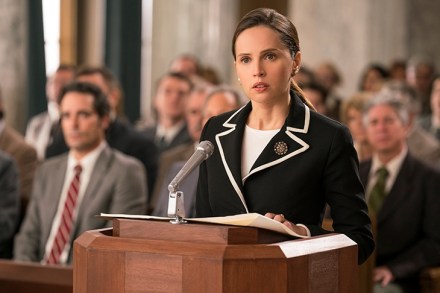
Ruth Bader Ginsburg is too ill to sit on the Supreme Court. When she saw On the Basis of Sex, a hagiography written by her nephew, she must have thought she had already gone to heaven. Directed by Mimi Leder to the highest TV-movie standards, this prequel to the obsequious 2018 documentary RBG will appeal to all purchasers of the grovelling 2015 biography, Notorious RBG. The real RBG totters across the last frames of this movie like the laminated ghost of American liberalism. Such idolatry diminishes Bader Ginsburg’s achievement, the unpicking in 1971 of the first of 178 laws discriminating against you-know-who on the basis of you-know-what. But this film crackles with nylon, self-regard, and unearned privilege. It’s the 1950s.

There’s something about Marie

A Private War is a biopic of the celebrated Sunday Times war correspondent Marie Colvin who was, judging from this, brave, humane and utterly fearless as well as a drunk, lonely, traumatised and annoying. A complicated human being, in other words. And why did she do it? Why did she risk her life to get the truth out there? No easy answers are offered, thankfully. It may just be that she had to face death to feel properly alive. I can only say, with confidence, that the film features a magnificently fierce, alert and impassioned performance from Rosamund Pike, whose usual English rose delicacy is nowhere to be seen. It is top work, properly.

Soapy and second-rate

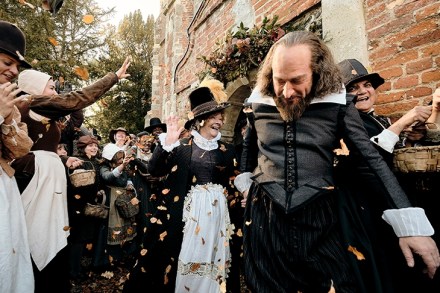
All Is True is Kenneth Branagh’s biopic of Shakespeare’s last years and All Is Not Very True, apparently, which we could live with, but All Is Not Very Interesting either, which is harder to endure, particularly at the midway point when you feel a nice doze coming on. I don’t get it. I mean, if you are going to conjecture, why not conjecture inventively as they did, say, with Shakespeare in Love? If you’re going to soar freely into the realm of imaginings, soar high! But this is leaden, lifeless, sentimental and afflicted by too many sub-plots that just don’t go anywhere. Also, if this portrait of the greatest writer of any age were to be believed, he was a walking cliché. As well as a bit of a moron.

All the lonely people

Can You Ever Forgive Me? is a true story based on the 2008 memoir of Lee Israel, the writer who turned her hand to forging literary letters and who became, as she puts it, ‘a better Dorothy Parker than Dorothy Parker’. So it’s that story, but it also isn’t. That story is here but the real story, I would say, is about loneliness and alcoholism and two outsiders who, in a Midnight Cowboy sort of way, form a friendship at a desperate time. And it is rivetingly moving on this count, as are the performances from Melissa McCarthy (Oscar-nominated) and Richard E. Grant, also Oscar-nominated. (Great, although it does now look as if his work on Spice World will never be recognised. A pity, but there you are.

Face time | 24 January 2019

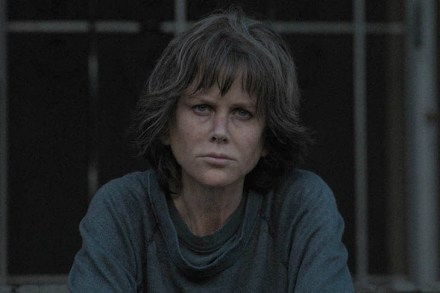
Destroyer is an LA noir starring Nicole Kidman ‘as you have never seen her before’. Her hair is terrible. Her eyes are red-rimmed with dark circles. Her lips are dry, flaking. Her skin is sun-damaged and liver-spotted. Her walk is a leaden shuffle. Just me on a regular day, in other words, but she is being hailed as ‘brave’, of course. This may or may not be so — I can only say that I went to the corner shop just now and Ahmet did not applaud me for leaving the house looking as I do or offer me an Oscar — but it is distracting. I don’t know what absorbed more of my attention, the story, her character, or just how bad she looks. Actually, I can answer that. How bad she looks.

Peak beard

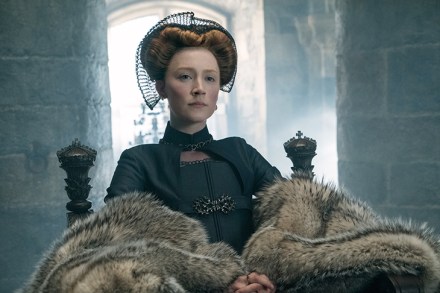
Mary Queen of Scots is a historical costume drama that, unlike The Favourite, does not breathe new life into the genre, or any kind of life, even of the old accustomed sort. It is lifeless, in other words, and quite the slog, with jerky pacing, such an abundance of bearded men you lose track of which bearded man is which, and it reduces two of history’s most fascinating women to not much of anything. However, on the plus side, the scenery is ravishing, the two leads (Saoirse Ronan as Mary and Margot Robbie as Elizabeth I) are better than the film probably deserves, and the hair and make-up are cheeringly insane. By the end, Elizabeth most put me in mind of Ronald McDonald.

Love match

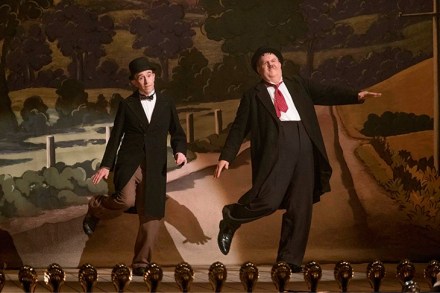
You mess with Laurel and Hardy at your peril. Their fan base is essentially the entire world. Samuel Beckett adored them: many think they inspired Waiting For Godot. Eric Morecambe’s reluctance to appear in bed with Ernie Wise melted when he was reminded that Stan and Ollie had used the same conceit. In Poland the duo are known as Flip i Flap, in Germany as Dick und Doof. I once attended a New Year’s Eve party at which the two dozen children present (toddlers to teenagers) were parked in front of a screen with a stack of Laurel and Hardy DVDs — not one of them left the room all evening. You have to ask yourself: could you honestly be friends with someone who didn’t love Laurel and Hardy? Which means that Stan & Ollie has got us nervous.

Women on top | 3 January 2019

The Favourite is a period romp set during the reign of Queen Anne, but it’s not your average period romp. The women are in charge. There is hot lesbian sex. It is savagely funny and often preposterous, with duck racing and ludicrous, vertiginous wigs and an astonishingly weird dance scene. Yet it is also involving and deeply moving with performances that are monumentally stellar. It stars Olivia Colman and Emma Stone and Rachel Weisz and while they are all flat-out fabulous, Olivia Colman, good grief. She deserves thousands of Oscars and thousands of Baftas, and if she can’t fit another through her door she’ll just have to bin some.

There’s something about Mary

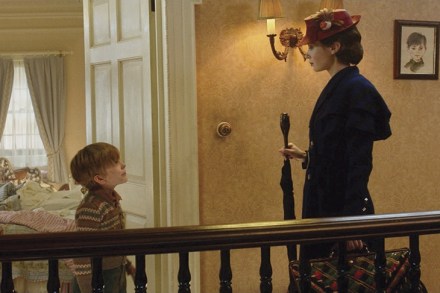
So, Mary Poppins returns, and I was, of course, primed to be spiteful, as is my nature. Not a patch on the original. Why did they bother? Why did they imagine it was necessary? Wasn’t the first film practically perfect in every way? Have someone play her who isn’t Julie Andrews? Are you right in the head? The original (1964) is one of the best-loved films ever. I love it, even though the fact that Mrs Banks was made to put away her suffragette nonsense to become a Proper Mother now makes me go: grrrr. So I had my spite at the ready. My spite was champing at the bit. But then I had to put most of it away, annoyingly, as this is not a travesty.

There’s no place like Roma

Roma is the latest film from Alfonso Cuaron (Gravity,Y Tu Mama Tambien, Harry Potter and the Prisoner of Azkaban) and you’ll probably already have heard that it’s wonderful, a masterpiece, magnificent, Oscar-worthy. But as I know you won’t believe it until you hear it from me (sigh, the responsibility is too much sometimes) I can confirm all of the above. At this point I should note that many cinephiles have complained that it deserves to be seen at the cinema, on a full-sized screen with full-sized sound, but as it’s a Netflix film (sneer, sneer) most won’t be able to watch it this way. I did see it at the cinema, at one of the very limited London showings (£18.50!