Any other business

It’s not just left-wingers who think the bosses’ pay boom is unhealthy

The FTSE100 index stands precisely where it did in the first week of December 1999. Whichever way you look at it, shareholders — including pension funds — have had a rotten run on the economic rollercoaster of the past 15 years. So it’s reasonable to keep asking whether the rise in executive pay over that same period is justified: a report from the High Pay Centre says remuneration of the average FTSE100 chief executive is now at a multiple of 130 times (corrected from the report's original figure of 143 times) that of the average worker in the same companies. In 1998 that multiple was 47, indicating that top pay has almost tripled relative to workforce earnings while shareholder returns have stayed flat. Of course this argument is not that simple.

Why a City job should be graduates’ last resort

August is the season for conversation about career choices. Every holiday party seems to include new graduates or next year’s graduands in need of grown-up advice. Many yearn to be pastry chefs, having devoted their student years to watching The Great British Bake Off. Some want to be journalists, and I tell them it’s more fun than having a secure job with a decent income. Happily I’ve only met one young man this summer who wants to go into financial PR, the métier in which I believe Satan himself did his first internship.

The man who could sell the British public on fracking

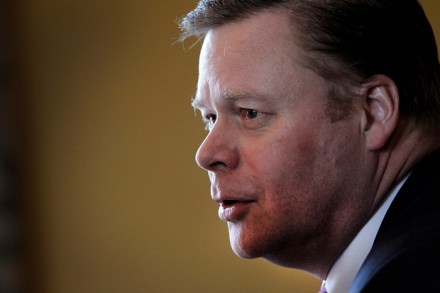
Iain Conn, who will succeed Sam Laidlaw as chief executive of Centrica, would have been a dead cert for the top job at his current employer, BP, were it not for the Deepwater Horizon oil rig disaster in the Gulf of Mexico in April 2010. The subsequent PR fiasco terminated the BP career of the then chief executive Tony Hayward — who seemed crushed by the episode, but recovered to make a double fortune at Genel Energy and Glencore. Had Hayward served a full term, Conn (BP’s head of refining and marketing) would almost certainly have followed him. As it was, BP found it more politic to appoint an American, Bob Dudley, to repair relations in Washington while simultaneously arm-wrestling with the Kremlin-connected oligarchs who were BP’s co-investors in Russia.

I know how ineffective sanctions are – but these ones just might work

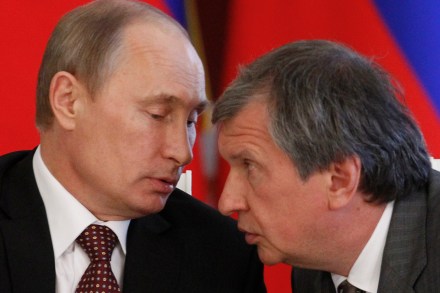
‘Sanctions,’ said Kofi Annan, ‘are a necessary middle ground between war and words.’ Neither the EU nor the US will deploy troops or missiles to defend Ukraine against Russian-backed separatists, while Vladimir Putin basks in hostile Western words and turns them to domestic advantage. That leaves sanctions as the only means of seeking to influence him. But do they work? Evidence is not persuasive: in 200 cases studied by academics in Washington, from the League of Nations action against Italy’s aggression in Abyssinia in the mid-1930s to Russia’s assault on Georgia in 2008, sanctions were judged successful in one third of cases; in many of those, success was ‘partial’.

Forecasting is a mug’s game – but I was right about the economic revival

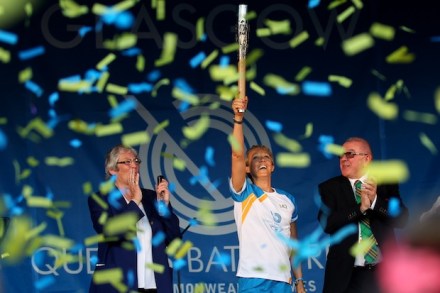
‘Perhaps I should shift my prediction to 23 July 2014,’ I wrote in April 2012. ‘That’s the opening of the Commonwealth Games in Glasgow, and we must all start thinking positively about it.’ I was talking about the moment when the nation would at last shake off its economic gloom, which I had previously pinned to the opening of the London Olympics. But that spring we fell back into negative GDP territory (avoiding a technical two-quarter ‘double dip’ only when the first-quarter result was revised upwards to zero) and I felt obliged to ‘elasticate my timetable’. Since the beginning of last year we have had 18 months of robust growth — but pundits less cheerful than me have continued to report a persistent absence of feelgood.

Any other business: trouble spots in European banking

‘1914: Day by Day’, the Radio 4 series by the historian Margaret MacMillan, is a gripping reminder that significant global events often arrive not in a single eruption but in a series of lesser happenings that only afterwards form an obvious pattern. Let’s hope that’s not what we’re watching in the banking sector as anticipation builds towards the results, due in October, of the European Banking Authority’s current round of ‘stress testing’. Last month’s trouble spot — with a certain resonance for the current centenary — was Austria, whose government forced losses on bondholders in the troubled Hypo Alpe-Adria-Bank by overriding a guarantee from the province of Carinthia.

Gold-fixing is the last ghost of the old City. It won’t be around much longer

In a season obsessed with sport and personal misbehaviour — separately or in combination — the word ‘fixing’ immediately brings to mind ‘match-fixing’, as in ‘Two World Cup referees suspected’ of it, and ‘Former New Zealand cricketer banned for life’ for it, to pick at random from this week’s headlines. ‘Gold-fixing’, by contrast, is a phrase of which the City has been proud for almost a century. But the imminent demise of its historic gold-fixing system is yet another parable of changing times. Since September 1919, the price of gold has been ‘fixed’ daily by five of London’s leading bullion dealers. In the era when the dollar price per ounce was already set by the US Treasury, first at $20.

‘Dark pools’ are just another conspiracy of bankers against the public

It was at the Mansion House dinner last year that a City gent two seats away announced himself to be the custodian of one of London’s ‘dark pools’. The phrase sounded pleasingly Tolkienian but his first explanation — an electronic exchange in which large share transactions are completed in total privacy — dispelled the charm. My reaction was sharp enough to make the Downing Street spin-doctor between us fiddle nervously with his Twitter feed. If institutional investors can shift blocks of stock on the quiet, without moving public markets, what happens to the normal process of ‘price discovery’ between buyers and sellers? Surely small investors are being ripped off? Sounds like another market abuse to me, I shot along the table.

George Osborne’s cynical grab for northern votes (and why I’m for it)

When John Prescott used to wax garrulous about a ‘superhighway’ from Hull to Liverpool, everyone assumed it was a wheeze to spray southern taxpayers’ money across the region he saw as his power base. When George Osborne decided to ‘start a conversation’ this week about a super-city along the same route, an English equivalent of Germany’s Ruhr valley connected by yet another decades-away high-speed rail project, everyone assumed it was about recapturing votes in northern conurbations where Tory MPs and councillors are an endangered species.

The return of oil price anxiety is a timely reminder to get fracking

‘Iraq turmoil sends crude oil prices to nine-month high’ is the sort of headline that used to send shivers down economists’ spines, especially if it appeared on the same page as ‘Europe faces gas shortage as Russia cuts Ukraine supply’. How worried should we be at the current turn of events in the energy world? Since Iraq’s new insurgency kicked off, the price of a barrel of Brent Crude has blipped from $105 to $115 — nothing to panic about — but the more pessimistic analysts are talking of a further $30 rise if Iraqi oil flows of 3.6 million barrels a day (representing about 4 per cent of global demand) are seriously disrupted.

The internet is broken – and we can no longer do without it

‘The internet is broken,’ a corporate chieftain told me last week. It was an arresting remark, but he did not mean that his home Wi-Fi hub had gone down and required a jab with a paperclip, as mine frequently does. He meant that the entire web has become so insecure — so plagued by industrial-scale scammers, viral anarchists and, according to the US Department of Justice, Chinese military hackers — that it can no longer be trusted for any form of confidential data transmission, from online payments to state secrets. By way of confirmation, as I type, in comes an email with a toxic fake ‘invoice’ attached.

I salute the wisdom of young Scots on independence (they’re voting No, by the way)

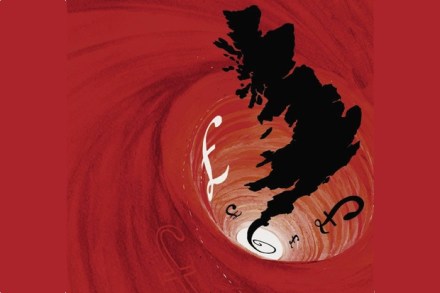
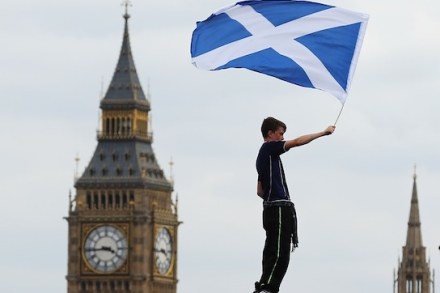
It’s a constant theme of this column that today’s young need to stop whingeing about their prospects and get on with making their own future. But a quick north-of-the-border tour as official campaigning kicks off for the Scottish referendum persuades me that the pessimism of the generation about to enter the world of work is for once well justified — and may play a key role in averting the potential economic disaster of independence. When SNP leader Alex Salmond chose to give 16- and 17-year-olds a say in September’s poll, he must have presumed that teenage Scots — if they could be bothered to vote at all — would be swayed by the romantic nationalism and anti-English fire of the Yes campaign. Not so, it turns out.

Fight Thomas Piketty or face a mansion tax

The postman at the door is stooped by his burden like an allegorical statue of Labour Oppressed by Capital. His wearisome, low-waged task is to deliver a copy of Thomas Piketty’s Capital in the Twenty-First Century — or perhaps multiple copies all round the town, since this breezeblock of a thesis on the iniquities of accumulated wealth stands second in this week’s bestseller lists, pipped only by the life story of someone called Guy Martin.

Forget about saving British big pharma – it’s little pharma we should be helping

Readers in all sorts of places — at the club bar, over a birthday lunch, even along the church pew — had been telling me I was wrong not to subscribe to the ‘save AstraZeneca’ campaign, and too complacent about the future of British science when I wrote: ‘the game is Pfizer’s for the taking, as soon as the price is right’. Now Pfizer has retreated, it looks like the battle has been won by the bandwagon I missed, whose crew included Ed Miliband, the Unite union, and former AZ chief Sir Tom McKillop — better remembered as the chairman of RBS who presided over its catastrophic merger with ABN-Amro, so at least speaking from rueful experience. But the reality is that the game was not taken because the price was wrong.

Are we killing investment banking? And if we are, should we care?

Do we really mean to kill investment banking, or are we trampling it by accident in a fit of righteous zeal? By ‘we’ I mean politicians, regulators and public opinion, and by ‘kill’ I mean rendering it unattractive or unviable for any shareholder-owned financial business except on the most limited scale — and as uncertain a career choice as, say, Liberal Democrat politics or freelance journalism. The announcement last week of a radical scaling back of Barclays’ trading and deal-making arm has stoked a debate that had been smouldering for some time; for background reading, I recommend recent articles by Philip Augar in the FT and Frances Coppola in Forbes.

Pfizer’s already beaten Ed Miliband. Now it just needs to offer the right price

Pfizer will almost certainly have to offer more than its second bid of £50 a share for rival drug giant AstraZeneca, but the American predator seems to be winning the game of spin so far. For a start, Pfizer chief Ian Read turns out to be a Scottish-born graduate of Imperial College London who has spent his entire career with the company. AstraZeneca, by contrast, is run by a Frenchman, Pascal Soriot, under a Swedish chairman, Leif Johansson, both parachuted in two years ago — reminders that AstraZeneca is already a multinational with its research facilities divided between Cheshire and Sweden and less than 15 per cent of its workforce based in the UK, and that it has recently recovered from a period of underperformance that provoked the departure of its previous top team.

Why the bankers’ bonus debate is not going away

A bouquet to Alison Kennedy, ‘governance and stewardship director’ at the Edinburgh-based pensions provider Standard Life, for leading the rebellion of Barclays shareholders against the bank’s decision to pay increased bonuses of £2.4 billion, far outstripping dividends to shareholders and despite a fall in profits. At last week’s AGM, 34 per cent of shareholders refused to endorse the board’s remuneration report after Kennedy declared herself ‘unconvinced’ that the bonus pot was ‘in the best interests of shareholders’ and warned of ‘negative repercussions on the bank’s reputation’.

George Osborne is entitled to look smug

The popular pastime for financial commentators this season is sticking pins in George Osborne. To those on the left who hate everything about him, to those on the right who think he should have used the fiscal crisis as an opportunity to slash state spending far more than he did, to those in the middle who prefer their politicians to be vacillating blunderers blown by fate, and thereby easier targets, this Chancellor is pretty bloody irritating. The UK is expected to be the G7’s fastest-growing economy this year, and Osborne’s doubters at the IMF have had to admit, in a mealy-mouthed way, that they were wrong to try to point him away from the path of austerity — which other critics now say wasn’t much austerity at all, which is why it did less damage than expected.

Should the Co-op be preparing for its own funeral?

'Care, respect, clarity and reassurance’ are what the Co-operative funeral service says it offers the bereaved, and the parent Co-op Group may soon find itself in need of just such support to help it come to terms with the resolution of the Co-op Bank. ‘Resolution’ is modern banking jargon for an orderly burial, involving powers vested in the Bank of England to transfer all or part of a troubled bank’s business to a private-sector purchaser, or (if the Treasury is so inclined) into temporary public ownership, or to force an accelerated insolvency procedure that ensures depositors are either paid out by the Financial Services Compensation Scheme or have transferred to healthier banks.

Don’t blame ministers for the Royal Mail sell-off. Beat up the bankers!

Vince Cable and Michael Fallon, ministers responsible for the Royal Mail sell-off, have been summoned for another select committee grilling after Easter. Meanwhile, Labour’s irritatingly smug business spokesman Chuka Umunna continues to score points by claiming that last October’s flotation was ‘botched’, costing taxpayers a notional £750 million as the shares leapt from the issue price of 330 pence to 455 pence on the first day, and much more since as they rocketed on upwards. The truth is that the ministerial duo were right to be super-cautious about pricing a privatisation that had been thwarted for so long by union subversion, for which public enthusiasm was uncertain, and in which taxpayers would continue to hold a 30 per cent stake.