Any other business

TalkTalk shows us the internet is only three clicks from anarchy

I’m not a customer of TalkTalk, the phone company which revealed last week that a hacker had potentially compromised the personal data of four million users. But I feel I’m on the front line of the cyberwar nevertheless. In August, someone unknown to me tried to spend £1,200 at House of Fraser on my credit card account. The bank, to its credit, sniffed a fraud, rejected the transaction, cancelled the card and invited me to speak to a nice young man in India who talked me through the corrective procedure, including deleting a false email address inserted by the fraudster and setting up a new password to add extra security for future contacts.


Heathrow’s third runway could still be halted – here’s how

The Great British Runway final between Heathrow and Gatwick is beginning to look like a game of two halves. The visit of China’s President Xi Jinping is a bonus for the west London team, who can claim that Chinese investors with bulging wallets are more likely to be impressed by landing at an urban mega-airport than an expanded flying club in Sussex. But the Volkswagen emissions scandal has been a gift for Gatwick, because as chief executive Stewart Wingate said: ‘Heathrow’s poor air quality already breaches legal limits and it’s difficult to see how expansion could legally go ahead with the millions of extra car journeys an expanded Heathrow would generate.

The spectre haunting George Osborne

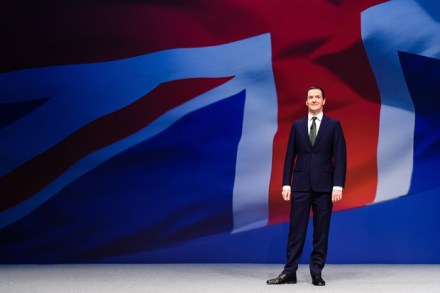
Rather more attention was paid last week to the strange position of George Osborne’s feet than to the dark shape lurking behind him. My own theory about his stance on the conference platform is that he was imagining himself as a operatic tenor, belting out an aria in praise the magic elixir he has administered to the formerly consumptive heroine, the UK economy, and pitching to be her next prince. But operas, like political careers, tend to end badly: so why the rumbling bass notes from the orchestra pit, and what is that sinister thing in the shadows? I’m not talking about Corbyn and McDonnell fighting in a sack with their own colleagues: they’re a comic subplot.

Finally, a business rates reform! If only I knew what it meant

This column has repeatedly cried that something must be done about business rates. Yes, it’s fair to ask businesses, as well as individual citizens, to contribute to local public-sector provision — even though businesses can’t vote. But it was far from fair during the recession to go on collecting £26 billion a year from hard-pressed firms based on an arbitrary multiplier applied to out-of-date rental valuations, in many cases long after those values had slumped to the point at which the rates were a higher cost than the rents.

VW and the truth of engineering: say what you do, do what you say

Not that I was much of a boy racer, but the sexiest car I ever owned was a 1982 Volkswagen Scirocco with the lines of a paper dart and the cornering of a cheetah. I once drove it overnight from the City to Tuscany with a blind date who barely uttered a word, en route or afterwards. In an era when British factories could make nothing better than a laughable Allegro or a downmarket Escort, everyone coveted a German car — the top choice for twenty-somethings being the VW Golf convertible (Sciroccos were rarer) whose quality came as a revelation after years of broken fanbelts and burst radiators on unreliable Minis. These were machines that spoke of Teutonic perfectionism and the will to win in global markets that we Brits had lost.

This will-they-won’t-they rate-rise saga has dragged on long enough

When news broke last Thursday evening that the US Federal Reserve had decided to keep interest rates on hold, I happened to be surrounded by serious economists representing a range of viewpoints and nationalities. None seemed surprised by the decision, though the media had declared it to be on a knife edge. But I did sense disappointment, not so much because the assembled sages thought technical data pointed to a rise but because the whole will-they-won’t-they saga of the first US rate rise since December 2008 (or March 2009 in the case of UK rates set by the Monetary Policy Committee) now feels as if it has dragged on far too long.

The Living Wage is nifty politics – but let’s see more help for small business too

What is George Osborne’s Living Wage? Is it a ploy to shift cost from the taxpayer to the employer by reducing in-work benefit claims; or a sop to Tory MPs who were bombarded with angry questions about earnings inequality during the election, as well as a neat way of turning one of Labour’s few effective lines of attack? Or is it a principled act of fairness, acknowledging that the lowest earners bore the brunt of the recent recession? Knowing how the Chancellor operates, it is probably all of the above except the last: he is, as Sir Samuel Brittan once remarked, ‘one of those people who do the right things without knowing why’. Either way, new research from the Resolution Foundation indicates that the cost of the Living Wage — £7.

All those boardroom codes still can’t catch rogues and incompetents

Sir Adrian Cadbury, who has died aged 86, is remembered as the author in 1992 of a first stab at a corporate governance code for public companies — which thereafter were expected to show ‘Cadbuarial correctness’ in the separation of chief executive and chairman and the powers of non-executive directors. Cadbury’s work was taken forward by the 1995 Greenbury report, the 1998 Hampel report, the Higgs review in 2003 and a subsequent drawing-together into a ‘Combined Code’. Finally Vince Cable, as business secretary, left his own mark by setting a target of 25 per cent women on FTSE100 boards by this year.

Cheer up: we’re robust enough to withstand a shock from China

Home from the hot Aegean, huddled by the fire as rain ruins the bank holiday weekend, I’m thinking: what gloom has descended since I’ve been away — and doesn’t it call for a round-up of cheerful news? So here goes. The UK economy grew by 0.7 per cent in the second quarter and a respectable 2.6 per cent over the past year. US growth has been revised sharply higher to 3.7 per cent, scotching our claim to be the fastest growing western economy, but George Osborne can still say convincingly that ‘we’re motoring ahead’ — and weak first-quarter performance can be seen as a blip rather than the revelation of doom it was declared to be by Ed (‘Where is he now?’) Balls. Tax receipts are rising at an annual rate of 4.

Sorry, but I can’t join in the China panic

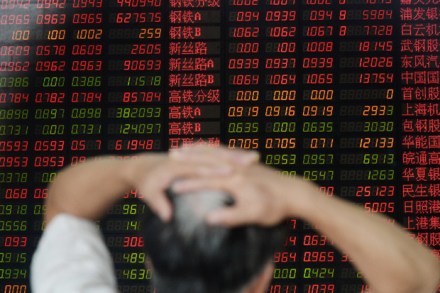
 MS Queen Victoria, 38°N 19°E I’ll do my best, but I’ve got to be honest: being surrounded by shining Ionian waters and convivial Spectator cruisers isn’t helping me channel the panic that has gripped global markets. So forgive me if this dispatch doesn’t have the apocalyptic tone you’re expecting. I’m as irritated as anyone that contagion from China’s share-gambling epidemic has knocked my modest interest in FTSE100 stocks back to where it stood in late 2012, but ask yourself: do you know anything about China or the global economy today that you didn’t know a month ago?

Come on, prime minister: a peerage for our peerless folding bike designer

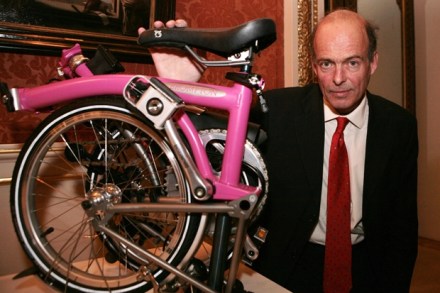
Asked to name Britain’s greatest living industrial designer, most people might cite Sir Jony Ive of Apple or Sir James Dyson of the bagless vacuum cleaner. I’d certainly shortlist Ive, but I traded in my unreliable Dyson for a brutally efficient German machine called a Sebo and I’ve always thought Sir James was overhyped. I might also mention Dumfries-born Ian Callum, the director of design for Jaguar cars responsible for the sleek F-Type. But surely the top prize must go to Andrew Ritchie, the former landscape gardener whose one perfect product, the Brompton folding bicycle, first sketched in his South Kensington flat 40 years ago, has never been bettered or even precisely replicated by any other manufacturer around the world.

The clock that stopped: the victory of nuclear arms and defeat of nuclear power

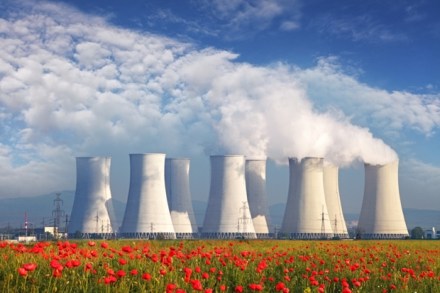
‘I visited the black marble obelisk which marks the epicentre of the explosion, and I saw the plain domestic wall-clock retrieved intact from the rubble with its bent hands recording the precise time of day when the city was obliterated: 11.02 a.m. I was glad to be alone, because I could not have spoken.’ Published here 20 years ago, that was my memory of Nagasaki, the target on 9 August 1945 of the second and last nuclear weapon ever deployed. The subsequent seven decades of non-use of nuclear arms — deterred by that most chilling of threats, ‘mutually assured destruction’ — is one of the miracles of modern history, given the unsafe hands in which much of the materiel was held.

The Libor trader’s long stretch is a big message to the banking world

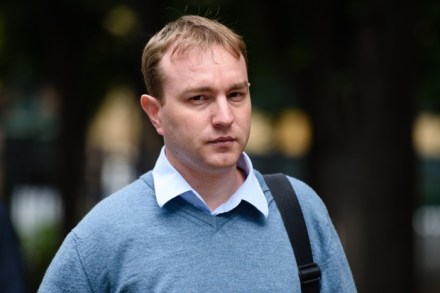
Fourteen years is a long stretch. The punishment imposed on former UBS and Citigroup trader Tom Hayes for his role as ‘the hub of the conspiracy’ to rig yen Libor rates is the same as the maximum sentence for burglary with intent to commit GBH. Even though no public attempt has been made to quantify his fraudulent profits or identify victims, Hayes’s punishment is twice that imposed on rogue trader Kweko Adeboli, who lost UBS $2.3 billion — both having pleaded ‘not guilty’. With remission, Hayes will serve about half the term: Adeboli, jailed in late 2012, came out this June. But even so, the socially awkward Hayes has forfeited a chunk of his life for the spurious gratification of peer-group esteem and bonuses he did not seem to enjoy spending.

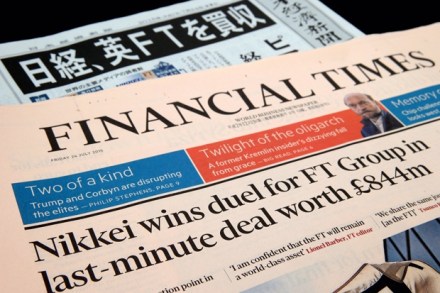
Do Nikkei and the FT really share the same journalistic values?

It’s nearly 30 years since I worked in Japan, but I still have a few words of the language and a certain idea of how the place worked. The role of the business press, for example, was to trumpet export successes of Japanese corporations, and not to report shenanigans in which securities firms boosted prices of selected shares by pushing them to housewife investors, to generate campaign funds for favoured politicians. So I’m curious how the Financial Times will fare under its new owner Nikkei, the very Japanese media group that has paid £844 million to acquire the world’s most prestigious business title. Has the culture changed since my day?

Farewell to the City’s stroppy regulator: a modest sop for the new bank tax

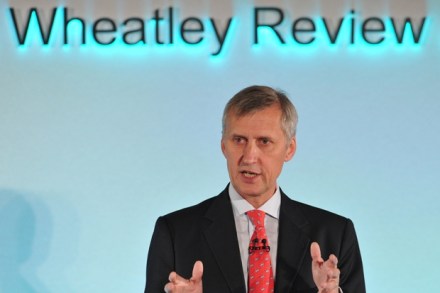
A City insider at last month’s Mansion House dinner told me the Financial Conduct Authority had become ‘a bit of an embarrassment’ — or rather, that was my bowdlerisation of what he actually whispered. So it comes as no surprise that FCA chief executive Martin Wheatley has resigned, having been told by the Chancellor that his contract would not be renewed. A former London Stock Exchange director and Hong Kong securities regulator, Wheatley has a knack of making enemies: Hong Kong investors, unhappy with his handling of alleged misselling of Lehman Brothers ‘minibonds’, once burned a funeral effigy of him outside his office.

A deal for the good of the world, but in Vienna rather than Brussels

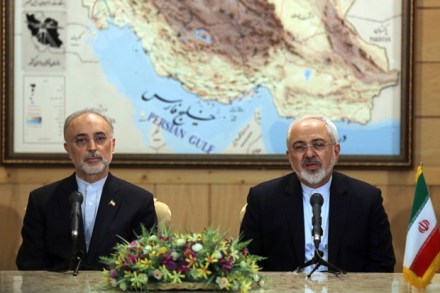
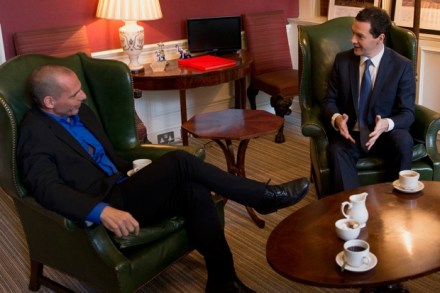
As an occasional lecturer on the abstruse topic of the efficacy of sanctions in conflict resolution, I find myself much more excited about the emergence in Vienna of a settlement of the Iranian nuclear stand-off than I am about a third Greek bailout — which left-wingers of the Syriza party regard as a vindictive form of sanctions regime designed to humiliate the government in Athens and remove its fiscal autonomy. The only thing that’s clear about the Greek crisis is that it’s not over: impossible to see how it could be ‘over’ without the debt relief Prime Minister Tspiras asked for but the Germans adamantly refused.

Good and bad politics: the Budget against a backdrop of Greek chaos

George Osborne’s Budget was good politics: not so much in terms of tactical point-scoring, though there was plenty, but in terms of striving for big objectives of fiscal rectitude and wider prosperity by incentivising sensible economic behaviour and discouraging casual reliance on the state: ‘a country that backs those that work hard and do the right thing’, in David Cameron’s phrase. Some of it will provoke rage, some of it will swiftly unravel, but it was a real attempt to steer the UK in a positive direction. How sad that it had to be presented against the backdrop of the Greek crisis, which is the most howling concatenation of bad politics so far this century.

This Greek catastrophe isn’t Lagarde’s fault but her career is starting to look like toast

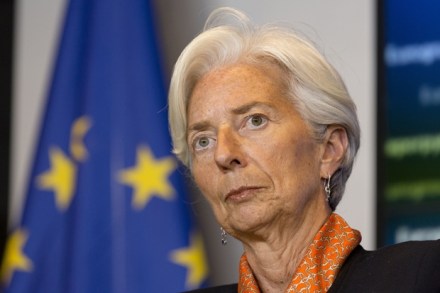
The Greek drama took a turn few of us expected last week, when the world thought compromise was imminent. What happens after Sunday’s referendum is anyone’s guess — but recrimination is already flying, much of it aimed at IMF managing director Christine Lagarde. Having inherited the Greek headache from her predecessor Dominique Strauss-Kahn after his resignation in 2011, she has always talked tough — but now stands accused of setting aside IMF rules, as well as long-established blueprints for debt relief and the views of many of the Fund’s own economists, in order to stay aligned with the European Commission and the European Central Bank in the ‘troika’ of bailout negotiators.

Contagion of a different kind as Greece wriggles off the hook

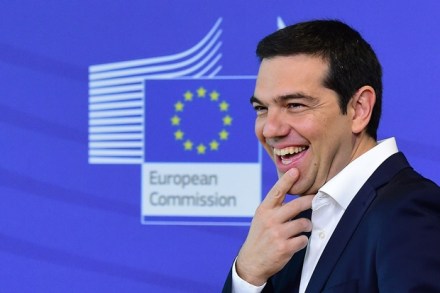
The clear winner in the Greek crisis is the author of The Little Book of Negotiating Clichés, whose royalties must have been pouring in as the clock ticked towards midnight while European leaders took positive steps back from the brink and found themselves speaking the same language, perhaps because they were reading from the same page. But assuming this predictable dance results in terms that Prime Minister Tsipras can persuade his comrades to accept before the IMF’s default deadline and the moment when the Greek banking system can no longer seek life-support from the European Central Bank — which is all still quite a big assumption — who will be the loser?

Late news: what was really served at the Mansion House banquet

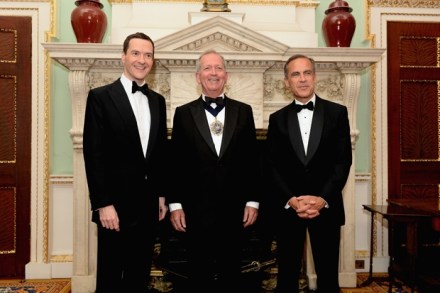
Last week’s deadline did not allow me to report from ringside at the Mansion House dinner, but there was so much to observe that I hope you’ll forgive a late dispatch. What a vivid guide to City psychology and precedence it offered. In the anteroom, Lord (Jim) O’Neill, the Treasury’s new Northern Powerhouse minister, could be seen chatting to ex-BP chief Tony Hayward, now chairman of mining giant Glencore Xstrata. At the top table, HSBC chairman Douglas Flint was carefully separated (by António Horta-Osório of Lloyds) from Governor Carney, so they could avoid discussing HSBC’s plans to move back to Hong Kong.