Ancient and modern

Hannibal (and Alexander the Great) vs the Islamic State

Whatever the Islamic State hopes ultimately to achieve by its current onslaught on all and sundry in the Middle East, Philip II of Macedon, father of Alexander the Great, would certainly understand why it has been successful (so far); but Hannibal, who came within an ace of conquering Italy, might offer a word of warning. In the ancient world, conquest of territory was the route to enrichment: other people’s resources became yours to use as you wished. By 358 BC Philip had trained up what would turn out to be an almost unbeatable army. Moving south from Macedon, he picked off Greek city-states one by one, until by 338 BC he had gained effective control over all of Greece. He then planned an assault on Persia, but was assassinated in 336 BC. Alexander fulfilled his father’s ambitions.

What Aristotle would have made of Brooks Newmark’s selfies

News that the soon-to-be-ex-Tory MP Brooks Newmark has sent pictures of his genitals to a second (presumed female) contact has centred yawningly around ‘rights’, ‘exploitation’, ‘power’ and so on. Aristotle can take us back to basics. The ancients did not do ‘rights’ anyway: they did the law. If there was no law against what you were doing, go ahead. But that did not mean that your action was therefore praiseworthy. How, then, should a man, especially one in the public eye, judge his actions? Aristotle suggested there were four main criteria: whether the actions in question were legal, advantageous, honourable and appropriately motivated. That Newmark’s action was ‘legal’ is undeniable.

The ancient roots of Alex’s Salmond’s demagoguery

Alex Salmond spent two years campaigning for independence for Scotland on the grounds of ‘social justice’. Now, claiming that the vote was lost because of the ‘old’ (subtext: the rich), he says he might declare independence anyway. His unprincipled demagoguery puts one in mind of Athenian society, as described by the ‘Old Oligarch’ (whoever he was). The O.O. saw Athens as a society in which the poor lorded it over the rich. His central point was that, because the poor were ignorant, ill-disciplined and evil, while the wealthy cared for what was good and just, the interests of the poor were not served by allowing the rich to hold power.

What Romans would have made of Obama’s Syria strategy

President Obama was assailed for saying that the USA had no strategy on combating Isis. Vegetius (late 4th century AD), the author of the only surviving Roman treatise on military science, would have approved, since ‘no plans are better than those you carry out without the enemy’s knowledge in advance’. Indeed, he went so far as to argue that the reason why the Minotaur was depicted on legions’ standards was because ‘he was hidden away in the innermost and most secret labyrinth’. As it is, Obama has now revealed his strategy, which is to train up and equip local armies to do the job for him. Vegetius would not have approved of that.

The Boris Island of ancient Athens

During his lecture on Athens at the Legatum Institute (see p. 22), Boris Johnson placed great emphasis on Athens’ development of Piraeus harbour in the 5th century BC. Did he have an analogy with a pet project in mind? It was the statesman Themistocles who ‘had been the first to propose that the Athenians should take to the sea’, and in 493 BC began to turn Piraeus with its three harbours into a military facility, replacing the old harbour at Phalerum. With Persian attack from the sea in mind, he built dockyards, mooring sheds and fortifications. This move had momentous political consequences for the poor. In 508 BC, Cleisthenes’ democratic reforms had handed power to decide political issues to the people’s Assembly.

Would Alex Salmond give up his job to a heckler? It happened in Athens

Alex Salmond claims to be thrilled that so many people in Scotland are suddenly gripped by politics. The importance of the question before the Scots — the future of their 8.5 per cent of the United Kingdom — is only part of the reason. What really animates them is that the decision is in their hands, not Alex Salmond’s. To see what happens when such genuine power-to-the-people is on display, consider the events of 425 BC. In their war against Sparta, the Athenians, masters of the sea, had trapped 420 Spartans on the island of Sphacteria. But it was proving difficult to get them off, and time was running out.

Horace still understands happiness better than the LSE

So here comes another book about how to be happy, written by Professor Dolan, an ‘internationally renowned expert’ at the LSE. The key evidently lies in ‘pleasure and purpose’, derived from your ‘daily felt experiences’, an analysis hymned in the introduction by a Nobel prize-winner as a ‘bold and original move’. Really? Since Dolan asserts that happiness derives from your ‘felt experiences’ (or ‘paying attention to the things that make you happy’), he is simply saying that it is a state of mind. Very original. This old hat is a form of 4th century bc Stoicism, which asserted that happiness depended on what went on inside your head, because that was all that you could ultimately control.

Why the Ancient Greeks didn’t have middle-aged spread

A drug has been invented to halt what is known as middle-aged spread. But it would be so much better if there was no such thing as middle age in the first place. After all, the Greeks had no such concept: why should we? The people one feels sorry for here are the early Sumerian kings (modern Iraq). En Men Lu Anna apparently died at 43,200. Nor was it all rosy with the biblical patriarchs. Adam made it to 930 before Methuselah, grandfather of Noah, pipped him to the record at 969, dying seven days before the Great Flood. Only then did God thoughtfully cut the natural span to 120. But for Greeks, childbirth, disease, diet and war meant that death rates peaked at birth, early childhood and the twenties. If one made it to the thirties, one might then expect another 15 to 20 years.

Demosthenes’ lessons in ambition for Boris Johnson

The ancient Greek word for ‘ambition’ was philotimia: ‘love of high esteem in others’ eyes’. Both Boris and Alex Salmond are consumed by this desire for what Greeks saw as a virtue. The 4th-century bc statesman Demosthenes instructed a young man as follows: ‘Consider that your aim in life should be to become foremost of all, and that it is more to your advantage to be seen to aim at that eminence than to appear outstanding in ordinary company.’ The required reputation, however, did not derive from working for self-advantage but from willingness to sacrifice time, profit, health and life in the community’s interests. This, apparently, is Boris’s problem.

Roman emperors understood more about democracy than Hamas

There must be some reason why Hamas seems to remain quite unfazed by Israel’s merciless slaughter of its people. Perhaps it is all part of a grand strategy. The point about Greek democracy is that its purpose was to enable internal disputes to be settled peaceably, by argument and not recourse to arms, and for the most part that is what happened. The Roman republic was a res publica — the people’s property/business — while Senatus Populusque Romanus was displayed on army insignia and inscriptions all over the empire: the Senatus and the Populus were in it together. Even if this was slightly economical with the truth, Roman emperors knew that if the populus was unhappy, there was trouble ahead. The public servant Cornelius Fronto (c.

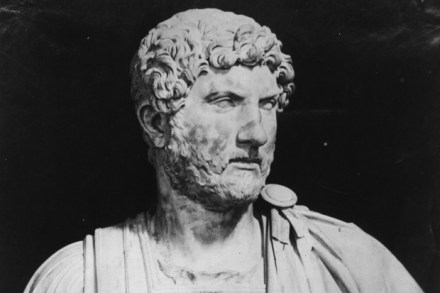
Hadrian’s advice for a new Defence Secretary

Michael Fallon, the new Defence Secretary, is a classicist by training. What lessons, if any, might he take from his study of the ancient world, especially in relation to military adventures in far-off places? Hadrian offered the key insight on the problem when he became emperor in ad 117 and immediately abandoned some Roman provinces in the East: ‘Since we cannot control them, we must give them their freedom.’ Ancient Greeks are an interesting test case. While the city-states were free during the 5th and 4th centuries bc, they were constantly at each other’s throats, almost completely incapable of working together in each other’s interests. Athens itself was at war three years out of four over that period.

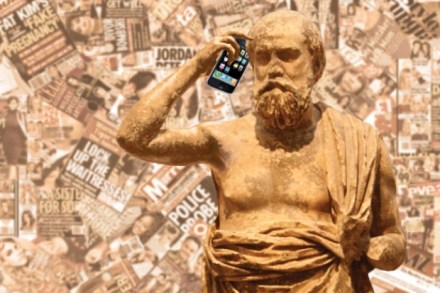
Plutarch on smartphone addiction

Adults, we are told, as much as children, become gibbering wrecks if deprived of their mobiles or iPhones for more than 15 seconds. The 2nd-century ad essayist Plutarch foresaw the problem. In his essay ‘On being a busybody’, Plutarch takes a very strict line on man’s desire to be up to date on every last piece of news and gossip, especially what is ‘hot and fresh’ and, most important of all, scandalous. Joyful occasions — weddings and such like — are of no interest. Country life is even worse, ‘since they find the peace and quiet unendurable’.

Ancient & Modern: the rumour mill

Geoffrey Dickens’s ancient dossier of (alleged) paedophiles in high places cannot be found among the 138 miles of government files, and rumour immediately takes wing. The ancients knew all about rumour: phêmê in Greek, fama in Latin, both words relating to ‘speech’. In 415 bc, the Athenians sent an expedition to Sicily, and Syracuse was rife with rumours about it. In the Assembly, one speaker said it was all nonsense, stirred up by agitators wishing to create fear and thus gain power. It was a reasonable assumption: in 411 bc a revolution occurred in Athens as a result of rumour. Rumour has not lost its power as a modern political weapon either.

Assisted dying? Ancient religion was all for it

There is something mildly unexpected about religious groups’ hostility to euthanasia. After all, in the ancient world one of the major differences between e.g. Christians and pagans was that Christians were renowned for welcoming, indeed rejoicing at, death. Pagans found this incomprehensible. Not that pagans feared the afterlife. Although, in the absence of sacred texts, there were no received views on the matter, Greeks reckoned that if the gods were displeased with you, they would demonstrate it in this life rather than the next.

Brussels will treat Britain as Macedonia treated Sparta

The EU is a federation of states (Latin foedus, ‘treaty’, from the same root as fides, ‘trust, good faith’). But for how long can such a federation endure a recalcitrant member? At some stage the crunch will come, as it came for Sparta. In 338 bc Philip II of Macedon, father of Alexander the Great, completed his conquest of the Greek city-states (poleis) and formed them — for the first time ever — into a political federation. All poleis sent representatives to the Council meetings, but executive power was invested in Philip, and when he was assassinated in 336 bc, in Alexander, it was Macedon that called the shots, and that was the end of it.

Of course fish are smart. Even the Romans knew that

Dr Culum Brown of Macquarie University, Australia, has been doing some research on fish, and concludes that they are intelligent, live in social communities (etc) and generally display ‘behavioural and cognitive sophistication’. Dr Brown’s research would seem to have consisted of reading the 2nd Century AD essayist Plutarch. In a treatise on the cleverness of animals, Plutarch stages a debate between the pro-animal and pro-fish lobby. Aristotimus, for the animal lobby, states that all living creatures have many human qualities. They demonstrate capacity for purpose, planning for the future, memory, perception, emotion, care for their young, gratitude, courage, sociability, continence, self-control and bigheartedness. He proceeds to prove this with reference to animals.

How ancient Athens beat tax avoidance

The taxman will soon be ordering those planning dodgy tax avoidance schemes to declare them beforehand and pay the full tax on them up front. Only if HMRC finally decides the scheme is legal will the tax rebate be allowed. This is a very Greek principle, which could help with the problem of bankers’ bonuses. The 4th century bc Athenian tax system was very progressive: only the richest paid any at all. In times of war, those with a certain value of declared property were liable for an emergency tax (eisphora), levied at 1 or 2 per cent. These wealthy Athenians — numbered in the thousands — were grouped into ‘tax partnerships’, and the state assessed what each partnership had to contribute.

The true gods of football (hint: they don’t work for Fifa)

The World Cup has started, and the gods of football will be in their heaven for a whole month. Not the players, of course: the spectators. Ancient gods, wielding absolute power, expected to have that power acknowledged. This was usually done by their adherents carrying out specific rituals at the right time and the right place. Do that, and the gods would smile favourably upon them, offering them personal benefits and even immortal glory in the eyes of the world. Fail, and that would be an affront, an insult to the gods’ dignity: their wrath would be unconditional.

What Julius Caesar would have done about Nigel Farage

Our politicians are desperately keen to turn the toast of the people, Nigel Farage, into toast himself. But is that wise? Time to consider the career of the Roman general Marius (157–86 BC). Noble families — i.e. those who had held high office — dominated Roman politics. Marius did not come from a noble family, but it was wealthy, and it did have good connections, which Marius later improved by marrying an aunt of Julius Caesar. Thanks largely to his considerable military prowess, he worked his way up the slippery pole, and made his mark in 107 BC when he became consul on a people’s programme, and six times subsequently. First, he made it clear that he was no toff.

How the Ancient Greeks did wealth taxes

After 685 tightly argued pages, the ‘superstar’ economist Thomas Piketty unfolds his master-plan for closing the gap between the rich and poor: you take money away from the rich. Novel. Ancient Greeks realised you had to try a little harder. The culture of benefaction was deeply rooted in Greek society, even more so when the Romans made Greece a province in the 2nd century BC and removed their direct power of taxation. The quid pro quo lay in the prospect of eternal honour for the donors. The services which the wealthy provided for the city included paying for baths, gymnasia and food supply. Where harbour facilities and commercial districts needed renewal, they would stump up.