Books & Arts

Books and Arts

Fashion, fairies and folklore

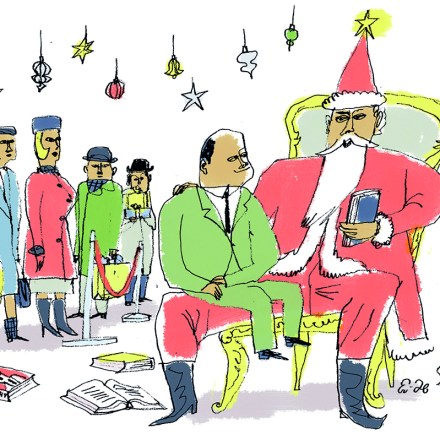
In blows the dark of winter, bringing with it partially estranged family members, seemingly endless nights and all those television movies about a big boss lady who gets stranded in a small town for the holidays and learns the true meaning of Christmas by falling in love with a lumberjack. It is not a great time of year. But as every sullen teenager knows, headphones are a great way to escape the gathering and retreat inward. There is an abundance of podcasts about how great the holiday season is — how festive, how rich with tradition and meaning. I get through the holidays with day-drinking and bingeing French television shows while shoving cheese into my face, so these don’t really speak to me.

fashion
christmas

Sounds of Christmas past

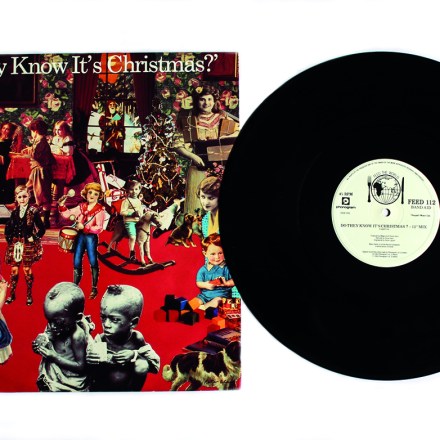
Remember when you were so nonchalant about the inevitability of Christmas privilege? Time off work for the holiday season, a few messy coke sessions with colleagues, maybe a boozy catch up with an old friend? Going out and about, buying your bourgeois real (dead) Christmas tree? Remember how you hated all that cornball Christmas muzak piped into the department stores: Slade, Wizard, Macca’s “Wonderful Christmastime,” The Waitresses’ “Christmas Wrapping,” Nat King Cole’s “Christmas Song”? Then along came Covid and Christmas was gone. You, my friend, were in lockdown. As each post-2020 festive season rolls into town, so will the new variants of Covid. The smart set decrees that it’s best we all hole up for the holidays and hide from disease and death.

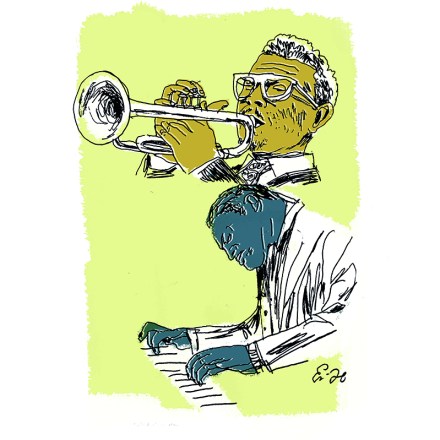
Roy Hargrove doubles up

There is a long tradition in jazz of duets between trumpeters and pianists. It’s a mercilessly revealing format, one that allows for no hiding on the part of either performer. But the payoff can be big. Consider the recording of the song “Weather Bird” by Louis Armstrong and Earl Hines in December 1928. Part of the epochal Hot Five and Hot Seven sessions that announced a new era in jazz, it featured Armstrong ripping up the old New Orleans playbook. Armstrong’s remarkable rhythmic innovations sometimes seem like the musical equivalent of a running back stutter-stepping to fake out his opponent before exploding downfield. He helped ensure that the Roaring Twenties really roared.

hargrove
dress

A dream of a dress

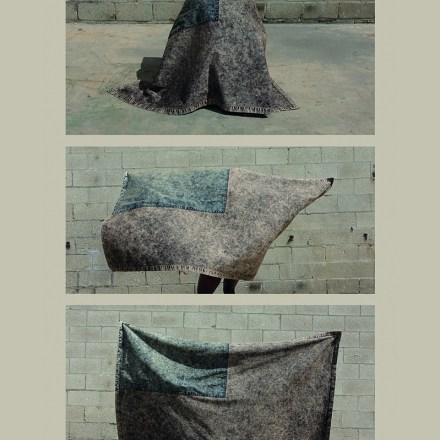
In America: A Lexicon of Fashion, now at the Metropolitan Museum’s Costume Institute, leads with a quote from Jesse Jackson: “America is... like a quilt — many patches, many pieces, many colors, many sizes, all woven and held together by a common thread.” Odd, then, that framed above the first wall panel is a drab, blank-faced suggestion of an American flag constructed from just two rectangular pieces of faded denim. Created by Sterling Ruby as a mourning garment — a model huddles under a wearable version in the exhibition poster — “Veil Flag” (2020) sits awkwardly next to the bright patchwork skirts, dresses, trousers and jackets also on display in the first room. Yet it’s the right way to open a fashion exhibition that makes you think, not swoon.

Broadway’s back(side)

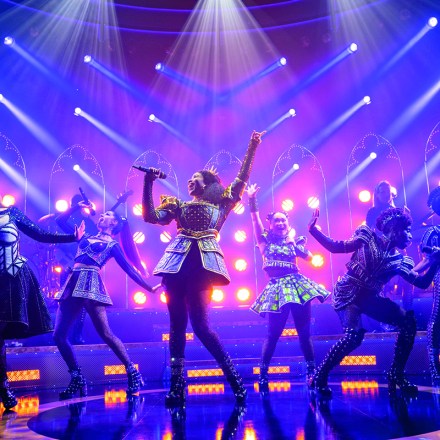
Six, a British musical about the wives of Henry VIII, is a scrupulously specious masterclass in frivolity. These onetime queens, blinged and bedazzled as fabulous pop-diva Kweens, undertake a six-way singing competition to decide who had “the biggest, the firmest, the fullest... load of B.S. to deal with” from their kingly husband. Backed by a live band, the sextet’s set amounts to the love child of RuPaul’s Drag Race and the Super Bowl halftime show. Those hoping for revisionist revenge fantasy will leave disappointed. Those seeking dramatic tension, character development, tragedy — anything having to do with the second half of the phrase “musical theater” — won’t find it here.

six
prints

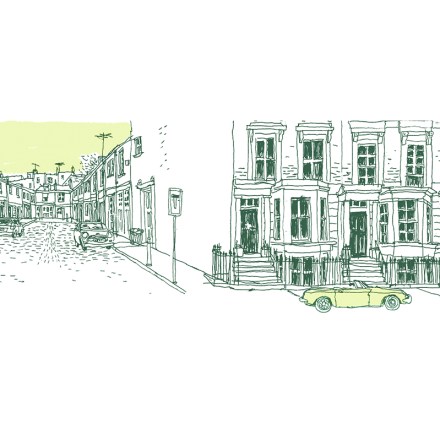
Prints of Wales and elsewhere

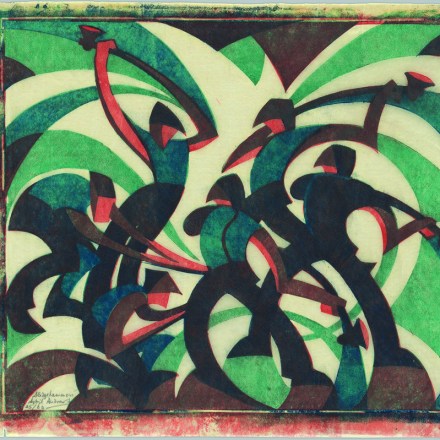
The print is a curious category in the world of art. Prints are not singular, of course — not typically at least. They are not ubiquitous, either — at least, again, not typically. They exist somewhere between art objects and art products. Printmakers often use the tools of sculpture to create works on paper. Three-dimensional carved objects become two-dimensional printed products. Think about it and you realize prints are far more curious than they let on. While art history typically does not know what to do with its curiosities, artists can sometimes make much out of the opportunities of hybrid creation.

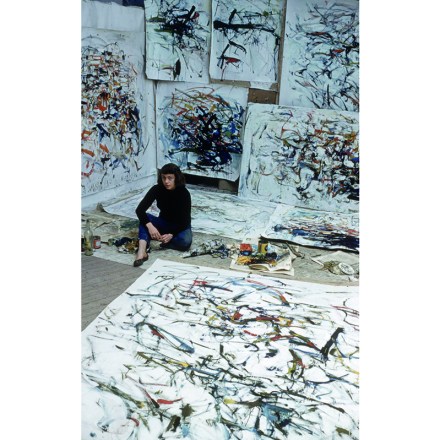
A brush with Joan Mitchell

“I am not a member of the make-it-ugly school,” Joan Mitchell told Irving Sandler for an ARTnews article in 1957. No argument there. As the major retrospective of more than eighty significant paintings by the second-generation Abstract Expressionist (1925-92), now on at the San Francisco Museum of Modern Art, reminds us, Mitchell’s artistic life was an unabashed pursuit of the beautiful. Her paintings, derived from nature but fired in the kiln of memory and intuition, are testaments to that pursuit, showing us at once just how devilishly out-of-reach true beauty can be, and just how important it is to stretch one’s arms and go for it.

mitchell
road traveled meredith

The Road Not Traveled

Meredith Swann is driving in her new car under the M40 flyover, checking on her GPS system to see if she’s following the flowing arrows correctly. She has switched off the woman’s voice — “Turn left in 200 yards” — because it reminds her uncannily of her mother, all calm, quiet advice with a subtext of disapproval. She turns and turns again. Now she is on a road of towering glass office blocks. Is she lost? No, there it is — Sainsbury’s Homebase. She parks, steps out of her car and pulls down her T-shirt to cover the neat dome of her pregnant belly. The car magically locks itself as she walks away, its lights giving her a knowing wink of acknowledgment. In the vast Homebase she is daunted and diminished by the size of the place.

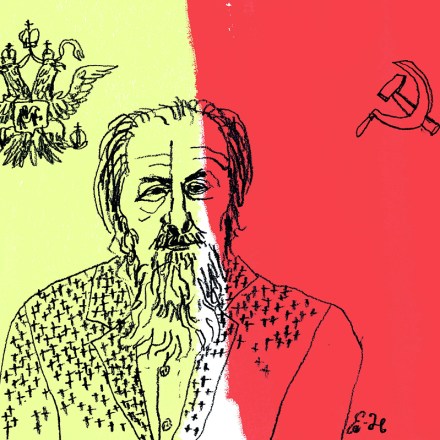
Aleksandr Solzhenitsyn’s masterpiece is finally appearing

In the mid-1970s, exiled from the Soviet Union for exposing its vast crimes against humanity, and having won the Nobel Prize in Literature for that endeavor, Aleksandr Solzhenitsyn turned his back on the lionization that awaited him in New York and other cultural capitals of the West and instead settled with his family in the woods of Vermont. Avoiding visitors for the better part of the next two decades, he churned out half a dozen or so books, averaging roughly 750 pages each, that together tell the story of the Russian Revolution and its antecedents. This act of sheer energy, self-discipline and renunciation of the conventional worldly pleasures bestowed by the literary elite was in the spirit of Russia’s own eastern monasticism.

Solzhenitsyn
books

Books of the Year 2021

Matt Labash I read a lot of books. Probably well over sixty in the last year. I’m not saying that in some little-kid braggadocious way. After all, I’m fifty-one years old. Though some have said I read on a fifty-two-year-old level. In addition to the couple of books I have open at any time, a good deal of my book consumption comes via audio: I have an audiobook going in my car or on my MP3 player at all times. And at my advanced age, if I don’t dog-ear and underline a book, it’s lost down the memory hole forever, no matter how much I liked it. But one I do remember liking so much that it bears mentioning, is John Green’s The Anthropocene Reviewed: Essays on a Human-Centered Planet (Penguin, $28).