Books & Arts

Books and Arts

Spinal Tap II is an amusing, honorable successor to the original film

The story of the made-up English heavy-metal band Spinal Tap is, in every way but its particulars, the story of Joe Biden. Consider the parallels: a group of not-very-bright Baby Boomers – or, in Biden’s case, a single not-very-bright old man – manage, through sheer dumb luck, to reach the peak of their professions – selling out stadiums, in the case of Spinal Tap, or being elected to assorted high offices, in the case of Biden. Essential to the film’s success is the characters’ persistent ignorance of their own deficits in intelligence and logic Then, as time marches on, neither the band nor the politician acquires wisdom or sagacity but merely becomes older, weaker, and ever more enfeebled.

Spinal Tap
fashion

New York Fashion Week’s shimmer feels noticeably dimmed

Crossing streets with lattes in hand, camera lights flashing, perfectly curated outfits meant to be noticed, and a crisp chill in the air means one thing: New York Fashion Week has arrived. The September Fashion Week has long stood as the pinnacle of American fashion prestige. As the leaves turn red and brown, style photographers capture eclectic ensembles in motion, A-listers march through the streets and assistants carefully place nameplates on front-row seats beside pristine runways. But this year the week’s shimmer feels noticeably dimmed. The big names still show up – Michael Kors, Calvin Klein, Tory Burch. But in recent years they’ve been eclipsed by smaller, edgier and distinctly New York-based designers.

The closest look yet at David Bowie’s mind and imagination

What would David Bowie say? The much-missed musician – dead a decade next January – is the beneficiary of a new, bespoke space inside the Victoria & Albert Museum’s East Storehouse outpost. Although Bowie is by no means Britain’s most commercially successful rock star, he is surely its most interesting – and certainly the most chameleonic, making his legacy ripe for serious re-evaluation. Now, thanks to the David Bowie Centre, the curious public can get its closest look yet into the artist’s mind and imagination. And as a bonus, it’s free, too. The space is composed of one room with nine rotating displays showing about 200 items.

Wilson

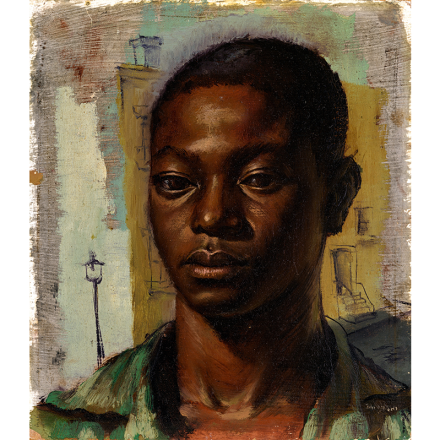
Witnessing Humanity: The Art of John Wilson is a must-see show

The Metropolitan Museum of Art’s Witnessing Humanity: The Art of John Wilson is a must-see show. Originating as an exhibition at Boston’s Museum of Fine Arts, the Met’s show is certainly the museum’s largest solo exhibition of an African-American artist’s work in recent memory, perhaps ever. It’s definitely the biggest-ever showing of Wilson’s work, but the Met is not patting itself on the back on these points. The show is a tribute to a fine artist of boundless talent, a painter of deeply felt and expertly rendered works, even if it will not rewrite any narratives of art history. Wilson (1922-2015) was an African-American artist of Guyanese descent who had a long and many-chaptered career.

How to fix the Met

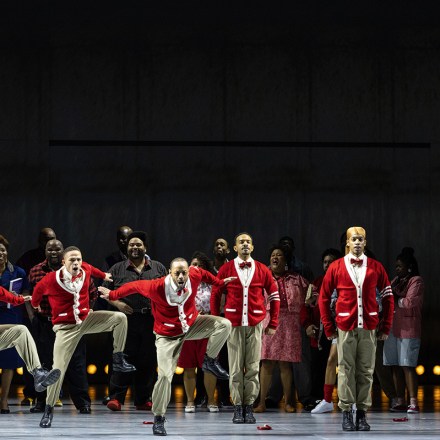
The Metropolitan Opera has been in the hole for years and for most of that time company leadership has pleaded ignorance as to why. Just this February, general director Peter Gelb lamented audiences’ lack of interest in the Met’s slate of contemporary operas. “It’s impossible to predict hits,” said the man paid $1.4 million a year to, well, predict hits. In its 2025-26 season slate, the Met finally seems to be wising up – but it faces an uphill climb. For the better part of a decade, the company has been financially unprofitable, artistically boring and actively hostile to its audience. ‘It’s impossible to predict hits,’said the man paid $1.

Met
Mull

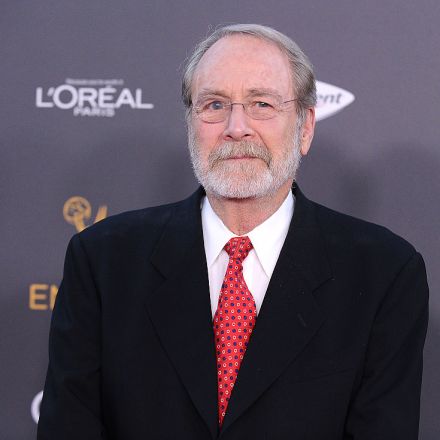
Martin Mull’s short stories bring levity to serious themes

Books of short stories are among the most difficult for writers to sell. Which is odd, as they’re often where the best writing is. A short story is rarely boring. It has to pack everything in, grip the reader right away, unfold its plot and make its point – a cultural truism or a subtle universal or a moral profundity – elegantly. It’s the one kind of writing I’ll always read when a friend says they’ve tried their hand at it.

Against abstinence-based approaches to sobriety

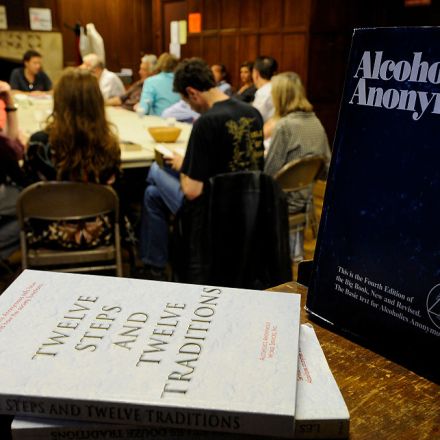
It would be impossible for me to review Katie Herzog’s Drink Your Way Sober without disclosing the central fact of my adult life: I have been sober and in Alcoholics Anonymous for more than 15 years. And while I am not an out-and-out evangelist for AA and its notorious Twelve Step method, it is, nonetheless, the movement that I credit with my survival. Not so for journalist – and addict – Katie Herzog. Herzog has all the serial-relapser energy you would expect from the addict who has forsworn AA Part memoir, part guidebook, Drink Your Way Sober is an impassioned – and at times, angry – argument that abstinence-based approaches to sobriety are doomed to fail.

Sober
Stein

Francesca Wade’s Gertrude Stein biography is a study in frustration

There came a point in time when Gertrude Stein was more famous for being Gertrude Stein than for anything she’d written. The American writer, born in Oakland, California, in 1874, moved to Paris in 1902 and devised a style of writing that privileged the sounds of words over narrative or plot, a process of discovery inspired by the art she discovered in the city. The non-representational canvases of Picasso and Cézanne, who became her close friends, made more of an impact on her emerging style than any writer: colors and shapes told a story of their own beyond any apparent subject or setting. She engaged in constant battles of wits with publishers and editors, eventually resorting to publishing her writing herself instead.

Is Dan Brown finished?

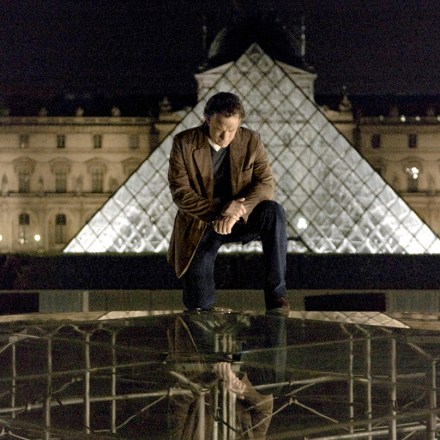
In a moment of modesty that he’s never quite been allowed to forget, Stephen King once declared himself “the literary equivalent of a Big Mac and fries.” This is self-deprecation taken too far. As the author of more than 60 books in a career that has spanned more than half a century, King’s writings have roamed over numerous genres: horror, most famously, but also mystery, suspense, science fiction, fantasy and a surprisingly dour brand of social realism. All are delivered in his trademark muscular prose, dappled with moments of stylistic brilliance. The real purveyor of literary junk food is surely Dan Brown, whose works of fiction mirror far more accurately the salt-rich, nutrition-free offerings of the hamburger giant than anything King has ever produced. If Mr.

Brown