Previous magazine Next magazine

Food fight, Shot shy, Womb for hire

Browse past issues

Books & Arts

Books and Arts

Inside the traditional art revolution

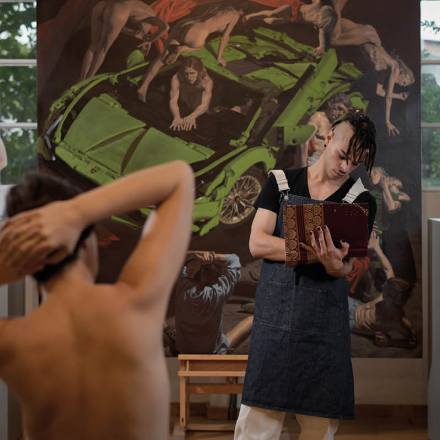
More and more often lately, people are rejecting tired modern art. They often find solace in the art of the past; online accounts admiring “traditional art” have amassed hundreds of thousands of followers, but they act as online repositories for a bittersweet recognition: what once was, no longer is. But the kind of art they seek, involving detail, meaning and skill, still exists, and it is growing. The cultural hegemony of contemporary, abstract art is slowly beginning to crack; through those cracks we can see new art surfacing. As I have become increasingly disillusioned with the state of politics, an observation from Ernst Jünger, the German philosopher and skeptic of the extreme politics of his day, rings true to me.
art revolution Milano Painting Academy
Richier

The brilliant, underappreciated work of Germaine Richier

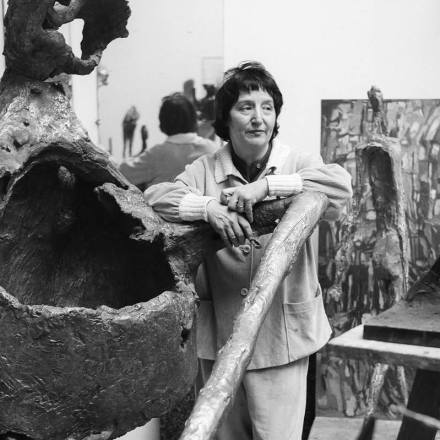
In the spring of 1951, there was a commotion in Assy, a remote part of the Alps where France and Italy are only separated by mountains and valleys. In a town normally famed for its tuberculosis-healing properties and its winter sports, a debate about sacred art was beginning to make itself heard. After nine years of construction, the Église Notre-Dame de Toute Grâce du Plateau d’Assy was finally finished in 1946. A low, squat building, designed by architect Maurice Novarina and fashioned out of sandstone, it looked more like a chalet than a church.

Jane Clark Scharl delivers artful truths in Sonnez Les Matines

As preface to his verse play King Victor and King Charles (1842), Robert Browning made a striking assertion about the claims poetry has on truth. In dramatizing King Victor Amadeus II of Sardinia’s abdication and subsequent attempt at re-accession, Browning said, he had produced a “statement” on the subject “more true to person and thing than any it has hitherto been my fortune to meet with.” Naturally, that “statement” — peculiar word for poetry — differs considerably from the historical record. Yet the merits Browning ascribes to his version — not surpassing beauty, but truth to “person” and “thing” — we would tend to call prosaic, the province of history or science or some other species of nonfiction.

sonnez
Arnold

Arnold Schwarzenegger is back

It would be presumptuous to call 2023 the comeback of Arnold Schwarzenegger: he never went away. From his first starring role in 1982’s Conan the Barbarian to an illustriously memorable life and career that have included everything from the Terminator films to his term as governor of California, he has judiciously created an existence for himself as an all-American success story; a sort of Scott Fitzgerald character for the Reaganite age. Not bad, really, for a man born seventy-six years ago in a small town in Austria, the son of an unrepentant Nazi. Should you turn on Netflix, you will now be greeted by two incarnations of Der Arnold.

Elliot Page’s memoir is a tale of tragic self-destruction

In 2010, the twenty-three-year-old actress Ellen Page appeared on the British talk show Friday Night with Jonathan Ross. Plonking herself down on the guest couch, and noticing there was a lot of room left, she announced: “I’m petite.” The affable Ross seized on this new avenue of conversation. “Do people comment on your height when you first meet them?” “They often comment on how incredibly short I am.” “And is this something you welcome or would you rather they didn’t?” “Oh, it’s just fine. I’m used to being short. It’s been a part of my life. And it’s something that I’ve begun to accept.” Back then, Page came across as confident and resilient. But according to Page, this was an act, carefully constructed for her by homophobes.

page
mirski

Visiting a forgotten chapter in American history

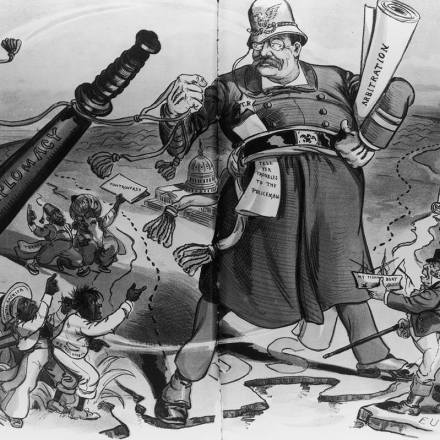
Nowadays few Americans could identify what the Monroe Doctrine signifies. Named for the fifth US president, the point of the 1823 policy had been succinctly stated fifteen years earlier by the third, Thomas Jefferson: “The object... must be to exclude all European influence from this hemisphere.” Sean Mirski terms the Doctrine “revolutionary” in his impressively erudite We May Dominate the World, an astonishingly comprehensive and stylishly written account of US foreign policy in the Western Hemisphere during the years 1860 to 1945. Calling the period a “missing chapter” in American history, he rightly asserts that “the story of the United States’s rise to regional hegemony has not received anywhere near the attention it deserves.

William Boyd’s latest novel is immense fun

William Boyd is perhaps best known for his novel Any Human Heart, which charts the adventures of Logan Mountstuart throughout the twentieth century. Mountstuart marries well, divorces, annoys the Duke of Windsor, is imprisoned, becomes an art dealer in America and has sundry diverting escapades. It’s a warm, impassioned and involving narrative, and Boyd winningly returns to a similar formula in his latest book, The Romantic. The prologue presents The Romantic as a fictionalized biography, reconstructed from notes and maps left behind by its subject. All biography, says Boyd, is by its nature fictional.

Boyd
blood meridian

Blood Meridian is Cormac McCarthy’s masterpiece

In June, Cormac McCarthy — our greatest living writer — slipped from this world to the next and joined his forebears Melville, Twain, Faulkner and Flannery O’Connor in the American literary pantheon. By noon the following day, Blood Meridian, or The Evening Redness in the West, his magnum opus, had reached number eight on Amazon’s Top 100 Books, assuring that, for the first time, it would hit the New York Times Paperback Bestseller List; a curious development for a novel that, when it was first published in 1985, failed to sell its initial print run of 1,500 and was quickly remaindered.

Taking a trip to Russoville

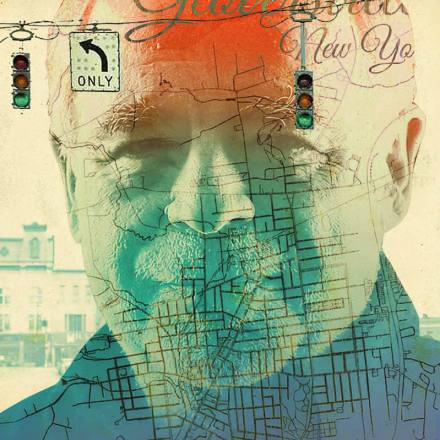
In Elsewhere, a coruscating memoir published in 2012, Richard Russo described his formative years as “an American childhood, as lived in the late Fifties, by a lower-middle class that barely seems to exist any more.” The setting for this slice of lost Eisenhower-era Americana was Gloversville in upstate New York, an East Coast leather town where the money had long since moved out and taken the locale’s animating spirit with it, to the point where the eighteen-year-old high-school graduate reckoned that “you could have strafed Main Street with an automatic weapon without endangering a soul.” The “Main Street” reference carries its own freight of associative cargo.

russo