Books & Arts

Books and Arts

This month in culture: August 2024

The Instigators In theaters August 2, Apple TV+ August 9 Boston crime movies are back! Starring Matt Damon and Casey Affleck — and produced by Ben Affleck, of course — The Instigators is a heist comedy-thriller about a robbery that goes wrong, causing Damon’s therapist to get dragged along for the ride. Affleck/Damon productions have consistently been solid — from the ultimate Boston crime movie The Town to last year’s Jordan 1 sneaker-origin story Air — and this is directed by one of the best working action directors around, Doug Liman, who was responsible for The Bourne Identity, Mr. & Mrs. Smith, Edge of Tomorrow and (the underrated) American Made.

culture
Resch

A beginner’s guide to buying art

Perceived barriers to entry often keep potential art collectors from taking the step beyond admiration to acquisition. Sometimes this results from neither liking nor understanding what’s available, but basic hurdles can involve learning how best to source and price what you are collecting — and the terminology can be daunting too. In his latest book, How to Collect Art, art-market expert Magnus Resch puts forward the most comprehensive, clearly explained guide to art collecting that I’ve ever read. A best-selling author, an entrepreneur and an art collector himself, Resch not only teaches art management at Yale, but has written and commented on the art market for years.

Inigo Philbrick, the art world’s wheeler dealer stealer

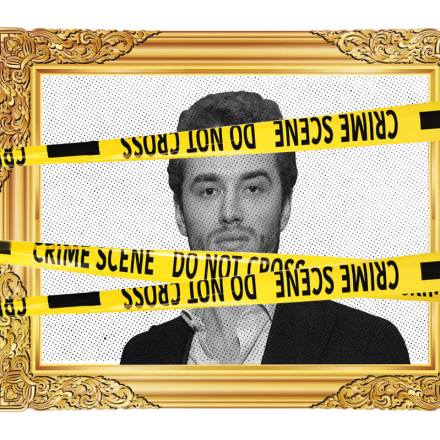
A few months after going on the lam in late 2019, the thirty-two-year-old wunderkind art dealer Inigo Philbrick sent his friend and colleague Orlando Whitfield a trove of documents. Philbrick wanted his old friend to write a sympathetic account of the misdeeds he stood accused of — since described as the biggest art fraud perpetrated in US history, for which Philbrick was later convicted and imprisoned. Whitfield has instead written All That Glitters, a memoir chronicling their friendship and dealings during a heady “gold rush” decade in the art world. Going through Philbrick’s correspondence and the court documents, Whitfield realized his friend was not the person he purported to be, certainly not the one his clients believed he was.

Philbrick
Gatsby

A new adaptation of The Great Gatsby is enrapturing and impressive

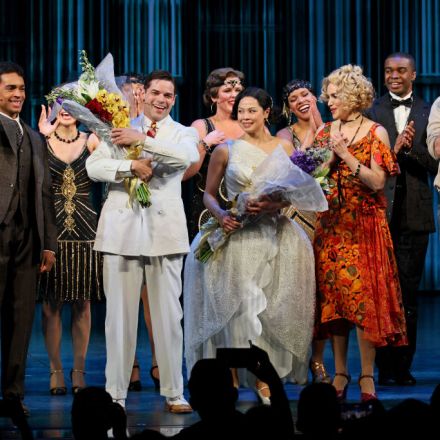
In F. Scott Fitzgerald’s classic 1925 novel The Great Gatsby, Daisy Fay is a mercurial character. The popular rich girl from Louisiana — married to Tom Buchanan, an adulterous brute — is ravishing and entrancing and, at times, cruel. It is her voice that most draws Jay Gatsby to her years after their initial fling when he was a poor officer, as he longs for her across the bay. As Fitzgerald describes it, Daisy’s is a voice that rises in dramatic swells and falls to intimate murmurs, coaxing its listeners to draw closer. Gatsby, the nouveau-riche rumored bootlegger from an impoverished farming family, is obsessed with Daisy: her class, her beauty, her unattainability, her voice. It is a voice, he tells the book’s narrator Nick Carraway, that is “full of money.

The Jedermann, the myth, the legend

The telephone was ringing. On the other end was Markus Hinterhäuser, artistic director of the Salzburg Festival. “Robert, would you like to direct a new production of Jedermann for us next year?” A new Jedermann at the Salzburg Festival, but with only a few months to prepare? I hesitated for about one second before saying I would be delighted and honored to direct. Jedermann is the complex, frightening, inspiring and fascinating German adaptation by the great Austrian writer and poet Hugo von Hofmannsthal of the English medieval morality play Everyman. Hofmannsthal’s adaptation premiered at Berlin’s Circus Schumann theater in December 1911.

Jedermann
devil

Devil in the detail

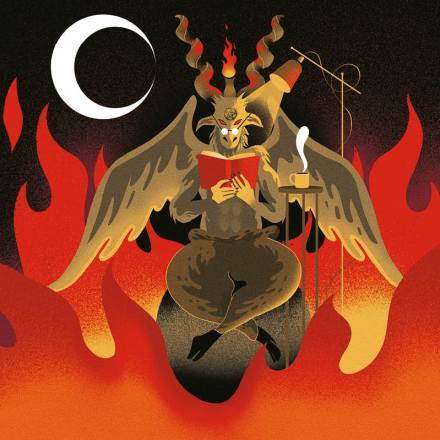
When I was offered the chance to review two new books about the Devil, I thought, “what fun!” I wouldn’t describe myself as a particularly diabolical person, but as someone whose deep love of Paradise Lost has made me, as good old William Blake didn’t quite put it, “of the devil’s party while very much knowing it,” I rubbed my hands together in glee at the prospect of getting down and dirty with Old Nick. Not, you understand, that my purely literary interest can begin to compare to the “Satanic Panic” outbreak that gripped the imaginations of middle America in the late 1980s and 1990s. “Satanic cults! Every hour, every day, their ranks are growing!

A new and compelling study of the life of the iconic rebel Nat Turner

In 1831, while the slave rebel leader Nat Turner sat in jail awaiting trial in Southampton County, Virginia, he was visited by a local lawyer named Thomas Gray. Turner spoke at length to Gray, who subsequently published his record of their conversations. At one point Turner said he had been visited many years before by the spirit. “What do you mean by the spirit?” Gray asked. “The Spirit that spoke to the prophets in former days,” Turner replied. Gray was unmoved by Turner’s claims of divine inspiration and concluded that he was a “gloomy fanatic” moved to mass murder by religious delusions.

Turner
Shapiro

James Shapiro’s timely account of the rise and fall of an influential public theater

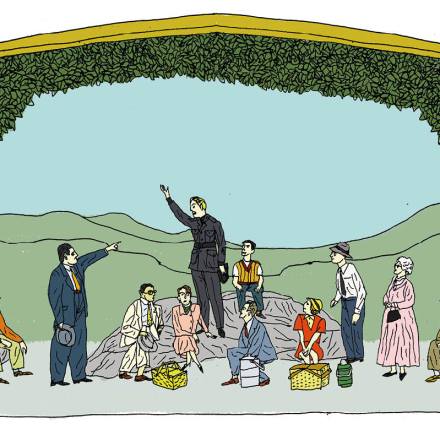
James Shapiro, a distinguished Shakespeare scholar, has turned his attention to the seeds of today’s culture wars in this fascinating, timely and deeply researched book. He unearths them in the demise of the New Deal’s Federal Theatre Project, brought down by a Red-hunting congressional committee. Shapiro’s is an unexpectedly gripping tale, as he exposes the “playbook” of the Texas Democratic congressman Martin Dies, a white supremacist and glory hound who seems to have settled on destroying the Federal Theatre simply as a means of boosting his profile, while also exploring the relationships between politics, plays and propaganda. The Federal Theatre was a utopian project of galactic size, of a kind which, in these days of funding cuts, now seems impossible.

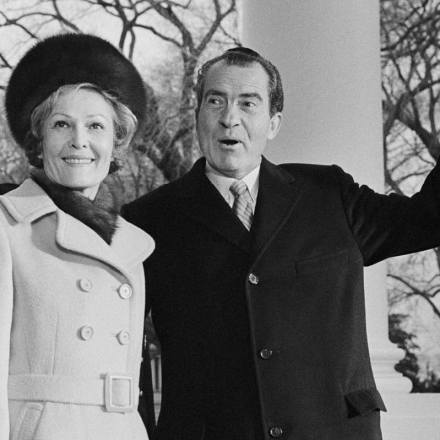
Pat Nixon, ambassador of goodwill

The Watergate scandal already commands a wide bookshelf. In the fifty years since Richard Nixon fell on his sword, we’ve had the big-ticket books by the tag-team of Woodward and Bernstein, and others, by contrast, seeking to exonerate Nixon and pin the whole thing on his adversaries; tales about secret sources and White House interns and plucky whistleblowers like the oleaginous John Dean and that human hand grenade Martha Mitchell; not to mention self-serving memoirs from all the principals, some now on their second or third helping at the table; or the ones saying it was all a conspiracy involving an unholy alliance of the FBI, MI6 and KGB, with the little green men from Mars thrown in.

Pat
Mandelbaum

A compelling and evocative biography of the redoubtable Mrs. Mandelbaum

If you thought organized crime in the United States had its roots in the Prohibition era, think again. As Margalit Fox demonstrates in this compelling and evocative biography, its seeds were sown half a century earlier, when a resourceful, daring and ingenious woman enjoyed a long and successful career as a forerunner of the familiar twentieth-century “Godfather” figure. By the mid-1880s, she was the boss of America’s most notorious crime syndicate, presiding over a multimillion-dollar criminal empire which stretched across the country and even into Mexico and Europe. Born in Kassel, Germany in 1825, Fredericka “Marm” Mandelbaum came to America in 1850, part of the mass exodus of European Jews in that period.

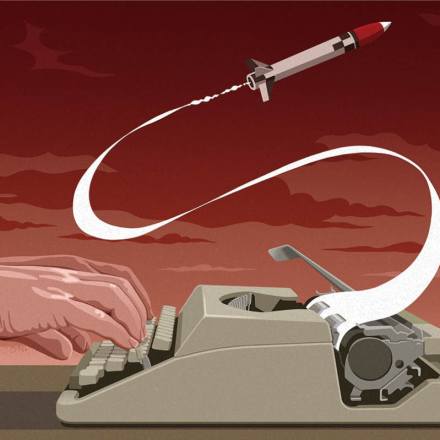
A superbly written and insightful account of the contemporary American military

Four-star Marine General Kenneth “Frank” McKenzie headed US Central Command — CENTCOM, covering the Middle East — from spring 2019 until spring 2022. It was an eventful, and stressful, three years: taking out long-time Islamic State head Abu Bakr al-Baghdadi in 2019, then notorious Iranian Quds Force commander Qasem Soleimani in early 2020 and overseeing the disastrous final withdrawal from Afghanistan in 2021. Prior to CENTCOM, McKenzie had spent four years in two top-level Joint Chiefs staff posts, and before that he served multiple tours of duty on the ground in Afghanistan. As a younger officer he had been in the Pentagon on September 11, 2001, when American Airlines Flight 77 hit; he was commissioned in the Marine Corps right out of the Citadel in 1979.

McKenzie