Books & Arts

Books and Arts

Macbeth on Broadway: a Very Modern Scottish play

The new Macbeth on Broadway starring Daniel Craig ends up about where you’d expect: a Macbond unhinged and raving about Birnam Wood come to Dunsinane, splattering the castle walls with the gore of his enemies and pummeling Macduff mercilessly until the showstopping reveal that the latter was “of no woman born” but, in fact, “from his mother’s womb/ untimely ripped.” Omit the full-cast kumbaya circle at the end (a too-sweet cherry atop a bloody sundae), and the denouement essentially gives you Shakespearean drama at its most unimaginative — as a Hollywood action blockbuster. This isn’t to say that Shakespeare cries out for bold reimagining. Nor is there anything wrong with giving people what they came to see. It is Daniel Craig, after all.


Macbeth
northman

Why did no one see The Northman?

The American director Robert Eggers has had an auspicious early career. His first two movies were smash hits in the arthouse world: 2015’s The Witch, which launched the career of Anya Taylor-Joy, and 2019’s The Lighthouse, which starred Robert Pattinson and Willem Dafoe. Both films were produced on small budgets by indie powerhouse A24, and both have already achieved a kind of cult status among horror buffs and cinephiles alike. So when news broke that New Regency was offering the auteur director a budget of around $70 million for his third film — a Viking revenge epic starring Alexander Skarsgård, Taylor-Joy, Ethan Hawke and Nicole Kidman — movie geeks went wild. Just not quite wild enough to buy actual tickets, apparently.

How green is your Soylent?

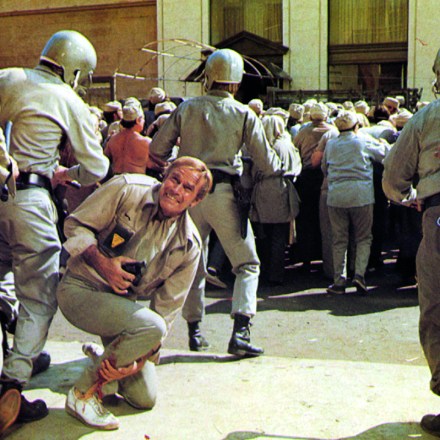
In 1966, when Harry Harrison penned his dystopian thriller Make Room! Make Room!, which began life as a serial in Impulse magazine, he predicted that by 1999, there would be more than 7 billion people on earth, and a robust 35 million in New York City alone. The 1973 film adaptation of Harrison’s novel, Soylent Green, altered several aspects of Harrison’s novel, including the year in which the thriller is set: 2022. Now that we’re there (and decades past 1999), it’s worth asking: did Soylent Green director Richard Fleischer and his writer, Stanley R. Greenberg, get things right?

Soylent
Schächter

A concert begun in darkness

It was all glitter at Blues Alley in Washington, DC when the trumpeter Terence Blanchard, who is the composer of a widely hailed opera called Fire Shut Up in My Bones that was recently performed at the Met, appeared in March with his E-Collective band as well as the Turtle Island Quartet to play several sets. Blanchard wore iridescent tennis shoes and played a miked trumpet with extra reverb that almost looked as though it was glowing in the dark. Periodically, he would tap his right foot onto an electronic device on the floor that manipulated his tones to extend them into the ether. Indeed, his audacious high notes lingered on long after he had stopped blowing. The collective is Blanchard’s foray into the world of deep funk. It definitely makes an impact.

Playing the long game

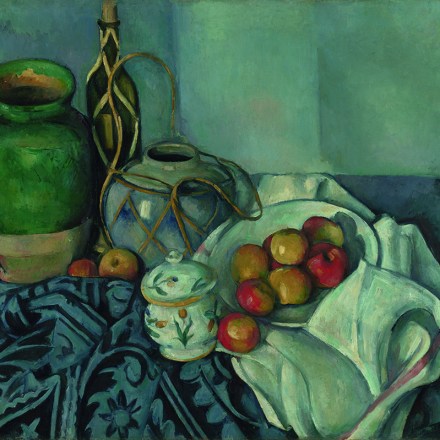
Back in the fall of 1995, on the centennial of Paul Cezanne’s breakout late-career exhibition at Ambroise Vollard’s avant-garde art gallery, a retrospective opened at the Grand Palais in Paris, titled simply “Cézanne.” That show traveled to the Tate in London in 1996 and then to the Philadelphia Museum of Art. Now, more than a quarter century later, another retrospective with a similarly spartan title has opened in the Windy City: a joint venture between the Art Institute of Chicago and Tate Modern.

cezanne
matisse

The one-note wonder

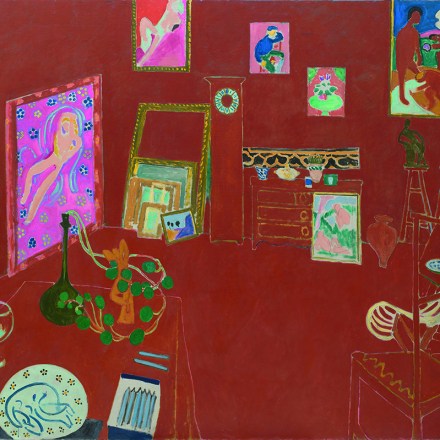
Art museums normally organize career surveys or thematic exhibitions, but this spring the Museum of Modern Art has departed from this practice to focus on a single work. Matisse: The Red Studio examines the pivotal painting of the same name that Henri Matisse (1869-1954) created in 1911. Exhibitions are normally years in the making, so while this one was in the works long before the Covid-induced lockdown, it offers a model for institutions struggling in the wake of the pandemic. Rather than expending scarce resources on an expensive blockbuster loan show, do a deep dive into something in your own collection. And what a dive this is.

Lost in translation

Picture the scene: a twenty-something college student, desperately trying to impress a girl he’s met for a date. He's early, but that isn’t a problem as it gives him a chance to sit nonchalantly with his ever-so-artfully-battered paperback. It’s Rimbaud’s Collected Poems: intellectual, sensual, rebellious — everything he wants to be perceived as. He props the book up so that the poet’s name is visible and waits for his delicate intellectualism to be applauded. The only thing missing from this tableau is the name of the poems’ translator, assuming that the student isn’t pretentious enough to be carrying around the original French. A smaller name on the fragile paperback, the translator is generally unmentioned, forgotten, and obscured.

translation
dewitt

Helen DeWitt’s brilliance and unsuccess

No one ever expects an author simply to minuet her way into a book deal and, if lucky — merely “talented” doesn’t usually do the trick — into commercial success. But the publishing jukes and vaults that have earned Helen DeWitt the title of “America’s Great Unlucky Novelist” rather resemble the vertiginous motions of a mazurka on pogo sticks. Disagreements with her editors led DeWitt to attempt suicide twice. Her first novel, The Last Samurai, remained out of print for eleven years after its publisher went bankrupt. Before DeWitt was able to publish her second novel, Lightning Rod, another ten years lapsed.

NIMBYs to the left of me, YIMBYs to the left

First disclosure: I do not appear in this book. I say that only because — second disclosure — I consider myself a YIMBY, and I am familiar, at least online, with many of the characters and figures quoted or interviewed. However, I learned a lot about this loose movement and found it fascinating to read a book on a phenomenon that I would have trouble viewing with a detached, scholarly distance. Yes to the City, by the cultural sociologist and urban policy scholar Max Holleran, must have been a difficult book to write, not least because YIMBY (“Yes in my backyard”) is as much a rallying cry or a slogan as it is a movement, let alone an organization. The YIMBY nemesis, NIMBY (“Not in my backyard”), is equally amorphous.

yimby
original sins

How not to live a life

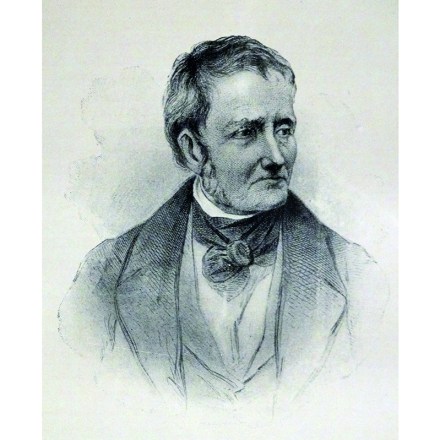
When Thomas de Quincey wrote Confessions of an English Opium-Eater in 1821, he could not possibly have guessed what he would set in motion. Over two hundred years later, the addiction memoir looks different: less subversive, more sentimental, undeniably more commercial. Since the advent of Alcoholics Anonymous in Akron, Ohio, in 1935, the formula of the recovery memoir now yokes the moral to the medical: alcoholism may be a moral disorder, but it is underwritten by a chemical condition marked by incessant craving — in recovery parlance, an “allergy,” a state of “dis-ease.” For Matt Rowland Hill, the two are inextricably combined. Original Sins is the debut memoir from a writer whose two great loves, “Jesus and heroin,” never quite slip out of one another’s grasp.

The circus that was 80s literary Britain

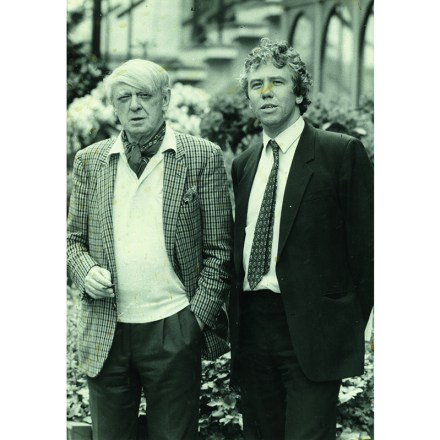
Many years ago, when I mistakenly thought that I stood a chance of embarking on a career in publishing, I went for an interview at an independent publisher to be editorial assistant and all-around dogsbody. I remember the interview well, because it was the shortest I ever had. The first question was, “How do you like to be managed?” I replied, “sternly, with a large whip.” The second was “What would your ideal role in publishing be?” and I answered, “running Jonathan Cape in the Eighties.” It became clear that our paths were not to join, and I left the room with thanks and smiles. I don’t believe that I was ever actually rejected for the job.

Walsh
gay

The rise of gay Washington

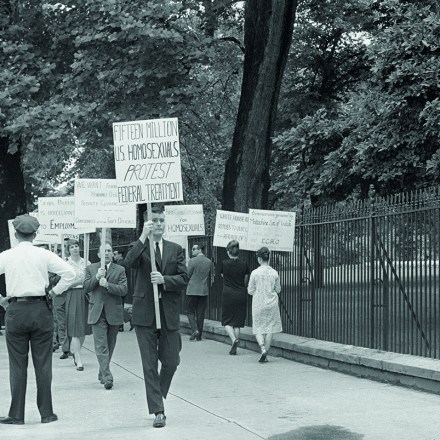
Anyone under fifty may be unaware of how largely invisible gay Americans were until at least the 1980s. James Kirchick’s incredibly rich and impressively thorough Secret City does not mention Bowers v. Hardwick, the notorious 1986 Supreme Court ruling that upheld the criminalization of gay sexuality, but only post-Bowers did the push for gay equality, and eventually same-sex marriage, rapidly become what he rightly calls “the most successful social movement in American history.” In 1992, a Gallup poll indicated that 43 percent of Americans said they knew a gay person — double the figure from just seven years earlier — and across all of America it was that growing knowledge of the presence of gay people that allowed such a dramatic political transformation to take place.