Books & Arts

Books and Arts

The final word on the millennial generation

More than anything else, the phrase “I’m still figuring it out” defines the millennial generation. Floating from passion to passion, job to job, lover to lover, possible spouse to possible dead end. In Joachim Trier’s The Worst Person in the World, Renate Reinsve plays Julie, a person that most of us would recognize from life, and certainly from the last ten years of media: approaching thirty; romantic and flighty to a fault (in the prologue, she drops out of medical school to become a philosopher and then a photographer); beginning to feel a void she doesn’t know how to fill.

worst
paradise

Throwing curveballs

"This mob is not the people,” declared Henry J. Raymond in his paper, the New York Times, about the Draft Riots in July 1863. Blue-collar workers in New York, mostly Irish, had begun by protesting a new conscription law, but anti-war sentiment quickly became a pretext for widespread destruction, looting and racial violence. Blacks were hunted, their homes and businesses trashed, and scores of them lynched. Raymond wanted no quarter for the rioters: “Give them grape[shot] and plenty of it.” The new musical Paradise Square imagines a “little bit of Eden” in the Five Points slum of downtown Manhattan, July 1863, where, we are told, blacks and Irish did not just coexist peacefully for a time but flourished.

Is Hans Zimmer a genius or a charlatan?

If you have visited a cinema in the past two decades, you will know the work of the film composer Hans Zimmer. Since he emerged in 1988 with his score for the Oscar-winning film Rain Man (he recently won his second with Dune, among twelve total nominations), Zimmer has created the music for more than a hundred films, television series and other multimedia projects. His eclecticism both startles and amuses. He is surely the only person alive to have collaborated with the reclusive director Terrence Malick (on The Thin Red Line) and to have composed music for a soccer-based video game, FIFA 19. He has scored romantic comedies, sweeping epics, cartoon animations and thrilling action films.

zimmer
Hannah

Diaries from Eighties New York

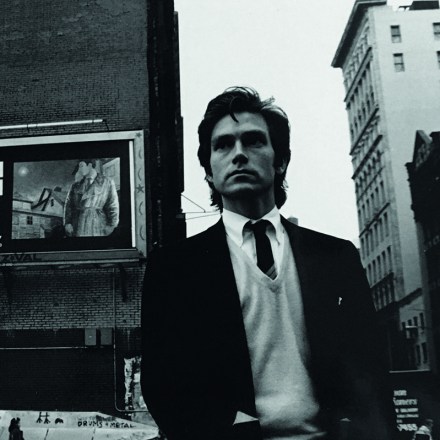
Duncan Hannah, wild child of Andy Warhol’s 1970s, matured to the art world of Eighties New York. The following is an exclusive excerpt from his as-yet-unpublished diaries that chronicle a decade of growing up and getting down — of painting, writing, reading, heroin, AIDS, infatuations, sobriety, Reagan and more. February 15, 1984: Semaphore Gallery sold the painting “Christmas” that I painted on Christmas. Hooray! I was in a cab coming down Broadway with Greg Crane and Simon Lane. We stopped for a red light at Houston Street. Crane said “Oh my God, LOOK!” and pointed to the south side of the street. Above the New-Wave fruit-stand, illuminated in the darkness, was a giant billboard advertising my upcoming show at Semaphore.

Deep water Winslow

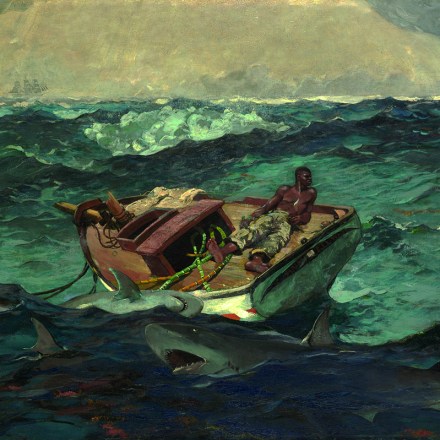
The advance buzz on Winslow Homer: Crosscurrents wasn’t good. “Woke Winslow” — that’s how observers, online and through the grapevine, pegged the Metropolitan Museum of Art’s new exhibition of paintings and watercolors by Winslow Homer (1836-1910). The stalwart purveyor of maritime adventure and manly pursuits, woke? One glance at the enlarged black-and-white photo displayed at the front end of Crosscurrents — a blurred portrait of Homer in his Maine studio — makes clear that the fusty man with the impatient glare is no one’s idea of a social-justice warrior. Looks aren’t everything, of course. Truth to tell, Homer’s art does touch upon important aspects of American history.

winslow homer
dyer

A grand slam

The majority of us who aren’t touched by genius come to terms with our mediocrity in late adolescence, once our dreams of sports superstardom are dashed or that bumbling first attempt at a novel sets us straight. You won’t be the next Jordan or Hemingway, after all. Getting over the initial shock of one’s dreams being dashed without suffering some kind of crack-up is the mark of high character and perhaps the first sign a man will settle solemnly — but not joylessly — for a well-adjusted life of invisible, middling victories. The best-adjusted man will embrace the comfort of mediocrity and live vicariously through the great men he admires, which is to say that he’ll become a fan.

Carry on regardless

The director Werner Herzog’s first novel, The Twilight World, occupies quintessential Herzogian territory. Those familiar with his films will recognize the themes: man’s insignificance in the face of a totally implacable nature and his overweening ambitions to surmount this failure. Futility and pride are locked together in hallucinatory, self-destructive cycles. His film Fitzcarraldo, for example, demonstrated the real-life attempts of a rubber baron to transport a steamship over a mountain in Peru. Grizzly Man, meanwhile, documented the sad life of a man who had made his home among bears. It doesn’t end well. (Those readers who haven’t the time to get to know his work may wish to find “Werner Herzog” reading Curious George on YouTube — a delightful parody of his style.

herzog
limón

A quiet delight

What would you do if you looked out of your window expecting to see the neighbor’s cat, and instead were presented with a groundhog in its place, “waddle-thieving” your tomatoes and “taking such/ pleasure in the watery bites”? Ada Limón’s speaker, in the opening poem of her new collection, The Hurting Kind, is not angry at this “all muscle and bristle” tomato-thief. The groundhog is an embodiment of all she cannot have: an animal, natural freedom that inspires her to ask, “Why am I not allowed/ delight?” ...A stranger writes to request my thoughts on suffering. Barbed wire pulled out of the mouth, as if demanding that I kneel to the trap of coiled spikes used in warfare and fencing.

Forever young

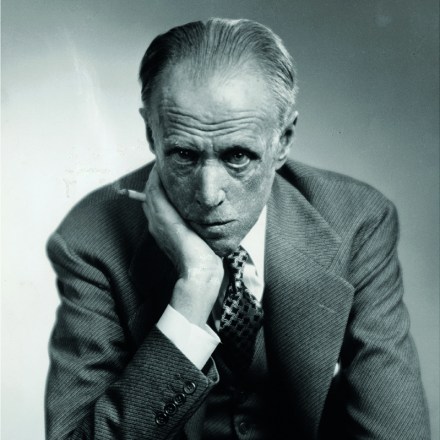
Long before publishing dreamt up the category of Young Adult fiction to try to persuade adult children and childish adults to keep reading, there were novels that described what it felt like to be young. Catcher in the Rye was one such, as were The Bell Jar and Bonjour Tristesse; these books coincided with the invention of the teenager circa 1950 and have enjoyed lasting critical and commercial success. Though British writers reign supreme in the field of children’s literature, American authors have always written outstandingly about teenagers. But the changeover from fiction describing the condition of being young to the YA genre, with its accounts of first love, high-school hell and so on, has not necessarily served every reader well.

friends
facemaker fitzharris

Faces off

Humankind’s ability to destroy itself has always outweighed its desire to fix the broken pieces. Conflict and war create great suffering, anguish and death, but they also lead to discoveries in technology, industrialization and, we learn from Lindsey Fitzharris’s The Facemaker, the invention of cosmetic and reconstructive surgery. At the dawn of the Great War, it became painfully evident to those in the trenches that contemporary developments in warfare had far exceeded those in the world of medicine. These ghastly developments are illustrated in great detail in Fitzharris’s book, which tracks the military career and early life of Harold Gillies, the man who is largely credited as the father of modern plastic surgery as well as with having performed the first phalloplasty.

Falling in line with Sinclair Lewis

In 1920 Warren G. Harding was elected president of the United States, after campaigning on a promise to the American electorate to return the country to what he called “normalcy.” Exactly one hundred years later, Joe Biden assumed the same office having offered the same thing, in different language. In July 1922 Sinclair Lewis published Babbitt, a bestselling novel about a normal middle-class American businessman living in a normal small-sized Midwestern city: the quintessential personification of “normalcy.” Around the middle of the same decade, H.L. Mencken, a good (if necessarily patient) friend of Lewis’s, predicted that America would “blow up” in a hundred years. 2022 is Babbitt’s centennial year.

babbitt
royal brown

A royal affair

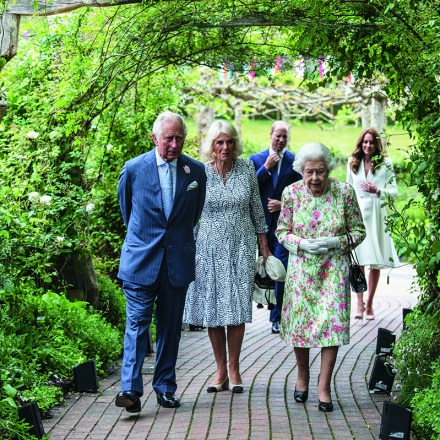
The cover blurb, from “Lady Anne Glenconner” on this huge book proclaims: “Brilliant. Tina Brown has inside knowledge and writes so well.” The credit for the author of the 2019 bestseller, Lady in Waiting: My Extraordinary Life in the Shadow of the Crown should in fact be “Lady Glenconner”. You might not think it matters much these days that, over and over again, Tina Brown gets the titles wrong in this book. But this is supposedly the ultimate insider’s look at the royal family over the last forty years or so. And titles are at the heart of the Firm — think of the agony of Prince Harry and Prince Andrew at no longer being able to use their HRH titles and having to give up their honorary military roles.