Place

Place

Dispatch from an unloved borough

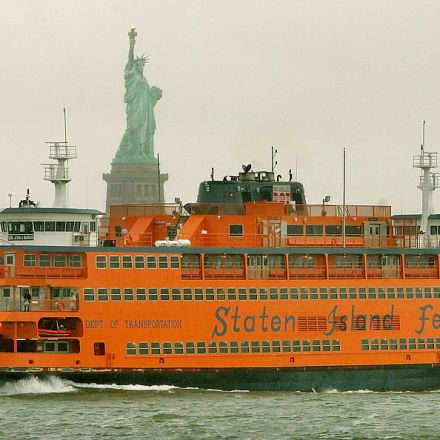
Once a year, Nick, a surgeon who lives on the Upper West Side of Manhattan, visits Staten Island. Almost as soon as he arrives, he literally runs back to where he just came from. Nick is a marathon runner — he’s done New York seven times — and like millions of similarly masochistic athletes and wannabes, he’s lined up at the mouth of the Verrazzano Bridge, the eastern edge of New York City’s least exalted borough, with the sole aim of getting back to more familiar territory as briskly as his legs can carry him. “Of course I don’t have anything against Staten Island,” he explains. “There’s just not that much of a reason to go there.” Many others, it turns out, feel the same. I moved to Manhattan just over four years ago.
Staten
Galápagos

The Galápagos evolution even Darwin didn’t foresee

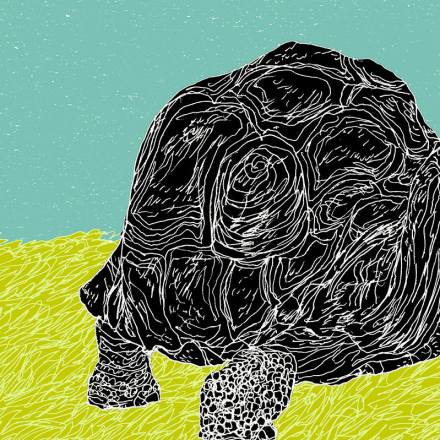
Lonesome George, a Pinta Island giant tortoise, spent the latter half of his hundred years munching on cacti and roaming around the Charles Darwin Research Station on the Galápagos island of Santa Cruz. He borrowed his name from the 1950s American comedian and actor George Gobel and one of the three B-52 Stratofortresses that completed the first non-stop jet circumnavigation of the world in 1957. But the name was ultimately more fitting for the tortoise who was the last of a million-year-old species. In 1959, fishermen introduced three goats to Lonesome George’s home of Pinta Island, one of the smallest islands of the Galápagos archipelago. Just ten years later, they had multiplied to around 40,000.

A terrible tale of a French village

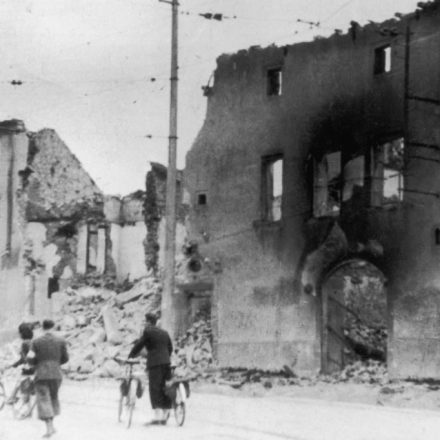
The new prime minister of France, Gabriel Attal, has promised to “take care” of Oradour-sur-Glane. The village, in west-central France, was the scene on June 10, 1944, of an infamous Nazi massacre of 643 men, women and children, shot or locked in the local church and burned alive. Only six villagers escaped to tell the tale; the last of them died in 2023. For years Oradour-sur-Glane has been a site where schoolchildren were taken to learn about what France endured during World War Two. Recently the abandoned village has become overgrown with vegetation, but with the eightieth anniversary this summer, the descendants of the victims are making sure they are not forgotten.

Oradour
Normandy

On D-Day at eighty

Traveling to Normandy fourteen years ago, we encountered a rare guide. He was a middle-aged Frenchman native to the neighborhood. I do not recall how long he had been at it, but he had learned something important about the guide business that was evident the day he shepherded us, and another American woman and her teenaged daughter, about the places made famous before any of us were born. He knew when to show, when to tell and when to relate something from his own experience that would enlighten ours. He took things in a certain order, which was not the order I would have guessed. First we stopped at the German cemetery at La Cambe, where 21,200 of the some-80,000 German soldiers who died in Normandy are interred. I remember few other visitors.

Loving Las Vegas

After ten hours of flying and too much bad airplane coffee, the beef carpaccio from 8 East at the Circa casino was ecstasy. Topped with potato chips, served with drops of citrus-infused wasabi crème, it would have been fabulous anytime. But nursing a cold Sapporo, stoned on exhaustion and discombobulation, I shivered in delight with every bite. Just a single piece would have been worth the flight. It was my first time in Las Vegas — my first time in the States — and I was hoping to write a meaningful story about a too-much written about place.

Vegas