Previous magazine Next magazine

Latest issue

It’s the corruption, stupid

Browse past issues

Books & Arts

Books and Arts

Life is a Cabaret: inside Liza Minnelli’s memoir

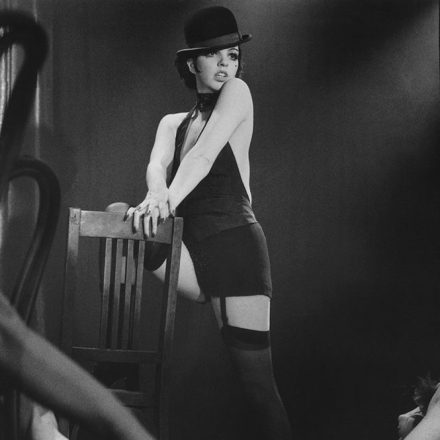
Though she may well have been “one of the world’s most celebrated, beloved and iconic performers,” who’d have wanted Judy Garland as a mother? When not remaining in bed “for days at a time, heavily drugged and in a deep state of depression,” she was, according to her daughter Liza Minnelli, slashing her neck with a razor blade because “she loved playing the victim… Hospitals are a way of life for her.” Judy died of a (possibly accidental) drugs overdose in 1969, aged 47. At the Frank E. Campbell Funeral Chapel on the Upper East Side, her corpse was prepared for public view by the very same make-up expert who’d worked years previously on The Wizard of Oz. Twenty thousand people filed past the open coffin – more than had come to gawp at Valentino.
liza minnelli
lena dunham

Lena Dunham is still her own worst enemy

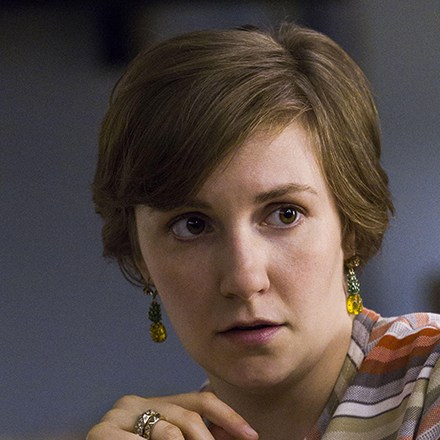
In her seminal 1967 essay “Goodbye to All That,” Joan Didion writes of her former self, a 20-year-old naif arriving in New York City for the first time: “Was anyone ever so young?” Lena Dunham – an avowed Didion stan – should have used that line as the title of her new book, an account of the messy process of making Girls, the HBO show she created, scripted, directed and starred in. Despite her inexperience and juvenile blunders Dunham, at age 25, produced a hit. Why, then, call her memoir Famesick? Because, she contends, the most important story she has to tell is how her body turned on her “right in sync with the public.” It’s true that Dunham has been the object of sustained fascination since Girls launched in 2012.

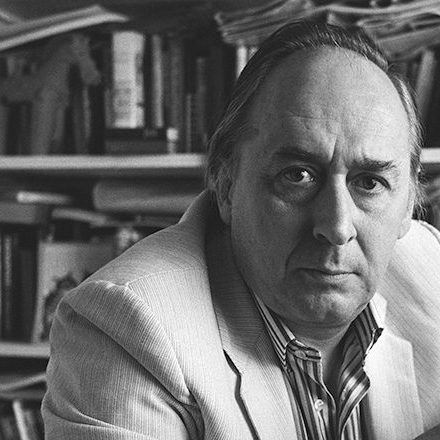
J.G. Ballard’s surreal fiction continues to resonate through the century

In 1951, when J.G. Ballard was 20, Pandora and the Flying Dutchman premiered in London. Directed by Albert Lewin and starring James Mason, Ava Gardner and a solid cast of English actors, it was filmed on the Catalan coast by Jack Cardiff in lush MGM color. Man Ray contributed designs based on the work of de Chirico. Set in an Anglo-Spanish colony, it featured a surrealist painter. a racing car driver and a toreador. All love the mysterious Pandora, who is unable to love anyone until the Dutchman drops anchor. To prove his passion for Pandora one suitor takes poison while another pushes his beloved car over a cliff.

j.g. ballard

Antony Gormley’s lonely figures transfer to paper

If there’s any consolation to be had in the prospect of AI bots filling the world with humanoids, it’s the look on their glassy faces when they realize that one of us has beaten them to it. The Turner Prize-winning sculptor Sir Antony Gormley, 75, has installed casts of himself from Crosby Beach in Liverpool to Gateshead, from Texas to the Netherlands and western Australia. He and his simulacra might not detain our new overlords for very long, of course (but in the meantime “The Gormleys versus the Bots” is the Doctor Who series I’m here for).

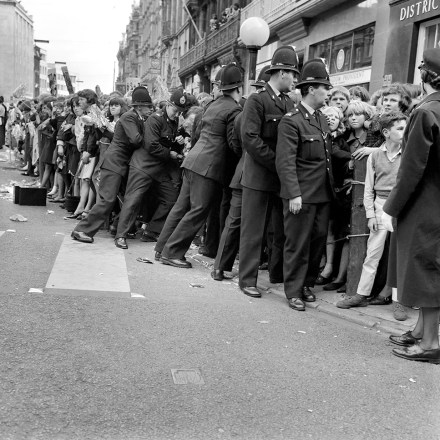
The nightmare of filming A Hard Day’s Night

It would be easy to dismiss A Hard Day’s Night, the Beatles film made in 1964, as a throwaway period piece. The plot hurls the Fab Four into a meta narrative: they’re playing themselves while a director – a seething Victor Spinetti – panics as the boys are delayed on their way to a televised variety performance by mishaps, distractions and stampeding fans. The film was thrown together to fit the group’s breakneck schedule – scripted over a few weeks in January by Alun Owen, shot by Richard Lester by May and out in cinemas in July. In her absorbing, concise book, Samira Ahmed sees the film not as a cursory promo but as a watershed moment in British culture – “a kind of cinematic big bang.

zurbaran

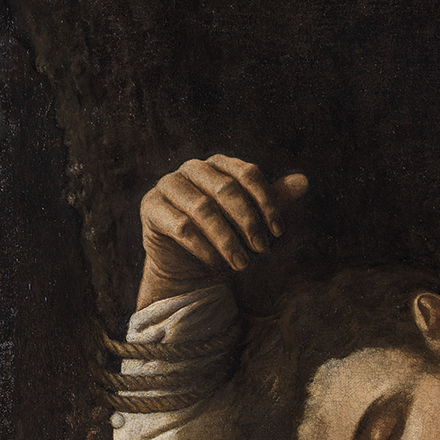
The genius of Zurbarán – and why he vanished

A pious Caravaggio JASPREET SINGH BOPARAI The Spanish painter Francisco de Zurbarán is sometimes thought of as a pious equivalent to Caravaggio – a Caravaggio without the bad temper, brutal vices or criminal record. But it seems difficult to argue that Caravaggio had any direct influence on his work. After all, he died when Zurbarán was 11 years old. Since Zurbarán never left Spain, he could not have seen any of Caravaggio’s paintings with his own eyes. Indeed, he might never even have heard the artist’s name. Still, there are unavoidable similarities between the two men’s work. Zurbarán shared Caravaggio’s sense of drama and his love of shadows broken up by patches of strong light.

AI could never replace me

There are two main schools of thought on AI in the Delingpole household. I, as the resident batshit-crazy reactionary tinfoil-hat loon, think that it is evil, indeed quite possibly satanic, and that everything would be much better if only we went back to horse transport, herbal salves and abacuses. And Boy Delingpole, representing technologically literate youth, thinks I’m an idiot, that AI is the future and quite mind blowing in its potential to change everything. Probably we’re both right. Personally, I don’t feel quite as threatened by AI as perhaps I should. More by accident than design, I seem to have ended up in one of the very few jobs that AI isn’t going to steal.

How good are the Rolling Stones’ alter egos, the Cockroaches?

Would you pay a tenner on the door to see the Cockroaches, the Fireman, Patchwork, the Network and Bingo Hand Job play your local pub? This unpromising lineup becomes a little more appealing (perhaps) upon learning that these are pseudonyms used by, respectively, the Rolling Stones, Paul McCartney, Pulp, Green Day and R.E.M. over the years. Pop stars spend the first part of their careers trampling over their grandmothers in the unseemly rush to demand the world take notice of who they are, and the second part whining about being pigeonholed. The only thing harder to escape in the music industry than your name is your original haircut. Hence, the pseudonymous offshoot, offering a degree of separation with very little sense of jeopardy.